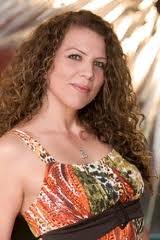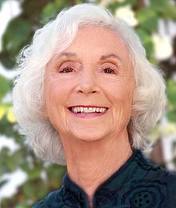
Arlene BlixI recently attended a Healthy People Conference at Loma Linda University in Loma Linda, CA and was introduced to Arlene Blix by a very good friend of mine Dr. Steven Bizal.  I soon realized that Arlene had published a book about her journey through grief, loss and survival as a result of her husbands struggle and ultimate death from liver cancer.

The book is aptly titled “Blindsided” which is what many people who go through an experience like Arlene’s feel like, at least that was the case for Arlene.  Her husband was the image of perfect health, and suddenly started having leg pain then intestinal issues before being diagnosed with liver cancer.

This book is as much about Arlene’s journey with her husband Glen, but it also brings to light the feelings emotions and the roller coster ride that the loved ones take when cancer strikes so close to home.

I know that many of you know my personal family experience, my eldest son at the age of 21 was diagnosed with Leukemia.  I took Arlene’s journey, and am well aware of the grief, and emotional pain that one experiences when a loved one is battling cancer.

Frequently,  I think that the people who are diagnosed are more prepared than the families and spouses.  At least this was the case with Glen.  As a matter of fact he stated to Arlene that he was prepared to die, and that he had a good life.  He was spiritual and had a wonderful relationship with God–death was an opportunity to reunite with God.  A relationship likes Glen  is so important in facing our impermanence, it makes the journey through death so much easier.

What I loved about Glen’s message in the book “Blindsided” is that he challenged all that knew him to serve humanity, and to maintain connections and model love.  What a wonderful way to leave your legacy.  Eight three people came to Glen’s and Arlene’s home for what was referred to as a “living funeral”.  An opportunity to say good by, acknowledge and honor someone you love before their death.  What a beautiful way to help someone move into the hereafter.

On March 19, 2002 at 9:50PM Glen took his last breath and moved into the heavens. Arlene’s book is a tribute to a man who really knew the meaning of life.  I encourage you to love, live and connect with others this is such an important part of being able to move through the grieving process.


If you want more information about Arlene and her work as a grief counselor, please click here to be directed to her website. I hope you enjoy this interview with Arlene Blix the author of “Blindsided“.

Tobin BlakeI recently had the pleasure of conducting an interview with author Tobin Blake.  His new book entitled “Everyday Meditation-100 Daily Meditations” is a wonderful book providing the reader with great techniques to “drop in” to a meditative state.

One of the issue we discussed during our interview, and is probably on the mind of many of my listeners is the concept of “the waterfall of thoughts”  I know that personally when I go to meditate that “the waterfall of thoughts” are frequently there.  You know the to-dos, and why am I taking this time to meditate, I have more important things to attend to. Tobin’s advice is really simple, and one that most meditation teacher recommend, let the thoughts flow–just be with them they are a natural part of who we are. Once we let them go they finally evaporate, and we can quickly find ourselves in a blissful state of connection with the Universal Energy-Aha!!!!

Tobin states in his book “Everyday Meditation” that meditation is a conscious act of turning around and facing inward.  I personally love this analogy about meditation, it certainly is a method to help us turn within, be with our breath and take a deep journey into a relaxed state leading to calm, radiance and love.

Tobin refers to taking this journey as making the connection to our core self. He says that our core self does not ask for much, in fact it requires only one ting, which is absolutely essential.  It asks that you love it and want to experience it above anything else–at least for one perfect instant.  Your own sincere desire, in your command alone, is the only force that can rejoin your awareness with your core, because desire is the active agent of the single most powerful thing in the physical univers–your will.

Tobin’s new book “Everyday Meditation” has lots of food for thought, and exercises to improve our meditation practice.  You can open his book up almost anywhere and receive the wisdom you need for the day.  It has 100 insightful meditations for your health, stress relief and everyday joy.


I hope you enjoy my interview with author Tobin Blake and if you want more information about Tobin please click here to be directed to his website.

John Michael GreerI recently interviewed author John Michael Greer about his new book entitled ” Apocalypse Not“.

John is a very fascinating and intriguing author and has a perspective about the apocalypse which will put every one at ease.

John states that a thousand years ago, the astronomers and mathematicians of another accent people worked out this same date in their own calendar, and set in motion a chain of events that made their calculations a topic of fear and fascination across most of the world today. They were the Mayans, and to them the date in questions was 4 Ahau 3 Kankin 13.0.0.0.0—the end fo the world.

John, claims that on 12/21/21 nothing is going to happen, no end of the world, no rapture– things will carry on as usual.

As for their “disappearance”, the great Mayan city-states of the southern lowlands when through a period of severe decline in the tenth century CE, involving warfare, famine, and the abandonment of most of the large urban centers, but the villagers of the countryside remained, and their descendants sill live in the same area today.  Elsewhere in the Mayan world, city-states on the classic model continued to flourish until the Spanish conquest of the Yucatan and Central America in the sixteenth and seventeenth centuries, and their are sill plenty of people descended from the accent Mayans, and who speak Mayan languages, throughout that part of the world. John points out that in times of severe social stress people start to focus on the possibility of an apocalypse, and that we have gone through these cycles before in history.

The first secular forms of the apocalypse meme actually began to take shape well back in the Middle Ages, with the earliest stirrings of what radicals of a later age would call “class consciousness”.  John states that throughout history we have been enamored with and apocalypse and the anti-christ, and during recorded history we have never experienced the apocalypse.

If you are interested in learning more about the history and our fascination with an apocalypse then I recommend that you read ” Apocalypse Not“.  Author John Michael Greer throughly documents why he believes that we are not going to experience the coming of the anti-christ or an apocalypse.  He states that on 12/22/12 those who are believers in the dooms day prophecy will wake up the next day and wonder why it did not occur.


If you would like more information about John Michael Greer please click here to be directed to his website.  I hope you enjoy my interview with John Michael Greer.

Walter GreenHow many of you have really thought about the importance that being grateful plays in your life?  I recently interviewed Walter Green the author of a new book entitled ” This Is The Moment-How One Man’s Yearlong Journey Captured the Power of Extraordinary Gratitude“, and was throughly impressed at the lengths Walter took to express his gratitude to 44 of the most influential people in his life.

In my interview with Walter we discussed the impact this experience had on his life.  He wanted to tell these men and women how much they mattered to him before anyone’s health or life was compromised and the opportunity was missed.  Walter mentions that you might think of his life as as rags to riches story, but that it is anything but that.  He realized that significant contributions to his learning and success these  44 individuals played .

As Joseph Campbell articulates in his book “The Hero’s Journey” we go on the departure, then have the initiation and ultimately the return.  I think in the case  Walter departed  on his own spiritual journey and through the beauty of gratitude  was able to experience the freedom  upon his return as a result of his profound gratitude.

Walter experienced mastery which leads to the freedom from the fear of death.  You see, Walters father died he was a very young age, and his death made a significant impact on the journey that he embarked upon to recognize and express his gratitude to the people that had a deep heartfelt role in the molding of his life.

As Walter states in ” This Is The Moment“, ” Their pieces of input allowed me a unique opportunity to answer the question; ” Who am I?”  What an empowering gift! . I never set out with an agenda of learning about myself; doing so was parenthetical and incidental, but not inconsequential.  Not only that it started me thinking about my personal legacy.  We all have a perception of ourselves, and everything we do is consistant with that vision—our integrity, our energy, or performance, our giving to others.  This leads us to keep an internal scorecard and wonder how we’re doing. Am I doing the right things? Am I doing enough?

But the scorecard get buried with us.  When we’re gone, only the perceptions other have of us live on.”   If you have at ever thought about expressing your gratitude to someone one you love or who has made an impact on your life, what is stopping you?  Go do it!

Walter’s experience and the stories he tells in “This Is The Moment” will certainly move you to want to express your gratitude.  I encourage you to read this book and  also share your stories of gratitude with Walter by visiting his website by clicking here.  You will also want to watch a video by clicking here about the book.

Walter will be speaking at an upcoming event in San Diego for Renaissance Executive Forums you can register for the March 20th event by clicking here.


Enjoy this great interview with author Walter Green.

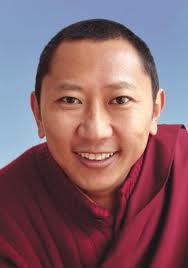
Shyalpa Tenzin RinpocheWhat an amazing interview with Shyalpa Tenzin Rinpoche about his new book entitled “Living Fully“.  The essence of the Rinpoche’s book is the importance of each breath and the life force and joy in each breath.

Now I am aware that at the pace we move in the Western world, understanding the importance of our breath is so essential; but really how many of us pay attention to our breath or are aware of the gift of each breath.  When you distill the message of this book into these terms and the simplicity of what we all take for granted you begin to see the beauty and transformational power within the message of “Living Fully”.

As Rinpoche state in “Living Fully” “Whether we realize it or not, our deepest aspiration is to experience the richness and fullness of our being in every moment. Each of us has the capacity to live fully, but how do we recognize our potential? ”  In my interview with Rinpoche we discuss the many desires and attachment we have to the physical world and how these desires and attachments really are not bringing us happiness and joy and distract us from “Living Fully“.

Happiness and joy are fulfilled when we look deep inside and content with who we are regardless of all of our worldly possessions.  As Rinpoche mentions in “Living Fully” instant pleasure is not the true way to enjoy our freedom.  When we know how to surrender, we can truly appreciate our freedom. This ability to surrender comes from a disciplined approach to life.  Surrender is not submitting to a higher authority, like an army recruit saluting a drill sergeant.  Rather, we surrender when we give up trying to satisfy all of our hopes and expectations.

If we abandon our efforts to fabricate a “perfect” world, we all experience genuine freedom that is not corrupted by endless craving or something better.  Understanding the philosophy and practice of the Buddhist way is quite simple.  Finding our essence of our precious human nature is learning how to live in the moment, enjoying each and every breath and the joy that it brings.

While this might sound like utopia, because we are all aware the plethora of distractions our material world brings, it  would certainly be nice to not just capture these moments but to become one with them permanently without programming our brains to remember how to remember what it feels like.

So if you are so inclined and want to learn from a master then I would recommend that you read and emerse yourself in the teaching of Rinpoche.  His new book is delightful, and something all of us in the Western world need to become more aware of how important the aspect of something as automatic as our breath teaches us about the joys of life.


If you would like to learn more about the book click here to be directed to the Rinpoche’s website or listen to a YouTube interview with the publisher Marc Allen at New World Library by clicking. here. Enjoy this great and inspirational interview with a wonderfully compassionate man.

Allan LokosIn a recent interview with author Allan Lokos we discussed his new book entitled ” Patience: The Art of Peaceful Living“.

Allan’s book was born one summer evening when a dear friend made a comment “Just about every mistake I have every made and every unkind word I have ever spoken might have been avoided if I had been more patient.”  Allan thought that this was a stunning statement revealing remarkable insight, and it was the birth of this book.

The development of genuine, open-minded patience may very well lead one to also examine one’s experience of anger and its root causes.  Although impatience and anger are not the same, they live in the same neighborhood states Allan.  In fact, it is as if they live in the same house with barely a flimsy curtain between them, anger ready to join in when impatience shows the slightest interest in emerging from its thin-shelled cocoon.  Not coincidentally, the journey that develops patience is traveled along a path similar to that which undermines the deceiving appeal of anger and what at times can appear to be anger’s uncontrollable nature.

The development of patience requires an understanding of the  root causes of our stress, anxiety, and frustration.  Then we must be willing to relinquish the type of thinking that leads to the loss of patience.  Although anger and patience are not opposites, they can be thought of as two side of the same coin.  When one side is visible the other is hard to see.  When one side is active the other is unlikely to emerge.

Allan is a teacher of Buddhist practices and his approach is not to get attached to the emotions that anger and frustration stur up within one.  To become more mindful from moment to moment which includes being nonjudgmental.  Because of anger’s enormous potential for danger, it would be an exaggeration to say we call on patience to come to the rescue, to save the day, perhaps even to save a life.  The courageous act of starting to address one’s anger and develop greater patience is, to me , a sacred act.  The simple act of pausing invites the mind and body to stop, to allow fiery thoughts to cool and subside before giving them expression.


If you want to cultivate more patience and reduce the dangers of anger and frustration, then you ought to read and take in the very important message of “Patience: The Art of Peaceful Living“.  This is a book worth the read, and especially in the complex world we are living in today that frequently tests our patience.

If you would like more information about Allan Lokos and his new book please click here to be directed to his YouTube video.

Bill GladstoneOver the last several months I have grown to know author and literacy agent Bill Gladstone.   Bill a fascinating man, and  has a true passion for helping and serving people through great books, and connecting people for the greater good.  I recently interviewed Bill about one of his many co-authored book entitled ” Tapping the Source

This book was written and co-authored with John Selby, Richard Greninger and Bill Gladstone and brings to light the works of Charles Haanel’s Master Key System combining short-form meditation techniques with new psychological insights assisting one in tapping their personal potential.

Charles Haanel never claimed to have invented the process of manifestation that he taught. In fact he often refers to classic sources in the Judeo-Christian heritage and Greek and Eastern traditions to highlight the ancient wisdom he’s drawing from and expanding upon.  But beyond classic parallels, his personal vision appears to be uniquely inspired with new psychological insights and remarkably clear elucidations of the core principles that drive our everyday lives:  ” What you and I desire, what everyone is seeking, is happiness and harmony.  If we can be truly happy, we shall have everything the workd can give. If we are happy ourselves, we can make others happy.”

The primary difference in the qualities of Haanel’s vision is that he’s not fixed on material possessions or giant bank accounts or a fleet of fancy cars in the garage.  Yes, he does fully support abundance, but he bases his teaching on the fact that what we really want deep down is to feel genuinely happy and in ongoing harmony with ourselves and the world.  He says “Harmony and happiness are states of consciousness, and do not depend upon possession of things.”

Haannel stated that ” creative power does not originate in the individual, but in the Universal, which is the source and foundation of all energy and substance; the individual is simply the channel for the distribution of this energy.” Haanel was not only a wise man, but very spiritually connected soul bringing awareness and light to the world.

If you want to learn more about Charles Haanel and Tapping the Source, please visit the Tapping the Source website by clicking here.  There is also a full featured DVD that is excellent and will provide you with insights from some of the greatest minds in the personal growth, spirituality and mastery  today.


Enjoy my interview with Bill Gladstone a wonderful author and compassionate man on a mission.  To learn more about Bill Gladstone please click here to be directed to his website.