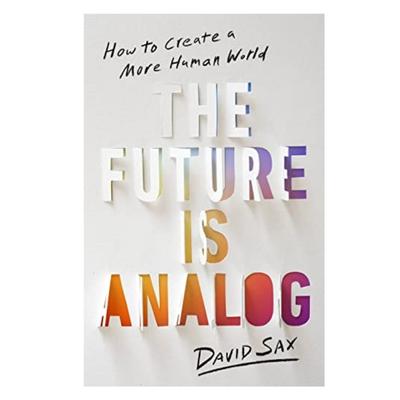
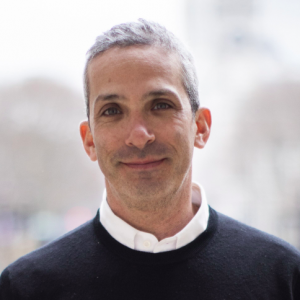
 Joining me for this podcast is bestselling culture writer David Sax. He recently released his latest book entitled The Future Is Analog: How to Create a More Human World.
Being an award winning writer, journalist, and keynote speaker, David has been at the forefront of reporting and dissecting the intersection of business and culture for nearly two decades, including four internationally bestselling books, articles and appearances in nearly every major global news outlet, and dozens of keynote speeches to audiences around the world.
David’s latest one is The Future Is Analog: How to Create a More Human World where he lays out the case against a false digital utopia—and for a more human future. Moreover, David points out that the onset of the pandemic instantly gave us the digital universe we’d spent so long anticipating. Instant communication, online shopping, virtual everything.
Additionally, this book is a manifesto for a different kind of change; that we can spend our creativity and money on building new gadgets—or we can spend them on new ways to be together and experience the world, to bake bread, and climb mountains. All we need is the clarity to choose which future we want.
If you want to know more about David and his works, you may click here to visit his website.
I hope you enjoy my engaging interview with David Sax. Happy listening!
THE BOOK
Bestselling culture writer David Sax lays out the case against a false digital utopia—and for a more human future
In The Future Is Analog, David Sax points out that the onset of the pandemic instantly gave us the digital universe we’d spent so long anticipating. Instant communication, online shopping, virtual everything.
It didn’t take long to realize how awful it was to live in this promised future. We craved real experiences, relationships, and spaces and got back to real life as quickly and often as we could.
THE AUTHOR
David is from Toronto, Canada but has also lived in New York, Buenos Aires, Rio de Janeiro, and Montreal in the past. The first article he wrote was for the Camp Walden newspaper at 16 years old. His parents used to send him Newsweek magazine to camp. He has always been a freelancer writer then he also started selling articles and books, then more articles and books, and then talks. Today, he mostly write books and give talks about those books.
You may also refer to the transcripts below for the full transciption (not edited) of the interview.
[fusebox_transcript]











Leave a Reply