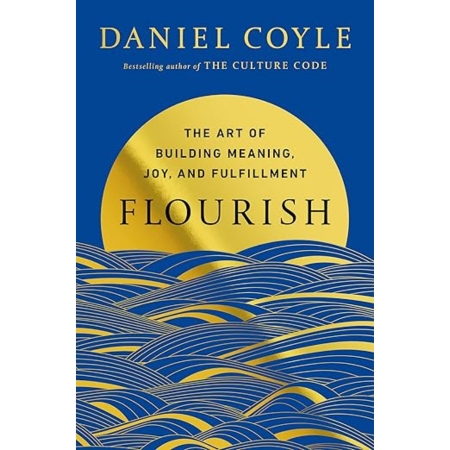
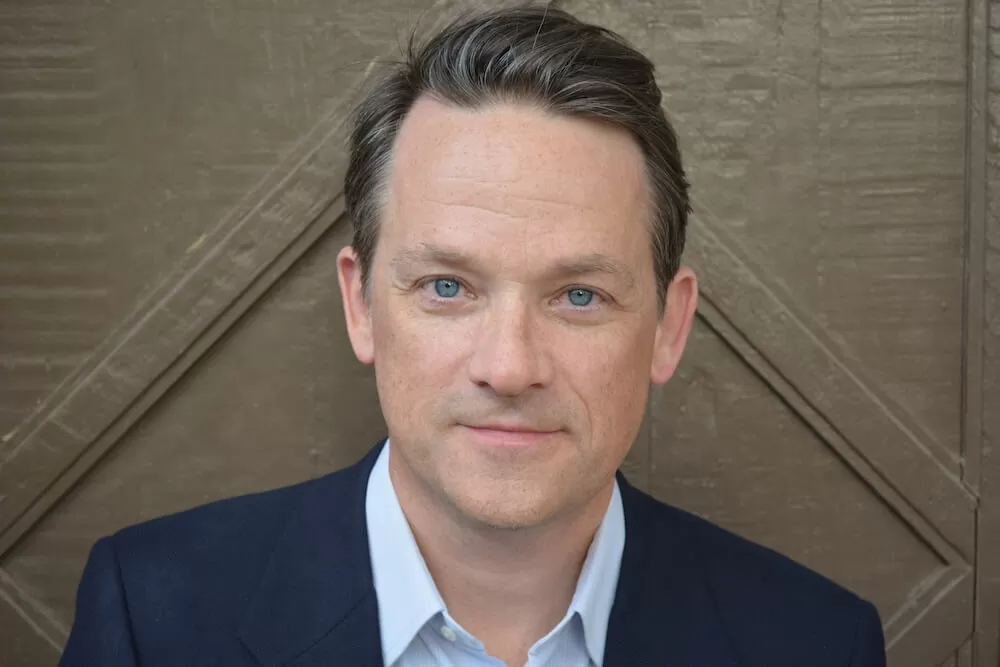
In this episode of Inside Personal Growth, Greg Voisen sits down with New York Times bestselling author Daniel Coyle to discuss his transformative new book, Flourish: The Art of Building Meaning, Joy, and Fulfillment.
For years, Coyle has been the go-to expert on high performance. His previous bestsellers, The Talent Code and The Culture Code, decoded how individuals and groups reach the absolute pinnacle of their fields. But after the passing of his parents, Coyle found himself staring at the “success mountain” and realizing that reaching the top often just reveals more mountain. This realization sparked an inward journey from the high-pressure world of performance to the soulful, messy world of flourishing.
The Trap of “Treasure Hunting”
In a culture obsessed with productivity, most of us spend our lives in “treasure hunting” mode. We believe that if we just hit the next revenue goal, get the promotion, or finish the next project, we will finally find the happiness we seek. Coyle argues that this is a fundamental misunderstanding of how a good life is built.
Coyle references the work of Barry Schwartz, noting that life is not a treasure hunt; it is treasure creation. While treasure hunting is about the destination, treasure creation is about the process of engaging with others, solving problems together, and being present in the “valleys” of life where growth actually happens.
The Biology of Connection: Relational Attention
One of the most striking parts of Coyle’s research involves the neurobiology of how we connect. He discusses the work of psychologist Lisa Miller, who identifies a specific neural pattern she calls “relational attention.”
Modern life often traps us in “task attention”—a narrow, controlling focus used to get things done. While necessary for work, staying in this mode too long makes us feel “dead inside.” Flourishing requires us to pivot to relational attention, the space where we form deep bonds and feel a sense of shared aliveness.
During the podcast, Coyle guides listeners through “The Council Exercise,” a mental tool where you visualize the people in your life who truly have your best interests at heart. This exercise isn’t just “woo-woo” sentimentality; it is a way to ground oneself in the stability and clarity that only strong relationships can provide.
Lessons from the Deep: The Chilean Miners
How do humans thrive under the most extreme pressure imaginable? Coyle points to the story of the 33 Chilean miners buried 2,000 feet underground. For 16 days, they had no hope of rescue, yet they didn’t descend into chaos. Instead, they built a “brotherhood” through simple, repetitive rituals.
They created systems for eating together, watching over each other while they slept, and even a ritual for confessing mistakes and mistreatment. These weren’t “efficient” actions in a traditional sense, but they were “awakening cues”—moments of care, curiosity, and contribution that kept their spirits alive when their environment was dark and stagnant.
Embracing the “Beautiful Mess”
A common mistake leaders and parents make is trying to treat human groups like machines. Coyle distinguishes between “complicated” systems and “complex” systems.
-
Complicated systems (like a Ferrari) are predictable and require expert instructions.
-
Complex systems (like raising a teenager or building a team culture) change as you interact with them.
In a complex system, “mess” isn’t a sign of failure; it’s a sign of life. Coyle suggests that if you know exactly what is going to happen next, you aren’t truly alive—you’re just executing a program. Flourishing groups embrace surprise and disorder because that is where the most creative and meaningful solutions are born.
The “Yellow Door” Moments
How do we start flourishing today? Coyle introduces the concept of Yellow Doors. Most of us look for Green Doors (open opportunities) or Red Doors (closed paths). A Yellow Door is a “maybe.” It’s an invitation to something you might not be interested in or might even be afraid of.
Coyle shares his personal “Yellow Door” story: a group of friends invited him to try indoor rock climbing in his 50s. Despite a fear of heights and a lack of interest in the sport, he said “maybe.” That single decision led to a five-year journey of deep friendship, shared music, and a sense of community that redefined his later years.
Conclusion: Life is a Garden, Not a Game
Daniel Coyle’s message is a refreshing departure from the “hustle culture” that dominates our feeds. He reminds us that our lives are not games to be won, but gardens to be grown. By shifting our attention from the summit to the soil—focusing on curiosity, care, and contribution—we can move past the flatness of modern life and into a state of true flourish.
Whether you are a CEO looking to revitalize your company culture or an individual seeking more meaning in your daily routine, Coyle’s insights provide a practical, science-backed roadmap to a more fulfilled existence.
You may also refer to the transcripts below for the full transcription (not edited) of the interview.
Well, welcome back to Inside Personal Growth. This is Greg voisen the host of Inside Personal growth. And Daniel, all the people out there, they know who the heck I am. They probably know you, too. It's Daniel Coyle. He's joining us from not Anchorage, but Homer, Alaska. Good day to you.
Good to see you, Greg. Nice to be here with you.
Well, it's good to meet you. I'm seeing a deer head kind of on the back of your wall over there. So you can. Yeah, Yeah, that you're an Alaska guy, but I'm going to let the listeners know a tad bit about you. Daniel is one of the most compelling voices in the world of human performance, leadership and culture.
And New York Times best selling author. His books have fundamentally changed the way we think about talent, teamwork, and what makes groups thrive. As I said, he's in Homer, but he was born in Saint Louis. We have a commonality there. I was born in Saint Louis. He was raised in Anchorage. Dan spent his career as an award winning journalist and author writing publications, including Outside Magazine.
00:01:05:13 - 00:01:33:21
Speaker 1
We all remember that one. Sports Illustrated, The New York Times Magazine. He previous his previous books, The Talent Code, which explored the neuroscience of skill development, the Culture Code, which unlock the secrets of highly successful groups. The Secret Race coauthored with Tyler Hamilton, which won prestigious William H. William Hall Book of the Year. The very first book, HARDBALL.
00:01:33:22 - 00:02:02:21
Speaker 1
A season in the Projects was adapted into a feature film starring Keanu Reeves, one of my favorite guys who gives and gives and gives. Dan has served as consultant to the Cleveland Guardians baseball Organization. I advise military forces, professional sports teams working Fortune 500 companies previously taught at Northwestern University and was a producer on an ESPN documentary called Enhanced.
00:02:03:03 - 00:02:28:19
Speaker 1
The book we're talking about today is called Flourish The Art of Building, meaning, Joy and Fulfillment. It's a Bantam Books. If you look at the show notes below, you'll be able to get more information there. You can also just go to his website. Daniel Coyle. SEAL. Why, Alex? We're going to put a link to that as well. Obviously, he spends time between Cleveland and Homer, I guess.
00:02:28:19 - 00:02:53:15
Speaker 1
Is that right? That's. Okay. And he lives there now. Nice and cold. He said it was 15 degrees and he goes back and forth. So that's really cool. Well, let's start out this like this. Let's dive. Take a deep dive. This book kind of feels like a departure from previous work that you had. You know, you did the talent called the Culture Called Code.
00:02:54:13 - 00:03:23:16
Speaker 1
You were a journalist studying others from the outside. Flourish begins with this passing of your parents in a very personal, existential crisis. You write about feeling flat, yet restless and possessed by big questions about meaning and fulfillment. Look, I know that we all look at our finitude, especially somebody like me at 71. You say what? Meaning that I have.
00:03:23:16 - 00:03:42:03
Speaker 1
And what purpose did I serve? And we all have an expiration date. We know long, man. We never get out of this alive. So what made you decide to turn the lens inward this time? And how did that vulnerability change the book that you ultimately wrote?
00:03:42:13 - 00:04:00:06
Speaker 2
Oh, what a good question, Greg. Well, first of all, thanks for making this podcast happen and all these conversations you've happened to had over the years. It's so cool to see what you built here, how meaningful it is. And I guess I guess for me, I see this this was sort of started as sort of a town no kind of an accident.
00:04:00:06 - 00:04:22:14
Speaker 2
But the bigger picture, it's kind of a trilogy. You know, I wrote about individual talent. Then I moved to groups and it was kind of it got me thinking, especially after my parents passed away, like, okay, what's beyond performance? You know, it's a question that a lot of us have. Then I think as a as a whole society and culture grappling with because we've seen when you get to the top of that success mountain, what you find is usually just more mountain.
00:04:22:24 - 00:04:57:00
Speaker 2
Yeah. Yeah. You don't necessarily find some magical breakthrough know some magical transformation. We all know a lot of unhappy billionaires. We all know a lot of unhappy, successful people. And I guess I reached that same thing where I was kind of I was looking out at those mountain tops and I started my gaze got captured. After my parents died, I started instead of looking up, I started looking down at myself and at the valleys, like where places that are growing things the rivers, the valleys, the forests, where places that where people are generating new stuff, where there's a sense of aliveness, where there's a sense of shared meaning or a sense of fulfillment.
00:04:57:14 - 00:05:14:10
Speaker 2
And so that's what that's what got me interested in it. You know, having your parents die is the most mundane thing in the world. It happens to almost everybody. And yet it still reminds you of how, boy, modern life has a way of knocking us out, of being in touch with what really matters.
00:05:15:08 - 00:05:44:17
Speaker 1
Yeah. You know, it's like you. You anchor the book, you know, you bury Schwartz insights that life is not a treasure hunt, but a treasure creation. So when you look down into where all that was happening, you even taped it above your desk. Mm hmm. Treasure creation. You realized that as a result of your parents death, that, you know, there is infinite air, there is a timeline.
00:05:44:17 - 00:06:07:14
Speaker 1
But the reality is, how can I engage? How can I be of benefit to others? How do I make this happen? And for our listeners, medium who've spent years in treasure hunting mode, like you said, treasure hunting up the mountain, you're on the top of the mountain. You've got everything. But it's very lonely up there, right? Yeah. Chasing goals, staying over busy.
00:06:08:05 - 00:06:30:17
Speaker 1
What was the moment that distinction truly landed for you, and how did you change the way you approach? This is important because listeners out there want to know your daily life. I noticed when we got on, you didn't tell me you were in busy Cleveland. You're in Homer. Mm hmm. Okay, so the population of Homer is How many?
00:06:31:04 - 00:06:31:21
Speaker 2
3000.
00:06:32:03 - 00:06:37:00
Speaker 1
Okay, that's my point. You're now in a place where there's solitude. Peace.
00:06:37:05 - 00:06:37:21
Speaker 2
That's from.
00:06:37:24 - 00:06:59:21
Speaker 1
Tranquility. You chose that. Okay. And so you've had that time to reflect because you're in Homer, Alaska. And I think daily people that are in the throes of where I live and many people that are listening are living, They're like, Wow, I only longed to be in Homer because I would really like to have some of That's all right.
00:07:00:04 - 00:07:21:17
Speaker 2
And it is solitude and it's also relationships. You know, when we really zoom out and all the all the science that we've got, you know, the Harvard study of long term developments followed people for 80 years. And what they find is that more important than nutrition, more important than exercise, more important than income is strong relationships and strong religious communities.
00:07:22:02 - 00:07:42:00
Speaker 2
Community. That's the word. That is the word. And so for us, I think everybody's kind of looking there's a word, you know, grounding yourself in community, and that's why we come here. But it's not just that we come here, we find we can find it anywhere. It's those moments when I thought about moments where I was not treasure hunting, where I was treasure creating.
00:07:42:09 - 00:08:01:06
Speaker 2
The moment that it hit for me is when I realized what's I ask myself, What's my favorite night that we have as a family? Like we were four daughters were together a lot. What's our favorite night? And when I ask that question, I found out the favorite night was Music Night. We have other families over. My kids play a couple of instruments not great, and I play a little guitar.
00:08:01:06 - 00:08:18:05
Speaker 2
Not great, but we all kind of get together and play songs together. And that for me was different. It wasn't that we went to an amusement park, it wasn't that we went to some luxury resort. It wasn't that we accomplished anything. We circled up and tried to navigate these songs together kind of poorly, but.
00:08:18:05 - 00:08:18:23
Speaker 1
Still, still.
00:08:18:23 - 00:08:38:13
Speaker 2
Did it with a lot of joy and a lot of adventure and a lot of fun and a lot of vulnerability that felt like treasure creation to me. And when we zoom out, what did our ancestors spend time doing? What did all the people who came before us, they didn't spend their time, you know, staring at screens and typing words and and having these consumer experiences?
00:08:38:20 - 00:08:57:24
Speaker 2
No, they were in that active treasure creation circling up and solving problems together. And there's really two things that are happening there. There's the there's the circling up where you're saying, hey, we've all got a role to play here. We've all got an instrument to play. We've all got something to add to this. And then there's the action We're going to we're going to create something today.
00:08:57:24 - 00:09:15:10
Speaker 2
We're going to we don't know what it is we might be plant in the garden. We might be trying to project at work. It's going to be messy. And because it's messy, because we're all engaged, because it's imperfect, that's what makes it come alive. That's what makes it feel like treasure. And that's the pattern that I kept seeing in these places where it was two steps.
00:09:15:17 - 00:09:32:01
Speaker 2
You kind of pause and look around and see the worth of the people around you, see what the gifts that they're bringing, and then you try something together that's not going to go great and it's not going to be perfect and you're not going to know the outcome. But through the course of doing that, some surprises are going to bubble up.
00:09:32:01 - 00:09:51:04
Speaker 2
People are going to bring gifts that you didn't realize they had. And that's where you get that treasure, I think. And we sort of look at those moments and we think, oh, that's just magical. You know, it's just kind of chemistry or luck. But what I saw in the book is that you can create that with intention if you understand how living systems work.
00:09:51:15 - 00:10:20:16
Speaker 2
We're not machines, you know, your audience knows this, right? They've gone through life. If you act like a if you act like you're trying to automate everything and come as a robot and have perfect habits, it ends up making you feel kind of dead inside. And and but if you are intentional about creating these moments that are kind of vulnerable, a little scary, but you're circling up with people, bringing gifts, solving problems, exploring questions together, those are the imperfect things that make you feel alive.
00:10:20:16 - 00:10:43:20
Speaker 2
And it's encouraging to see, to hear. I'm glad your podcast exists because it feels like it's kind of a humanist revival going on. You know, I don't know if it's the age of I don't know if people are kind of bummed out and realizing what social media really does to you or but there's this awareness of people are realizing, Hey, look in other people's eyes and having conversations and exploring real questions.
00:10:44:11 - 00:11:02:13
Speaker 2
You know, answers are cheap as tap water now having a bunch of good answers, but actually circling up with people and exploring questions, that's a hell of a drug. Like that is a hell of a thing. And it's exciting and it's thrilling and it gives you that feeling of aliveness that I think a lot of us are craving these days and a lot of us are appreciating these days.
00:11:02:13 - 00:11:09:10
Speaker 2
And the word for that is community like Community is a group of people exploring the question of how they can live well together.
00:11:10:07 - 00:11:39:08
Speaker 1
And I concur with you on that. And what I would say is that when you're curious and you live life in wonderment, right? And you live life as an experiment. Okay, So I'm going to say experiment, wonderment and curiosity. Groups of people can come together and create marvelous things. Now, whether or not it it's 100% correct doesn't matter.
00:11:39:21 - 00:12:07:24
Speaker 1
It's the fact that the they came together and bonded in this tapestry. I call it the tapestry. We're all connected. We're all one, right? We're all one. And the things that are happening like to help change the planet. I remember listening to Jane Goodall's last words. All right. Her last words that were published was like, Don't ever give up.
00:12:09:00 - 00:12:33:16
Speaker 1
Have hope. Understand that the gorillas and the chipmunks and the chimpanzees I work with and all the things that I did was I learned a ton. But the point is nature. And then there's the point. Here's a person is living in nature, you know? Homer laughed. Mm hmm. Mm hmm. And so this to me, one of the book's most powerful ideas is this concept of awakening.
00:12:34:00 - 00:13:19:12
Speaker 1
Cuz. Hmm. Just like she said, awakening cues, moments of receptive stillness, that spark meaningful connection like her with the chimpanzees. Mm hmm. You describe how flourishing groups you studied would often pause. Mm hmm. Stop their activities and come together in ritual, like stillness. Okay. Again, I'll go back to Jane Goodall. Same kind of thing. So in a world that the prize is constant productivity achievement, always making it to the top of the mountain, how do you explain to a skeptical leader or parent why they're doing nothing together?
00:13:19:22 - 00:13:27:00
Speaker 1
It might be the most powerful thing they could do, which would be come together and do something together.
00:13:27:05 - 00:13:47:19
Speaker 2
That's so great. We always think of pauses as being what they're not like. Pause, pauses. Doesn't make any sense. But these places that I visited, as you say, they kept having these unnecessary ritual like pauses. And I guess to explain why they're powerful, it's kind of useful to have people do some reflection on the relationships in their own life and why they're meaningful.
00:13:48:21 - 00:13:56:10
Speaker 2
There's a there's a little exercise that Lisa miller, she's a psychologist at Columbia. She had a.
00:13:56:10 - 00:14:04:02
Speaker 1
Researcher. Yeah, Yeah. Like this distinctive neural pattern She calls neural docking station.
00:14:04:09 - 00:14:21:15
Speaker 2
Neural doc is a She points out that our brains are not just built to kind of control the world. When we use the word attention, we sort of think of it as a narrow thing. Right. Focus. Focus. But what she points out and what other scientists have pointed out is that our attention system is actually two things. There's task, attention, narrow focus, get things done.
00:14:21:15 - 00:14:36:08
Speaker 2
But there's another thing called relational attention. Relational attention. That's where it's the space in which we form relationships, where we feel connection to others. And Lisa had me do an exercise that was really simple. I don't know, you want to do it. It's yeah.
00:14:36:08 - 00:14:39:01
Speaker 1
Let's do it and unlock it for the listeners.
00:14:39:11 - 00:14:41:07
Speaker 2
Let's do it. All right. So close your eyes.
00:14:41:13 - 00:14:41:19
Speaker 1
Mm hmm.
00:14:41:24 - 00:15:07:13
Speaker 2
I want you to picture a large wooden table, a table with chairs around it and around that table. I'd like you to picture the people in your life, living or deceased, who truly have your best interest in mind, who are truly, deeply on your side. It's picture. I'm sitting there, they're taking their seats, and now I want a picture yourself.
00:15:08:07 - 00:15:38:24
Speaker 2
Walk up to that table and taken a seat. Got it. And now ask them if they love you and listen to their response. And now ask them, what is it that I need to know right now about the path I'm on? What is it that is important for me to know right now about the path that I'm on and listen to their response?
00:15:38:24 - 00:15:50:20
Speaker 2
Mm hmm. And open your eyes. Mm hmm. And that's called the counsel exercise. And if you're like most people, if you're like me, and I don't know, how did it go for you, Greg?
00:15:50:20 - 00:16:13:10
Speaker 1
What did you picture? It went great. And it wasn't anything I didn't expect is the answer. You know, you look at your past, I look at my past and I see how fast I've moved. Mm hmm. A number of things I've accomplished. Mm hmm. And in every one around the table said, be easy on yourself.
00:16:13:20 - 00:16:14:16
Speaker 2
Oh, interesting.
00:16:14:16 - 00:16:33:06
Speaker 1
Take time. Yeah. Self nurturing and care. Mm hmm. Care for yourself, Okay? Because I've always been somebody who has a hard time saying no. Mm hmm. So I say yes too often, and I realize now I have to say no. Yeah, For my own peace.
00:16:33:15 - 00:16:54:20
Speaker 2
Yeah. How cool is that? How cool is that? Well, that counsel is always with you, you know, And and again, like, that seems kind of like a woo woo little exercise. But at your ground in that moment, you're grounding yourself in the relationships and you're creating what relationships give you, which is stability, clarity, Clarity. Right. The modern world does not offer much of that.
00:16:54:20 - 00:17:16:08
Speaker 2
The modern world wants to pull you in the saying yes all the time to everything. But having the ability to slow down. And I would say that's an awakening cue to slow down and look at things with curiosity, with care, with contribution. Seeing those relationships, letting them come to life, even in between your own ears. Right. And that's what I saw in these places.
00:17:16:08 - 00:17:23:04
Speaker 2
They were good at grounding. Always it grounding themselves. You know, an example from the sports world that's really vivid.
00:17:23:08 - 00:17:53:19
Speaker 1
Can you use that? Yeah. Pardon me, but I'm. I'm reflecting on the Chilean miners who are traveling around for 17 days. Right. And I think most of the world saw this. Right. It was. Yeah, on the news. That's right. Unimaginable conditions, starvation, darkness and near death. And then what can the rest of us learn from what happened in that mine about human beings actually bonding under this pressure?
00:17:53:19 - 00:18:10:16
Speaker 1
Because let's face it, I watched that video. I saw people come out of that mine that I thought would never make it out of that mine. I saw people risk their lives to pull people out of that mine. Yep. So crazy. You want to tell that story?
00:18:11:01 - 00:18:26:07
Speaker 2
Yeah. I mean, if you if you're going to trade places with anybody in the history of the world, these 33 people would be the last people you would choose, you know, Really? Because they were in a tough spot, you know, they were buried under a couple hundred million tons of rock, 2000 feet down, not much hope of rescue.
00:18:26:08 - 00:18:44:23
Speaker 2
16 days went by with no hope of rescue. So and but when they did find them, they were turned out, they were doing great and they were able to, with very little food, create a brotherhood down there that where they treated each other. There was there's strong relationships and they're able to treat each other with care and as a result, survive.
00:18:45:09 - 00:19:04:13
Speaker 2
It wasn't the act of one leader. It was this collective sense making. What happened is early on, when things were kind of going to hell, they had enough sense to circle up to their club and the leader walked to the center and took off his white helmet and said, And he was kind of a stern leader. Nobody was expecting him to do this.
00:19:04:13 - 00:19:22:15
Speaker 2
And he said, there are no more bosses and no employees here, no more. We're all one. And they started building these little rituals. And the rituals weren't super useful, like they weren't like, designed to get them out of the cave. There was no getting out. But there are rituals around. How are we going to eat together? How are we going to do that?
00:19:22:18 - 00:19:38:16
Speaker 2
All right, let's do that one by one. Let's do that this way. How are we going to watch each other when we sleep and take care of each other when we're sick? Well, we'll do a buddy system will pair up. How are we going to like they are a little system for confessing their mistakes. If they had mistreated somebody or spoken rudely, they had sort of a ritual to do that.
00:19:38:23 - 00:20:04:17
Speaker 2
They built all these small, simple rituals that showed care, curiosity and contribution. They built systems for feeding relationships. And we typically think relationships just exist. They just happen like you and I have a relationship they don't raise. Ships are living things that you nurture. It's not a machine. They're not machines that you operate. They're not networking with people and blasting information at them.
00:20:04:17 - 00:20:29:06
Speaker 2
It's not transmitting. It is a living connection. And that connection gets formed by moments. And those moments, there's always three moments, right? There's moments of curiosity where I'm really seeing who you are and curious about that. And there are moments of care where I'm expressing, I'm helping, I'm getting you some water, I'm doing something for you. And then there's moments of contribue Ocean where we're coming together to do something in a higher good.
00:20:29:22 - 00:20:52:14
Speaker 2
And that's what they created down there. And it sort of flips upside down our image of what a good leader is, right? We think a good leader is the one is going to say, okay, guys, here's the plan. Follow my plan. I have the information. No, it's not the person with the answers. It's the person who's asking the question, who's creating the space like that leader did?
00:20:52:17 - 00:21:16:18
Speaker 2
There are no bosses and no employees that created a space for people to set up that phrase. Creating space is one that I've always kind of been allergic to. Like it sounds woo woo. Like, I'm going to create space for Greg to express himself here. But in fact, it's pretty accurate. Like it's a beautiful phrase. You're creating space for care, for contribution, for curiosity, You're sort of asking questions.
00:21:17:03 - 00:21:40:12
Speaker 2
That's what leaders do in this space. They're asking questions or sort of sort of saying, okay, what is what are we all about? What do we want to value? How are we going to take care of each other? How are we going to self-organize around these obstacles? And so it's it's really beautiful to see. And there's this because it's sort of liberating when you realize leadership isn't about being the answer.
00:21:40:12 - 00:21:44:15
Speaker 2
Guy Yeah, it's kind of about being the question builder, you know?
00:21:44:15 - 00:22:13:18
Speaker 1
Well, you know, after 19 years of asking questions to guests who write books and doing consulting because that's what I do, this podcast show doesn't pay me a living. It's it's my passion work. I've learned that. And, and one of the people that you've devoted an entire chapter to was Aria, Zingerman's Deli. And Ari's been on the show now twice or three times.
00:22:13:18 - 00:22:14:04
Speaker 2
I love.
00:22:14:04 - 00:22:42:13
Speaker 1
Her. His series of books, right? He had this whole I think there was five in the series. And when you look at a gentleman who built a deli, right, you thinking to yourself and the culture that he built in that deli. Yeah, it's just amazing. Now that Ari told you that excellence is a function of uniqueness and compared growth to a cancer cell.
00:22:42:13 - 00:22:45:17
Speaker 1
So in a culture obsessed with scale.
00:22:46:04 - 00:22:46:12
Speaker 2
You know.
00:22:46:23 - 00:22:55:16
Speaker 1
What is Zingerman's teaching us about a different model of business success and maybe a different model of life?
00:22:56:01 - 00:23:22:14
Speaker 2
I know we have these models in front of us really clearly, maybe never as clear as they are right now. You can live in the algorithmic world or you can live in the human world. And Ari is an example of somebody who has built a community of businesses totally. And I would recommend all your listeners go back and listen to those episodes with him, because I think he's for a guy who is basically a taxi driver.
00:23:22:14 - 00:23:39:12
Speaker 2
I think before a cab driver before he started working this, I think he was a dishwasher to no business experience. He studied history in college and who he should be taught at every business school. What they've created there is so remarkable. You know, for those of you who've been as.
00:23:39:12 - 00:24:05:13
Speaker 1
Well, he has. He is pardon me, but he has a whole training company now. That's right. So one of the things that I love about Ari is if you've ever read the series of books that he make, the the business anarchist was one. Whatever he comes to the table with such a unique perspective of what business should be.
00:24:05:22 - 00:24:06:07
Speaker 2
Mm hmm.
00:24:06:15 - 00:24:17:01
Speaker 1
Right. Mm hmm. And the culture that should be created and supporting his culture, and especially in the restaurant business, which is a really hard business to be at.
00:24:17:14 - 00:24:18:01
Speaker 2
That's right.
00:24:18:01 - 00:24:47:16
Speaker 1
You know, but he does it gently and he gets accountability. Oh, yeah. It's because people love the culture. They love the people, they love Ari, and they're willing to do almost anything. Right. So, yeah, I'll put those on our show notes, everybody. I'll have Ari's interviews down here with at the bottom of these notes. But you got to add something.
00:24:48:00 - 00:25:07:08
Speaker 2
Well, yeah. It's so beautiful. You really see it. When I sat in on an orientation at Zingerman's and there are about nine new employees, All right? And in most orientations, what you get is oriented, how they tell you where to narrate this and you get your marching orders for how you should behave. And you are in receiving mode, right?
00:25:07:09 - 00:25:29:16
Speaker 2
Yeah. Orient me, please. Is nine employees are coming in and they've got a whole community of businesses. It's not just a deli, it's a coffee, coffee outfit, a bakery, a travel business, a catalog business. All these things. And they're rooted in Ann Arbor only. That's the thing that makes them kind of kind of magical. They've turned down all these opportunities to grow and scale, and excellence is a function uniqueness.
00:25:29:23 - 00:25:47:23
Speaker 2
So Ari walks in, he's orienting. There's nine or ten new people there, and they're ready to hear from the CEO. Ari walks in. He looks like a roadie for AC DC, like he doesn't look like a CEO, and he starts by asking questions. He doesn't start by giving answers. They're expecting answers. He says, Well, how'd you guys get here?
00:25:48:00 - 00:26:09:22
Speaker 2
Like what? What stories? Tell me the story of your lives. How did you end up in this room? And then he has them talk about what they want to build after they leave. And then he talks about their their training compact. When you get trained at Zingerman's, it's not a one way transmission. They have what they call their training agreement, which is two things Zingerman's agrees to be responsible for setting expectation and some providing tools.
00:26:10:08 - 00:26:29:09
Speaker 2
And the trainee is responsible for the effectiveness of the training trainees. Got to speak up. If you're not if you're not learning, speak up. If you don't get it, you got to talk. Show me where you're at. It is an it is. You're turning what is usually tipped a downhill waterfall thing. You're equalizing it and treating that person with dignity and respect.
00:26:29:09 - 00:26:56:14
Speaker 2
And it is. And there's a ton of rigor at Zingerman's, too. I think that people ought appreciate this isn't all Kumbaya business stuff, right? They are absolutely rigorous about the bottom line, but they do that in a way that is incredibly human and another example of that is that they have these to teach customer service. They have something called recipes, which are step by step moves to help have better service.
00:26:56:14 - 00:27:18:22
Speaker 2
But when you look at those recipes, they are so simple and they're designed to help people orient their attention. Here's the recipe for great service. Step one Find out what they want. Find out what they want. It's up to you. Use your two step to get it for them. Step three Overdeliver. Get them something more like. It's not.
00:27:18:22 - 00:27:40:00
Speaker 2
It's not paint by the numbers. Right? Right. It's it is. It is really guiding people toward having real interaction with people there. It's just like the whole structure of helping people guide their attention. And these days, you know, we're living through an intentional crisis. I think people feel that, right. Our attention is being captured by all these devices.
00:27:40:08 - 00:27:56:18
Speaker 2
It's our sense of relationship is being blocked by this stuff. Ari has realized that that's the core challenge. And so he's created all of this kind of attentional furniture to help guide people towards stuff that matters in a way from stuff that doesn't customer service, find out what they want.
00:27:56:24 - 00:27:59:17
Speaker 1
Yeah. You know, for them overdeliver.
00:27:59:17 - 00:28:02:04
Speaker 2
Like, it's so refreshing to be in that environment.
00:28:02:07 - 00:28:28:18
Speaker 1
It's it's interesting you say that because I had a pre-interview with this guy. Oh, cool. Gary Rich, he's the guy that ran WD 40, and he says, any dumb ass can do it now. He came from he ran it for 25 years into a $3 billion company. Right. Well, but he said, just all you have to do is find your people doing something good and praise them.
00:28:28:18 - 00:28:48:11
Speaker 1
Right? That's one of them. Now, the word ass in Indian is like a mule will just carry stuff and it'll keep consistent. It keeps going. It just likes to be loved fad and it kind of keeps going. Right. And so there's no secret, he said to branding of his like Ari, he would tell you the same thing. The secret is pretty simple.
00:28:48:14 - 00:29:17:02
Speaker 1
Just do what's right. Right? That's what's right. Right. It's what It's the way you'd want to be treated. Find somebody doing. You know, Ken Blanchard used to do that to find people doing things. Good. Now, in your second half of your book, you introduce two rules for what you call group flow. Okay. This should be the the Steven Cotler section of the book, The Flow Genome Project.
00:29:17:09 - 00:29:41:14
Speaker 1
Yeah, All of the beautiful mess and the rule of surprise. You argue that disorder isn't the obstacle but the doorway, and that if you know what's going to happen, you're doing it wrong. Yeah. Okay. That's a radical idea for anyone running a business because they always want to know how it's going to go there. I'm trying to predict it.
00:29:41:14 - 00:29:54:06
Speaker 1
I'm going to do forecasts and I'm going to do whatever or managing a team. How do you reconcile embracing mass and surprise with the practical need for planning and accountability?
00:29:54:14 - 00:30:13:13
Speaker 2
Yeah, that's good. Well, it starts with a distinction, and it's a distinction between two words that we know we treat as being kind of the same. But they're deeply not the same. The words are complicated and complex. There's two two kinds of systems in the world. There's complicated ones, and there's complex ones. Complicated systems come together the same way every time.
00:30:14:19 - 00:30:34:08
Speaker 2
If I'm going to build this microphone and I give you all the parts and pieces to build it and I give you an instruction sheet, you put them together, you're going to get this microphone every single time. Same thing with a Ferrari. I'd give you that. It's a complicated system. Complicated systems depend on getting expert knowledge, going to be expert knowledge and build it, and it'll be reliable.
00:30:34:24 - 00:30:54:07
Speaker 2
But it's not the only kind of system in the world. There's a second kind of complex, complex systems change when you interact with them. So the distinction is, is this problem more like building a Ferrari or is it more like raising a teenager? I can't give you a book on a teenager. I can't give you a list of instructions on how to raise your teenager.
00:30:54:13 - 00:31:14:04
Speaker 2
You're going to learn as you go because it's going to change you. And if the problem's going to change each step you make. So when you have a complex problem, you need to probe, learn, and then probe again. And so when we're talking about complicated problems, we're talking about the Ferrari type of problem, then yeah, you need predictability.
00:31:14:04 - 00:31:31:11
Speaker 2
You need to build a machine to handle that, right. You need to build an algorithm to handle that good. But all the interesting stuff is not complicated. All the interesting stuff is human and complex. So if you're talking about how to motivate your sales team, you can't do it like a machine. If you're talking about how to build an innovative product, you can't do it like a machine.
00:31:31:11 - 00:32:01:09
Speaker 2
You have to do complexity. And complexity means mess. The world. Ecosystems are complex, ecosystems are messy. Go look at a swamp or a forest. There's a million little seedlings that grow. They don't all become a tree, right? They're trying all these experiments. Some of them will become a tree. And so your job as a leader is to create conditions where a lot of little hypotheses can be tried and messy hypotheses can be tried and things can be moved in different ways and tried in different ways.
00:32:01:19 - 00:32:03:01
Speaker 2
Nature does this really well.
00:32:03:09 - 00:32:03:24
Speaker 1
Yeah, they do it.
00:32:04:00 - 00:32:19:08
Speaker 2
So the best places that I've that I've met are all places that kind of they're like complexity athletes. They think in hypotheses and, and they create structures and we can talk about that structure if you want that where that can happen really easily.
00:32:19:19 - 00:32:48:08
Speaker 1
Yeah well it, it, it leads to this. I want to go back to Ari again, because you described in your book this practical visioning where you project yourself into the future. And we just talked about this. The people are forecasting and start writing whatever comes to mind. No planning, no strategy, just imagination and trust. Yeah, I've had Dr. Steve Berman on here.
00:32:48:17 - 00:32:57:17
Speaker 1
Amazing guy. And my my personal hypnotherapist and he said, worry is misuse of your imagination.
00:32:58:03 - 00:32:59:08
Speaker 2
Hmm. That's good.
00:32:59:08 - 00:33:28:14
Speaker 1
And and I think that, you know, as a society, we do get caught up into worry and anxiety and whatever. And then you you misuse that imagination. You don't use it to expand. You probably use it to contract more. You say it worked because it served as in a weakening clue for a listener who's feeling stuck in their career or relationship, or even in their own personal growth.
00:33:29:04 - 00:33:45:16
Speaker 1
Maybe in that treasure hunting mode. Mm hmm. Okay. You describe that you've described in the book. How would you suggest that they begin their own visioning process today? What would you tell them?
00:33:46:13 - 00:34:03:10
Speaker 2
I love that. Yeah. It's the visioning process. It was actually started by a guy at University of Michigan, and Ari got it from them and tried it. And it does sound kind of woo woo, right. Just just project yourself ten years in the future or five years in the future. Pick a time frame, pick a random Tuesday and describe what happens.
00:34:03:10 - 00:34:18:20
Speaker 2
Just start writing. Don't think you got up. What'd you have for breakfast? Who'd you talk to? What did you work on? What did that feel like? Who else did you talk to? What? How did you get to work? Just write a paint. A picture of a perfect day. Five years from now. Ten years from now? Is your family there?
00:34:18:20 - 00:34:36:12
Speaker 2
What? What? What are you doing? How are you getting nutrition? How are you exercising? Just fill it in. Which as much detail as you can. And the advantage of that is it. It kind of turns off our narrow attention system, our task attention system, and allows us to surface the values and the ideas that really matter to us.
00:34:37:08 - 00:35:00:21
Speaker 2
And and the point of that exercise is to allow yourself to let go of this kind of narrow, controlling attention system enough to illuminate the things that matter. And if you realize, wait a minute, that ideally you come away with clarity, just like you did with the council exercise. Wait a minute. What really matters to me is self care or whatever is going to be the thing.
00:35:02:06 - 00:35:22:12
Speaker 2
And then I would say, if you were going to employ this to start experimenting in that direction, you know, your job, your life is not a game to win, it's a garden to grow. And if you're going to grow a garden, you've got to have some place to grow toward some horizon. And that's what that visioning exercise gives you and continue to refine that, right?
00:35:22:12 - 00:35:38:05
Speaker 2
That's not just you can keep writing it, keep writing it and keep writing it and revisit it and share it with people, you know, and say, does this feel like me? Or if you're working with other people in a business, writing a vision together can be really powerful because it really unlocks where you're trying to go, what horizon you're aiming for.
00:35:38:05 - 00:35:43:19
Speaker 2
If you're aiming for the North Pole and they're aiming for the equator, it's good to surface that early on rather than later.
00:35:44:07 - 00:36:06:12
Speaker 1
Well, guess where it goes down? Is it the awakening cues. So, you know, when you do that, what I found is, you know, we live in an awful noisy world and there's so many distractions and I look at it almost like I wrote a book, Hacking the Gap, A Journey from Intuition to Innovation and Beyond. That's one of my books.
00:36:06:24 - 00:36:31:18
Speaker 1
You Know what happens is we have to fine tune to hear and listen to our intuition and discern that intuition. I mean, if you ask some of the greatest leaders, they'll say, Hey, intuition was what I relied on to make this decision, right? Yeah. And I think we've allowed the world's noise to block out the ability to fine tune the channel where that's coming from.
00:36:31:18 - 00:36:50:12
Speaker 1
Call it spirituality, call it what you want. The reality is there is a voice or a feeling or something you will get that will help you. But you have to know it's there, right? And you say it's woo woo. Well, yeah, I've been doing this show long enough with a lot of spiritual people. They're going to go, No, it's not Woo woo.
00:36:50:18 - 00:37:15:20
Speaker 1
Yeah, the truth, right? So you kind of end your book with this Epilog you take on a journey with the rock climbing boys, your group of friends, their fifties who started rock climbing, getting together, built this flourishing community, shared adventures, music and deep conversation. It's really a deep personal example that you give to everyone of everything you teach in the book.
00:37:15:20 - 00:37:42:14
Speaker 1
And as we close, what I'd like to do, I'd love for you to reflect. Have you spent five years studying flourishing? Mm hmm. What has changed most for you, and what would you say to anyone right now who's tuned in to this podcast? Mm hmm. Who feels that the kind of meaningful connection you describe in the book is a Hey, they're saying it's out of their reach.
00:37:42:14 - 00:38:11:00
Speaker 1
I just had I just had that guy on from Stanford, the school who wrote the book on meaning. Right. And they say, you can design meaning. Okay, Right. You can design meaning into your life. And I agree. Bill BURNETT Yeah, that you can. And the point is you're saying the same thing. You're just saying take a closer look and let those clues be a guide.
00:38:11:05 - 00:38:31:03
Speaker 2
I like that. Yeah. No, it's true. I'd say starting you know, let's get to my own journey a second. But starting with two questions. It's a look at your own life as a good place to start. Kind of a litmus test. Couple of questions. The first is, where do you feel most alive? With whom do you feel most alive is a good question to ask.
00:38:31:13 - 00:38:53:06
Speaker 2
And the second question is what am I helping to grow? What am I helping to grow? That's a place that'll give you a sense of where things are happening in your life. There is a we already talked about. Lisa mILLAR She had another idea that I really found powerful called Yellow Doors. And the yellow doors are the idea that we mostly go through life looking for green doors open, red doors closed, and that's what we attuned to.
00:38:53:06 - 00:39:17:19
Speaker 2
We look for that, but life gets a lot more interesting and complex, you might say, when you look for the yellow doors, which are neither red or green, neither stop nor go, but sort of a maybe. And I got one of those doors about five years ago. A friend of mine had gotten divorced and he wanted to get together with some guy friends and the thing he wanted us to do is to indoor rock climb, which I had no interest in doing.
00:39:17:19 - 00:39:35:07
Speaker 2
It's I'm afraid of heights. I climb it to be kind of persnickety and the shoes hurt and all that stuff. But I wet I yellow, darn it. I was like, you know what? I don't know. I don't know these guys very well. I hate the sport, but I'm going to go and it turned out the guys were delightful and funny.
00:39:35:16 - 00:39:55:13
Speaker 2
And so the next week I went and the next week I went. And long story short, it's grown into, you know, what you've described, which is some of the deepest relationships I have and which is really precious for an older guy whose kids are grown to like, have a bunch of guys to do stuff with and play music with and it's been it's been an absolute delight.
00:39:55:13 - 00:40:17:08
Speaker 2
And for me, it has been proof of a couple of things. The first is that life is not straight lines. Life is is complexity. It's a garden, and gardens don't grow in straight lines. And those moments where the things open up for you, those curves, they're yellow doors. It's all it's all yellow doors. If you know what's going to happen, it's not alive.
00:40:17:16 - 00:40:35:00
Speaker 2
And so stepping into that uncertainty is way more powerful than than you might think. And the second thing would be kind of thinking experiments, like I could have done indoor climbing three times and then realized how these guys are kind of boring and I could have quit, but I experimented. And then I followed the energy. I kept it going.
00:40:35:11 - 00:41:07:21
Speaker 2
That approach of not thinking judge mentally, but staying curious and staying expressive, mental thinking and hypotheses really, really helped. And the third thing is the whole thing adds up to not some great transformation. There's a lot of language in this zone about transformation and about change and that transformation to go back to, you know, kind of what we're talking before, you know, excellence is a function of uniqueness and there's not a it's more like a very channeling a re channeling of attention and energy and action.
00:41:08:07 - 00:41:28:11
Speaker 2
It's not like you're rebuilding yourself from top to bottom. It's not like you're copying other people. It's more like you're tapping into who you are and and looking at what's matter, what matters to you, and exploring these yellow door moments that just sort of re channels you a little bit. It's not a big lift and it's not everybody's not going to look and say, oh, you're so different now.
00:41:28:17 - 00:41:47:19
Speaker 2
You're not you're the same person. And that's the good news and the bad news. You know, you're going to be yourself. That's kind of the human condition, but you can channel your attention and energy in ways that create these feedback loops and that create these new patterns. Creating new patterns. Life is not a machine, it's a river flowing.
00:41:48:03 - 00:42:07:08
Speaker 2
And so when you tilt your river into new territory, you generate these new worlds and worlds of pattern, these new waves of energy that, you know, can can bring you to new places and that change you as you go. It's never the same river twice, as Epictetus said. And that's a great thing, right where you are not stuck.
00:42:07:19 - 00:42:35:01
Speaker 1
Yeah, well, you know, Dan, that's a great way to kind of sum up our our podcast interview. And what I want to say to people is I've had several people tell me this, Oh, well, if you ask yourself a question and you hear yourself answer, you think you're a little crazy. And I'm going to say, if you ask yourself a question and you get an answer, you're lucky enough to get an answer and hear it and be discerning.
00:42:35:11 - 00:42:36:15
Speaker 1
You're very blessed.
00:42:37:02 - 00:42:37:11
Speaker 2
Yeah.
00:42:37:19 - 00:43:09:18
Speaker 1
That's true. So ask yourself more questions. Use those questions as a guide and a support system. Bounce those questions off of others in your community to build the strength and character for you and be willing to be, as Brené Brown says, very vulnerable in the process. All of those things lead to you. As you said, the path is it's messy, no journeys, methods, nothing's in it like a straight line.
00:43:09:18 - 00:43:28:14
Speaker 1
And you come and you show up and you have all the answers. You don't have all the answers, but you find what I would call the clues and the answers together. Now, that is the unique thing about your book flourishing. Do you have a copy there? You want hold up or you don't have this? You might. You got so many of them.
00:43:28:14 - 00:43:29:00
Speaker 1
Yeah.
00:43:29:07 - 00:43:30:08
Speaker 2
It's hard to keep track.
00:43:30:15 - 00:43:52:22
Speaker 1
There you go. That is the book, everybody. The Art of Building, Meaning a flourish. That's the book you want to get. We have a link in the show notes below and then honor just having you on. Finally on the show, I'd love to have you back again so we could do this another time, but you really gave our listeners some.
00:43:53:12 - 00:44:17:24
Speaker 1
I'm going to say questions and. You've changed what could be complex into their life, into creating something very simple. And I would say more than anything too, is people have a tendency when they don't think they have an answer to beat up on themselves. Do that. Don't do that. I'm going to tell my listeners, please don't do that.
00:44:18:24 - 00:44:56:13
Speaker 1
The answers will come, the solutions will come, have faith, trust in it, ask questions, and then also bring all those other people around that table into the conversation. Bring them all into the conversation because you'll be amazed it will happen when you hear what they have to say. Nama say to you, my friend, thank you so much for being on INSIGHT, personal growth, sharing your wisdom and your which more importantly led you to, you know, getting to these conclusions right.
00:44:56:13 - 00:45:00:17
Speaker 2
Thank you, Greg. It's been a delight. It's been an honor. And I hope we get to do it again sometime.
00:45:00:17 - 00:45:03:15
Speaker 1
We will. We're definitely going to do it again.
00:45:04:01 - 00:45:05:08
Speaker 2
Thanks, Greg. Thank you.
Sign up to receive email updates
Enter your name and email address below and I'll send you periodic updates about the podcast.











Leave a Reply