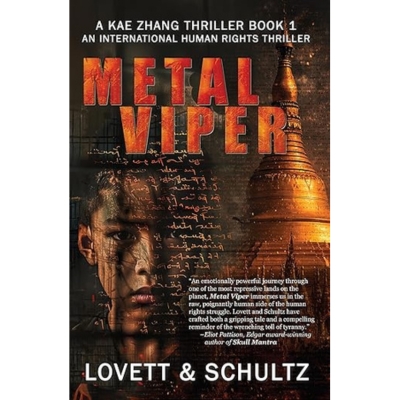
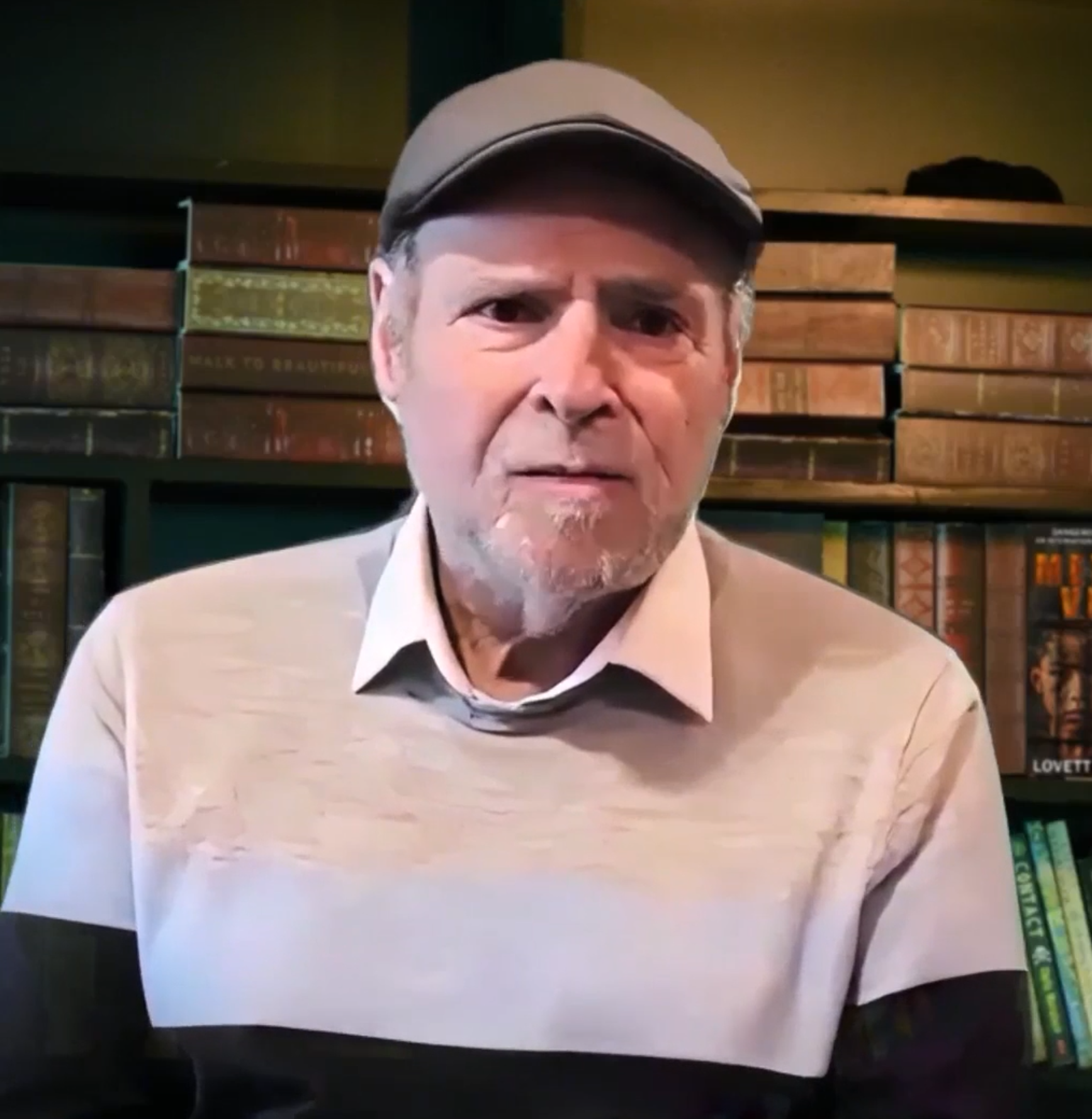

In this episode of Inside Personal Growth, Greg Voisen sits down with an extraordinary literary pairing: Ron Schultz, a pioneer in social innovation and Buddhist thought, and Sarah Lovett, an international bestselling author known for her gripping forensic thrillers. Together, they have forged a narrative that is as timely as it is terrifying.
Their collaborative debut, Metal Viper, is not just a high-octane thriller; it is a mirror held up to the harrowing realities of modern-day Myanmar. In a conversation that spans from the philosophy of non-violence to the gritty mechanics of a prison cell, Schultz and Lovett reveal how their two very different worlds collided to create a story that demands to be heard.
A Heartbreak in Yangon: The Seed of the Story
Every great thriller has a hook, but Metal Viper begins with a wound. The novel opens with the arrest of a 12-year-old boy named Vica, whose only “crime” was wrapping fresh bread in the pages of his father’s peace poetry. As soldiers crash through the windows in Yangon, the charge is “seditious poetry.”
During the interview, Ron Schultz shares that this heartbreaking scene was inspired by real-life accounts coming out of Myanmar following the 2021 coup. The reality on the ground is sobering: tens of thousands of political prisoners and thousands killed by the junta. For Ron and Sarah, the goal was to take these cold, hard statistics and give them a pulse. By centering the story on a child poet, they created an emotional anchor that forces the reader to confront the human cost of authoritarianism.
The Birth of a New Hero: Kae Zhang
At the center of the storm is the protagonist, Kae Zhang. Standing barely five feet tall but possessing the intellectual gravity of a giant, Kae is a Chinese-American leader who founded “Article 5″—an organization named after the UN Universal Declaration of Human Rights that prohibits torture.
Kae is a departure from the typical “action hero.” She doesn’t rely on brute force; her superpower is her intuition—what she calls her ability to “read people.” This trait is a direct reflection of Ron’s decades of work in social innovation and Sarah’s deep research into psychological thrillers. Kae represents a new kind of leadership: one that values empathy, cultural intelligence, and the unwavering pursuit of the rule of law, even in places where the law has been discarded.
Collaboration Across Disciplines
One of the most fascinating aspects of the podcast is the synergy between the two authors. How does a Buddhist practitioner and social entrepreneur team up with a writer who spent months inside the New Mexico state penitentiary researching organized crime?
Sarah Lovett discusses how her background in criminal justice and dance helped shape the “rhythm” of the book. For Sarah, writing a thriller is much like choreography—it requires a specific beat, a build-up of tension, and a release. Her experience interviewing offenders provided the “chilled vibe” needed for the scenes where Kae faces off against the “Metal Viper”—the book’s primary antagonist.
Conversely, Ron brought a sense of “magical realism” and complexity science to the table. He emphasizes that the world isn’t black and white. Even in the face of extreme evil, there is a human element that must be navigated. This philosophical depth ensures that Metal Viper isn’t just a “good guys vs. bad guys” story, but a complex look at the biases and systemic failures that allow oppression to flourish.
Article 5: A Mission Beyond the Page
The organization in the book, Article 5, is inspired by real-world social entrepreneurial groups that operate in the world’s most dangerous regions. These groups don’t carry weapons; they carry the UN Charter. They work with governments to replace torture with effective, law-based investigative tools.
Ron and Sarah reveal the immense risk involved in telling this story. Because Myanmar remains an active conflict zone, many of their sources and contributors had to remain anonymous to protect those still working on the ground. The authors have committed to donating a portion of the proceeds from Metal Viper to the organizations that inspired the book, ensuring that the fiction supports the real-world fight for justice.
The Power of Nature and Non-Ordinary Space
Perhaps the most unique element of the novel is its climax, which involves “non-ordinary space” and the forces of nature—specifically, elephants. Eschewing the traditional military rescue trope, the authors chose to resolve the conflict through elements of “magical realism” and shamanistic traditions native to Myanmar.
This choice reflects the authors’ belief that there are other ways to solve global problems besides force. By using nature as a catalyst for resolution, they provide a sense of hope and “harmony” that is often missing from the grim landscape of political thrillers.
Final Reflections: A Call to Action
As the interview draws to a close, Greg Voisen asks the authors what they hope listeners take away from this journey. Their answer is simple yet profound: Listen. Listen to your own voice, listen to the stories of those who are being silenced, and look at your own biases. Whether it is through supporting humanitarian efforts or simply choosing to engage with stories that broaden our worldview, we all have a role to play in the pursuit of justice.
Metal Viper is more than a book; it is a testament to the power of collaboration and the enduring strength of the human spirit.
Connect with Ron Schultz & Sarah Lovett
Our Guests, Ron Schultz & Sarah Lovett: ➥ Novel: Metal Viper (A Kae Zhang Thriller Book 1) ➥ Buy Now: a.co/d/0fYDkhAF
➥ Website: metalviper.com/
➡️ LinkedIn: www.linkedin.com/in/sarahlovett/
www.linkedin.com/in/ron-schultz-5965411/
➡️ Facebook: www.facebook.com/SarahLovettAuthor/
www.facebook.com/p/Ron-Schultz-Author-61562557695445/
➡️ Twitter / X: x.com/S_Lovett_writer
➡️ Instagram: www.instagram.com/ronschultz_author/
You may also refer to the transcripts below for the full transcription (not edited) of the interview.
[fusebox_transcript]











Leave a Reply