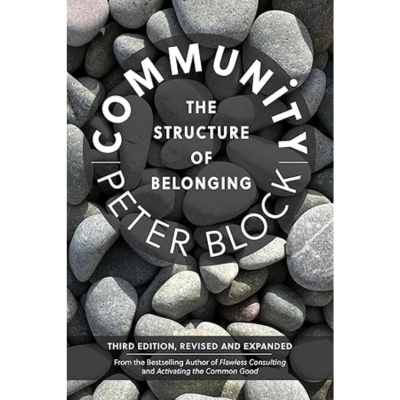

In this episode of Inside Personal Growth, Greg Voisen sits down with the legendary Peter Block—one of the most influential thinkers in organizational development and community building of the past half-century. In a world increasingly defined by digital isolation and a “colonial culture” that prioritizes speed over soul, Peter returns to the show to discuss the highly anticipated third edition of his seminal work, Community: The Structure of Belonging.
This conversation is a masterclass in shifting our collective narrative from fear and scarcity to possibility and generosity. If you have ever felt like a “wandering outsider” in your own workplace, neighborhood, or city, Peter Block offers the architectural blueprints to finally build a place where you truly belong.
The Crisis of Isolation in a Connected World
We live in a paradoxical era. We are more digitally “connected” than ever, yet the Surgeon General has declared a loneliness epidemic. Peter argues that while we have developed the vocabulary for belonging, our daily practices remain stuck in a “colonial” mindset. This mindset values consistency, control, and predictability above all else.
“The problem with community,” Peter jokes, “is that there are too many night meetings.” But the deeper issue is structural. Our systems—from city councils to corporate boardrooms—are designed to deliver services, not to produce care. To bridge this gap, we must move away from the “consumer” model of citizenship, where we wait for leaders to fix things, and toward an “associational” life where we reclaim our own agency.
The Power of Linguistic Transformation
One of the most profound takeaways from Peter’s work is the idea that all transformation is linguistic. A shift in how we speak and listen is the very essence of changing a culture. When we change the conversation, we change the room.
Peter identifies six specific “conversations” that have the power to materialize belonging:
-
Invitation: Shifting from mandates to a choice-based summons.
-
Possibility: Moving from problem-solving to dreaming of a future that has no relationship to the past.
-
Ownership: Asking, “What have I done to contribute to the very thing I complain about?”
-
Dissent: Creating space for “no” so that “yes” can be authentic.
-
Commitment: Making promises with no expectation of return.
-
Gifts: Focusing on the assets we bring rather than the deficiencies we need to fix.
By engaging in these dialogues, we stop treating bosses as the sole “cause” of outcomes and start seeing the relationship between citizens as the true engine of change.
Reclaiming Agency Through Inversions
Peter’s framework relies on “inversions”—concepts that are counterintuitive to the Western mind but essential for true growth. He posits that:
-
Citizens create leaders: A leader is only as effective as the space the citizens provide.
-
The audience creates the performance: The energy of the listeners dictates the quality of the speech.
-
Students create the teacher: Curiosity is the precursor to effective instruction.
These inversions take the pressure off the “heroic leader” and place the power back into the hands of the collective. It moves us from a state of helplessness to a state of agency.
Humanizing the Virtual and Professional Space
With the rise of remote work and Zoom fatigue, the challenge of building community has moved into the digital realm. Peter shares how we can humanize virtual spaces by breaking the “webinar” mold. Instead of passive listening, he suggests using small breakout groups and music to foster “side conversations” that mimic real-world connection.
In the professional world, Peter encourages leaders to stop looking at employees as “doing beings” and start seeing them as “being beings.” When we stop trying to “get” things out of people and start being curious about who they are, performance naturally follows. Curiosity, as Peter puts it, is the antidote to the misuse of imagination we call “worry.”
A Call to Action: The First Step
Building community doesn’t require a massive budget or a 10-year plan. It starts with a simple change in protocol. In your next meeting, try one of Peter’s “small structures”:
-
Start by asking, “Why was it important for you to be here today?”
-
Halfway through, ask, “Are you getting what you came for?”
-
End by acknowledging the gifts each person brought to the table.
These small shifts rearrange the social contract. They move us from a narrative of “What can I get?” to “What can we create?”
Connect with Peter Block:
Our Guest, Peter Block:
➥ Book: Community, Third Edition: The Structure of Belonging
➥ Buy Now: a.co/d/05kOGBYV
➡️ LinkedIn: www.linkedin.com/in/peter-block-238848a/
➡️ Facebook: www.facebook.com/AuthorPeterBlock/
You may also refer to the transcripts below for the full transcription (not edited) of the interview.
Well, welcome back to Inside Personal Growth for all of my listeners. Peter, they know me. But joining me from. You're in Cincinnati, Ohio, correct? Correct. That is Peter BLOCK. And you can see, Peter, there will be a link in the show notes below. It's Peter BLOCK. AECOM also designed learning. We'll put a link to that as well. Peter came to us by way of one of the publishing companies, Barrett Koehler, and he has been publishing books with them for some time and has a great reputation there.
Good morning to you, Peter. How are you doing?
Good. Thank you for inviting me into your world. I really appreciate it. I'm doing good.
00;00;53;11 - 00;01;30;10
Speaker 1
Well, I appreciate you. And I'm gonna let the guests know a little bit about you. They say is one of the most influential thinkers in organizational development. And I would say so after having had a pre-interview and looking at his website. All you have to do is look below in the show notes and it community building. As of the past half century, author of numerous bestselling books, a consultant with a global base, deeply committed citizen of Cincinnati, Peter Works, Centers of Empowerment, Stewardship, chosen accountability and Reconcile Creation of Communities.
00;01;30;10 - 00;02;00;23
Speaker 1
The founder of Design Learning. As I said, we'll put a link to that training company that offers workshops designed to build and build the collaborative and partnership skills outlined in his books. He's also the founder of Common Good Collective and is part of the Cincinnati Common Good Alliance, yields a master's degree in industrial administration from Yale. He is the recipient of the American Society of Training Development Award for Distinguished Contribution to Workplace Learning.
00;02;00;23 - 00;02;19;21
Speaker 1
He is like putting his hands up in his ears. He's like, Oh my God, I don't know if I can take much more of this, but we will get down to it because he's going to hold up a book that we're going to be talking about today. There it is. Community, The structure of belonging. Thank you for holding that up.
00;02;20;18 - 00;02;47;18
Speaker 1
I love it. And let's just let's just dive in, Peter, because this is an interesting book and it's one that I think many of our listeners who are linked in Connected would definitely be interested in. And I ask you this because you've been doing this community building work for years, what compelled you to write a third edition? Okay.
00;02;48;01 - 00;03;22;27
Speaker 1
And you mentioned that community building is and it says in the book an idea whose time has come. Well, maybe it's come and it's past and it's come again. But the reality is yet it still hasn't entered most of our daily lives. What is keeping it stuck and on the sidelines, in your estimation? Because it is such an imperative element of should be of building a society and a world where we're linked together and we're collaborating together.
00;03;23;29 - 00;04;02;14
Speaker 2
Thank you. You know, it's it's talked about a lot. Yeah, but it's not practice. What it's up against is a colonial culture that we are participants in where we kind of as a culture, we believe in speed, scale. We want to automate as much as we can. I mean, going on for 20 years. Yeah. And, and basically somebody once said that the problem with community is that too many night meetings.
00;04;02;14 - 00;04;04;06
Speaker 1
Repeat that again. Too many.
00;04;04;23 - 00;04;06;24
Speaker 2
There's too many meetings in the evening.
00;04;06;25 - 00;04;16;20
Speaker 1
Oh, meetings in the evening. I got it. I got it. Night meetings, meeting meaning meetings after work. And people don't really want to go. Okay, I get it.
00;04;16;29 - 00;04;48;18
Speaker 2
But we have the language now. You know, when I wrote the book, nobody was talking about belonging or isolation. You know, in England they have a minister of belonging. Minister of loneliness. So it's in the vernacular now. But our practice is still consistency, control and predictability. And so all of the protocols we have are, you know, Robert's Rules of Order is iconic in terms of how we gab.
00;04;49;17 - 00;05;19;01
Speaker 2
And let's get down to business. We don't have time for relationships. We treat relationships as important and peripheral. And let's let's do a retreat. Oh, yeah, We need to do team building and stab every day, connect with each other. We'll do it on occasion. But I think the the fact that the word belonging isolation is so much among us that the chance is greater than ever.
00;05;19;01 - 00;05;28;06
Speaker 2
And it's still hard because then you see it culturally that we have the structures for democracy, for example, but they're not working.
00;05;28;22 - 00;05;29;04
Speaker 1
Right.
00;05;30;01 - 00;05;42;08
Speaker 2
Now. Every every organization does. So we all we engage citizens. Well, they do a survey, and so we're trying to just live out the words of what community met.
00;05;43;07 - 00;06;06;25
Speaker 1
And, you know, I, I Larkin back to and I appreciate your that analysis of this, the isolation and as belonging in this world that we're living in with loneliness. The surgeon general said that Reagan it's and I agree with you I don't disagree I, I believe that's true. I remember a gentleman, an author who was on this show.
00;06;06;25 - 00;06;33;03
Speaker 1
I can't remember his name from your neck of the woods, I think Cincinnati, Cleveland area. And and I went to an event that he did at Levi-Strauss in San Francisco and he passed a talking stick. Right now I do a silent meditation retreat. So I'm used to this, but I he passed the talking. Stick with all of these executives in this room, me included there.
00;06;34;00 - 00;06;59;27
Speaker 1
And the deal was you couldn't talk unless you had the stick, right? That's like the native American traditions. And he built community in that room within, like literally, I'm going to say, half an hour, right? Didn't take long because and I'm going to say, one, it was unusual to our Western world for people to experience that, and they were really into it.
00;06;59;27 - 00;07;10;25
Speaker 1
It was like, Wow, that's really cool. So what do you think has to happen inside of these businesses for people to really get down to earth to want to know one another?
00;07;12;23 - 00;07;31;25
Speaker 2
Well, that's a great example because the structures, that's why I put structures in the title. Is there simple structures or protocols that that are a metaphor for something larger when he gave them a stick, he says everybody's voice in this room counts.
00;07;31;25 - 00;07;33;03
Speaker 1
Equally, right? Yeah.
00;07;33;22 - 00;08;16;26
Speaker 2
Well, thinks of a speaking stick and what all it takes is one person anywhere in the organization to decide that everybody's voice counts it. The last thing it needs is top management. Support is what what what a top management decides becomes experiences as a mandate. And people don't resist change. They resist coercion. And so my belief is that the that the the change, the departure from the traditional is available to all of us, whether it's in our neighborhood.
00;08;16;26 - 00;08;31;27
Speaker 2
Now, the structures we have are not designed for that city council meetings, board meetings. If you ever been to a board meeting, is our name OC is or highly structured, a board.
00;08;31;27 - 00;08;53;00
Speaker 1
I'm totally board at this board meeting and I do see that the Western culture though, look, I think I'm not saying this doesn't occur in other places. Look, you've been consulting in business. You have a book called Follett's Consulting. You get the fact that people have to get things done. Yet on the other time they're not taking the time.
00;08;53;12 - 00;09;23;03
Speaker 1
And you draw this sharp distinction between systems, which we're just talking about, that delivers services and associational life that produces care. If you would kind of walk the listeners right now, what's the difference look like in practice? And why do you believe somebody of your age who's done this for a gazillion years, why it matters so much?
00;09;23;03 - 00;09;36;13
Speaker 2
You know, the system people are in the room because they should be in and I've done many workshops and they're all sitting like this. This is the white male learning position.
00;09;37;24 - 00;09;40;25
Speaker 1
At because they had to be. They had to be.
00;09;41;04 - 00;10;08;09
Speaker 2
And I once asked a group in India, I said, How many of you are here by choice? How many were sent? And they raised their hands, not only raised but with great enthusiasm. And so we have the habit of mandate. And now our systems can change that any time they want. So we make a living from systems that want to realize that if we engage people, it affects outcomes.
00;10;09;05 - 00;10;39;22
Speaker 2
Too often, belonging and loneliness are treated as a human condition or human longing. But we know that if people are connected with each other, that group with a talking stick, when they decided to do something, they would be more committed to doing it than a three. Two or three people talked, power pointed any questions. So we have these these patriarchal protocols that we think are good for efficiency, but they don't work as well.
00;10;40;14 - 00;11;07;13
Speaker 2
The research says that if you engage people with each other, not with the boss, part of what I'm longing for is to stop treating the bosses If they are cause right, they matter. I need bosses. I need to know what fence we're working with that. And so I think that this is associational life. People, they're by choice. They're because they care about something.
00;11;07;13 - 00;11;09;21
Speaker 2
And if it doesn't go well, they're not back again.
00;11;10;16 - 00;11;11;13
Speaker 1
Their care and their.
00;11;11;13 - 00;11;14;08
Speaker 2
Work and social life because people have a choice.
00;11;14;29 - 00;11;38;29
Speaker 1
And I think you draw a good distinction. On the other hand, to when you run an organization with this kind of inclusion, with this kind of acceptance that you want to hear, it's amazing what happens to the profit and loss and balance sheet. So I think for all those are listening out there going, wow, well, there's no we don't have time for that.
00;11;38;29 - 00;12;05;17
Speaker 1
Well, if you took time, you'd find out that people would be, as you want to call it, more productive, more giving, more. They'd solve more problems. They would be a better asset for the company itself, the whole company. When you write in the book that all transformational is linguistic, that a shift in speaking and listening is the essence of transformation, I would agree.
00;12;06;02 - 00;12;39;16
Speaker 1
I mean, I think even using the little technique, as I mentioned to you in the pre-interview, I got a master's degree in spiritual psychology, and we used to say, Is this what I heard you say? Meaning repeating it back again, right? So that there was clarity in the communication. That's the linguistics that I'm calling that. But you said for people to hear that and think it sounds abstract, that meaning that it's all linguistic.
00;12;39;27 - 00;12;49;05
Speaker 1
Can you give us a concrete example of how changing a conversation actually changed a community.
00;12;49;05 - 00;13;20;25
Speaker 2
Or what does this do back on your outcome? It creates accountability. Okay, you right now we think we have to hold people accountable as if squeezing works. Okay. Okay. So we're talking about choosing accountability. And it's really saying what conversations? Take us somewhere. It's not abstract at all. So if you ask people in the start of a meeting what's on your mind or why was it important for you to be here today?
00;13;21;22 - 00;13;48;28
Speaker 2
I haven't talked to two people near them. The energy in that room changes. MM They're not there as consumers. Okay. HOST Boss, what do you got in mind for me? Contributors, users, contributors Yeah. And so it's that simple stuff. It takes 2 minutes. You know, if you stop halfway through a meeting and say you're getting what you came for, well in that question, no.
00;13;48;28 - 00;14;01;11
Speaker 2
Right. You are saying you have a part to play in producing this experience. Are you getting what you came for? Not am I giving you what you want, which was.
00;14;01;13 - 00;14;03;16
Speaker 1
Or am I giving you what I want.
00;14;03;28 - 00;14;05;27
Speaker 2
Or what? Either way.
00;14;05;27 - 00;14;06;10
Speaker 1
Yeah.
00;14;06;11 - 00;14;29;06
Speaker 2
Yeah, yeah. These are simple little structures that renegotiate a social contract between a leader and others and the essence of it. And this is where writing a book for the third time you finally figure out what you had in mind, is that people's relationship with each other is what produces agency and outcomes, not the relationship of the boss.
00;14;29;06 - 00;14;57;24
Speaker 2
The relationship of the boss creates order. I need bosses, not against bosses. They stopped seeing them as a source of outcomes. They just did that. I was the playing field. But promises Do we make a structure? I think a word. The stuff is so simple, but it goes. People choose control over performance. That's the mythology, is that we care about performance.
00;14;57;24 - 00;15;05;28
Speaker 2
If you care about performance, you start every meeting with a talk and you say Curiosity will take get us there fast, and then clarity and.
00;15;06;15 - 00;15;34;17
Speaker 1
I agree with you. And I think when it's interesting when I will go to the meditation retreats, which a couple of days are silent and six days how quickly community is built by holding these rights, this this essence, right. In other words, it's an energy that starts to happen and people start to feel a new vibration and a new interest in wanting to participate in it.
00;15;34;17 - 00;16;06;20
Speaker 1
You the concern of context is decisive. From Werner Air hired the old est guy plays a major role in your framework. How does someone actually go about shifting their context? In other words, moving from a narrative of fear and scarcity to one of possibility and generosity? Because they think sometimes I don't think I know when employees walk into that meeting, whatever it might be.
00;16;06;20 - 00;16;12;04
Speaker 1
I do sense the fear, the scarcity right.
00;16;12;16 - 00;16;12;26
Speaker 2
Around.
00;16;13;13 - 00;16;22;24
Speaker 1
Exactly. Because they're wondering what's going to happen, what's going to be thrown at them, not what are they going to give. Right. How do you shift that context.
00;16;23;11 - 00;16;52;26
Speaker 2
That Well, as a person, I shifted by seeing the existing story, narrative context, that I wasn't in. Once I see that, I go into these meetings with caution, fear, wondering what's going to happen to me if I see it. That gives me choice about reconstruction. MM It said, Oh, can I find the possibility of every person in this room?
00;16;53;12 - 00;17;26;17
Speaker 2
VOICE mattering as mean. It's going to happen. I mean I go and talk to everybody, but I could choose the narrative I live within. Like for me personally, I, I always thought I was an outside wandering Jew. I didn't belong anywhere. So you, you, you, you choose careers based on your own woundedness. Okay. Something happened to me, and this is an area and I decided I'm a citizen now.
00;17;27;07 - 00;17;59;06
Speaker 2
I play a part in this place instead of being a consultant, you know, and everything change. It's not that I did anything that useful, but my context for being here, allowing me to say I'm helping create this city. The the, the problem with fear is it produces autocracy, it produces control, it feeds control scarcity. And so part of there's a lot at stake here.
00;18;00;15 - 00;18;10;21
Speaker 2
But in organizations, you know, and it's not just business organizations. I used to strike me when I go into a church every the back fills up first.
00;18;10;26 - 00;18;11;06
Speaker 1
Yeah.
00;18;11;14 - 00;18;26;15
Speaker 2
If I hear, okay, so what's that about? And, and churches are and I'm about a lot of churches, synagogues are trying to shift the context area and trying to build audience again.
00;18;27;01 - 00;18;31;12
Speaker 1
Maybe it's that maybe it's that female rabbi that they're a little afraid of.
00;18;32;12 - 00;18;35;05
Speaker 2
Like they're going to have as a friend of mine.
00;18;35;14 - 00;19;07;12
Speaker 1
I know, I know they are. And that's the point. I mean, I'm Jewish and self-aware and there's dad, I get what you're talking about, where the room fills up from the back to the front. Oh, no, there's number of seats in the back. And it is again this. How do you want to say it? There's a there's much tradition which is steeped in much of these institutions, whether it's government or it's churches or it's educational institutions.
00;19;07;25 - 00;19;31;12
Speaker 1
And it's been hard for people to break. Now you have this idea of inversions that citizens create leaders, the artists, and creates the performance. The students create the teacher. It's provocative and counterintuitive. By the way, how do you see this context to help people reclaim their power?
00;19;31;12 - 00;19;37;04
Speaker 2
Exactly. What they do is they're reclaiming their agency. Agency use the word power.
00;19;37;16 - 00;19;40;10
Speaker 1
Okay, So agency is better. I agree.
00;19;40;10 - 00;20;07;13
Speaker 2
Okay. And we you decide that. But how do I bring that to what I'm doing right now? And people didn't come for that, but they're waiting for it. And I assume that that we're looking for people looking for us. I don't want to convert anybody. You will say, don't you want to work with top management, if I must, that I think we're waiting for it.
00;20;07;13 - 00;20;27;00
Speaker 2
And it's very so simple to do. All you have to do is rearrange the room. You know, I got invited a couple of times to give the sermon when the when the minister was going on vacation. Peter, would you talk to us on Sunday morning? And so here's a Jew in a Christian church. I think this is perfect.
00;20;27;28 - 00;20;57;14
Speaker 2
And I get up there, I said, What do you want from me? You know, I'm a little nervous. They said, I want you to be done by 5 minutes to 12. Okay? That's an expectation like in the bill. And then after talking 10 minutes, I said, Would you all stand up? Okay, Pews and everything was you find one or two other people in this room you don't know and tell them why it was important for you to be here this morning.
00;20;57;14 - 00;21;28;26
Speaker 2
You have 7 minutes and all of a sudden they stood up, walked around, found people in the energy in the room, changed. I had to say, come back, please come back. And so these little simple structures rearrange the social contract. You you don't say you're too passive. You don't say you're too afraid, you're too scarce. You just depart the scarcity and say, let's create a structure.
00;21;29;12 - 00;21;41;25
Speaker 2
And some people don't like it. They say, I don't. This is not what I came for. I know it's not what you came from. Period. Now break into small groups and the thing is, it works.
00;21;42;05 - 00;21;49;02
Speaker 1
But you work, done it 5 to 12 because they were having so much fun. It didn't end until 1:00.
00;21;50;16 - 00;22;12;29
Speaker 2
I would have been fired. I would see you. You live within the constraint of the moment. It's not like, Hey, what's happening, baby? Right. Okay, we're done. We have 15 minutes. I break people in the group since 18 six minute segments. We don't have enough time. And I say, I know you don't have enough time. Neither do I.
00;22;13;13 - 00;22;26;28
Speaker 2
You know, And it's just like we we can play with these structures once we make up our mind that that we want to replace direction with curiosity.
00;22;28;00 - 00;22;29;29
Speaker 1
Agreed. I think curiosity.
00;22;29;29 - 00;23;05;19
Speaker 2
Meditates. You have structures, you have a liturgy of meditation. I'm writing. I do yoga in the morning and we're running a workshop at University of Cincinnati called Yoga and the Common Good that we're trying to take the yoga principles and translate that into relational practice. And so when you go to meditation, you you focus on breathing. When you're with people, we place breathing with curiosity and not here to argue we're not divided.
00;23;05;19 - 00;23;25;17
Speaker 2
And when you say something strange to me, I say, Why does it matter to you? I don't respond with I agree or disagree. And it takes a couple of days, just like, you know, the first 3 hours of meditation. You what the hell am I doing here? My back hurts. But you know, you so there are practices. Yeah.
00;23;25;17 - 00;23;27;23
Speaker 2
So League of Community.
00;23;28;10 - 00;24;07;21
Speaker 1
You're reminding your reminding me, Peter, of, of I was sitting in George Leonard's living room, and he and Michael Murphy have founded Aslan, and George is just a beautiful man. And he says, Well, I would like for you to go to ITP with me. And I said, ITP, integrative, transformative practice. He said, So for all of you listening, go look that up, because it is truly mind bending to actually do an ITP session to get in this space through yoga, meditation and tai chi.
00;24;08;10 - 00;24;41;27
Speaker 1
All in one hour. Okay, actually about an hour and a half, but it's crazy. It's great. Now you identified six conversations that materialized belonging. You said in the book Invitation possibility, ownership to set commitment and gifts. So if a listener could only start with one who is out there right now in the business community, personal life, wherever, which would you recommend and why?
00;24;42;22 - 00;24;46;10
Speaker 2
Well, first of all, these are relational practices.
00;24;46;21 - 00;24;47;00
Speaker 1
Right?
00;24;47;12 - 00;25;12;29
Speaker 2
They conversations our whole world, including the yoga, is inward. And so we're trying to say let's do with each other what we learned how to do with ourselves. And I think the most is what's the crossroad you're at at this stage of your life? And these are conversational domains. You don't have to get the question right. There is no sequence.
00;25;13;20 - 00;25;33;25
Speaker 2
Any one conversation will take you wherever you want to go if you decide. And and so every time we do it, we say, What's the crossroads? You at this stage your life is that embodies in fact, I have a choice of my condition. When you consult with organizations, most people you talk to want to talk about their bosses or their bosses, boss or top manager.
00;25;35;04 - 00;25;58;16
Speaker 2
They have internalized the fact that somebody else has caused and I'm upset. And what you're doing is you're renegotiating that. You're inverting that. You mentioned the inversions. I was thrilled that you picked that up. Does a child really raise a parent? I don't know. But it's a useful concept that took me years before I decided I was interested in who my children were.
00;25;59;10 - 00;26;04;12
Speaker 2
The first decade I wanted to. I was interested what they what they would become.
00;26;04;12 - 00;26;05;00
Speaker 1
Oh, yeah.
00;26;05;21 - 00;26;25;19
Speaker 2
And so finally, after a while, I got curious. And so that's the that's the switch here. And any conversation with and the conversations in the I, they are not usual. For instance, the commitment conversation was the promise. I'm willing to make with no expectation of return.
00;26;27;03 - 00;26;56;08
Speaker 1
You know, it's you you bring up a memory for me, right. My mom died at 93, a little Jewish woman, four foot 11. And her conversation on the phone with me, always even into my fifties, was what did you do today? And it was so when you look at from generation to generation now, I have two sons in their forties and I'm just using this as an example.
00;26;57;04 - 00;27;22;13
Speaker 1
It takes me thinking to really break the pattern that my mother used to do with me, to not say to both of my boys, What did you do today versus how are you or how is your life or what is going on? And I think it's this it's like a pattern. Interrupt, Right. It's like you've got to have a pattern interrupt to get there.
00;27;24;04 - 00;27;31;28
Speaker 1
And I don't know what you feel about that, but that went on for a long time with me. Any comment on that silly little comment I made?
00;27;31;28 - 00;27;58;04
Speaker 2
Well, that's what I mean. That's you made a little linguistic switch. Or at some moment you discover that your children, your sons were not about doing right. All right. And it's so powerful because most of my friends, when I say, how are your kids, they tell me what they have accomplished. Right? Right. You know, even me. How's your kids?
00;27;58;04 - 00;28;03;14
Speaker 2
I say they're fine. They're vertical, drug free and not in jail. Well.
00;28;04;13 - 00;28;30;14
Speaker 1
I think I said this the other day to some executive who was on the show, and I said, I said, you need to look at your people not as doing beings, but as being beings. And he goes, Wow, I want to borrow that. And I said, Well, you borrow, you want it's not rocket science. The reality is most H.R. people, most CEOs don't look at the employees as being kids.
00;28;30;16 - 00;29;06;21
Speaker 1
They look at them as doing beings. Ahem. So I want to go to yeah, it is huge. The ownership conversation includes a powerful guilt question. Okay, what have I done to contribute to the very thing that I complain about? This takes real courage to answer honestly, to be honest with you. And I have a company I'm consulting right now, and the owner is Jewish, and I need to need to bring this question up because we've just gone through like literally four firings, right?
00;29;06;21 - 00;29;23;21
Speaker 1
Main people, top people, right. So a lot of shakeup going on. And he knows better, but he isn't in that mode. He's in this. He's shifted. How do you create a safe enough space for people to actually go there and and own that?
00;29;24;23 - 00;29;56;20
Speaker 2
You have to you have to there's got to be trust. You don't start with that. Hi. My name is Peter. And and so but the reason you do it is because as soon as he says we we we fired four people are hiring process isn't working. That's an expression of his helplessness. And what I'm trying to do is find a way around the feeling of helplessness.
00;29;56;20 - 00;30;24;29
Speaker 2
It's I don't care where you are, who you are, whether you're a neighbor or whether you're a CEO. And that question does it. And it treats you as you're a creator. Karabell And and there's two kinds of guilt. One is neurotic guilt, which is I'm sorry. I'm sorry. I shouldn't I should not know that. Not right. Existential guilt means that I'm accountable and responsible for my life.
00;30;25;07 - 00;30;49;18
Speaker 2
And I have to own that. But I'm not the effect of what my parents did. And part of our work is to help people reconstruct. And so when people talk about neighborhood councils or whatever, I say, well, and so you just ask the question, what's what's your part? Having created this, I'm innocent. I didn't create it. What kind of question is that?
00;30;50;17 - 00;31;01;24
Speaker 2
And I said, I understand, but karma, I contact. If you were creating the thing that you're concerned most about what form? Why the take.
00;31;01;28 - 00;31;02;13
Speaker 1
The.
00;31;03;26 - 00;31;20;23
Speaker 2
And you ask it three times. You know, with space in between and they really can't answer it. And that's their contribution to the problem they think their audience the scene a CEO or you know CEOs are beings as much as anybody else.
00;31;20;24 - 00;31;22;09
Speaker 1
Well yeah, yeah, yeah.
00;31;22;14 - 00;31;31;22
Speaker 2
And and it's hard. It's not where you want change. So change always starts upper middle, middle as the CEO has at least power to bring about change.
00;31;32;12 - 00;31;32;27
Speaker 1
Yes.
00;31;33;25 - 00;32;05;17
Speaker 2
As so. But that's a great question. Even if it doesn't get answered, it works on me. And that's the user conversation of domains is where create trust, he said. I'm not going to answer that question. I say set. Why tell me I don't trust you and a thank you. I understand that. And one of the questions in the process is also to say how any where you feel vulnerable as a part of us working together.
00;32;06;04 - 00;32;36;16
Speaker 1
So when you're shifting a CEO's perspective, his reality I can't tell you how many times you know, Marshall Goldsmith or Richard Barrett's been on this show. And and you look at consciousness. I mean, there's waves of discussions around the elevation of consciousness. You've got people, you know, if you look at Maslow's our hierarchy of needs, you know, you talked about fear, scarcity.
00;32;36;16 - 00;33;00;24
Speaker 1
You know, we're dealing with different vibrational levels of people in an organization, some that get it, but a lot of people that forget that they that's truly who they are. They are a higher vibrating being. They are I know this sounds a little ethereal, but it's really true. They can vibrate and at any level they want to on that.
00;33;01;04 - 00;33;27;16
Speaker 1
Now, while they might not be a Dalai Lama or Jesus Christ or whoever, they literally can be a great gift. And you have this gift conversation. You ask people to name the gifts they bring and what gifts they see in others. What happens in a room when people start doing this, and especially a people who've been marginalized or labeled by their deficiencies.
00;33;27;16 - 00;33;55;21
Speaker 1
Because CEOs are great at saying, you know, I have a I have a review after you here. Right. This guy ran any domains, Garry Ridge, WD 40. And you know, I said any dumb ass can do it And I and I agree with them. The reality is they're not finding people, as Ken Blanchard said, doing things right. They're always finding the faults.
00;33;56;10 - 00;34;30;01
Speaker 1
Right. But that's a default of the person because they have made all those mistakes themselves, selves. Right. And but they don't really realize it. So if you were a you came in a room like this under this question, I'm talking about the gifts. How do you get these people to shift from deficiency to their possibility? You know, I believe that not worry, worry, which is a lot of CEOs worry is the misuse of their imagination beautiful.
00;34;30;17 - 00;34;31;27
Speaker 1
Okay. And is.
00;34;31;27 - 00;34;34;04
Speaker 2
What what what shifts their.
00;34;34;13 - 00;34;41;09
Speaker 1
What? That's your question. You meaning you the CEO comes in the.
00;34;41;09 - 00;34;42;18
Speaker 2
Room you Greg.
00;34;42;18 - 00;34;43;28
Speaker 1
Oh. Me. Okay.
00;34;43;28 - 00;34;44;14
Speaker 2
Okay.
00;34;44;29 - 00;34;46;11
Speaker 1
Me Yeah.
00;34;46;22 - 00;34;47;05
Speaker 2
I it.
00;34;47;13 - 00;34;48;00
Speaker 1
Okay.
00;34;48;06 - 00;35;12;03
Speaker 2
That I have to realize that focusing on the individual in their consciousness, this doesn't take me anywhere. Now, this is just my inversion that when I don't talk to them about or try to heal them that way, maybe you do a little retreat. But I want to do this every day and you have to stop using the word get.
00;35;12;03 - 00;35;16;26
Speaker 2
How do you get them? Soon. As I say, get at. That means I have something in mind.
00;35;17;07 - 00;35;19;07
Speaker 1
That I got to get out of you about.
00;35;19;22 - 00;35;24;04
Speaker 2
At least. So I get I have to get off of that. Okay.
00;35;24;29 - 00;35;27;20
Speaker 1
Good. Linguistic catch. Good linguistic catch.
00;35;28;03 - 00;36;04;27
Speaker 2
Well, I'm just, you know, and. And then I want to work with conversations with between people now, with individuals and themselves. Now the individual work is healing, is loving, mostly coaching the growth industry, especially with psychiatrist where insurance stocks came, it is more healing. It doesn't change culture, it doesn't change the way people are together. And so you say, well, let's there's two people in the room conversation and what kind of courage can I get them?
00;36;04;27 - 00;36;36;28
Speaker 2
And that lives out the consciousness I'm looking for, without naming it, the request and the gifts conversation is amazing because we don't but we it's it's hard because it makes me accountable. If you say, Peter, you have a gift of translate have taken a theory of things and making them concrete. Well, if I let that in that moment I got I bet I guess I better do that.
00;36;36;28 - 00;37;05;05
Speaker 1
But well, actually they have. They possess that agency. You don't possess it you aside, what I'm hearing you say is we possess the agency to provide them the door to open up the possibility in their own mind to be able to create what they want to create in their life. Right. That's true. Personal growth, right? That that's the show is called Inside Personal Growth.
00;37;05;15 - 00;37;28;17
Speaker 1
And it is an inside job. All the mentors that have come before me, like Bob Anderson was saying, you were his mentor. I think it's when somebody gives you that accolade. On the other hand, that's all you ever, ever wanted from Bob was for him to become the most he could become, no matter how that happened in the relationship.
00;37;28;17 - 00;37;40;14
Speaker 2
I wanted to be a friend. Yeah. See, I'm still focused more on the connection people, right? Like I never did much individual coaching. I always.
00;37;40;14 - 00;37;41;21
Speaker 1
Wanted either.
00;37;42;05 - 00;37;56;14
Speaker 2
Ego advisory, three people in the room and then what we're doing is giving them a conversational pattern that shifts what you're talking about without having to name it or call it or have it in mind. People.
00;37;56;28 - 00;37;57;15
Speaker 1
I agree.
00;37;57;17 - 00;38;23;13
Speaker 2
The things we do in every meeting is to say, okay, you go to have this conversation. Don't be helpful. All right? Help means it's the colonial instinct. Oh, I know what's good for you. All right, stop that and be curious. Say, why is that matter to you? What is that costing you? Oh, what are you worried about? What are you vulnerable about?
00;38;25;19 - 00;38;58;27
Speaker 2
And those questions take us somewhere because you're trying to experience an alternative. And I do it through conversations. And I there's certain conversations that take us somewhere where people want to tell their story. I act interested, but I'm not because I know they it's a fiction. I made it up when I was seven, when I was 14. My mother, that's my boss, that all of those are constructions we make up that are waiting to be reconstructed.
00;38;59;23 - 00;39;12;06
Speaker 2
And the gifts conversation does do that, not what gifts are you what gift that I receive from you in this call. Glad we could do it right now. What gifts have we received from each other?
00;39;13;06 - 00;39;35;02
Speaker 1
I could tell you right now the gift I've received from this call has been remembering who I am. Right? I think what happens is we get going so fast. You know, you put a whole chapter in here about this virtual world. We talk about this. We got on. We started with loneliness and what's happening and the speed of things.
00;39;35;13 - 00;39;59;02
Speaker 1
New even asked me, Well, did you make up all these questions? I said, No, I can't, because I just don't have the time because of the demand on my time. So I think. What have you learned about creating genuine belonging and connection in online gatherings? Because look, this didn't start I mean, this whole thing we're doing right now was a result of COVID.
00;39;59;02 - 00;40;34;15
Speaker 1
The whole Zoom thing didn't exist. Yeah, there were a few of these online things, but they kind of failed miserably. Microsoft had one and Cisco had one. But when COVID came, everybody had one, right? And now online gathering. So what what are the pitfalls to watch out for? Because so much of what I do in my life, you know, like a regular basis is interview thought leaders over Zoom.
00;40;34;15 - 00;40;58;12
Speaker 2
Well, so let's talk about that. So how can we you know when we have groups, we start with music like we don't do webinars. Most things online are done when somebody is talking in a panel talks and then you put your questions in the chat. We don't do that we break people in the small groups, right, and ask them why was it important?
00;40;58;29 - 00;41;26;14
Speaker 2
Now what you and I can do is process what we're doing as we're doing this. It was missing in virtual worlds. We don't have side conversation. And so how do you bring the more informal conversation And so we can say, how are you getting what you want from me? Greg The what's changed is the notion of I'm a thought leader and I here to lead your thoughts.
00;41;26;14 - 00;41;31;18
Speaker 2
You know, save me from leading your thoughts out of my thoughts to be led.
00;41;31;29 - 00;41;33;27
Speaker 1
I like that my own thoughts plays.
00;41;34;28 - 00;41;55;09
Speaker 2
You're going to change my mind by who you are. What I said your give others conversations. It took you inward and and you make it personal by the way you speak to me. And in So how do we make the virtual personal and and not just fallen into the patterns of its efficiency.
00;41;57;19 - 00;42;26;20
Speaker 1
And I and I and I'm you're really a blessing because of the cadence that which you speak the time at which you give thought to the question and the cadence. Again at which you answer those questions. You know, I get authors that believe this is a race that every one of the questions I give them has to be answered.
00;42;26;20 - 00;42;54;12
Speaker 1
And I would like to say that that isn't true, because what listeners get out of these recordings is what they get, right? What they came to get, whether it's minute three or it's been at 27, doesn't matter. That brings me to me kind of in and I could beyond with you for a long time and we have another interview on what my listeners know we're going to do one on flawless consulting.
00;42;54;24 - 00;43;15;11
Speaker 1
Look below in the show notes because Peter and I, we hit it off very well. But look, for someone listening right now, kind of to wrap this community one out, but can you hold the book back up again, Peter, just so people have it? So what the other side we're going to put a link to Amazon in the show notes.
00;43;15;11 - 00;43;36;21
Speaker 1
Please go get a copy. And if you don't get a copy of it, just go to Peter Blackham and or go to Design Learning. We're going to put the link to that. And plus, by like we get a lot of LinkedIn listeners, these are people in business. We get a lot of people who are seekers. They're definitely seekers who are inspired.
00;43;37;08 - 00;43;55;16
Speaker 1
They might be inspired right now to build a community, but they don't know where to go actually. So what is the simplest, most immediate first step that someone listening could take? We understand you buy the book that will help you. But on the other hand, you can help yourself.
00;43;56;03 - 00;44;21;06
Speaker 2
What the book will do will let you know that you're not crazy. I research for affirmation. You talk about people wanting to cover everything. What's the point of covering? And if nobody's there, Right. You know, And so the first thing people can do is decide that they want to take one moment, one gathering and say, is there a conversation?
00;44;22;17 - 00;44;46;03
Speaker 2
And it's very simple. Halfway through, say you're getting what you came for. Start the meeting by saying, before we get to the agenda, something come A was what's on your mind coming in here? Okay. Two thirds of the way through the meeting. Ask people what's working for us. Here we are. After the meeting is over, we say, what can we do better?
00;44;46;04 - 00;45;17;14
Speaker 2
Stop that. It's too late. And so this simple. That's why I focus on the conversation, because the point is we're trying to help people trust each other, get connected for the sake of doing something together and doing something together is the intent. But if you just focus on content and not on connection, what you do is it drains energy instead of producing this.
00;45;17;18 - 00;46;00;02
Speaker 1
And I love the fact that that, you know, this book and your work is about connection. You know, I started a nonprofit, Compassionate communications foundation, and my work is about connecting with those that are underserved. So the homeless. Right. And I realized that, you know, that work fills my heart probably more than anything that I do. And the reality is, is that I think for people out there, if you're looking community wise, there's so many things in your community that need good.
00;46;00;26 - 00;46;05;16
Speaker 1
You call them people who are curious to look at it deep. Right?
00;46;06;01 - 00;46;07;10
Speaker 2
That you have to be careful.
00;46;07;24 - 00;46;08;05
Speaker 1
Yeah.
00;46;08;15 - 00;46;26;15
Speaker 2
Because you don't your CEOs are also are overserved, okay. They're worthy of our compassion also. And when I deal with like homeless people, I don't like that term. That's not who they are. Now.
00;46;26;26 - 00;46;27;17
Speaker 1
When I look.
00;46;27;17 - 00;46;27;28
Speaker 2
Around.
00;46;28;15 - 00;46;31;03
Speaker 1
What do you call them then? You're right.
00;46;31;03 - 00;46;52;03
Speaker 2
They're supposed to go and citizens. I asked them What are you good at? What have doing here? I don't look for more services now what you're giving them is your love, right? The fact that you're giving attention to them and caring for them is the point. But you can do that wherever you are.
00;46;52;16 - 00;47;30;04
Speaker 1
You know, and anywhere. In other words, you can do that in a boardroom. You can do that in a meeting, you can do it. And I think that's the point of this whole podcast, is that that essence, which you can drop into as an individual versus the one that's so much in a hurry that needs to get to the next, It needs to move on, take the time to listen to the homeless, take the time to listen to your employees, take the time to listen to your children right and truly hear them for what they're saying.
00;47;31;03 - 00;47;50;10
Speaker 1
And I and I think that's the connection point. In other words, everybody can do that, make that connection point. But your book brings out ways that people can take this further in their life. Let's put it that way. It'll awaken them to a possibility that maybe they haven't thought of.
00;47;50;17 - 00;47;57;22
Speaker 2
And it's also an act of reciprocity, what we call the homeless is who I call them, economically and socially isolated.
00;47;57;22 - 00;47;58;03
Speaker 1
Yeah.
00;47;58;15 - 00;48;12;01
Speaker 2
Yeah. As I call them isolated, that it takes me to help them get connected. And and so to me and in people's isolationism, which is what you're talking about.
00;48;12;13 - 00;48;13;03
Speaker 1
Agreed.
00;48;13;10 - 00;48;39;03
Speaker 2
And we do it with reciprocity and the challenge with the business is the habit runs so deep and we're so interested in truth, we commodify each other. So let's stop a little bit and and I ask and vulnerability is the pathway okay. The questions that are powerful are ones that allow us to be vulnerable with each other.
00;48;39;11 - 00;48;40;07
Speaker 1
Exactly.
00;48;40;10 - 00;48;45;18
Speaker 2
Exactly as we are. We before perform better and better.
00;48;46;17 - 00;48;47;08
Speaker 1
Well, Peter.
00;48;47;20 - 00;48;49;13
Speaker 2
Thank you for what you care about now.
00;48;49;27 - 00;49;11;12
Speaker 1
Not a mistake here. Thank you for being on Inside Personal growth. Thank you for sharing your time and speaking with us about the new book. All of my listeners, again, look in the show notes you'll have that you have the ability to listen to this on iTunes and Spotify and Audible and anywhere that you like to go to listen to it.
00;49;11;19 - 00;49;27;16
Speaker 1
If you want to watch it, it's always on YouTube. Please go up there and subscribe and Peter and I will be back on again to speak about another book that he wrote called Flawless Consulting. Peter. Blessings to you today. Thank you for your time. Thanks for being on the show.
00;49;28;04 - 00;49;34;01
Speaker 2
Thanks. Thank you for how you do this, Greg. It's beautiful. You bring humanity into this strange medium.
00;49;35;04 - 00;49;37;18
Speaker 1
Yeah, I've been doing it for a long time and.
00;49;37;18 - 00;49;42;13
Speaker 2
Oh, no, it's not. It's not because you've been doing it a long time. It's the way you do it.
00;49;42;18 - 00;49;49;19
Speaker 1
Oh, well, thank you for that. I appreciate that. I accept your. I accept your compliment. Thank you so much.
00;49;49;19 - 00;49;51;05
Speaker 2
My aggression. Sorry about.
00;49;51;13 - 00;49;52;17
Speaker 1
That's okay.
Sign up to receive email updates
Enter your name and email address below and I'll send you periodic updates about the podcast.











Leave a Reply