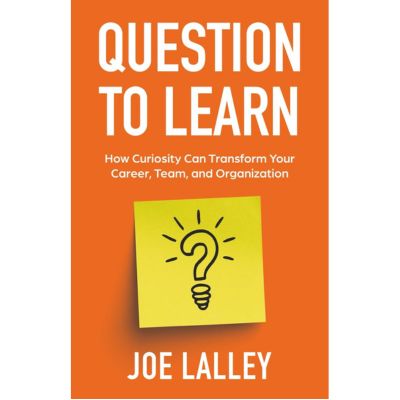
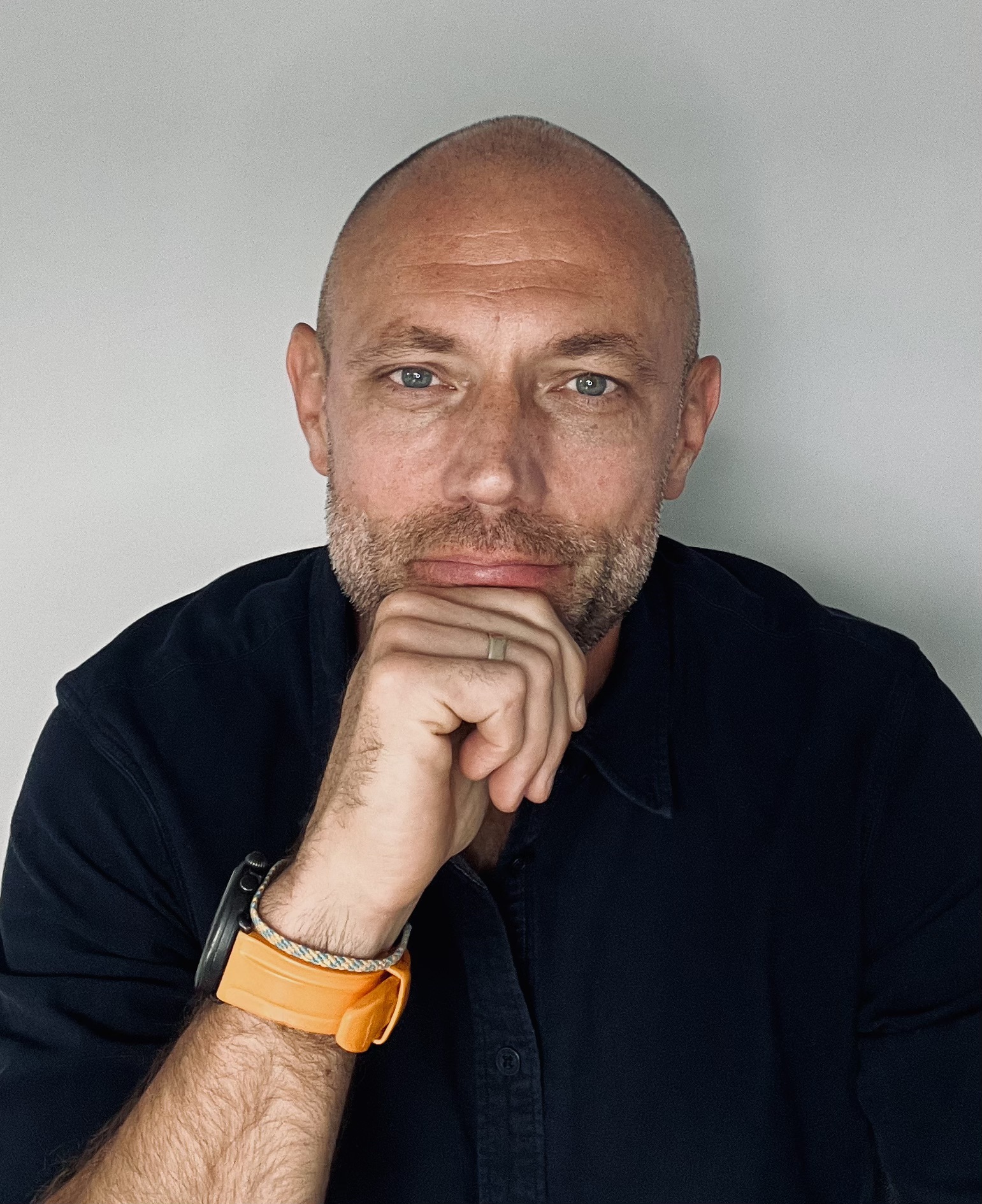
 In this podcast episode of Inside Personal Growth, host Greg Voisin sits down with Joe Lalley, author of the book Question to Learn: How Curiosity Can Transform Your Career, Team, and Organization, for a deep and timely conversation about curiosity, leadership, and the power of asking better questions.
At a time when workplaces are obsessed with speed, certainty, and instant answers, Joe offers a different perspective: real progress doesn’t come from rushing to solutions—it comes from slowing down just enough to truly understand the problem.
How Curiosity Gets Lost at Work
As children, curiosity comes naturally. We ask questions freely, without worrying about how we sound or whether we should already know the answer. But as Joe explains, that instinct gradually fades. School systems reward correct answers. Workplaces reward decisiveness. Over time, curiosity becomes something people suppress rather than practice.
In organizations, this often shows up as premature certainty. Teams jump to solutions before aligning on the real issue. Leaders unintentionally shut down exploration by signaling that answers matter more than questions. The result is familiar: wasted effort, repeated mistakes, and innovation that looks good on slides but fails in reality.
Questions to Learn vs. Questions to Judge
One of the central ideas Joe introduces is the distinction between questions to learn and questions disguised as judgment. The former are asked with genuine intent to understand. The latter are often used to test, trap, or reinforce authority.
Questions to learn create space. They invite multiple perspectives and reveal assumptions that would otherwise go unnoticed. When leaders model this kind of curiosity—especially by asking questions they don’t already know the answers to—it changes team dynamics. Conversations shift from defending ideas to exploring problems together.
Leadership, Ego, and Psychological Safety
A powerful theme in the conversation is how hierarchy affects curiosity. Joe describes moments many listeners will recognize: a room full of ideas and energy goes quiet the moment a senior leader walks in. Suddenly, people start guessing what the boss wants instead of thinking freely.
Joe argues that great leaders actively work against this dynamic. They lower ego, create psychological safety, and show that curiosity is valued—not punished. When leaders ask honest questions and listen without judgment, they signal that learning matters more than being right.
Design Thinking and Staying with the Problem
Drawing from his background in design thinking, Joe emphasizes empathy and iteration. Instead of brainstorming solutions right away, he encourages teams to spend time asking questions—sometimes exclusively. One technique he shares is “question-storming,” where teams generate only questions, not ideas, to deepen understanding before moving forward.
This approach may feel uncomfortable at first, especially for experienced professionals used to offering solutions. But the payoff is significant. Teams align faster, build less waste, and create outcomes that people actually use.
Curiosity in the Age of AI
The conversation also turns to AI and its growing role in work and decision-making. Joe is clear: AI is a powerful tool for speed and information, but it doesn’t replace human curiosity.
AI can summarize experiences—but it doesn’t have lived experience. It can suggest solutions—but it doesn’t care about the problem. When people outsource thinking too early, they risk outsourcing empathy and motivation as well.
Joe advocates for a problem-first mindset: use curiosity to deeply understand what’s wrong, then use tools like AI to support—not replace—that understanding.
A Book for Lifelong Learners
Joe’s book, Question to Learn, is intentionally story-driven. Rather than prescribing rigid frameworks, it shares real experiences from careers, teams, and organizations, inviting readers to draw their own insights.
It’s a book for people who feel stuck, rushed, or pressured to always have the right answer. And it’s a reminder that curiosity isn’t a soft skill—it’s a strategic advantage.
In a world moving faster every day, this podcast episode offers a simple but profound takeaway: staying curious may be the most future-proof skill we have.
Learn More About Our Guest
To explore more of Joe Lalley’s work, visit joelalley.com, connect with him on LinkedIn, or watch his insights on YouTube – Question to Learn
You may also refer to the transcripts below for the full transcription (not edited) of the interview.
[00:00.5]
Welcome to Inside Personal Growth podcast. Deep dive with us as we unlock the secrets to personal development, empowering you to thrive here. Growth isn't just a goal, it's a journey. Tune in, transform, and take your life to the next level by listening to just one of our podcasts.
[00:19.8]
Hi, this is Greg Voisen, the host of Inside Personal Growth. And Joe Lalley is on the other side of the screen joining us from New York. He was just telling me how darn cold it was. I don't want to tell him how darn warm it is where I am here in Encinitas, California, because he'd be like, okay, I'm getting on a plane.
[00:39.1]
I'm coming to San Diego. That's a lot better. Yeah. How are you doing today, Joe? I'm doing great. I'm indoors, so the cold's not affecting me here. Well, it's good to see you again. We did a pre interview about this book, which I got, by the way, listeners.
[00:56.6]
I don't think it comes with the little question marks in it when you get it from Amazon, but I'm sure that Joe could get you some of those or tell you where to go to get them if you needed them. But those question marks are pretty cool to actually do a bookmark with. And I'm really excited about having you on the show for a couple of reasons.
[01:16.1]
One, for a living, I ask questions. That's what I've been doing for 19 years. I've been doing it longer than that. But the reality is, 19 years for a podcast, probably the most important thing that our listeners can learn how to do effectively and also be curious.
[01:34.0]
So I'm going to let my listeners know a bit about you and they can go to your website. Which is just. I went. It's just jolo.com, right? L a l l e y dot com. So Joe's a writer, a speaker, workshop facilitator.
[01:51.2]
He's dedicated his career to helping organizations unlock transformative power of curiosity. Also the author of Questions to Learn, which I just held up. How curiosity can transform your career, team and organization. He explores how asking the right questions, particularly one powerful question, can drive innovation, break cycles of self doubt, and cultivate unfiltered curiosity in the workplace.
[02:17.8]
Joe's expertise in design thinking began at Stanford D School Design Thinking boot Camp in 2011, where it collaborated with executives from Google and Cisco to reimagine the passenger experience of JetBlue in San Francisco International Airport.
[02:35.3]
His experience shaped his approach in innovation and human Centered design. Throughout his career Joe has held leadership positions Columbia University, MTV and Viacom, WWE and Pricewaterhouse and has been his own consultancy.
[02:55.2]
So Joe Lally's experience design. His clients now include Meta Pfizer, Cisco Match Group, Tinder and On and on. Among others he's published articles on topics ranging from navigating remote work with curiosity to fixing insufficient, inefficient, meeting cultures.
[03:15.0]
And his insights on curiosity and leadership have been featured in numerous podcasts and business publications. He's a New Yorker and he was a marathon runner. Not in this weather. Joe draws parallels between endurance running and building sustainable businesses, bringing both analytical rigor and creative thinking to every challenge.
[03:36.8]
Well, it's a pleasure having you on Inside Personal Growth. Thanks for being here Joe. And as I said when we first started this book and for my listeners just go to the link below. There's a link, you'll have a link to Amazon and if you're listening via itunes or Spotify or any of those others and you want to get all of these great links, just go on over to YouTube channel and pick up those links because you get them there or go directly to Joe Lolly and I'm going to print and say it one more time la l l e y.com there you'll see his website.
[04:17.2]
There are ways you can reach him there and learn more about him. So do that. So you know the book central theme is really this true power of questions lies to motivate and to learn. Can you define what a question to learn is and contrast it to with common subtitles and judgment questions or, or critical disguises as curiosity.
[04:46.8]
And I think importantly here too Joe, because this is the first pop up question from me. I think people are going to want to know and put a preface this question with this. Why did you choose to write this book and why now?
[05:04.8]
And what is that you want people to walk away from after this 40 podcast? Yeah, so I chose to write this book. I thought about writing this book for five or six years. I just didn't know what it was yet.
[05:21.7]
I didn't know how to go about it. But I started to write articles about my thoughts on curiosity, innovation, how to ask why do we do these things and why do we do them this way and what assumptions are we making. So I started to publish articles about these topics on LinkedIn and Medium and mostly just to get them off my chest and figure out what I thought about them.
[05:44.6]
But I learned that a Lot of people, had experiences that were similar. A lot of these topics resonated with them. And, people would reach out on the side and say, you know, I experienced exactly that in a meeting today. So the more that happened, the more it gave me the courage to put all of it into a book.
[06:03.0]
I decided to write it now because I thought, why not now? You know, if I don't at some point make the decision to put all of this together into one product, when am I going to do it? I've been, as you mentioned, I've been facilitating workshops for all sorts of companies over the years.
[06:19.7]
I've been running my own business for five and I just felt ready, I felt like I had enough, enough to share, that it could fit into a book. You know, I hope people who read it, can maybe get unstuck, whether it's in their career or their team or even their organization.
[06:38.9]
Questions and curiosity can be that tool. I've found that. And this happened to me in different parts of my career. But also clients I work with have just sort of forgotten what it was like to not know, have forgotten, what it was like to be a beginner user or a beginner customer.
[06:57.0]
And they make assumptions about what people want and need. And that blocks innovation. You end up doing a lot of the same things over and over. You end up creating a culture that's more focused on solutions than understanding problems. And that can be really detrimental.
[07:13.1]
It can lead to a lot of just kind of repeats. So I hope people, you see this as a way to break that cycle. I also wrote this book very much as a narrative. So it's a lot of my career stories, stories of people who I interviewed, professionals at all levels.
[07:32.0]
Because I didn't want this to be a, you know, a how to book or that sort of style of a business book. I wanted it to be story based so people can draw their own conclusions, conclusions about how the story and the lessons can apply in their life and career. So I hope everybody finds something for them in it.
[07:49.5]
And so far I've gotten a lot of feedback that is indicating that is the case. Well, look, it's a topic which has been for years and years talked about and I think you do it, you did it, understand the why behind the problem.
[08:05.9]
Before, you know, that's it, you got to go deeper. And you argued. And I don't call it arguing, but that curiosity is an innate skill we had as kids, but it becomes dormant, degraded in the Working world?
[08:22.2]
I'd say so because for a lot of, you know, you look at the information age we're in today, we have access to just so much with AI and everything's out there and we can get an answer to something pretty quick. So we kind of lose a bit of that innovation.
[08:40.7]
I'm not saying we're not using our brains, I'm saying we're using them, but we're maybe not using them for that. So what are the key behaviors or environmental factors, that you see often kill curiosity in an organization or in a team?
[08:58.7]
And I'm not going to be offended if you say, hey, I think maybe AI kills a bit of that curiosity. I think it's a really useful alternative, but also a great compliment. So as you mentioned, we all had this innate skill as kids.
[09:16.4]
Kids will ask why five times a five year old is not feeling self conscious about not knowing something. They just want to know it. So, you know, we all had this, kind of unfiltered curiosity. It tends to erode a little bit in kind of teenage years.
[09:31.7]
Self consciousness develops, you know, I don't want to look dumb. And then a lot of things change when you enter the working world. And I talked a lot about my experiences. So there, there are some situations where maybe a more junior employee feels like it's not my place to be asking questions.
[09:49.7]
I'm going to defer to the experts in the room, defer to the more senior people. And there are people who may have just started their career who probably have really interesting ideas. They also have this huge advantage of not knowing what everyone else knows so they can think of things differently.
[10:06.2]
But a lot of times in organizations, and this was my experience, though, you know, that feeling that you can throw out a wild question that you don't know the answer to, gets suppressed. So you know, that's one thing that I see happening in organizations. Well, you also said, and I'm going to throw this in here because it's a, compound question, that when the senior person enters the room, seniority enters the room, it's like this curiosity gets suppressed frequently.
[10:42.2]
And I think that sometimes happens even when we're going through school. Right? We're, we're conditioned through school, university. Oh yeah, this person knows it all. We're just supposed to take it in, regurgitate it back again and you know, get an A.
[10:59.8]
Right. Hopefully we'll do that. They're the expert. Yeah, right. Versus group think. You know, today we're seeing more cohort groups and campuses. We're seeing this kind of group problem solving.
[11:15.4]
We're saying, hey, you know, let's do this together, because we can do it better together than as one. This is really what you do, isn't it? Yeah. Yeah. And exactly what you described I see over and over and over.
[11:31.0]
I've watched or been in meetings where maybe the team is, looking at things in different ways, throwing out different ideas, asking really good questions. The boss walks in and all of that just comes to a grinding halt because, well, the boss has it, you know, whatever the boss wants. We're going to sort of try to read the boss's mind.
[11:49.0]
So, you know, it can be stopped by a leader. A leader can change that. A leader can create a different kind of culture. If a leader is asking questions they don't know the answers to and doing it in a genuine way, not as a trap, you know, not to maybe show off their own knowledge.
[12:06.4]
If they're truly asking things that they don't know the answers to, it changes the culture and then it becomes an, you know, an us versus the problem versus the boss versus the, the employees. So, you know, a lot of it is leaders modeling the behavior.
[12:21.9]
Hopefully they want. I would think so. I mean, you'd want that, you'd want a culture. I, you know, just recently, we had the guy who started the Zappos innovation on with his book and, you know, obviously the owners passed away, but the Zappos kind of mindset about having fun at work and being curious and open, finding solutions.
[12:49.9]
It became a big thing for people wanting to shift their cultures, to have some of this in it, this playfulness, this curiosity, this, whatever. And Richard, wrote a book about that called the Blueprint Culture because he was in charge of it.
[13:06.1]
Now you discussed in your book this danger of solutions in search of problems like the new Coke blunder, in a business culture obsessed with being decisive, that tactical steps can, lead to enforce kind of a slowdown, to truly understand the problem before jumping to the solution.
[13:28.7]
What would Joe's theory kind of be here? Because this happens a lot. Oh, yeah, Yeah. A shiny new technology comes out, a, product that maybe a leader is excited about. These things become many times solutions in search of problems.
[13:47.2]
Let's go build this thing because we can, let's make it the most exciting thing that we can make. Looks great in presentations, looks great in marketing, and then try to back our way into a problem that people maybe have and in many cases, maybe the problem's a little bit different.
[14:03.6]
So what I try to help companies do and help leaders do is just put that on pause a little bit. So, you know, be curious a little bit longer. There's the, I think Walt Whitman quote, be curious, not judgmental. I think that really applies to business and products and solutions and services where really early on, if you decide, if you judge a solution to be the solution, then you've lost your opportunity to be curious.
[14:28.9]
But if you can remain curious a little bit longer, maybe you can find out exactly what that problem is and if that solution does solve it. And how, and just be. How do you, how do you get the finance guys above who manage the budgets in the innovation departments to tell people this isn't about speed to, you know, a speed to market?
[14:51.2]
Right. In other words, hey, we gotta hurry up and move this along? It's one thing for project management, it's another thing for product management. Product development, right? So it's like you're saying, first understand why you're creating this product to solve this problem.
[15:11.0]
And then you've got people along the way who were, I think, pushing it. So what would you tell those people that are kind of pushing for the release going, oh, we got to get version 10 done, because if we don't get done, we got all this demand or we got to get this widget done.
[15:27.4]
You know, I just, I use an example, I adopted a thing that I, that I love called Whisper Flow. And the guy wrote an email to everybody saying, hey, we're gonna. I was in a trial and he goes, oh, we just raised, 81 million, so we're going to give it to you at half the price we were going to ask for it.
[15:48.3]
Right. I, I don't know if that's a normal strategy, but the reality was it was enough of an incentive for me to buy it. And I really like it. Right. So I always look at that and I'm going like, where is this whole finance money situation driving, decisions that ultimately might not be the best decision?
[16:11.6]
Yeah, I mean, I mean, I think there's hard data to look at for even, you know, the most serious and, you know, numbers driven finance person. There's a cost to building something that people don't need. There's a huge cost here. You know, there's, you know, there's.
[16:28.2]
And I've done projects like this. I've worked on an app years ago that took nine months to build. The only things we discussed were what we discussed in meetings with each other. You know, we, we presented to each other, you. And we launched it. And, you know, that's nine months of people's time, lots of other cost involved.
[16:47.7]
We launched the product and we found that people used about 15% of it. And no matter what that was the 15, they loved that 15%. And it had great usage, but the rest, it just was mostly ignored. And, you know, I think back to a project like that and the amount of money spent to build, you know, that other, you know, all the other features that people weren't using was huge.
[17:10.5]
So I think that's something that, people can look at if they're really looking for hard cost. You can look to projects like that. I think the other thing is a bit of a mindset shift around the act of making a decision. I think I've written about this, but decisions tend to hold so much weight there.
[17:29.1]
These big moments in time, we've got to make the right decision. And what I think is it's less about the decision, it's more about what you do after the decision. So if you are still paying attention to the results, if you're willing to maybe make a pivot based on what you're seeing, then you kind of lower the gravity of each decision.
[17:49.0]
And you probably make smaller decisions more frequently, because it really is about the time spent afterwards. I had a boss once who. This was one of the things that has always sticked out to me. He would change his mind a lot. So he would give a directive to the team. He'd say, focus on this thing.
[18:06.0]
And then he might tell us a different thing the next day. And it frustrated all of us, and we would, you know, leave the meetings, just kind of, you know, grumbling. And then one day he sensed this, and he said, I reserve the right to change my mind when I have new information available, you know, and it just always stuck out to me because he.
[18:22.3]
He didn't know what he knew yesterday. You know, he didn't. He didn't know that thing. And he was willing to make these smaller decisions and pivot. So I think it's, you know, there is hard data on the cost of fast tracking a solution, if it's not the right one.
[18:38.0]
But I think that mindset shift of reframing how you think of decisions can help a lot. How do you help inventors, innovators, access intuition, the Yoda, in the room, the Yoda in them to, help make decisions, to move forward.
[18:58.9]
Because, look, much of this is as much as we talk about the theoretical part of it, I remember interviewing Guy Kawasaki not that long ago about when he was with Steve Jobs, one of the first employees at Apple. And, Jobs used to say, to the people that were working there, you know, even though he was the one with the biggest ego.
[19:23.0]
Leave your ego at the door before we come in. Right. And ego gets in the way. The, it becomes the inability to access intuition, which is this. I'm just going to say it's this spiritual element of design and innovation.
[19:40.0]
I mean, when you talk about things that have been designed and built, there is this external spiritual world that sometimes we're getting buzz from that says, hey, this would be a good idea. I want to go for it.
[19:55.8]
So how do you help these people kind of get in that state, maintain that forward movement, and not be dissuaded by, you know, superiors and whatever to, you know, squash, some idea?
[20:13.8]
Yeah, a, couple of things. The, the leave your ego at the door. I've actually done an activity in workshops with leaders where I actually have them write their tit down on a post it note and then stick it on the outside of the door. You know, just that physical act of leave your title at the door.
[20:30.4]
It doesn't really matter here. And, you know, people many times will still know each other's titles, but that, you know, that, that ceremony helps. The thing that I think, you know, helps you tap into, you know, that Yoda moment or, you know, lowering the eagle is talking to customers.
[20:49.2]
The more, the closer you can get to a person who's actually experiencing what you're creating, the less your own ego comes into play. If you can hear a customer say, you know, this part of your product is really frustrating, and here's why. It, at first it may feel like, oh, you know, I thought it was really good, and now I'm offended by this.
[21:09.5]
But the more you can hear those kinds of things, and hear them directly, the more you can incorporate them into what you're building. The further away you get from customers and the more you feel like your opinion is the most important one. And it doesn't mean that experience and, you know, some level of expertise isn't important.
[21:30.6]
It's what you do with that. It's combining that curiosity, combining that empathy with some of the things you know and have done. Yeah. You know, I think that asking questions and this book is Question to Learn is obviously one of the best ways that we can, get More critical data.
[21:51.8]
Right. You said the best place to go is with your client. Ask the questions, get the data you need. You use an example of building an app that only 15% of the people ever used. And you talk about this and look, you describe question storming as generate only questions, not solutions.
[22:11.2]
Why is it so difficult for experienced professionals to hold back on solutions during the process? And what is the biggest benefit of resisting that urge? Because, you know, we've just talked about it. You don't want to draw to a conclusion too quickly.
[22:28.2]
You want to ask enough questions. You want to stay in this state of curiosity, Wonderment, I'll call it wonderment in awe, of what's being created before you think this is the best solution for everybody in the world. Yeah. Yeah.
[22:43.3]
Well, we've all been in brainstorming meetings and, you know, I used to get excited about a brainstorm. We'd go in, there was no real agenda. We'd all get to throw out ideas and get creative. The more I had them, the more ineffective I viewed them as.
[22:58.6]
So, a lot of brainstorming meetings would leave people excited and a couple of weeks later need another brainstorming meeting because we actually didn't do anything afterwards. And I think a lot of that can happen based on how a culture is described.
[23:14.2]
So if an organization says we're a solutions oriented team, or we're here to think big, or we're here not just to solve today's problems, but solve the problems of the future, there's nothing wrong with those things except that without curiosity and without thinking about the moment, it's hard to solve those future problems if you don't solve today's problems.
[23:36.2]
Question. Storming is something that I've used to help break this trend. So question storming is really simple. Instead of ideas, you have to come up with questions. But the trick is you have to start this activity in this meeting as a silent one.
[23:52.7]
So typically, I'll set a timer, a literal timer that's in front of the room, and I'll say, okay, here's the problem we're experiencing or we're trying to understand better. Write down all the questions you have about this problem. So I'll have them do it on sticky notes. If we're virtual, I'll use a virtual whiteboarding tool school.
[24:11.0]
And nobody's allowed to discuss or talk because once somebody starts, and this is what happens in most brainstorming sessions, once somebody starts to throw out an idea or maybe it's, you know, the loudest Voice in the room. You just get stuck on that idea and a bunch of other things just don't make it to the surface.
[24:27.1]
So that silent, silent portion allows everything to get out on the table. Then you can start to organize and see, well, are there some themes in our questions? And then based on some themes, you can narrow down and say, well, how might we find out more about this question?
[24:43.5]
So you're really staying in a curious mindset. And, once you've figured out, well, how might we find out more about this? Then you can start to answer just those questions. Okay, well, we'll go talk to our customer service department, or we'll identify this one person in sales who experience them.
[25:00.0]
So whatever it is, you can start to learn more about the problem before starting to think of solutions. And it'll just get you closer to an actual a, solution that's probably close to solving the problem as opposed to throwing out ideas kind of in a vacuum. The other thing I see is if you start with solutions in a brainstorming session, very often people in the room have a different interpretation of the problem, so it really may not be connected at all.
[25:27.6]
So lots of benefits to that silent and solo approach, as well as just focusing on questions. I really love that because, you know, when you do give yourself the time to investigate through another question, another question, another question, you get deeper to the core.
[25:46.2]
Problems that you're trying to solve. Right. Or, but not come to a solution, don't immediately want to jump, oh, yeah, this is the best solution. And go run off and try and design something. You've really thought it through. So you have this concept of design thinking, and it's kind of central to your work.
[26:03.4]
And you graduated with a degree. You went to Stanford. There's a whole department there that's got a design thinking school. And we talked about Bill Burnett, and I still owe you that introduction, by the way. How does the discipline practice of asking powerful questions integrate with core design thinking principles of empathy?
[26:27.1]
Yeah, this is an interesting one. Yeah, I mean, design thinking for me just opened up this whole new way of looking at product and service design. And it made me realize I wasn't really factoring the customer into my decisions at all. The two key themes in design thinking are empathy and iteration.
[26:47.0]
Empathy needs to. If it's true empathy, it has to involve interacting with the person who's experiencing whatever it is you're trying to improve. And that can be observational. You can watch people use a product, watch people make their way through a Store I got to watch people going through, an airport and security and those sorts of things.
[27:08.1]
So observation is really key because you start to see where the real problems are, where things are working well. And through design thinking I learned so many different question based techniques. Like how might we. Is a great tool for generating questions.
[27:25.1]
That is, it's collaborative, it's action based, it's shared ownership, you know, doesn't assume a solution. And these are, that's a big tool in design thinking. So being able to use a lot of tools to learn as much as you can about a problem just saves you so much time in the long run.
[27:43.0]
The other key component is iteration. So working in small increments with solutions. So based on maybe an initial understanding of a problem, coming up with a series of potential solutions, not holding on to any one of them too tightly, but building very lightweight early versions of them that you can put in front of somebody who might experience it and then you can get honest and immediate reactions from people.
[28:08.9]
Prototype. It's like the version one, version two, version three, version four, right? Yeah. An iterative kind of, hey, what's working here? What's not? Because you're actually testing the product, right? Yeah, exactly. Now what I, I really appreciate about your perspective is your marathon running.
[28:29.8]
And you talk about running a marathon and running a business. What are the questions you have to ask yourself at mile 20 that translate directly into navigating a major business crisis or career? And I'm going to, revert back to a book I wrote called Hacking the Gap, A Journey from Intuition to Innovation and Beyond.
[28:53.6]
And I wrote that back book in 2007. And one of the things I found when I did all this research through this product innovation cycle is that business owners, people, they kind of start to lose energy and spend, what do you want to call it?
[29:14.4]
They lose energy and they start to burn out. Okay. And then they'll either reconcile for something less and they'll say, well, I'm going to quit at mile 20 because I'm tired and I'm burnt out. They don't finish the race and they usually don't win.
[29:34.0]
Whether or not they win or not is, is not important. What's important is finishing the race and preserving your energy. So what would you tell people that are at this state? Mile 20? Yeah, fresh in my mind.
[29:50.8]
I just a couple of weeks ago completed the Philadelphia Marathon. Okay. So, and I reached, you know, mile 20, 21, 22. And the things that, that were going through my mind. So, one, and you start to feel pain.
[30:06.9]
Anybody who's run a marathon, you hit a point where things hurt, and then the only reason something stops hurting is because the new thing started hurting. That's got more of your attention, you know, so, you know, I. I hit that mark. And I had trained pretty well, and, you know, I actually enjoy the training.
[30:22.6]
I really liked to run, and I had a plan. I had a good idea for the paces. I wanted to run at different times, how I was going to kind of fuel my body, drink water, and, you know, electrolytes along the way. Around mile 20, 21, that plan had to.
[30:39.0]
It had to shift. I started cramping up. I was feeling a little bit more tired than I expected at that spot. I adjusted how I was approaching uphills and downhills. I adjusted how I was hydrating. But I still trusted myself.
[30:56.4]
I trusted the plan. And I trusted my ability to adapt. And I ended up finishing. I was really happy with the race. And it relates a lot to running a business. There's a lot of preparation you need to do. You have to go through, client engagements, you have to interact with customers.
[31:14.6]
You have to do a lot of things that help you gain the skills to pivot. And you do have to plan, you do have to make plans, but you have to really be able to deviate from those plans based on what you're seeing, because things do happen. You know, I talk a lot about improv and how, you know, improv is this really great training to make sure you're in the moment and paying attention to the cues, that might help you shift.
[31:38.2]
So, you know, running a marathon, really similar. You have to be listening to your body. Running a business, you have to be listening to yourself, to your customers, and, you know, trusting the process because, you know, you. You've. You've probably done the work, and you're probably more prepared for reacting to that situation than you think.
[31:57.6]
Yeah, I think it's a good analogy. I'll be honest with you. It's a good correlation. So, look, you encourage the readers of your book, and I'm going to hold the book back up again. Here you go, everybody. No bookmark included. You encourage the readers to use the five lenses to move past obvious answers.
[32:19.1]
Can you give us an example of how you applied a question from, unconventional lens. Right? Say, a beginner's mind reveals a better pathway forward. I remember having, Steven, Kotler on here, the guy that Wrote all the books about abundance and innovation and staying in the flow and, you know, just tons of stuff around flow, the flow genome project.
[32:45.5]
And he always said, if you wanted a different perspective. And I'll repeat this, some of my listeners may have heard this once or twice, but there, it can't be said enough to get the different perspective. He says, think about it. If you are in this field, you're probably only reading books. In that field, you're only probably only reading magazines.
[33:03.5]
So he said, if you're not a designer, why don't you go read a reader's, or a, Architectural Digest, or read something that's completely different than what you would normally read. Because we do fall into these ruts, right. And I like this unconventional lens as a beginner's mind.
[33:22.3]
So what would you tell people that are out there in that situation? Yeah, I think that's great advice. Just look in unexpected places, places you might not, because you probably will find inspiration for new ideas. There's a few things. So, there's this first day on the job mentality.
[33:41.5]
And I think I've. A boss told me once I had just started a job and, you know, he's asking me what I thought about certain things. And then he said, well, I know I've only got about three weeks left from you, so I'm going to get as much out of you as I can. And his point was, in three weeks I'll know too much and I won't have this kind of fresh perspective anymore.
[34:02.3]
So that first day on the job mentality, so critical. So if anybody's just hired somebody or has just been hired, you know, tap into that three weeks. The other thing is just the lenses that you ask questions through can force a little bit of that kind of, you know, alternative thinking.
[34:20.9]
So there are some tools from design thinking that you can use, you can use analogies. So the how might we tool is really helpful where, let's say you're trying to solve a, customer service problem. So if you use an analogy, how might we make this experience feel like going to a spa?
[34:40.3]
So customer service maybe for a software tool very different from a spa experience, but there are probably things that can help you think about ways to improve the experience that you never would have thought of. I, had a customer recently. They were building or rebuilding just a shopping cart flow.
[34:59.9]
Just a simple, Here's a product on my website. I need, I want to buy it, I want to put it in my cart, I want to pay for it all that kind of stuff. And I said, you know, go off and do some, some inspiration based research and don't look in the obvious places, don't look at competitors, don't look at what you've done.
[35:16.5]
Find other things. And one person started looking at games. They had some games that they were playing on their phone, and there was no shopping cart or anything. But the games had these kind of moments of delight. You know, you look great today or great job on that last round, or just little things that were in between the steps that made people excited to continue.
[35:37.8]
And that may be not a direct application in a shopping cart flow, but I bet there are some ways to make it a little bit more enjoyable, encourage people to keep going. So I think it's great advice. Read things outside of your industry or your profession, because there's inspiration in all sorts of places.
[35:56.9]
Well, that whole gamification kind of idea, I remember. Yeah. You know, in that industry, many people in the healthcare field started using gamification as a way to get people to want to take their metrics, their body metrics. Right. So play a game, do whatever it was, because it engaged people.
[36:16.3]
So there's a lot of psychology involved in that to get the ultimate result, which would be, complete immersion in the tool or whatever it is that I'm doing to try and measure all my elements of my health. And I thought that was an interesting one.
[36:33.0]
I worked with a company early on that did that. Now one of the things that we discussed just a tad bit about was this increasing reliant on AI to provide quick answers and kind of summarize information. What is the human superpower that questions and curiosity protect and elevate?
[36:57.1]
So in this particular situation, what would you recommend or advocate? Because many people are becoming reliant on that. All right. It's AI has become like, I wouldn't call it a crutch, but to a certain degree.
[37:14.4]
Yeah, maybe it is a crutch because it's getting things done quicker and they're being pressurized to do things quicker from management as a result of having this superpower next to them. Right?
[37:31.7]
Yeah, yeah, I've watched this play out over the last few years. So I've used AI in different workshops with different clients and at different moments as an inspiration tool. So what we were just discussing, it's really, really valuable.
[37:47.6]
You can say, go out and find me a bunch of examples that are not in this industry of how this thing has been done. And, it can do that really fast, then you can go through and really look at them yourself. And kind of use your curiosity. AI does not have lived experiences.
[38:06.9]
It can tell you about lots of existing experiences, but it can't tell. It can't tell you what its breakfast was like or wedding day or why they love someone or anything like that. It can tell you the reason someone else might. So humans have this superpower of lived experiences, and it allows them to tap into caring about solving problems.
[38:30.0]
So this is probably the main risk I see in how people are using AI is you're moving yourself further and further away from the problem because you're sort of outsourcing the research and outsourcing some of the summarization, which is okay.
[38:48.1]
But when you start to ask AI how to solve the problems, you're really kind of outsourcing your caring, your motivation to solve it. People projects are hard. It's hard to build big solutions. And the thing that keeps people going many times is that beginning understanding of what the problem was like for people and truly caring about solving it, and that can be lost.
[39:14.7]
You know, it's sort of, you know, like before we were talking about the boss walks into a room in a big spirited meeting, and people just kind of shut down. There's a huge risk in just kind of shutting off your curiosity. So, I think there's a huge opportunity to pair this, this caring about problems and this lived experience, the lived experiences that we have with the speed and access to information that AI provides.
[39:43.0]
So we're at a pivotal moment, I think, and I hope people retain their curiosity through this because it's a great opportunity. Well, as long as the human being is involved in the process, I think, yeah, will retain our curiosity.
[39:59.5]
When the machine completely takes over, that's a different story altogether, you know, because people are writing long workflows now and trying to automate every little piece or segment of it. And while that saves tremendous amount of time, I'm not saying that it always makes the customer experience that much better.
[40:18.9]
Right. And the other, I mean, the other thing is what I see a lot is in just people's daily lives or in organizations is trying to find places where you can use AI to be faster or be more efficient, which is solutions kind of in search of problems.
[40:37.0]
So let's use this tool wherever we can. If we reframe that just a little bit and said, let's find our problems, let's find things that aren't going well, focus first on that, and then you can bring in AI and think about, well, what parts of this might be useful in solving that problem.
[40:55.6]
So really taking a problem first approach, I, think that that is a great way to leverage the power of AI. You know, I heard a study or I heard an experiment. It's on another podcast where there was a law firm that handed a series of AI tools to their paralegals at the law firm.
[41:16.3]
And they, they split the groups in half. They said to one half, use this for all the things, all the tasks that can be more efficient, use this to be faster. The other group, they said, use this to do all the jobs you hate doing. And the usage for the second group was so much higher than the first group because the second group was going problem first, the first group was kind of going solution first.
[41:40.8]
So I think that's such a great example of just a really good way to use AI. Yeah. You know, and I think we've kind of, come to the conclusion here too, for our podcast. And I, I think the last question I'd like to ask you is, you know, beyond your professional career, kind of how has the journey into the art of questioning transformed personal relationships, or fundamental view of what it means to be a lifelong learner?
[42:15.3]
Because, you know, everybody who's going to read this book, you've got to be a lifelong learner to really understand. I mean, if you're going to be curious, if you're going to be inquisitive, if you're going to ask questions, if you're going to read, if you're going to research and fundamentally do all those things, you are defined as a lifelong learner.
[42:40.4]
Okay. And I don't think in today's world, with the speed at which technology is driving this, are you one with AI or are you utilizing, as we said, AI to assist you to be better at what it is that you do?
[43:03.2]
Right. And I think fundamentally our sidekick here, let's call it AI, can fundamentally make us so much better at, looking at things like we've maybe never looked at them before.
[43:19.3]
Yeah, yeah, yeah. And it can build relationships. It can actually make relationships stronger. Yeah, yeah. Well, a couple of parts of your question. So to the first part, just, just, you know, how have questions and this sort of commitment to curiosity made my personal relationships better.
[43:42.2]
So you can put me in front of a room of a thousand people on stage and I can give a talk. And I feel really comfortable in that setting. If you put me in, you know, a restaurant with five people at the table. I get really uncomfortable. I'm not great at, you know, those kind of small group interactions.
[43:58.8]
I'm good one on one, but I, I've always struggled with these kind of small groups. And since I have been focusing on the book and writing it, I've become a lot more question oriented. And if I don't know what to say to a group or to a person, I'll, I'll just start to ask questions.
[44:17.6]
And people say, oh, everyone loves to talk about themselves. I don't think it's really that. I think it's more people like it when someone is showing curiosity towards them. In many cases, nobody's ever asked them. So I think it's helped my personal relationships because a, I have something to say.
[44:36.4]
You know, but people, people respond positively to someone being curious about them. You know, and how it works with AI. I think it can, it just the, the speed at which you can gather information is just nothing like we've ever had before.
[44:53.7]
You know, I can be curious about a topic with my kids and we can do a bunch of research about it and we can find things out quickly and talk about them more. So I think tapping into that simple use case, and people say, oh, it's, you know, people are using it as just a more powerful search engine maybe, but I think, you know, it's accelerating something you were trying to do before.
[45:13.2]
It's not replacing it so well. But it's a large learning model. Right. And I think the challenge is, is the wrapper around the model to make it more efficient. It's one thing to say, well, there's a large learning model out there, that's gathering all this data and yes, it's acquiring it from all of us who are feeding it.
[45:32.9]
And the people that own these systems love this because they're getting our information fed that this system is there for free. Right? Well, actually we're paying them, every month to feed them more information and it becomes smarter and smarter and smarter.
[45:49.7]
Right? Yeah. So the point I think is not that it's so smart, but specific use case. So, you know, if you were to look at it and say, well, here's the, you know, the large learning model that we're using, whether it's Chad or it's, it's Claude or Gemini or whatever, the reality is is that the wrapper around it makes it very focused, makes your application better.
[46:15.7]
Writing that wrapper isn't just a workflow, it's more than just a workflow. So the Reality is, is that your book? This book will ask. It will help teams, ask great questions to learn how they could use these tools for the betterment of their company and the world at large.
[46:38.6]
And, Joe, I want to thank you for being on Inside Personal Growth and sharing your insights and your wisdoms. Obviously, people go to your website at Joe Lawley, L A L L E Y. There you can learn about workshops. You can contact Joe, if you want to get, him involved in a project, to work with you and your company to, lead, a workshop or a seminar.
[47:02.7]
He's there. Reach out to him, please. Just hit the contact button and reach out to Joe. Any final words, Joe? I'll, I'll go back to, the. The Walt Whitman quote that I guess was reinvigorated, by an episode in Ted Lasso, if anybody's a fan.
[47:19.9]
But, be curious, not judgmental. I think that simple line of advice, can go a long way. Be curious, not judgmental. I like that very much. Thank you for your words of wisdom and your inspiration today.
[47:36.6]
And, I love what you're doing, Joe. Keep it up. Keep people curious. Thanks so much. Take care. Thank you for listening to this podcast on Inside Personal Growth. We appreciate your support. And for more information about new podcasts, Please go to InsidePersonalGrowth.com or any of your favorite channels to listen to our podcast.
[47:59.8]
Thanks again and have a wonderful day.
Sign up to receive email updates
Enter your name and email address below and I'll send you periodic updates about the podcast.










Leave a Reply