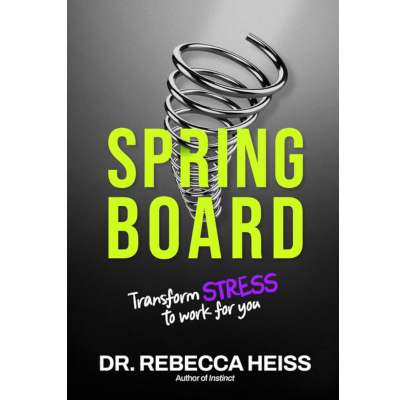
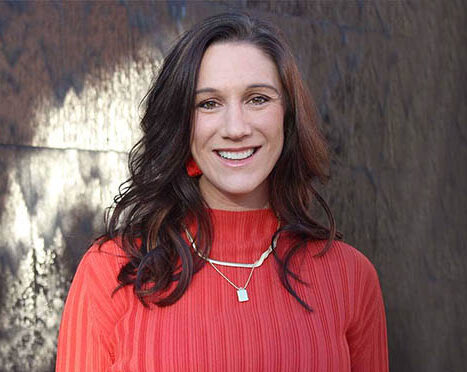
In this episode of Inside Personal Growth, Greg Voisen sits down with Dr. Rebecca Heiss, biologist, behavioral scientist, keynote speaker, and author of the powerful book Springboard: Transform Stress to Work for You. Known for her energizing presence and science-backed insights, Rebecca helps people rethink one of the most misunderstood forces in modern life: stress.
At a time when most of us are told to “calm down,” avoid discomfort, or reduce pressure, Rebecca offers a radically different — and deeply liberating — message. Stress isn’t the enemy. Our perception of stress is. And when we learn to channel that energy, it can become one of the greatest catalysts for courage, growth, and purposeful living.
To learn more about her work, you can visit her website at rebeccaheiss.com, or connect with her on
Facebook | Instagram | LinkedIn.
A Life-Changing Moment — And a New Understanding of Stress
Rebecca shares a powerful turning point from her own life: the day her sister called with devastating news about a loved one’s terminal diagnosis. That shock forced Rebecca to confront a profound question:
“If this were my diagnosis, would I be proud of the life I’ve lived?”
Her honest answer was no — she’d been living a life shaped by fear.
That realization was the catalyst for sweeping transformation. In one month, she quit her job, sold her house, and began rebuilding a life rooted not in fear, but in meaning, freedom, and authenticity.
This personal journey, combined with her background in neuroscience and evolutionary biology, led to the development of her signature process: the Fearless Stress Formula.
The Fearless Stress Formula: Tiger → Transfer → Trajectory
Rebecca explains that our stress system was built to respond to literal tigers — three minutes of life-or-death danger.
Today, our “tigers” look different: financial uncertainty, relationship struggles, career pressure, and constant busyness. But our bodies react the same way.
Her formula helps us reclaim control:
1. Tiger
Identify whether the stressor is truly life-threatening.
99.9% of the time… it isn’t. That alone can shift the narrative.
2. Transfer
Reframe the stress response as energy, fuel, and even excitement.
The same physiological signals that feel like anxiety can become momentum.
3. Trajectory
Take a small, actionable step forward — not away.
Action triggers dopamine, confidence, and a new neural pathway.
This is how fear becomes fuel.
Why Stress Isn’t Bad — But Our Beliefs Can Be
One of the most striking studies Rebecca discusses followed 30,000 people for eight years. The key finding?
People with high stress and the belief that stress is harmful had a 43% higher mortality rate.
But people with high stress and the belief that stress is helpful lived longer than anyone else — even those with low stress.
The science is clear:
Stress doesn’t kill us. Thinking stress is bad for us does.
Curiosity: The Antidote to Fear
Rebecca offers one of the simplest and most powerful psychological tools: curiosity.
Curiosity and fear cannot coexist in the brain.
When we shift from “I’m scared” to “I wonder…” the entire neurological pathway changes.
Instead of running from the “tiger,” we become explorers of our own experience.
Journaling: A Pathway for Emotional Release and Rewiring
Rebecca also highlights why journaling is especially effective: it moves emotions from the limbic system into the conscious, rational frontal lobe.
Even three minutes of free writing a day — attached to a habit like brushing your teeth — can create significant emotional shifts.
Journaling becomes a space where fear loses its power, stress becomes information, and clarity emerges.
From PTSD to PTG: The Untold Story of Trauma
While PTSD is widely understood, Rebecca emphasizes the equally important — and often overlooked — concept of Post-Traumatic Growth (PTG).
Up to 50% of people naturally experience growth after adversity, gaining:
-
Deeper purpose
-
Stronger relationships
-
Greater appreciation for life
-
Spiritual or existential clarity
Rebecca’s message is not to seek trauma, but to recognize the profound human capacity to rise meaningfully after challenge.
Why This Message Matters Now More Than Ever
We live in an era of constant uncertainty, rapid change, and unprecedented personal and societal pressure. Many feel helpless, overwhelmed, or disconnected from their purpose.
Rebecca reminds us that while we can’t control the world, we can control our response.
Small actions.
Reframed beliefs.
Curiosity over fear.
Agency over helplessness.
This is how we build resilience — not by eliminating stress, but by partnering with it.
A Book That Helps You Redefine Your Life
Rebecca’s book Springboard: Transform Stress to Work for You goes far beyond theory. It’s a hands-on guide filled with stories, tools, exercises, and even QR-coded videos that help you apply the principles to your daily life.
It’s a book for anyone who wants to stop surviving and start fully living.
You can also explore more of her work, programs, and resources at rebeccaheiss.com.
And be sure to connect with Dr. Heiss on social media:
➡️ Facebook
➡️ Instagram
➡️ LinkedIn
A Final Reflection: What Will You Do With Your One Wild and Precious Life?
Inspired by Mary Oliver’s iconic question, Rebecca closes the podcast by sharing her personal mantra:
“I will run toward the roar.”
For her, that means stepping into fear, embracing challenge, and using stress as a springboard toward courage and meaningful contribution.
For each of us, the invitation is the same:
How will you use your stress to build the life you truly want?
You may also refer to the transcripts below for the full transcription (not edited) of the interview.
[00:00.5]
Welcome to Inside Personal Growth Podcast. Deep dive with us as we unlock the secrets to personal development, empowering you to thrive here. Growth isn't just a goal, it's a journey. Tune in, transform, and take your life to the next level by listening to just one of our podcasts.
[00:19.9]
Well, welcome back to Inside Personal Growth. This is Greg Voisen. Rebecca, I always have to thank the listeners that always come back again and again, because without them, after all these 18 years, there'd be no reason to do a show.
[00:36.2]
And I really want to let them know. I appreciate it. And Dr. Rebecca Hess is joining us, and we're going to be speaking about a new book that she's authored called Springboard. She also has another one called Instinct.
[00:53.1]
And if you want to learn more about her, she's got a website. Rebecca R E B E C C A H E I S S dot com. That's the best place. She's also got a course we're gonna be talking about here in a few minutes, which has got a new price, and it's gonna be available for all of my listeners.
[01:14.1]
And so, Rebecca, good day to you. Well, thank you so much, Greg, and thank, you for all the listeners as well. I hope that I can add some value to your life today. I'm sure you can. With all your experience at this, you can. And I'm gonna let the listeners know a tad bit about you.
[01:33.5]
It's a pleasure, really, to have Rebecca on. We did a pre interview, which was just fantastic. A biologist, a behavioral scientist, and a keynote speaker whose work is really transforming the way we think about stress and fear.
[01:49.4]
She's, the author of an incredible new book called Springboard, which I just put up to the screen. Embrace stress, discover strength, and create a wild and precious life. In it, she challenges one of the biggest myths of modern living, that stress is something to eliminate.
[02:06.5]
Instead, she teaches us how to use it as energy, as fuel, and even as a source of meaning and joy. Drawing from our background in neuroscience and evolutionary biology, Rebecca helps us understand that the same psychological reactions we label as anxiety can actually become the very momentum that moves us forward.
[02:27.6]
She's developed what she calls, and we're going to be talking about this, the Fearless Stress Formula, a practical framework that helps us reframe fear, transfer its energy, and use it as a springboard toward greater fulfillment and resilience. I love this message, by the way, Rebecca, because it is so important.
[02:48.1]
She lives her life joyfully. When you see the videos of her, on, YouTube and all these other places, you'll see that, she's a great speaker. So anybody out there who's ever felt overwhelmed or caught in the loop of stress. Stress.
[03:03.5]
This conversation is going to give you a brand new perspective, and I invite all of you to stop fighting your stress and start using it to live, one wild and precious life. Rebecca, welcome again to the show. Thank you.
[03:18.8]
And let's start off this with, you know, you had a book prior to this Instinct and in Springboard. And usually I find with authors that there is a connection between the books that they write.
[03:35.1]
Okay. You tell a deep, personal story about realizing your perfect life wasn't, truly fulfilling. Okay. I'd like you to share the moment that made you decide to blow up your life, as you called it, and start over again.
[03:55.0]
Yeah, I mean, this was one of those moments where life just kind of pulled the rug out from underneath me. And I know we've all had these experience. For me, it was my sister calling me, saying that her wife of 20 years, somebody who had become like a second sister to me, had developed a brain tumor and was, likely going to die in the next year.
[04:14.6]
And, you know, it is in that moment of shock, I immediately went to. To my own mortality and was like, man, if that had been my diagnosis, would I be proud of the life that I'd lived? And the answer in that moment was no.
[04:31.1]
Because every decision I'd made up to that point, I'd made out of fear. And so that month, I quit my job, sold my house, and divorced my husband. And I am not suggesting that that is what everybody should go out and do. Right. But it was really important to me to begin to reestablish myself and rebuild a life that was not built on fear, but on something much greater than that.
[04:56.1]
Wow. That's, a major transformation in one month. Right? Sell your house, divorce your husband, and then move a few stressors in there. Yeah. Yeah. Well, you know, there's something about finitude. People can reflect on finitude.
[05:12.9]
You had that opportunity to do that pretty young. Sometimes that doesn't happen until people get a little bit older and they see friends around them passing away or something happens. Right. Happens to them. And being young as you are, and talking about that moment where you reflected on your finitude and you made this change and you move from running your life from fear, to having it be more meaningful, what would you say was the emotional reaction for you that got you to Go so deep to really do that.
[05:55.4]
Yeah. I mean, to your point of the reflection on finitude, it was, it was a need to honor the life that Kim, my sister's wife, had. Had lived and to recognize that a lot of people die in their 20s and aren't buried until they're a hundred.
[06:15.0]
Right. And I didn't want to be one of those people. I wanted to truly live. You know, Mary Oliver's poem that you've. You've quoted several times now, that's in my book. One of my favorite lines of all time is, what will you do with your one wild and precious life?
[06:31.7]
And that. That urgency of needing to live fully, I think, kind of hit me. And that was the, that was the emotion that really drove a lot of my research, a lot of my. My brave decisions. Well, you know, you speak about this all over the world, and you write that terror is fuel if you know how to use it.
[06:54.5]
Now, I, I don't know if I was looking as terror, but, what did the learning to use fear as fuel teach you about resilience and self trust? Ooh, that's so good.
[07:12.0]
I think the biggest learning there was recognizing that most of the time, the fears that we have are blown out of proportion. Right. We treat everything like a life and death situation. And sometimes, you know, those diagnoses are real.
[07:28.3]
But most of the time, our stress response is built for three minutes of screaming terror. Right. Being chased by a tiger, lion, or bear. Oh, My. And in reality, 99.999% of the time, it's not a tiger. And in recognizing that, in realizing that, that terror, that's actually something that can fuel you if you're not going to die in three minutes, that's energy that can be repurposed.
[07:55.3]
And when I leaned into that, I began to trust myself more. And rather than trying to avoid those circumstances, which I think many of us do, we try and push them aside or push them away or just avoid having the terror to begin with. I realized it was truly a privilege.
[08:11.3]
And the more I leaned into it, the more confident I became in building a new life that didn't lean away from that fear, but really were one where I was running toward the roar of that tiger. You know, I think, you know, when you look at the neural pathway and you're a neuroscientist, and you see that, you know, it's fear fight or flight, right?
[08:36.5]
And that is something that, in the modern world, now granted, these weren't. We are not facing tigers most of the time. And I saw the one with the, wizard of Oz video that you have in here, which reminded me of. Yeah, exactly.
[08:55.0]
You know, but, but even though we are not living in a world where, you know, we're out hunting for our food or we're out trying to do what we do, we don't live in those times. We aren't cavemen. The body still has this natural reaction to do that.
[09:13.6]
What would you tell listeners when they're confronted with this? To actually change those neural pathways so that they can better use that moment positively versus using it in a way that could harm them?
[09:31.8]
Yeah. So the very first thing I'll tell you is recognizing that this stress response that's built into us is not a bug, it's a feature. Right. We shouldn't be trying to squash it or to change it or to challenge it.
[09:47.4]
We should be using it. And so I'd walk people through my fearless formula, which is really this three step process. And the first process is identifying is it a tiger? And like I said, 99.9% of the time, the answer is no. Which means we get to repurpose this energy and realize that this is our body fueling us to perform.
[10:08.2]
And even saying that allows us to get into a new mindset where we recognize that we have the potential to be excited about what's happening rather than have only an ordeal about this stressor that's that we're facing. And when we reframe this energy as possibility and we open ourselves to it, we can begin this step of the trajectory, which is the small actionable step forward.
[10:34.5]
So again, rather than running away, rather than avoiding or fighting against that fight flight freeze. We're rewiring those, those small steps and taking the step into the fire, like running at that roar.
[10:50.9]
So you call it tiger transfer trajectory. Okay. And that is your formula. And it's very laid out very well, listeners in the book. So I would encourage you to do that even. There's some charts and there's all kinds of, QR codes for videos.
[11:09.6]
It makes it very exciting because you can kind of interact with the book. So good on you for doing that. But what, what would you, if, if you were. If somebody felt this way? Let's just say they're having financial problems, they're having problems in their life with their husband or their wife.
[11:29.3]
They're looking at that. And for many people, that erosion is daily. It's just a little bit at a time. It's a little bit More until it just becomes a point where they blow up. Right. And that's kind of what happened to you.
[11:45.0]
You saw this diagnosis of your sister's wife, but you immediately saw that finitude thing as this opportunity to click something clicked and you did all of this at once. Which probably isn't the average person.
[12:01.4]
Right. Or I don't recommend it. Or even the above average person. Because I think people associate pain with it. Okay. So immediately what happens is they don't want to address the pain.
[12:17.4]
So how would you tell them to use your formula to deal with those situations? Maybe in a much more effective way. Because I think stress, people have always said little bits of stress are dis ease.
[12:37.6]
Disease then manifests into dis ease meaning disease in the body. So can you address how people might look, relook or reframe or change their perspective about this small eat away so that they don't end up with cancer or heart disease or any of these other things because they're living a life in fear.
[13:01.0]
Ugh. There's so much to address there. I. We could spend the rest of the time talking about this. I think, you know, the first question I would ask is, where are you complicit in that stress? In other words, it's really easy to sit in what we think is safety because our brain believes that if we are not taking action, if we sit in and we sit back, we have control because we're not taking actions.
[13:27.9]
It's easy to measure the cost of our actions. Right. We might screw up, we might fail, we might be rejected, whatever those costs are. And we forget to measure the cost of our inaction. Like, what if we don't take that step? What if we don't take that risk? What if, well, those are often more costly and we're not, we're not seeing them as clearly.
[13:47.3]
And so I would ask you to get curious about your own complacency in creating the stress that you're feeling. So how are. So pardon me for interrupting, but, are. I get this, but I still think people have a hard time.
[14:05.1]
You're using the word cost. And it's more costly. So people associate that with money. But they don't oftentimes associate it with emotional well being. Sure. Okay, so the thing is, is the cost is most likely an emotional well being.
[14:25.9]
Right? Absolutely. That we're talking about like you saying, hey, in one month I moved. I divorced my husband. Well, you divorced him because you wanted to be in a more emotional, better state. Right. It maybe wasn't finding a whole new mate.
[14:41.2]
It was really just about you feeling good about yourself. That's correct, right? Yeah. Yeah, that's correct. And yeah, this is not monetarily costly. Right. This is, this is the cost of, of our own well being, our own health, our own one precious wild and precious life.
[14:58.5]
And, and so much of this, you know, comes back to mindset. And I want to, I want to set us up here a little bit, because one of the more powerful shifts for me in all of this research was a 2013 study where, 30,000Americans were studied over the course of eight years.
[15:15.0]
And the single question that they were asked that really made a difference was, do you believe that stress is bad for you? And people who had very high levels of stress, who believed that stress was bad for them had a 43% higher mortality rate than the rest of the study.
[15:31.8]
That's really scary, right? For a lot of us that are like, oh, yeah, I'm stressed and stress is bad for me. Yikes. So here's the good news. People who had that same very high level of stress, but simply believed that stress wasn't bad for them, that it was energy or that it might have some good properties.
[15:51.5]
Those people had the lowest mortality rates of the entire study. So lower, in fact, than people who had very little stress in their life. And what that means is that we're not dying from having high levels of stress. That's not the erosion piece. What is actually killing us is the belief that stress is bad for us.
[16:14.8]
And that's what I think is the most powerful, is recognizing it is the way we think about stress, not the stress itself that is causing all of this, tension and these, these issues. Interestingly, because I'm reflecting back on a time in my life when I used to get anxiety attacks.
[16:33.0]
And then I went and got biofeedback with the electrodes on my head. And I realized that meditation was one of those ways to help me cope with it. But what was manifesting through the stress? Because I was a highly productive, very, high achiever person.
[16:52.5]
And it was manifesting in these anxiety attacks to the point where it was debilitating, right? Just like, hey, because everything I did, I just, I felt so anxious, right? Not a good place to be. Not a good place for your body, but your body, your body.
[17:08.5]
And the, cortisol which is released into the body during these times is not good at all. And we know that. Right. Obviously you as a biologist or, well, you're going to say yes, no. But I'm waiting to hear this because most, most conventional philosophy is don't release these cortisols.
[17:34.6]
Because these cortisols have a negative effect. I really want to hear what you have to say. I disagree wholeheartedly there. And so does the research. So cortisol is not a good molecule. It's not a bad molecule. We, have diurnal cortisol patterns that literally, cortisol is the thing that wakes you up in the, in the morning.
[17:55.6]
You need cortisol to survive. It is the thing that says get out of bed and go seek some food. So it's not a bad molecule. It's getting released at different points in the day to help you stay motivated, to help you do the things. It's a, it's a motivation hormone more than anything.
[18:12.0]
And without it, we don't function well. So having, having a level of cortisol that is higher isn't necessarily bad bad. It is how we think about that and what that means. So let's say my heart is pounding. Right. You need a, But doesn't it make your heart pound more and make your body go into different states that you're not used to being in?
[18:34.7]
Sure. So let me ask. Excessive amounts of it. Yeah. So let me, let me ask you this, Greg. Do you exercise? Yes. All right. So is that, a good thing for you? It's a wonderful thing. I enjoy it the most. I agree. And you know what it's doing? Creating amounts of cortisol.
[18:51.2]
Yeah, it's creating massive amounts of cortisol. So this is the, this is the thing that I keep coming back to. It's not good, it's not bad. It's the interpretation and how we're utilizing that in our. But like, your heart is pounding, you're sweating, your mouth is drying up, you're exercising.
[19:08.0]
It's not, it's not a bad thing. Let's talk about oxytocin then, because I think we can get into some great conversation here. You know, oxytocin, serotonin. You know, I've actually had, friends.
[19:25.8]
I have one friend in particular, I'll point out his daughter was not. She was exercising crazy. But she wasn't releasing the serotonin. She was only 13 years old and she hung herself in the garage. Now she committed suicide. And so you were wondering, okay, here's a girl that was playing soccer.
[19:44.7]
She was doing every sport. She was doing everything. So mental health as we understand it and try and understand it. When they did an autopsy on her, she had the lowest levels of serotonin that they'd ever seen. So you're kind of wondering between the oxytocin, the serotonin, the cortisol, the different things we're talking about.
[20:06.3]
Tell me as a scientist and a doctor, how all this interplays and that stuff like that can happen. I wish that there was a simple answer to that. I wish that there was a simple answer. Here's what I'll say. The thing that I want to say to that particular scenario is, first of all, that's tragic and heartbreaking and it should never happen.
[20:27.6]
It just breaks my heart. And what we don't do well in this country in particular is help people get the help they need. And independent of whether your cortisol is high or low or your serotonin levels, this is a, this is a biological function.
[20:48.2]
If you had a broken arm, you go to the doctor, there's no stigma there. There's no, you get it casted, you get it fixed. And people's brains are sometimes broken. And that doesn't mean that they're bad or weird or they need, they need a, cast, they need some help to get those serotonin levels to the point where, you know, you can function better.
[21:09.3]
And unfortunately, you know, we're not treating mental health the way we need to. I, I concur totally. One of the, one of the anecdote or so one of your prescriptions, I should say, is your journaling method.
[21:25.4]
Now what makes this approach so effective compared to traditional stress management techniques? Because look, I journaled for years. I've stopped journaling. I did a lot of things that I used to do that I stopped and don't do on a regular basis anymore, including one of them being meditation, which I was always doing that.
[21:45.6]
And I think what's happening is it's a matter of what's important. Now I, when I journaled, I'm saying this to my listeners, I was able to get emotions out that I had never been able to do before.
[22:03.2]
And then frequently I would just take the papers and rip em up or put em in the fire. Cause it was stuff I didn't really, it was like, okay, I got it on paper now. Boom. Tell us about your journaling method and why is it, what can it do to help people with their stress?
[22:18.4]
Oh, Greg, I think first of all, thank you for your vulnerability. For your vulnerability. I think that is exactly why journaling is so powerful. So what's happening when we journal is we're moving from this limbic system. Right. This limbic system is where all of our emotions are created and where all emotions come from.
[22:37.4]
And it's not a rational portion of our brain. So when we journal, what we're doing is we're making our frontal lobe engage. And because you can't write without consciously engaging. And so you're consciously engaging with those emotions, allowing them to have space to be seen and heard and felt.
[22:57.7]
And it's a safe place because to your point, this is just me in the paper, and I get to decide if somebody sees this or if I just burn it. But it allows that escape. It's too often we're cramming those emotions down, we're pushing them aside. We're trying to avoid stress, and we know that always just comes back with a vengeance.
[23:16.3]
What's a quick start guide for people? Because I think people get stuck on this, Rebecca. It's not that they can't buy a journal. It's not they can't do it. It's like it's the last thing they think of doing, not the first. And I would like to encourage my listeners reconsider, what priority you put things in, because if anything's going to affect the stress in your life.
[23:44.0]
You talk about inviting the tiger in for tea. Yeah. You know, journaling is something that really is cathartic. It's extremely cathartic. I agree. So here's the quick start guide. Set a timer for three minutes.
[24:01.2]
Three minutes. That is like a very low bar. That is the time that you are just going to free. Journal whatever comes up, even if it's nothing. Like, nothing is coming up. And just keep writing whatever is happening in your brain. There's no right thing. There's no wrong thing. And allow yourself to just regurgitate onto the page for three minutes.
[24:19.8]
And here's what I'll say. Habits are really, malleable. And one of the best ways to start a new habit, like a journal is to attach it to a habit that you already have. So think right after I brush my teeth, I'm going to journal for three minutes or right before I turn out the light.
[24:36.5]
These are things that we always do. Every night I go to bed. Every night I go to bed. Before I go to bed, I brush my teeth. Good. So here's this front end point, and the end end point. And I'm going to put that journal right in between. And I'm going to set my timer 3 for 3 minutes and attach it to one of those other habits.
[24:53.6]
So that's the, that's the quick Start guide. And what that's going to allow you to do is to get those tigers out onto the page and realize they're not going to kill you. The other thing too is, I would say, one motivator too. That's a great one because you're giving the actual physical process of saying, making the time in it.
[25:11.2]
But, frequently people wait until the pain is so great. You know, it's like a lot of things as human beings. You know, it's like, okay, the stressor's gotten so great, you know, I need to do something about it now. We aren't somebody, we aren't a species that's horribly proactive.
[25:28.4]
That's true. We kind of wait. And you referenced this Yerkes Dodson curve on how our performance peak, at moderate stress. Why do you think the wellness industry, which I've spent a lot of time in, I helped create, an app for Mayo Clinic actually on wellness and, aces adverse childhood experiences.
[25:56.5]
Why do you think their obsession with calm is actually counterproductive? Now, you've talked a little bit about it, but you gotta realize there's a whole industry out there right now that is advocating more calmness.
[26:11.8]
There's even an app called Calm. I know, I know, I know. And look, you're this, other side of the coin person. I'm the, counterculture here. That's right. Yeah. Look, there's, there's nothing wrong. Look, I'm a fan of the, of the Calm app.
[26:29.1]
I think meditation is important. There's a time and a place for that. And here's the thing with the Yerk's Dotson curve. First of all, let's recognize that this was done almost a hundred years ago on rats, and the sample size was like five. So this is, this is really needing some update.
[26:44.9]
But the idea of the Yerkes Dotson curve is if you think of an upside down U, right, or a normal curve, small levels of stress are supposed to motivate you. And you get this like, nice peak performance. And then if you have too much stress, you start to crash. And I think there's a couple things wrong with this.
[27:01.9]
Beginning, with, look at any top performer Olympic athletes, they're breaking world records at the Olympics when the pressure and the stress is at its peak, not at like mid range. The other, the other thing about trying to calm down under stress is you can't do it.
[27:18.8]
First of all, Physiologically it's impossible. You can't just tell your adren, adrenal glands not to release adrenaline or slow your racing heart rate. That's, that's outside of your control. And the more we tell ourselves I have to calm down, I have to calm down, the more we actually freak out about it.
[27:34.9]
And we end up stressing out even more, trying to control our stress rather than shifting into this mindset that this is my body preparing me to perform, it's pumping my blood to my brain faster, delivering nutrients to fuel my fire here and to move into the stress to conquer it.
[27:53.7]
I would say you're absolutely right, in that when you see high performance athletes, you know, I've had Steven Kotler on here many times and people that have studied flow. And when you look at stress, I co wrote a book with a famous mountain climber, who puts himself in these very, very stressful situations, you know, like Everest three times and all the highest seven summits.
[28:22.6]
And you know, you're just in an area where you've got to perform at your highest, you know, all the time. There are some people that do well at that and there are others that don't do so well at that.
[28:38.7]
So let's switch this to organizational stress. You know, you talk about leaders and teams and use the research to create workplaces where stress, can fuel growth instead of burnout.
[28:55.9]
And I think that given all the stuff that's being advocated by the wellness industry and medical, I should say health insurance companies. Right. And you see the curve of productivity and turnover as a result of stress, you're kind of not, you're saying, hey, look folks, wake up.
[29:22.3]
You need to use that to be more productive. So speak with us because I've seen you speaking on video about this and you've got to be speaking to corporations and their teams and their people. And it's got to be, quite interesting.
[29:38.8]
Yeah, I mean, well, a lot of people have the attitude that, that you have, which is look, yeah, that's good for some people. But aren't most people suffering? And the answer is yes, because they don't have the right mindset. And it is so powerful to shift your mindset.
[29:55.2]
That's the thing that's driving all of this burnout. You know, so Carol Dweck has done so much, you know, stuff on growth, mindset. And I agree, growth mindset is where people have to be. But look, being in the personal growth space for as many years as I've had, I'D say it's a small fraction of people.
[30:16.7]
Sure. And, and that's, that's why I don't think I can shout this message loud enough, to as many people as I can. Because the, the ability to have this mindset shift around. Stress is not only a lifesaver, it also is the thing that's going to bring meaning and purpose to our lives.
[30:37.5]
So, you know, I started talking about burnout there. The reason we burn out is we don't connect. We fail to connect the dots between high levels of stress and stress being a barometer for how much we care. So if we are constantly running away from stress, we're going to miss our most meaningful, purposeful life.
[30:58.0]
That is what the research shows, that in order to live a meaningful, purposeful life, the highest correlate is past stressful events, current state of stress, and even future worry and anxiety. So this. So when people have struggles, I mean, look, it doesn't matter if it's, Elon Musk or it was Steve Jobs or it's Bill Gates or it's any of those people.
[31:22.9]
You know, you wrote a book prior to this called Instinct, and I wrote a book on intuition. And every time I've read about people that have made it, that are high achievers like that, they have said that their intuition was the best thing that guided them through the most struggling or stressful situations.
[31:44.0]
How do you, awaken inside people and make this an instinct to actually use more of their intuition and look at a higher source to guide them through this? Because, look, when you're,
[32:00.9]
the wife of your sister got this diagnosis, something triggered in you magically, but something even greater triggered in you. I would say to look at yourself and the world from a spiritual lens, from not a religious lens, but a spiritual lens, and to get in touch with a power that was much greater than.
[32:27.1]
And I'm surmising this, but this is what's happened to me then Rebecca. Because Rebecca couldn't do that. Probably alone. Yeah. So let's talk about this for a second, because there's a, there's a lot of research, around ptsd.
[32:46.1]
Right. We're all familiar with. You've heard of ptsd. Everybody's heard of ptsd. You know, post traumatic stress disorder. We've got a stressor, and then we have trauma as a result of it, and it's recurring. And that affects about 8% of the population. Okay. I, would argue it probably is undiagnosed in 99.9% of us because life is traumatic by its very nature.
[33:06.6]
We are experiencing traumas, big T traumas, little T traumas. We're going through it. But here's what I don't think we talk about enough. And that's PTG. Post traumatic growth. And this affects 50% of the, of the population.
[33:21.9]
Without them trying, this is, this is. Without any intervention, 50% of the population will experience post traumatic growth. And that's exactly what you're talking about, which is a connectedness feeling, some spiritual calling or a deepening of, purpose and meaning in life or greater community connectedness, or an experience of awe and wonder.
[33:43.5]
That post traumatic growth is really powerful. And unfortunately I don't think we talk enough about it. We're so concerned with avoiding trauma and avoiding these, what I would, would say are negative experiences. And look, if I could bring my sister's wife back, if I could bring Kim back, I'd do it in a heartbeat.
[34:01.5]
It's not something I'm, I want to have had happened. But that's the story. So what is the best story I can tell about it? What is within my control? And what's within my control is meaning making from that.
[34:17.6]
How can I make meaning as a result of that occurrence? It's so interesting what you say, because if people are going to take. You called it ptg. Ptg. It's one thing to be on the growth line and to learn from it.
[34:38.7]
And you're hoping that everybody's learning from it, right? That they're taking, they're on the learning line. Right. It's like, hey, we're on the learning line. You listen to your podcast, we want to hear people like Rebecca, we want to apply this to our lives. And you're saying, and I don't disagree with you, that when people have these struggles, they derive more meaning in their life.
[35:02.3]
They've worked through a divorce, they've worked through a financial hardship, they've worked through being, let, go at their work and losing their job. And they don't allow the depression from it to get them down.
[35:21.9]
Right. They don't allow that. So I'm interested in this one because I've always been such a curious person. I'm very curious. So how does curiosity help us transform fear into excitement?
[35:39.1]
And why can't curiosity and fear coexist? Because I'll just make a statement. You know, I've been a serial entrepreneur all my life. Every, I look at something and to me it's always an opportunity. I don't see it as anything other than that.
[35:56.5]
And so that side of me is great. Although on the other side, most people like me, who've been CEOs, executives, they're ADHD, they're all over the place.
[36:11.9]
They're like, bing, bing, bing, bing. And if there's anything that's happened in my life that ADHD has been a blessing and a curse. So what would you say about curiosity? Well, my famous line, which I think you just adopted.
[36:28.2]
Lovely. There it was. Curiosity and fear cannot coexist. And the reason for this is that for 200,000 plus years, nobody ever had a tiger charging them and went, You know, I wonder how fast it's coming or I wonder how many stripes it has, right?
[36:43.6]
Like, they died, they died. So as a result, there's literally no brain mechanism that can hold curiosity and fear in the same space. Because if we are in imminent danger, then we can't be curious, which is great. When we recognize it's not a tiger, we can then shift and go, oh, let me get curious.
[37:03.7]
And then it will take my body offline of this. I'm going to die. Stress response and start to start to transpose this energy into a new neural pathway that is going to allow me to seek a new step forward, maybe into the fear, rather than going, oh, gosh, what do I do?
[37:23.0]
And running from it. Right. It actually gives us a new perspective, I think, when you're using curiosity. You know, I frequently have said, when you run really fast because you're afraid, because you're, you're, you're flighting, right?
[37:39.7]
And a lot of people flight all day long every day, they're just running. They don't know what they're running from. But if I put a picture up in front of them, they wouldn't. They don't have the focus to actually see that it's even them until they move out in perspective and go, oh, that's me.
[37:56.3]
This is what I'm doing to myself. And for years they've been running. And they can't always tell you why they're running. But if you took the flight, flight, freeze. And you said, well, these people are flighting all the time. They're flighting every day from something, they're trying to run from something.
[38:14.4]
You don't know what they're running to though. Right? So, they don't. And they don't either. No, I don't. I guess. Yeah. Yeah. So you emphasize that the goal isn't to have less stress as we've said all along here, but to have control in the chaos now, we probably couldn't be living in a time right now where most people are finding more and more uncertainty.
[38:43.1]
We've got an administration which is creating tons of uncertainty. We've got, you know, and I won't go into all the political elements here, but the reality is our world is more uncertain in my 71 years on this planet than it ever has been.
[38:59.9]
Okay, I can't agree more. How, can we start to build the skill of looking at this and perceiving it differently so that we can live with this uncertainty without the stress and that we can have a gain from all this versus a minus?
[39:21.0]
Yeah, I think the first step is in recognizing that those stressors are actually outside of your control. The only control you have is here. And humans are so unique in that. You know, I think of tigers a lot.
[39:37.0]
Tigers go hunting and they fail 80% of the time. 80% of the time, they fail in their hunt. And you know what they do immediately after they take a nap? They don't beat themselves up and go, oh, my gosh, I'm such a terrible tiger. I can't believe. What are my friends gonna think?
[39:54.4]
Humans will create stories that actually create more stress, especially in uncertainty. Right. I have no control. Therefore, I'm gonna spin out in 17 different directions of how this might play out. Now that's anxiety talking.
[40:11.3]
And honestly, I don't think that's a problem until you start getting that more energy than the agency you have in the moment. And what I mean by that is we all feel by default.
[40:26.9]
Our, brain shuts down and says, you can't do anything about it. This idea of learned helplessness actually isn't learned. It's a misnomer. It's the default setting of your brain when it believes that, that there's. They. It has no control, about your future. Which, by the way, is true.
[40:43.4]
No matter what. I don't care what times you're living in. Anything can change at any moment in time. So when we recognize that and we can take ownership of taking small, tiny, tiny actions that we can take in hope of an outcome that gives our agency back to us.
[41:06.0]
It doesn't. It doesn't guarantee any outcome. It just provides agency that allows us to move forward every day. It's like tiny habits for behavioral change, you know, he's been on the show, and I remember it quite.
[41:23.8]
Is it very vivid as you were speaking? You know, we've got to make minor little adjustments. Because that's the way our brain works. And it will adopt the new behavior if we give it time.
[41:39.8]
Now this and, and action and action, people. Yeah, people wait for motivation. And what I want to scream to people right now, please, if you're listening, motivation comes from action. Action doesn't come from motivation. So when you take the action, you have a release of dopamine, you have a release of those.
[41:59.3]
Those motivating hormones, which means you're more likely to do the next thing. But if you're waiting for motivation, sorry, sister, it's not coming. That is absolutely true. It's like exercising. Sometimes you have to force yourself to go to the gym.
[42:15.8]
So, like, when we hang up here and I do one more call, that's exactly where I head. So the. So the reality is, and there are days where I am pushing myself to do that. It's not the thing that I feel like doing, but I know it's better for me. Right.
[42:30.8]
I think that's the key. So look, this is for all of my listeners, a wonderful book. But the other thing she's got is a masterclass. This masterclass for individuals you can get to at her website by going to the masterclass tab.
[42:48.9]
And there's going to be a special offer. When this airs, it will be $111. And I'd like to encourage all my listeners because, look, you read a book, you can do the QR codes, but there's nothing like having somebody like Rebecca to actually be there on video.
[43:06.7]
Even though it's asynchronistic, the reality is seeing, hearing her like you've heard this morning, talk about this, this is the best thing you can do. She's about ready to hold something I was gonna say. And, and here's what I'll. Here's the additional little sell. Selling point. It is asynchronous, but you had full access to me, which means that you can email me and I will respond to you, which is like, really access.
[43:30.5]
Yes, you have access to me. And it's one thing to listen to something. It's one thing to read something. It's another thing to actually do the work. So this is the workbook, and it is at least as long as the book itself, but it's applying it to your life.
[43:45.6]
How do you actually take action so that the changes do occur? And do they get the physical book for the 111 along with the book or. They do. So you're going to get all of that. Folks, I want to set that up. So let me ask you this final question.
[44:02.6]
Your book asks this powerful question, as you said earlier, inspired by Mary Oliver. What will you do with your one wild and precious life? Granted, my listeners have probably heard that question before But this time I want them to rejigger how they think about it.
[44:24.2]
What's your answer to that now? And what do you hope the readers, whether they take your course or not, but they buy your book, are going to take away from Springboard? You know, that question brings tears to my eyes.
[44:41.1]
And it is such a. It's such a visceral response that I have to that question. You know, my one wild and precious life is to run continuously at the roar. And, to me, what that means is finding new ways to push and to grow and to love bigger and find more joy, by helping others.
[45:05.1]
I think that is what I am called to do. I think it is terrifying for me to step into that role. And so the more terror I have, the more I feel like I may be onto something. So I am going to just keep showing up the best I can, in my life to serve and to continue to grow and push myself to be better.
[45:24.7]
And hopefully that sets an example for others. Well, Dr. Rebecca Heiss, you are an amazing young woman. And. What are you calling me? Young? Well, you look younger than I do over the screen, let's put it that way. I appreciate that I have a few more years on you, I'm sure.
[45:44.1]
But, this is a great book. You know, and I want people to, if you can, go buy this class, and this isn't, like, me promoting it, but I do believe that Rebecca's work and her energy behind this work is really what will help transform you because it really requires somebody to get excited, to release those oxytocin, to release that endorphin inside of you.
[46:15.7]
Once you get those released in your system, you can do almost anything. You can meet that tiger face on, and most of the time, you're gonna be allowed run him. That's right. That's it. But it's been a pleasure having you on, speaking about your new book, Springboard.
[46:35.5]
And Instinct is her other book. So when you're at Amazon, go look at that one. There'll definitely be a link between the two. Rebecca, thanks for your time. Namaste. Thanks for being here today. It's been wonderful having you on. Greg. It's truly been a privilege. Thank you.
[46:51.4]
Thank you for listening to this podcast on Inside Personal Growth. We appreciate your support. And for more information about new podcasts, please go to inside personal growth.com or any of your favorite channels to listen to our podcast. Thanks again and have a wonderful day.
Sign up to receive email updates
Enter your name and email address below and I'll send you periodic updates about the podcast.











Leave a Reply