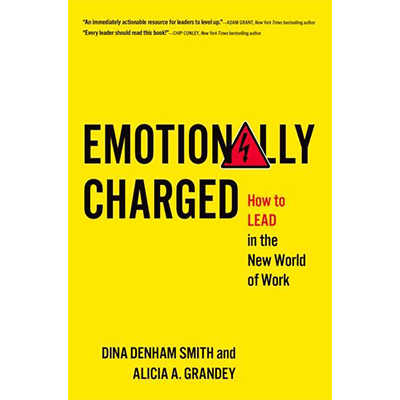
 In this episode of Inside Personal Growth, host Greg Voisen sits down with Dina Denham Smith to discuss her latest book, Emotionally Charged: How to Lead in the New World of Work. Leadership today demands much more than decision-making and strategy; it requires emotional intelligence, resilience, and the ability to navigate an increasingly complex workplace environment.
Dina, an executive coach and founder of Cognitas Coaching, has worked with top companies like Adobe, Netflix, and Dropbox, helping leaders harness their emotional strengths to improve team performance and well-being. In this conversation, she shares key insights from her book on how leaders can better manage emotions—both their own and those of their teams—to create a healthier and more productive work culture.
What Can Listeners Learn?
1. The Emotional Demands of Leadership
Leaders today are expected to inspire, mediate conflicts, boost morale, and manage uncertainty—all while keeping their own emotions in check. As Dina explains, emotions have historically been ignored or suppressed in leadership, but they are essential data points that provide valuable insights into decision-making and interpersonal dynamics.
2. Recognizing Emotional Triggers
One of the key takeaways from the podcast is the importance of self-awareness. Leaders often face emotionally charged situations, and recognizing their own triggers—whether it’s stress from time constraints, team conflicts, or high expectations—is the first step in managing their reactions. Dina offers practical strategies to respond rather than react, allowing leaders to remain composed and effective.
3. The BRAVE Framework for Emotional Regulation
Dina introduces a simple yet powerful framework to help leaders down-regulate intense emotions in the moment:
- Breathe – Deep, controlled breathing helps calm the nervous system.
- Recognize – Identify where emotions are showing up in your body.
- Accept – Acknowledge emotions without judgment.
- Verbalize – Label the emotion to reduce its intensity.
- Engage – Move forward with a clear and intentional response.
This method is particularly useful for handling difficult conversations, making high-stakes decisions, or managing stressful situations at work.
4. The Role of Gratitude and Perspective
A surprising yet powerful tool for managing workplace stress is gratitude. Dina explains that taking a moment to reflect on positive aspects—whether it’s a small win, a supportive colleague, or a learning experience—can shift your mindset and enhance resilience. Instead of focusing on worst-case scenarios, leaders can train their minds to visualize success and reframe challenges as opportunities.
5. Time Management and Avoiding ‘Hurry Sickness’
One of the biggest stressors in leadership today is time pressure. With increasing workloads and constant deadlines, leaders often feel overwhelmed. Dina shares insights on how to:
- Prioritize ruthlessly – Not everything needs immediate attention.
- Communicate effectively with upper management – Leaders need to manage up by setting realistic expectations.
- Learn to say no – Taking on too many responsibilities leads to burnout.
She also discusses the importance of creating time to think strategically, rather than constantly reacting to tasks and emails.
Final Thoughts
If there’s one key lesson from Dina’s insights, it’s this: Emotions are valuable data, not distractions. Leaders who learn to understand, regulate, and leverage their emotions will be better equipped to navigate uncertainty, build strong teams, and sustain their own well-being.
To dive deeper into these strategies, check out Emotionally Charged: How to Lead in the New World of Work, now available for pre-order on Amazon.
For more insights and resources, visit Dina Denham Smith’s website.
What are your biggest emotional challenges as a leader? Share your thoughts in the comments!
You may also refer to the transcripts below for the full transcription (not edited) of the interview.
[fusebox_transcript]











Leave a Reply