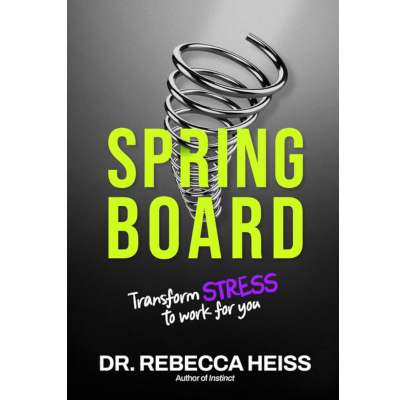
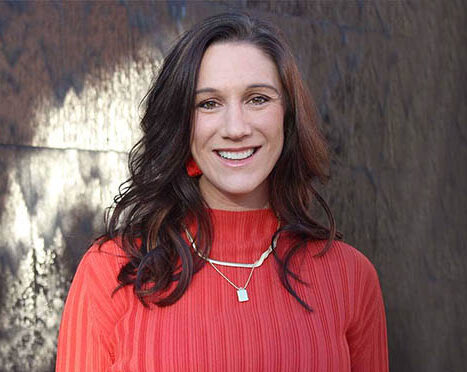
In this episode of Inside Personal Growth, Greg Voisen sits down with Dr. Rebecca Heiss, biologist, behavioral scientist, keynote speaker, and author of the powerful book Springboard: Transform Stress to Work for You. Known for her energizing presence and science-backed insights, Rebecca helps people rethink one of the most misunderstood forces in modern life: stress.
At a time when most of us are told to “calm down,” avoid discomfort, or reduce pressure, Rebecca offers a radically different — and deeply liberating — message. Stress isn’t the enemy. Our perception of stress is. And when we learn to channel that energy, it can become one of the greatest catalysts for courage, growth, and purposeful living.
To learn more about her work, you can visit her website at rebeccaheiss.com, or connect with her on
Facebook | Instagram | LinkedIn.
A Life-Changing Moment — And a New Understanding of Stress
Rebecca shares a powerful turning point from her own life: the day her sister called with devastating news about a loved one’s terminal diagnosis. That shock forced Rebecca to confront a profound question:
“If this were my diagnosis, would I be proud of the life I’ve lived?”
Her honest answer was no — she’d been living a life shaped by fear.
That realization was the catalyst for sweeping transformation. In one month, she quit her job, sold her house, and began rebuilding a life rooted not in fear, but in meaning, freedom, and authenticity.
This personal journey, combined with her background in neuroscience and evolutionary biology, led to the development of her signature process: the Fearless Stress Formula.
The Fearless Stress Formula: Tiger → Transfer → Trajectory
Rebecca explains that our stress system was built to respond to literal tigers — three minutes of life-or-death danger.
Today, our “tigers” look different: financial uncertainty, relationship struggles, career pressure, and constant busyness. But our bodies react the same way.
Her formula helps us reclaim control:
1. Tiger
Identify whether the stressor is truly life-threatening.
99.9% of the time… it isn’t. That alone can shift the narrative.
2. Transfer
Reframe the stress response as energy, fuel, and even excitement.
The same physiological signals that feel like anxiety can become momentum.
3. Trajectory
Take a small, actionable step forward — not away.
Action triggers dopamine, confidence, and a new neural pathway.
This is how fear becomes fuel.
Why Stress Isn’t Bad — But Our Beliefs Can Be
One of the most striking studies Rebecca discusses followed 30,000 people for eight years. The key finding?
People with high stress and the belief that stress is harmful had a 43% higher mortality rate.
But people with high stress and the belief that stress is helpful lived longer than anyone else — even those with low stress.
The science is clear:
Stress doesn’t kill us. Thinking stress is bad for us does.
Curiosity: The Antidote to Fear
Rebecca offers one of the simplest and most powerful psychological tools: curiosity.
Curiosity and fear cannot coexist in the brain.
When we shift from “I’m scared” to “I wonder…” the entire neurological pathway changes.
Instead of running from the “tiger,” we become explorers of our own experience.
Journaling: A Pathway for Emotional Release and Rewiring
Rebecca also highlights why journaling is especially effective: it moves emotions from the limbic system into the conscious, rational frontal lobe.
Even three minutes of free writing a day — attached to a habit like brushing your teeth — can create significant emotional shifts.
Journaling becomes a space where fear loses its power, stress becomes information, and clarity emerges.
From PTSD to PTG: The Untold Story of Trauma
While PTSD is widely understood, Rebecca emphasizes the equally important — and often overlooked — concept of Post-Traumatic Growth (PTG).
Up to 50% of people naturally experience growth after adversity, gaining:
-
Deeper purpose
-
Stronger relationships
-
Greater appreciation for life
-
Spiritual or existential clarity
Rebecca’s message is not to seek trauma, but to recognize the profound human capacity to rise meaningfully after challenge.
Why This Message Matters Now More Than Ever
We live in an era of constant uncertainty, rapid change, and unprecedented personal and societal pressure. Many feel helpless, overwhelmed, or disconnected from their purpose.
Rebecca reminds us that while we can’t control the world, we can control our response.
Small actions.
Reframed beliefs.
Curiosity over fear.
Agency over helplessness.
This is how we build resilience — not by eliminating stress, but by partnering with it.
A Book That Helps You Redefine Your Life
Rebecca’s book Springboard: Transform Stress to Work for You goes far beyond theory. It’s a hands-on guide filled with stories, tools, exercises, and even QR-coded videos that help you apply the principles to your daily life.
It’s a book for anyone who wants to stop surviving and start fully living.
You can also explore more of her work, programs, and resources at rebeccaheiss.com.
And be sure to connect with Dr. Heiss on social media:
➡️ Facebook
➡️ Instagram
➡️ LinkedIn
A Final Reflection: What Will You Do With Your One Wild and Precious Life?
Inspired by Mary Oliver’s iconic question, Rebecca closes the podcast by sharing her personal mantra:
“I will run toward the roar.”
For her, that means stepping into fear, embracing challenge, and using stress as a springboard toward courage and meaningful contribution.
For each of us, the invitation is the same:
How will you use your stress to build the life you truly want?
You may also refer to the transcripts below for the full transcription (not edited) of the interview.
[fusebox_transcript]











Leave a Reply