

with Richard Moss
May 12, 2026
Inside Personal Growth
Listen on your favorite platforms
In this episode
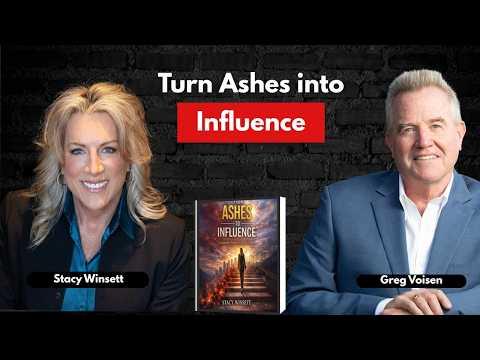
In this episode of Inside Personal Growth, Greg Voisen sits down with Stacy Winsett, a powerhouse senior executive who has navigated the highest stakes of corporate life. While many know her as a seasoned Chief People Officer who has steered organizations through mergers, turnarounds, and intense National Labor Relations Board hearings, Stacy recently pulled back the curtain on the “why” behind her success.
In her moving new book, From Ashes to Influence: Leadership Forged by Fire and Faith, Stacy reveals a startling truth: the very skills that made her a corporate giant were forged in the fires of childhood trauma, government housing, and the literal destruction of her childhood home. Her story is a raw reckoning with the cost of being “strong too soon” and a blueprint for any leader ready to stop running on survival and start leading with integration and presence.
One of the most striking revelations in Stacy’s journey is the concept that for a child in an unstable environment, the safest thing they can be is useful. If you can anticipate a parent’s mood, fix a problem before it escalates, or carry more than your share of the load, you create a semblance of safety.
For many high-achieving leaders—especially women—this childhood defense mechanism follows them into the boardroom. They become “over-functioners,” the reliable fixers who never let a ball drop. As Stacy explains, the corporate world rewards this behavior with promotions and titles. However, when your leadership is fueled by the need to stay safe through performance, the cost to your soul and health is immense.
Stacy describes growing up “listening for footsteps” and reading the energy of a room before anyone speaks. In executive leadership, this translates to a “superpower” of awareness—the ability to sense tension in a meeting or a shift in market sentiment.
However, Stacy makes a critical distinction: Hyper-vigilance is rooted in fear and keeps the nervous system in a constant state of “fight or flight.” Discernment, on the other hand, is the mature expression of that same skill. By repurposing these survival instincts, a leader can read a room without taking on everyone else’s anxiety. It moves the leader from a reactive state to an intentional one.
For years, Stacy performed at the highest levels, but her body eventually stopped negotiating. She discusses the “silent record” the body keeps, manifesting in chronic illness and autoimmune issues. This is the physical price of “never-off” leadership.
The lesson for today’s executives is clear: endurance has limits. If you do not give your nervous system permission to rest, your body will eventually make that choice for you. True leadership requires self-stewardship—putting on your own oxygen mask first so that you have the capacity to lead others with a calm, regulated presence.
In a particularly poignant part of the conversation, Stacy discusses her decision to leave an abusive personal situation. She frames “leaving” not as an escape, but as the most consequential leadership act of her life.
She reminds us that what a leader tolerates becomes the culture—not just in the office, but in the home. Choosing to leave a toxic environment, whether a marriage or a boardroom, is an act of integrity. It is a declaration of what you will no longer tolerate and a commitment to a healthier future.
The ultimate shift Stacy advocates for is the move toward Stewardship Leadership. Survival-based leadership is about control and self-protection. Stewardship is about trust and agency.
When a leader heals, they stop asking for compliance and start allowing for growth. They realize that their presence leads far more effectively than their title ever could. By integrating faith and trauma-informed awareness, leaders can move from a place of “getting it done” to a place of “building what lasts.”
Stacy’s story is a testament to the fact that while fire may shape us, it does not have to define us. We have the choice to take those ashes and forge an influence that is grounded in truth, safety, and a deep, abiding peace.
Connect with Our Guest, Stacy Winsett:
➥ Book: From Ashes to Influence: Leadership Forged by Fire and Faith
➥ Buy Now: a.co/d/04oRMBRx
➥Website: stacywinsett.com/
LinkedIn: www.linkedin.com/in/stacywinsett/
Facebook: www.facebook.com/stacyewinsett
Instagram: www.instagram.com/stacywinsett/
Continue Listening