


with Dr. Stephen Fenton
May 12, 2026
Inside Personal Growth
Listen on your favorite platforms
In this episode
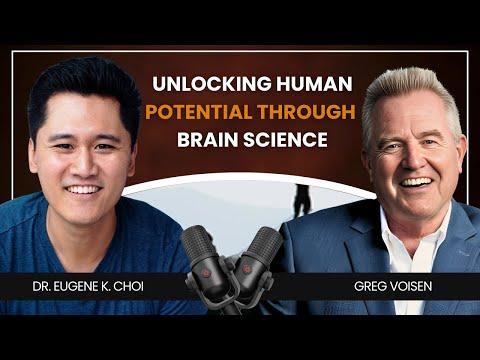
In today’s fast-paced world, many of us find ourselves running on autopilot—working harder, juggling stress, and feeling as though no matter what we achieve, it’s never enough. Dr. Eugene K. Choi, a transformational mindset coach, pharmacist turned entrepreneur, and filmmaker, knows this feeling all too well. His own journey from healthcare to filmmaking to neuroscience coaching offers profound lessons on how we can break free from survival mode and unlock our brain’s true potential.
You can connect with Dr. Choi through his platform Destiny Hacks, or follow his insights on Instagram, Facebook, and LinkedIn.
Dr. Choi began his career as a clinical pharmacist, motivated by the promise of financial stability. Despite the success and the lifestyle it afforded him, he felt unfulfilled. The six-figure salary, the nice car, and the new apartment all left him with a gnawing question: Is this all there is?
Pursuing his creative side, he turned to filmmaking and eventually worked with Jubilee Media, a platform now boasting millions of subscribers. Yet his deeper calling emerged when he realized the profound impact of neuroscience on human behavior. This realization led him to found Destiny Hacks, a coaching practice designed to help leaders, entrepreneurs, and change-makers rewire their brains for success.
At the heart of Dr. Choi’s work is a simple but transformative concept: our brains operate in two primary modes—survival and executive.
The problem? Dr. Choi explains that most adults spend 70% or more of their lives in survival mode. Emotional discomfort—stress, anxiety, frustration—triggers the brain as if it were under physical attack. As a result, many of us never fully access our executive brain.
One defining moment in Dr. Choi’s journey occurred during a volunteer trip to Rio de Janeiro. In one of the city’s most violent neighborhoods, he found himself face-to-face with a drug trafficker who pointed a gun at his chest. Frozen in fear, he experienced firsthand how survival mode shuts down higher brain functions.
Reflecting on this experience, Dr. Choi realized that most people live daily as though a “gun is pointed at them,” reacting to emotional stress in the same way they would to life-threatening danger. This insight fueled his mission to teach others how to consciously shift out of survival mode and into executive mode.
By age 35, Dr. Choi notes, up to 95% of our daily behavior is on autopilot—driven by subconscious programming. While this efficiency helps with routine tasks, it also means we unknowingly reinforce patterns rooted in survival.
To break free, Dr. Choi uses a three-phase process with his clients:
One practical tool he recommends is “Name it to tame it.” By naming an emotion—“I feel anxious” rather than “I am anxious”—we activate the frontal lobe, helping regulate emotions and shift out of survival mode.
Dr. Choi’s teachings extend beyond personal performance into leadership and relationships. He shares a powerful story about changing how he spoke to his young daughter. Instead of saying “You’re making me mad,” he shifted to “I’m feeling mad.” This subtle change acknowledged his own responsibility for his emotions, teaching his daughter that she wasn’t the cause of his anger.
This kind of mindful communication, he explains, can transform families, workplaces, and communities. Leaders who operate in executive mode are not only more creative and decisive—they are also more empathetic and connected to those they lead.
Many entrepreneurs believe stress and constant pressure are necessary for success. Dr. Choi challenges this assumption. Living in survival mode may fuel short-term gains, but over time it leads to burnout, anxiety, and even physical illness. Long-term exposure to stress hormones like cortisol weakens the immune system, disrupts digestion, and contributes to chronic disease.
High performers, he argues, must learn to recognize when they’re operating in fight, flight, or freeze responses. True peak performance comes not from working harder, but from shifting into executive mode where smarter, more innovative solutions are possible.
So, how can you begin? Dr. Choi emphasizes awareness as the first and most crucial step. Simply noticing when you are in a fight, flight, or freeze response can create the space to choose differently. From there, tools like mindful labeling, reframing self-talk, and conscious pauses can help you access your executive brain.
He also encourages practices like reflection and contemplation—giving yourself time to think deeply without distractions. As Stephen Covey famously said, sometimes the most productive thing you can do is simply to “put a sign on the door that says, I’m thinking.”
Dr. Eugene K. Choi’s work is a reminder that we don’t have to stay trapped in survival mode. By cultivating awareness, rewiring autopilot habits, and engaging our executive brain, we can lead with clarity, creativity, and empathy—unlocking not only our own potential but also the potential of those around us.
For more insights and upcoming resources, visit Destiny Hacks, follow Dr. Choi on Instagram, Facebook, and LinkedIn.
You may also refer to the transcripts below for the full transcription (not edited) of the interview.
Continue Listening