

with Raj Sisodia
Feb 16, 2026
Inside Personal Growth
Listen on your favorite platforms
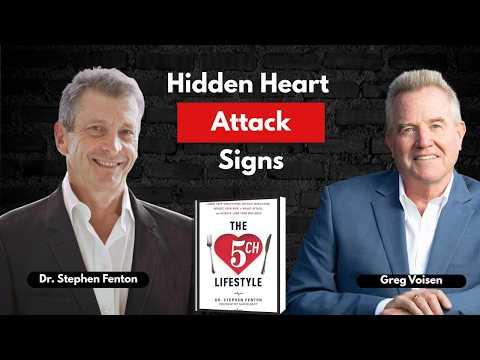
In this episode of Inside Personal Growth, Greg Voisen sits down with Dr. Stephen Fenton, a renowned preventative cardiologist with over 40 years of clinical experience, to discuss a silent epidemic that standard medicine is often failing to catch. Dr. Fenton is the author of the groundbreaking new book, The 5 CH Lifestyle: Lower Your Cholesterol Without Medication, Reduce Your Risk of Heart Attack and Achieve Long-term Wellness, and in this conversation, he pulls back the curtain on why millions of people are walking around with “invisible” heart risks.
Dr. Fenton begins by describing what he calls “The Emperor’s Heart Check.” Inspired by Hans Christian Andersen’s famous tale The Emperor’s New Clothes, Fenton argues that mainstream medicine is often parading a version of “heart health” that doesn’t actually exist for everyone. Currently, many healthcare systems rely heavily on traditional risk calculators—factors like age, smoking status, and basic cholesterol numbers—to determine if someone is in danger.
However, the data tells a different story. Dr. Fenton points out that nearly 50% of people who suffer a heart attack do not have these traditional risk factors. “The king has no clothes,” Fenton says, explaining that we are often treating heart disease based on population averages rather than diagnosing the actual presence of plaque in the individual. He advocates for a shift toward precision-based medicine where we look inside the body before a crisis occurs.
To truly protect your heart, you must understand how a heart attack actually happens. It begins with atherosclerosis, the buildup of plaque. This process starts as “Atheroma”—a soft, fatty buildup that looks like porridge under a microscope. Over time, this soft plaque calcifies and hardens, which is known as “Sclerosis.”
A heart attack typically occurs when this plaque becomes unstable and “bursts” like a pimple. Because coronary arteries are incredibly narrow—often only 2 to 4 millimeters wide—the blood clot the body forms to “heal” that burst can completely block the artery. If blood flow is cut off, the heart muscle begins to die. Dr. Fenton’s clinical focus is on early detection: finding this “porridge” before it has a chance to block the flow.
If traditional calculators are missing half the people at risk, what is the solution? Dr. Fenton points to the Calcium Artery Correlation (CAC) scan. He describes this as a “mammogram for the heart.” It is a simple, 5-minute, non-invasive CT scan that requires no needles and provides a direct look at the amount of calcified plaque in the coronary arteries.
While many guidelines suggest waiting for symptoms, Fenton argues that waiting for chest pain is waiting too long. He suggests that anyone with a strong family history, or men over 50 and women over 60, should consider a CAC scan. A score of zero provides incredible peace of mind, while any other number provides the “wake-up call” needed to implement lifestyle changes that can prevent a future event.
One of the most actionable parts of Dr. Fenton’s philosophy is the “Five CHs.” He developed this simple mnemonic to help his patients identify the primary food groups responsible for the saturated fat and trans fats that drive plaque formation:
Fenton challenges his patients to a “Miserable Month”—30 days without these five groups. He has observed that this short-term sacrifice leads to a drastic drop in LDL (bad cholesterol) and significant weight loss. He notes that cheese is particularly difficult to quit because it contains casein, which has addictive properties, but breaking that habit is often the fastest way to improve heart health.
Heart health isn’t just about the kitchen; it’s about a comprehensive approach to living. Dr. Fenton uses the “SEEDS” acronym to outline the pillars of his preventative strategy:
He emphasizes that “Chuckle”—laughter and joy—is a clinical necessity. Social isolation and chronic stress can be just as damaging as high blood pressure. By fostering community, love, and intimacy, we create a chemical environment in our bodies that supports arterial health.
The most encouraging message from Dr. Fenton is that a diagnosis of heart disease is not a life sentence. Through aggressive lifestyle changes and, when necessary, modern medical treatments to lower LDL to very low levels, plaque can regress.
While hard, calcified plaque may remain, the “soft” dangerous plaque can be stabilized and shrunk. This process turns a “vulnerable” artery into a “stable” one, significantly reducing the risk of a sudden heart attack. Dr. Fenton’s book provides the roadmap for this healing process, proving that wellness is achievable even for those with a genetic predisposition.
Dr. Fenton’s work is a call to move away from being a “passive patient” and toward being an “active participant” in your health. We don’t have to be victims of our genetics or the standard American or Australian diet. By taking the first step—whether it’s taking a risk profile test or committing to a month without the “Five CHs”—we can close the door on heart disease.
Connect with Our Guest, Dr. Stephen Fenton:
➥ Buy Now: https://a.co/d/0aUkMG8M
LinkedIn: https://www.linkedin.com/in/stephen-fenton-a67891130/
Continue Listening