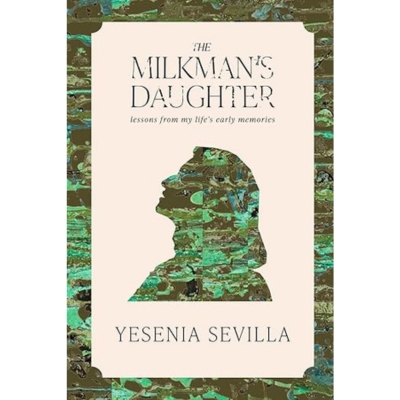
Podcast 1313: The Milkman’s Daughter: Lessons from My Life’s Early Memories by Yesenia Sevilla

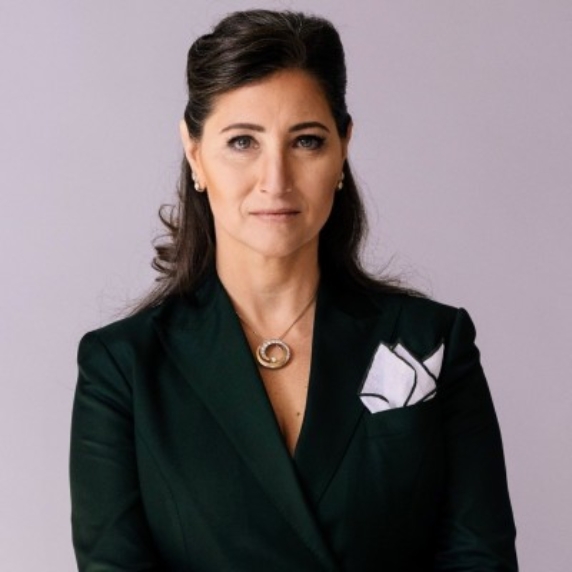
In this episode of Inside Personal Growth, Greg Voisen sits down with Yesenia Sevilla, an accomplished leader, TEDx speaker, and author, to peel back the layers of a life defined by secrets, resilience, and the ultimate pursuit of truth. Her new book, The Milkman’s Daughter: Lessons from My Life’s Early Memories, is more than a memoir; it is a roadmap for anyone who has ever felt like an outsider in their own home or a stranger to their own story.

The Myth of the Milkman’s Daughter

For decades, Yesenia grew up hearing a family joke that suggested she didn’t quite belong. With green eyes, light hair, and a taller stature than her siblings, she was often teased as being “the milkman’s daughter.” In many cultures, this phrase carries a sting—a subtle implication of illegitimacy or maternal infidelity. For a young child, these jokes aren’t just banter; they are the bricks used to build a wall of isolation.

The irony, as Yesenia eventually discovered, was profound. While her siblings shared the same coloring, they were from her mother’s previous marriages. Yesenia was, in fact, the only biological child of the marriage she was raised in. This revelation flipped her world upside down. The person who was told she didn’t belong was actually the anchor of that family unit. This discovery serves as the foundation for one of the book’s core themes: the importance of questioning the narratives handed to us by others.

A Father’s Fall and the Weight of Truth

One of the most poignant moments in the conversation involves what Yesenia calls “the day Daddy broke in two.” Her father, a beloved doctor who bartered medical services for the poor, had his license revoked because he had falsified his high school graduation years earlier.

Witnessing her father sit in 48 hours of paralyzed silence on the back porch left an indelible mark on Yesenia. She saw firsthand how a single lie, even one buried deep in the past, could dismantle a man’s entire identity and livelihood. This trauma instilled in her a fierce, uncompromising commitment to the truth. Whether it is social, professional, or personal, Yesenia argues that while the truth might hurt, a lie destroys.

Faith, Control, and the Sanctuary of Nature

Yesenia’s upbringing was a complex tapestry of Catholicism and Santeria. She recounts a chilling memory of being seven years old and tied to her father’s belt with a dog leash for days. This wasn’t a punishment for bad behavior, but a “protection” measure following a prophecy from her mother—acting as a medium—that Yesenia would die in an accident.

This experience led to a silent rebellion against organized, institutionalized religion. To Yesenia, these rituals felt less like spiritual connection and more like tools for human control. Instead, she found her “cathedral” in the woods of rural Florida.

Through the practice of forest bathing, she realized that she was a biological being interconnected with the earth. Nature doesn’t judge, nature doesn’t lie, and nature doesn’t require a leash. This sense of oneness with the environment provided the belonging she couldn’t find within her family walls.

The Seventh Grade Drug Bust: A Lesson in Bravery

At just thirteen, Yesenia faced a moral crossroads. She discovered that her crush—the boy she desperately wanted to notice her—was carrying a duffle bag full of marijuana to sell to younger children. Despite the social risks, she reported him, leading to the largest drug bust in her school district’s history.

The fallout was immediate. She became a social pariah overnight. The isolation was so intense that she attempted to take her own life that very evening. However, a failure to follow through led her back outside, under the stars, where she realized that she was the author of her own life. A supportive history teacher, “Mrs. A,” later validated her choice, teaching her that doing the right thing is often lonely, but it is always right.

Reclaiming the Body and Autonomy

Yesenia speaks with incredible candor about a topic often shrouded in shame: sexual autonomy. After losing her maidenhead (hymen) in a childhood bike accident, she was later accused by a fiancé of not being a “pure” virgin because she didn’t bleed during their first encounter.

This experience highlights the toxic myths surrounding women’s bodies and the archaic ways society measures a woman’s worth. Yesenia’s message to women is clear: Your body belongs to you. Your value is not a biological checklist to be verified by a partner; it is an inherent right that you define for yourself.

How to Rewrite Your Own Story

As the interview concludes, Yesenia offers a powerful exercise for listeners. She suggests writing down ten instances in your life where your identity was defined or inferred by someone else. Once you see them on paper, you can begin the process of taking back control.

She emphasizes that we are all “meant to be” simply because we are here. Our lives are shaped by “micro-acts of kindness”—opening a door, offering a compliment, or listening to someone in pain. By integrating our traumas rather than shunning them, we find the authority to write a final chapter that is truly our own.

Connect with Our Guest, Yesenia Sevilla:
Buy Now: a.co/d/0c2wLtkb
 Yesenia Sevilla TEDx Talks: https://youtu.be/X4SR0npn4Pk

You may also refer to the transcripts below for the full transcription (not edited) of the interview.

Welcome back to Inside Personal Growth. This is Greg Voisen. And today we have Yesenia Sevilla as am I pronouncing it route. I hope I get it right. Yesenia Sevilla And this is the book kind of hard, but I mean, I hold it up here. The milkman's daughter. Lessons from My Life's early memories. Well, thank you for being on, and I'm glad we were talking.

She got a little bug the other day, but she's feeling better now. And remind me where you're joining us from. You got all those beautiful pictures behind me. Thank you. I am joining you from Nashville, Tennessee. Okay. And this is all a art. It's beautiful. I told her that on our pre-interview. So today I have really I'm going to say because we did a pre-interview.

Truly inspiring guest. Your center is known as many as. Yes. And is a TEDx speaker, accomplished leader, author and passionate advocate for inclusive innovation. With over 20 years of leadership experience spanning industries such as education, technology, global biotechnology, health care consulting and higher education. Yes, he has built a remarkable career dedicated to connecting, innovating and leading with purpose.

00:01:33:09 - 00:02:15:13
Unknown
She currently serves as the CEO of Chuck C. H ALK. It's a K through 12 education software company that uses data and helps schools connect to curriculum instructions and assessment. Previously, she served as director of Strategic Engagement and Ecosystem Development at Vanderbilt, where she fostered entrepreneur ship galvanizing connections with Nashville's innovative ecosystem. She's also held leadership roles in the University of Florida Innovation Academy, and a work has consistently centered on nurturing innovation, mindset, mentoring and minority and female entrepreneurs and driving sustainability in the community.

00:02:15:19 - 00:02:45:22
Unknown
She holds her bachelor's from the University of Miami and a certificate in Multicultural mentoring from the University of Florida. She's fluent in English and Spanish and converses in Portuguese, and she has a TEDx out there that will give you a link to look in the show notes below. It's Ted. It's Old Hickory, where talk explored how to ignite an innovation fire within ourselves and why the practice of inclusion is the key to making it happen.

00:02:46:07 - 00:03:10:19
Unknown
Well, thank you so much for being on the show. Looking forward to this conversation and this dialog we're going to have about your new book. Again, there's a link below to the book, so please do that. Take it. So look, this gets you the title. The milkman starter comes from a family joke about you not looking like your siblings.

00:03:12:06 - 00:03:41:00
Unknown
Can you share what it felt like growing up, being called the milk man's daughter and the story You later discovered that you were actually the only child biologically related to your father? Yeah, of course. And thanks again for having me. And you know what's interesting is that phrase, the milk man's daughter actually works in several languages, so it definitely works in the languages in my family and my and my background.

00:03:41:00 - 00:03:58:00
Unknown
So that phrase is the same in Spanish as it is in Portuguese as it as an English. And it's always had this connotation of you're not really part of the family, and either mom had an affair with the milk man or we found you write the those of the connotation. Yeah. So growing up, I definitely do not look like my siblings.

00:03:59:07 - 00:04:30:03
Unknown
The only one with green eyes. I'm the only one with light hair. I'm the. I'm taller, you know, physiologically different from my siblings. And so from a very, very early time, they thought it was fun to just come up with milk. My daughter, because my mother is Cuban and she's you know, she is definitely of a of a all of five feet high and definitely coloring, one would assume belongs to a more Hispanic origin.

00:04:31:20 - 00:04:51:17
Unknown
It was really it was really hard right. I didn't I didn't look like them. I didn't I didn't think like them either. And there was always this question of, you know, do you belong? Why are you here? And so it was really painful. It was really everyone thought it was funny, but I thought it was absurd. And and as a child, when you hear things like you, you don't belong or you're not one of us.

00:04:52:02 - 00:05:17:09
Unknown
It's very isolating. And then you end up trying to, in my case, be a people pleaser. Right? Trying to fit in, trying to always please people. And of course, then the joke was on them because we've come to find out. My mother had been married three times. She had three children, one with each child. And so the man who was supposedly our father during most of our our years as young children was actually only my father.

00:05:18:15 - 00:05:40:24
Unknown
So it really turned itself on its head to find out that, yeah, not only am I not the milkman's daughter, I'm the only daughter of this marriage. That was interesting. Well, you wrote in the book that your your premature birth actually saved your mother's life. How did rewriting your own origin story become like a turning point for you?

00:05:41:04 - 00:06:02:17
Unknown
And what advice do you have for others whose beginnings were framed kind of negatively like a you were referred to as milkman's daughter, But the reality was, no, you were really the only daughter from this third husband. There were two prior, and the other siblings you have were actually from two other men. That's why they didn't look like you.

00:06:03:10 - 00:06:26:08
Unknown
Hmm. Exactly. And they were both. And it's interesting because even though they don't look like each other, their coloring matches, their hair matches, and so everyone sort of does that, judging the book by its cover kind of situation and therefore, assuming that that didn't fit. But yeah, my birth story was really interesting because when you when you do the math, you realize that my parents got engaged when I was pregnant.

00:06:27:23 - 00:06:49:14
Unknown
So even though some of our family pictures are cut out and look wonky, you realize there's something wrong with the math. But then also, you know, my mother had overextended herself. It was the middle of my sister's communion. And my mother started having contractions. She ignored them until the afternoon. And so I basically just abruptly, seven months, decided to show up in the world.

00:06:49:14 - 00:07:14:20
Unknown
And that looks so different. Like I was long, thin and no eyelashes, no eyebrows. I only had my nail beds. I hadn't finished cooking, so to speak. And so the story of my birth, you know, is yet another thing where everyone finds it amusing that I look like a little lizard and all of these things. I don't think what people understand is children are listening intently to how you tell their origin story and how that's weighted.

00:07:15:03 - 00:07:54:24
Unknown
And so for me, I always thought I was this unwanted. You know, isolated. I was a burden in everything. And so for me, being able to be like my story and understanding that my mother was truly something, so she was starting to have the signs of developing blood cancer. So leukemia. And one of the things that was not known then and wasn't known until maybe a couple, maybe maybe a decade or two ago, is that umbilical cord blood cells and embryonic blood cells can actually fight those kinds of diseases because the mother integrates that DNA and that genetics into her bloodstream.

00:07:55:06 - 00:08:15:07
Unknown
And so my mother was ill when she had me, and she then recovered and did not go back to that same stage. So, in essence, I saved my mom. It's those kinds of stories that should be told, not what I look like or how inconvenient that was. But I realized that I have the power to rewrite my story.

00:08:15:08 - 00:08:40:22
Unknown
So when I started to take back that story and talk about things positively, I think it makes a difference for feeling like you belong in the world. Yeah, definitely. So. I mean, it's certainly an interesting twist and turn in your life being premature and then really only being the only child in your family that was born from the third husband your mother had.

00:08:41:05 - 00:09:10:07
Unknown
So, hey, you mentioned you call it the day that Daddy broke into. Yes. How did witnessing this fracture in your fathers shape you and your own commitment to truth and transparency because your father was, you know, bartering, bartering medical services for governmental chiefs, for poor and rural patients. And then it came to day that his medical license was revoked.

00:09:11:19 - 00:09:39:15
Unknown
And so he sat on the back porch for 48 hours in silence. And that's the day that he broke in, too. What was it about that that happened to him that really had this huge impact on you? Absolutely. I think and I think to reiterate what I said before, children are listening, but they're also watching. Right. And in in my case, what I saw was was a man who had become a doctor.

00:09:39:15 - 00:10:02:04
Unknown
I still remember the day he was licensed. I remember the day he passed his boards. I was very little. But I remember and I remember the joy and I remember that, you know, when he first set up his first office and how beloved he was with his patients. But when his license revoked, it was all because he he falsified his high school graduation.

00:10:02:04 - 00:10:23:01
Unknown
And you can't do that. You can't lie. Right. Then that's the reality. And so as a young child, I didn't process everything. I just realized that there was a lie somewhere that he told that broke him into that. We weren't supposed to talk about that. I went to school literally the Monday after that weekend, and people were whispering.

00:10:23:01 - 00:10:46:16
Unknown
There was all sorts of talking and I just didn't know how to process it. But what I did internalize was a lie destroyed him and I think if not before, but definitely that weekend, those days, I said to myself, the truth matters. And so I really believe that whether it hurts or it doesn't, I mean, I still go by that the infamous rule of is it true?

00:10:46:16 - 00:11:13:23
Unknown
Is it kind, is it helpful? But I'm not with wholly the truth. I don't I don't want people to see themselves destroyed because of the lie when the truth hurts less. And I think that that's that was definitely ingrained in me at that point. Well, it's a very, very good lesson for somebody to have. And fortunately, your father got his license revoked, which would would be traumatizing to the family because he had to shift his career.

00:11:14:07 - 00:11:46:23
Unknown
Right. Completely. Yeah. You tell a story, too, about this blended practice of your religion. Okay. Santeria and Catholicism. And this is a seven year old. You were literally tied to your father's belt with a dog leash for days after your mother held a prophecy that you would die. Now you describe a silent rebellion against organized religion that began in your childhood.

00:11:48:00 - 00:12:23:13
Unknown
How did that experience cause that sounds pretty wacko, but it happens a lot leads you to find your own belief system rooted in nature rather than ritual. And then we'll talk about forest bathing gurus. Yeah. So for me, you know, based on, you know, a Cuban mother, Brazilian father, Catholicism mixed in because of colonialism and then Santeria and the derivations of that which really belonged to hoodoo and different African religions.

00:12:23:13 - 00:12:47:14
Unknown
And again, it's all colonialism, right? So it's like peoples brought their religion. The Spender's and where she is brought Catholicism. And then you have this blending of ideas. And so my parents practice this blended. And again, I always say I respect everybody's religion. So it's not about their religion, it's about what we did and how my parents sort of blended things at their convenience.

00:12:47:14 - 00:13:07:04
Unknown
Right. And yeah, that episode where I was tied was belt. My father and I were very close when I was very young and my mother channeled. She pretended to be not pretended, but pretended to be purportedly a medium. And she channeled this prophecy that I was going to have an accident, I was going to die. So my father was mortified.

00:13:07:04 - 00:13:26:04
Unknown
The solution was, Let's just tie. Yes, he did to his unit, his pant, so his belt buckle. And that seems like a great idea to some people. To me, it was horrifying. I'm this wild, crazy, fun child and I'm tied to my dad everywhere from going to the bathroom with him standing just inside, turned away so that I could go to the bathroom.

00:13:26:04 - 00:14:02:04
Unknown
It was just it was just humiliating. But what it led me to start to believe was that this idea that institutionalized faith, religion, no matter what you believe when it's institutionalized and a little bit too interpreted by people for convenience, it's really just control. And so for me, it was more about exploring all religions. I went on to study all religions and find out that there was a common strain in all of them about kindness, about goodness, about leaving the Earth in a better way than he found it all about respecting all life.

00:14:02:11 - 00:14:27:24
Unknown
And so I just decided that instead of waiting for people to interpret my faith for me, I just decided to interpret my own faith. Well, that happens to a lot of us, right? And you do have to interpret your own faith, not religion and your own spirituality, because the religion, in my humble opinion, has done more to divide people than unite people.

00:14:28:09 - 00:14:53:16
Unknown
It's done more to kind of eliminate the love than to bring the love that's needed. Now, interestingly, as a kid growing up in rural Florida, you started doing forest bathing and you called it it was your religion before you knew it was your religion, traveling every continent, seeking the same oneness with nature, just like I talked about in you.

00:14:53:16 - 00:15:21:00
Unknown
Walk us through how nature became by the pictures in the back. You can see that that's what it is your sanctuary, your place of worship, and ultimately your source for belonging. Because you realize something very special was happening when you united out in nature versus you sitting in the four rooms of a Catholic church for walls. Absolutely. Yeah, absolutely.

00:15:21:07 - 00:15:58:02
Unknown
So I just love that that term exists now for standing. And obviously it wasn't coined until probably in the last 20, 25 years. Yeah. But I did what I, what I ended up doing is I realized that connecting with the earth right, being barefoot where it was safe to do so, which for me was a lot of places being outside, connecting with the earth, talking to trees, talking to animals, always being around that what are the things that I realize is when you really sit and and sit in deep in space, in nature, nature resumes the cacophony of is it resilience?

00:15:58:02 - 00:16:20:01
Unknown
Right? And so once you've done that, you realize, well, I do go on and I'm a biological being, right? I am a being that has a respiratory system and a blood system and and atoms and molecules. And I actually am a natural being on this earth. Therefore, I belong and so as a child, I wouldn't have ever known to put it in those words, but for me it was belonging.

00:16:20:09 - 00:16:36:15
Unknown
I could climb a tree and sit and watch the world go by. Birds would land on the branches and it felt natural. I would go for long, long walks in the woods. I would discover things and I wouldn't have to make noise. I wouldn't have talk. I would just know and I would see. And I. I saw the circle of life.

00:16:37:17 - 00:16:58:14
Unknown
That belonging is really important. And if you travel and you do that in every continent you go to, in every country you go to, you realize you belong everywhere. Because we're Anopheles, we're supposed to be here. And then that led me to, as I got older, research, you know, different people's opinion about Mother Nature and nature in general and how much everything is tied to it.

00:16:58:14 - 00:17:18:08
Unknown
I mean, we're still tied to lunar calendars and we're still tied to the tides. And depending on where you live is how nature presents itself. But it's all natural. And so why not? Why not believe in the things that we can see around us that just fit? Yeah, it is. I mean, look, you have had this great experience in this book.

00:17:18:24 - 00:17:45:15
Unknown
The milkman's daughter really brings it all out and how your trajectory through life has shifted and in so doing the richness from it and, and along the way, you had a lot of lessons. And as you said, the truth was one of them. And your dad didn't tell the truth about his high school diploma, but you also told the truth.

00:17:45:15 - 00:18:18:14
Unknown
And there was a severe consequence. In seventh grade, you reported your crush for bringing a duffle bag full of marijuana to school to sell to the younger kids. This led to the largest drug bust in your school district's history, and you became really a social outcast because you tattletale on your crush. You even attempted to take your own life at the same evening while your family was watching Harold Rivera special on Al Capone's vault.

00:18:19:22 - 00:18:51:03
Unknown
What kept you going and what role did you say her name is? Mrs. A your history teacher play and helping you find validation. Yeah. No, that was. That was an interesting situation. You know, when you're young and you have a crush, they can do no wrong. And to me, it was it was very striking because he saw me when I saw it was in his bag and he was telling someone else that, you know, he's he's going to be selling it to the younger kids, which when you're in seventh grade, can you fathom who the younger kids are?

00:18:51:03 - 00:19:10:06
Unknown
Just ridiculous. It is not the right thing. But what also really threw me was that he he turned on the charm. And because he knew, I'm sure that I'm positive he knew that I was crushing and he did not reciprocate, that he was enjoying being the crush. And he said, You didn't see anything, did you? You're not going to say anything, right?

00:19:11:01 - 00:19:32:21
Unknown
It just needs to stay there. And everything in my fiber was like, No, not okay, not okay. And so I had the decision to pretend not to see, but everything that I'd experience with my family this far, I was so I was so at this point, like, the truth matters, the truth matters. And you're going to hurt other kids with this.

00:19:33:15 - 00:19:54:18
Unknown
And so I did. I told and it became a big deal. And of course, I still don't know. It's the biggest one in history now, but it was the biggest drug bust at the time. I mean, literally it was a duffle bag full. But for me, you know, the overnight social pariah that I became was everyone just was silent.

00:19:54:24 - 00:20:09:02
Unknown
Nobody wanted to talk to me. Nobody wanted to tell me. Their secret is this, you know, you just get stitches. But it came to a head when he called my house and he didn't have my number, but he got my number and he called my house and he's like, I understand why I did it. You know, no one's ever going to like you again.

00:20:09:02 - 00:20:27:04
Unknown
And, you know, and then I find it very ironic that my parents were watching the Al Capone's vault, like everyone was intrigued to find out what is in this vault which read the book. You find out if you don't remember. But it just it led me to just think about the fact that no one was going to come save me.

00:20:27:21 - 00:20:47:21
Unknown
And I failed. Attempt at taking my own life, thankfully, led me outside in the dark to watch the stars, to lie down on the ground, on my animals around me and look up and say, No one's coming, no one's coming to rescue you. Crushes don't even matter, right? People like and people there's no responsibility in that if you if you give up that power.

00:20:48:05 - 00:21:11:16
Unknown
And so that was the day that I said, well, I guess my life is my own, so I've got to figure it out. And that's what I did. And Mrs. Day was supporting. Yes. So Mrs. is a and I give her that name is I don't have permission to use her name. She was a history teacher, a strong, made, beautiful black woman who loved history and she loved teaching it.

00:21:11:16 - 00:21:30:00
Unknown
And she was the only adult in that school that asked me to stay after class. And I didn't know why. Where she quietly told me. She said, what you did was brave. Not everyone would do it. It's not always easy to do the right thing. I mean, like the lovely, but the right thing is always the right thing.

00:21:30:04 - 00:21:52:14
Unknown
And I see you. And that made all the difference. Because when you have an adult that you respect, I adored her class. I loved history, everything about her, her validation of the right being matters and not trying to sugarcoat it like, oh, everything will be okay. She didn't say that. She told me the truth. It's hard. It's isolating, but it's right.

00:21:52:21 - 00:22:16:05
Unknown
And I think I've kept those words with me since then. Well, it's something you never forget, especially when somebody like a teacher calls you out and it calls you aside and gives you a compliment about something that you did that was right and that was really important. It's like a a good coach, a basketball team or a football team.

00:22:16:14 - 00:22:39:24
Unknown
Many of the guys remember the good coaches. They don't remember the bad ones, the ones they call them by name or told them negative things about themselves. You want to find people doing things good and praise them for it. And that's what she did. Was she found you doing something right and complimented you for doing it right. And it makes you feel good.

00:22:39:24 - 00:23:12:01
Unknown
Now that absolute this book takes lots of twists and turns and you were pretty candid about writing about your maiden head, your hymen at the age of nine in a bike accident, and then years later, having your virginity taken by force, by your own fiancee who then accused you of not being a virgin because you didn't bleed. This is a such a powerful statement on sexual autonomy and the myths surrounding a woman's purity.

00:23:12:14 - 00:23:38:03
Unknown
So what do you want women to understand about owning their bodies and their stories? Because I mean, look, this happens a lot. This isn't your you know, you breaking your own hymen at nine years old and then someone accusing you that you weren't a virgin. It's not the first time. Right. Kind of a stupid thing for him to stay, say, to be honest with you.

00:23:38:03 - 00:24:02:23
Unknown
But there are there are a lot of ignorant people out there. Absolutely there are. And yeah, there are. There's all sorts of accidents and activities, some of them in sports as well, or where where women actually will will tear their hymen. Yeah. For me it was it was so incredulous because when I was in the by accident, that was horrible.

00:24:02:23 - 00:24:21:05
Unknown
Right. It was painful and horrible. And also now I know why no one ever should ride the man's bike. I don't even know why that bar is there. Because, you know, my brother fell on his bike and he was in a lot of pain, too. So he had to go to guys like you. So I still I still I still question the bar.

00:24:21:05 - 00:24:38:08
Unknown
Does it have to be right there? I don't know. We're riding astride something, and if you wreck it, it's just not good for anyone. Well, the women's bikes now, the bar is supposed to be going like this. Now, in the olden days, when I say olden days, you probably had a bar that was went across like this. But now we're in these bikes.

00:24:38:08 - 00:25:09:13
Unknown
The bars go down like this or. Yeah, they go down. They definitely do. But I was I was on I had been down from my brother, so I definitely had this bar. Yeah. But what's interesting is that, you know, that memory literally within the next day to two days later was now more like I just whatever. So when I get to being an adult and thinking that I have to follow protocol and saving myself for marriage and all of these things, it's very it's very over done.

00:25:09:13 - 00:25:32:16
Unknown
It's very it's about control over women's autonomy. And quite actually, I want every woman to own their own body in a way that makes them decide when to have sexual activity as their choice and not because someone else is dictating how it should be and it should be something consensual and it should be something good, because it if there's nothing about sexual intimacy that's evil.

00:25:32:16 - 00:26:00:04
Unknown
It isn't. It's good. And it should happen between two consulting, consenting adults, whoever they are. But this idea that that a woman's worth, that her value, that her purity is somehow going to be dictated by biologically something or by someone else's interpretation is one of those things that I find ludicrous, because here I was saving myself. I was engaged, not not to the person who ended up being my husband, to this former person.

00:26:00:18 - 00:26:22:00
Unknown
And I had a I had a date. So I thought, okay, well, if I'm going to break the rules a little bit, well, we're already engaged. You know, there's a wedding date, there's all of this. And then, of course, if you read the book in the last second, I changed my mind. And you'll read about that. But then right after losing the autonomy, I had my first sexual encounter and then being accused of not being pure.

00:26:22:00 - 00:26:46:03
Unknown
I mean, it is the most monstrous thing to go through because you there's nothing that you can say that will justify or prove to the other person. And my thoughts now are, why do I have to prove anything to someone else if I'm going to share my money in an intimate way with a partner? It should be about the moment of the two of us coming together, not judgment about how I what I bring to this table, whether or not that's pure enough for them or not.

00:26:46:10 - 00:27:08:22
Unknown
I want women that that's the that's the mindspace of the man or woman that you're about to be intimate with. Perhaps you should not eat with them. Yeah, I would say you're absolutely right. And again, for for our listening audience, many of them are way beyond this. But for kids or young adults, I would say it's really, really something they really need to think about.

00:27:09:08 - 00:27:50:19
Unknown
Now, you've had that and you write in this book about your remarkable relationship with dogs. And I have had the same thing, incredible relationship with Strong's. And you speak about the various dogs that you had during your life and the Rottweiler that guarded your baby. And you described the cathedral in Mexico filled with 25,000 representations of dogs, knowing that you made the right decision, letting Isabelle go and one of your other dogs, what is it about the human canine bound that you have been so healing for you in your life?

00:27:50:19 - 00:28:15:06
Unknown
Yeah. So as a young, young child, I was drawn to animals. I always have and still am. But I never found myself without a dog. In fact, when when doing some some research for for therapy appointment, I was told to go back and try to find how much percentage of my life exists around dog. And when you find out that it's I mean, less than 1% of my life, I don't have a dog.

00:28:15:14 - 00:28:32:13
Unknown
You realize that that that for me that that has always been a connection. I think part of that is, you know, there are only a few animals on the planet that have grown so symbiotically with humans. They can read the whites of our eyes. We can point where we're with our eyes, and dogs will follow our visual cue.

00:28:32:13 - 00:28:56:19
Unknown
Right. I think that dogs their smell, they're hearing and they're sentient senses are so attuned and so far better than ours. They can sense things before they're going to happen to us. They can sense how we feel. They can sense whether we're sick or not. They can sense certain things about us. And when you take the time to stop and connect and listen and watch the dog and people laugh, it's like, Oh, you're talking to your dog.

00:28:56:19 - 00:29:21:19
Unknown
And like, I'm communicating with my dog. Of course, the dog doesn't turn around and say, Well, hello. Yes, I mean, that would be, you know, uninteresting Dr. Doolittle ish, but not real. But they do communicate with us a lot of animals do, Most animals do, but we're not listening. And I think the dog, if you go back and look at the history of how this animal has evolved alongside humans, it is one of the closest animals in our communication.

00:29:22:03 - 00:29:42:15
Unknown
We can point with our finger, point with our eyes, and the dog will know to follow from puppy hood. I mean, that's something ingrained with them. And for me, they've been healers. They've sensed when I have not felt like they have protected me, they have been companions for me to go to sleep. I'm a tactile sleeper and so I'm I'm rubbing fur before I go to sleep.

00:29:42:15 - 00:30:02:16
Unknown
It's very calming or holding the power. I don't feel complete if I don't have a canine heart somewhere in my life. And I think a lot of people can relate to that, whether it's dogs or their animal toys. And I think we need to pay attention to that because I think that that's nature really outreaching to connect with us.

00:30:03:06 - 00:30:32:04
Unknown
And if we're listening, we understand. And I think that that for me has been just so important. Well, I love that you're a dog lover because I am as well. I don't remember a time in my life, even as a kid when I was growing up in the Midwest, that we didn't have animals, dogs, always hooks. And all through my life, all my children, we always had dogs and in some cases three, three or four.

00:30:32:04 - 00:30:55:08
Unknown
I can remember one point, maybe we had four, but it seems like we had plenty of dogs around and they do bring love. They're really the one of the pets that has the most unconditional love. There's never a condition. The tails are wagging. When you come home, they're laying with you on the sofa or in the bed, depending on the size of the dog.

00:30:55:14 - 00:31:30:08
Unknown
I have two little dogs now. I always had Labradors, but I will say it is the best thing. Now, look, you know, in this chapter with the phrase that's the lesson, it's become almost a month. And throughout your book, was there a moment or writing process when you realized that all of these painful memories, whatever we've already talked about so far, about your father and him losing his license and your hymen and all of these other lessons that you had, were you actually connected by a thread of lessons?

00:31:30:17 - 00:31:58:04
Unknown
And did the act of writing the book become its own form of healing for you? I'll answer that question first. Yes, absolutely. It was such a healing process to to bring these stories out of my body, out of my head, and and put them down. And then and so I had an incredible book. Coach Aleisha, and she helped me pull these stories out of me.

00:31:58:04 - 00:32:33:07
Unknown
And it was by a series of questions like I would tell her, I want to tell the story. And we would sit together and she would ask me questions and she would dig and dig and dig until I you know, I brought forth the stories and what we realized together, if you would. Yes. She also talk about the poems you put in each one of these chapters very simply last year to not only write this, but actually the cathartic process that you went through in writing the poems and putting the poems in the book with each one of the chapters, I think that's absolutely so.

00:32:33:07 - 00:33:01:06
Unknown
The poems were written over the course of 30 some odd years, possibly 40 some odd years, and there were there were snapshots in time of things that I was sincerely seeing and moments of catharsis in which I took pen paper and wrote poems. And I wanted to include them somehow. So as as the chapters started taking shape and I started healing, it was the Leisha who said to me, she said, You know, you keep saying that, you know, this is the lesson that you learn.

00:33:01:13 - 00:33:24:11
Unknown
And she said, Why don't you end each chapter with that's the lesson where you really process because people need to hear simplistic terms like that. Like this is what I put out because we do a lot of work externally with others that it is very helpful, but it also stops at I've said it now what? And so I wanted people to see the lessons that I pulled from each thing.

00:33:24:17 - 00:33:47:02
Unknown
And it doesn't mean that that has to be their lesson. It means that they're just is a lesson. And if they wanted an example, this is mine. But to to push people to think about the lessons from what you learned. And then when we sat down with the poems, we saw that poems over the course of my life were really just these these really interesting summaries of some of these experiences.

00:33:47:02 - 00:34:07:08
Unknown
And so we were able to overlay a poem with each chapter, even though there might have been 35 years apart in terms of when the poem was written. And and the and me actually writing this book. And so it really just shows that however you process things, you need to bring them out to make them real, to then process them.

00:34:07:13 - 00:34:25:15
Unknown
So whether you write, you paint, you sing, you do music, you exercise, fine. The poetic way to move these traumas outside of you so that you can then say, Now I'm going to look at it now I'll learn something from it. What do what? What do I change about myself after this? And I think that that's what we learned from putting those things together.

00:34:26:04 - 00:34:50:19
Unknown
Yeah, it's it's true, because, you know, working with a book coach like that and then choosing to do a poem and then close it with a lesson is a great way to kind of put a, a bow on it, as they say. As far as a chapter is concerned, it's like writing a lesson plan. If you were a teacher, you know you're going to go through the lesson plans and then there's going to be a purpose for that.

00:34:50:19 - 00:35:29:01
Unknown
That's tied to something that was in that chapter. Right? So at the end of the book, you write that your purpose is about micro acts of kindness and rescue. This book could be more than a micro act of kindness and rescue. But opening a door on Tuesday, giving a compliment on Friday, listening to someone whose whispers of suicide have been getting louder and louder for the listeners who may be carrying their own unwritten origins, Stories and unheard are unhealed wounds.

00:35:29:14 - 00:35:52:12
Unknown
What's the first step toward rewriting their narrative and finding their own lessons out of their life like you've done through this book? Which, by the way, for my listeners, we will put a link below in the show notes to Amazon so you can get a copy of the book. But how would you answer that question for the listeners?

00:35:52:12 - 00:36:35:02
Unknown
Yeah, well, I think the first thing is to is to sit with yourself and try to think of ten instances in your life that you wish were different or ten moments of trauma or ten moments of identity that you wish were different and and write them down. And it's okay if you take them electronically, right? There's a digital world now, But if you look at ten moments in your life from early childhood until the day, the present day that your identity was, this was designed, decided, inferred by someone else, write that down and then look at how you take back control each moment.

00:36:35:21 - 00:36:56:02
Unknown
It's either change you in some way. It's it could have burned you in some way so that maybe it's something you stop doing. But look at how you take back control over those ten instances, because I think that all of us struggle with, you know, the heavier questions about am I doing what am I supposed to be doing, Is there something in state?

00:36:56:02 - 00:37:18:12
Unknown
Is there something is destiny who has control? Is my life in control of my control? And the reality is, is that your breathing, your living, your natural, you're meant to be full stop. We are real natural human creatures that are meant to be on this planet. So you're already know that you're meant to be. So remove that stigma right away.

00:37:18:16 - 00:37:35:23
Unknown
And if you're meant to be, how do you take control of everything else? What about your life? Do you want people to remember? What about your life? Do you want to have the most impact with? And then you make that decision. And once you do that, you can actually remove the weight of those. I say ten. That could be less.

00:37:35:23 - 00:38:04:04
Unknown
It could be more those instances where you know that you didn't have definition of your life because in the end, the reality is you do have control. I have full control of the choices I make. You're not powerful. You hands very you have authority over your life. You are you are you are the writer of your story. Now, absorbing it doesn't mean that all of these incidences that you had in your life, they are what make.

00:38:04:04 - 00:38:51:06
Unknown
Yes. Yes. He right. Yeah. And I think the key is instead of trying to shun them away, is integrate them into this story and give loving kindness for them having occurred, your father, your home and your dogs, your everything that you have learned in these lessons, who make you who you are today. And I think this personal growth journey is one where when people find that freedom to give themselves authority versus let someone else have authority over them, that's when they start awakening to a higher consciousness of what can be of what is truly the possibility for their life.

00:38:51:17 - 00:39:14:21
Unknown
Um, you know, it's, it's, it's interesting when you get to be like my age, you start to look at finitude and you say, Oh yeah, how much time do you actually have left to make a difference? What can you do to make a difference? Like you said, you want to give a compliment to somebody. You want to open a door for somebody you want to do.

00:39:14:21 - 00:39:52:02
Unknown
You want to give somebody on the street a homeless person some money so they can go get some food or find some shelter, whatever, whatever those small gifts of kindness are, their bigger gifts to you. They're huge gifts to you. And I think that's really the essence of your story that when people can find this and you see like you've been able to do, the biggest gift you had was the gift of awareness that this was truly aware versus a world that was closed by a dark veil that said, no, this is the way it has to be.

00:39:52:17 - 00:40:17:11
Unknown
So I want all my listeners go ahead, get a copy of the book, open up your awareness and explore and be curious, which is basically what, yes, he has done. Any last words? No, I couldn't agree with you more. And take back your power and start with love. And that's love for yourself and love for your story. Because it matters.

00:40:17:11 - 00:40:37:20
Unknown
Because you matter. Because you're here. And so that's the starting point, I think, for everyone. And so I hope that with the book you can see yourself and know that that if you go to the website, you reach out to me, I will hold space for you. We'll put a link to the website below. You'll see it now on the stage to you.

00:40:38:15 - 00:40:51:15
Unknown
Yes, I would say appreciate you so much and stay on the journey learning, Keep loving and enjoy the journey along the way. Thank you so much. Likewise to you.

powered by

Leave a Reply

Your email address will not be published. Required fields are marked *

Inside Personal Growth © 2026