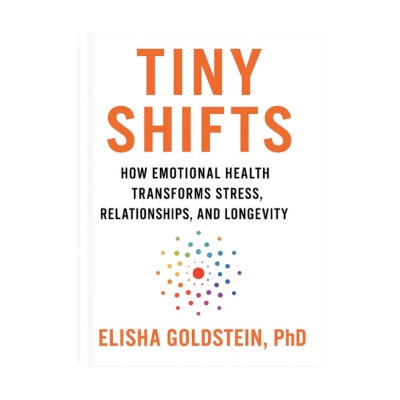

In this episode of Inside Personal Growth, Greg Voisen sits down with Dr. Elisha Goldstein, a renowned psychologist and pioneer in the field of mindfulness and emotional health. After nearly fourteen years since their last recorded conversation, the two reunite to discuss a crisis that has only intensified in the digital age: the “overwhelm loop.”
The focus of their discussion is Dr. Goldstein’s powerful new book, Tiny Shifts: How Emotional Health Transforms Stress, Relationships, and Longevity. In a world obsessed with bio-hacking, productivity apps, and physical optimization, Dr. Goldstein argues that we are missing the most critical pillar of health—our emotional well-being. This conversation is an invitation to stop adding more to your plate and start making the intentional, microscopic pivots that lead to lasting peace.
The Myth of Modern Optimization
During the interview, Greg and Dr. Goldstein reflect on a common phenomenon: people who do everything “right” but still feel miserable. They cite health experts like Peter Attia, who have mastered the pillars of exercise, sleep, and nutrition, only to realize that without emotional health, the structure of a “good life” eventually crumbles.
We live in a time of unprecedented “fracturing.” Our nervous systems are under constant assault from pings, alerts, and digital demands. Dr. Goldstein explains that this isn’t just a mental annoyance; it is a biological state of chronic high alert. When we live in this state, we lose our “choice window”—the ability to respond to life’s challenges with wisdom rather than reactivity.
Understanding the “Overwhelm Loop”
At the heart of Tiny Shifts is the concept of the “Overwhelm Loop.” Dr. Goldstein describes this as an umbrella term for the modern condition. It consists of four distinct elements:
-
Thoughts: The racing mind and “monkey mind” that can’t stop planning or worrying.
-
Emotions: Feelings of inadequacy, irritability, or deep fatigue.
-
Biology: The physical tension, spiked cortisol, and bracing muscles that signal a fight-or-flight response.
-
Actions: The reactive behaviors we take, such as snapping at loved ones or overeating.
The loop is self-perpetuating. To break it, Dr. Goldstein introduces his signature 4-R Method.
The 4-R Method: A Toolkit for Real-Time Change
Unlike complex psychological theories, the 4-R Method is designed to be used in the heat of the moment. Dr. Goldstein shares a personal story of being scammed on social media—a situation that triggered intense shame and anxiety—to demonstrate how these steps work:
-
Recognize: The first step is naming what is happening. By labeling the “overwhelm loop,” you move blood flow to the prefrontal cortex, the part of the brain responsible for regulation and perspective.
-
Release: This is a somatic move. You can’t think your way out of a body-based stress response. By lowering your shoulders, softening your eyes, and exhaling, you signal to your nervous system that you are safe.
-
Refocus: Once the body is slightly calmer, you can ask a “supportive question.” Instead of asking, “Why am I such an idiot?”, ask “What do I need right now?” This points your brain toward helpful answers.
-
Reinforce: This is the most overlooked step. Through “emotional tagging,” you take a mental snapshot of the moment you felt a shift. By acknowledging the win, you wire the neurons together, making the next “tiny shift” easier to achieve.
Finding Meaning in 90,000 Hours
A significant portion of the podcast explores our relationship with work. With the average person spending roughly 90,000 hours of their life working, Dr. Goldstein emphasizes the importance of “Job Crafting.”
He explains that purpose isn’t some grand, elusive destination. Rather, it is the alignment of your daily actions with your core values. If you value connection but work behind a computer all day, a “tiny shift” might be sending a voice note instead of an email or taking five minutes to truly inquire about a colleague’s life. These small pivots transform “doing” into “meaning,” preventing the emptiness that so often accompanies high achievement.
Healing the “Not Enough” Wound
In a vulnerable moment, Dr. Goldstein discusses the childhood roots of emotional health. He shares his own “not enough” wound—the unconscious belief that he had to overachieve to be lovable.
This theme resonates throughout Tiny Shifts. When we live from a place of perceived inadequacy, we become obsessed with the “next shiny thing,” believing it will finally make us whole. The book teaches readers how to provide themselves with the compassion and support needed to heal these wounds, allowing for a sense of peace that doesn’t depend on external accomplishments.
The Power of Tiny Shifts
The message of the podcast is clear: you don’t need a total life overhaul to find happiness. You need the courage to make intentional pivots. As Dr. Goldstein notes, “Neurons that fire together, wire together.” By consistently choosing to recognize, release, refocus, and reinforce, you are literally rebuilding your brain for resilience and longevity.
Whether you are struggling with the loneliness epidemic, career burnout, or simply the feeling of being “constantly pinged,” this episode provides the practical tools needed to reclaim your life.
Connect with Dr. Elisha Goldstein
Our Guest, Dr. Elisha Goldstein:
➥ Book: Tiny Shifts: How Emotional Health Transforms Stress, Relationships, and Longevity
➥ Buy Now: https://elishagoldstein.com/
LinkedIn: https://www.linkedin.com/in/drelishagoldstein/
➡️Instagram: https://www.instagram.com/drelishagoldstein/
➡️Facebook: https://www.facebook.com/drelishagoldstein
➡️Youtube: https://www.youtube.com/@drelishagoldstein
You may also refer to the transcripts below for the full transcription (not edited) of the interview.
Well, welcome back to Inside Personal Growth. This is Greg voisen the host of Inside Personal Growth. And joining me today from Los Angeles is Dr. Elisha Goldstein. You know, I was just reminiscing before we got on here with Elisha that we've done two previous podcasts and it's been so long ago. His first one was in May of 2010 on a book called A The Mindfulness based Stress Reduction.
00:00:30:23 - 00:00:53:01
Speaker 1
And then he did another one in 2012 on the Now effect. And this morning, we're going to be talking about a brand new, very powerful little book called Tiny Shifts How Emotional Health Transform, Stress, Relationships and Longevity. Do you have a copy of the jacket or the book anywhere? I know it comes out March 3rd. Did I catch you off yet?
00:00:53:05 - 00:00:53:16
Speaker 1
Not.
00:00:53:16 - 00:00:55:03
Speaker 2
Yeah. Yes, Yes.
00:00:55:11 - 00:01:14:21
Speaker 1
All right. So what we will do for all of my listeners and viewers, it's going to be in there. It'll it'll also be in this video if you watch this on video. So, Elijah, good day to you. Thank you for being on. Thanks for gracing us with your presence.
00:01:15:09 - 00:01:33:05
Speaker 2
Yeah, I'm really happy to be here again. Greg, you know, reminiscing before the the show on the history of the couple, the couple of shows that we did before, and just your history of the the amount of shows that you've gifted to the world is incredibly impressive. So I just want to acknowledge that.
00:01:34:01 - 00:02:01:08
Speaker 1
Well, thank you for that. I always appreciate that. I know that some of my listeners, since we were last on, which would have been as 14 years ago, don't know who you are. They do know who I am. So I'm going to do a brief introduction for you. Elijah, psychologist, bestselling author, one of the most authentic voices in the field of emotional health and mindfulness.
00:02:02:06 - 00:02:31:19
Speaker 1
But what I've always appreciate the most about you, Elijah, is it beyond all of your credentials, all of your accomplishments, Accomplishments? It's really your ability to take complex psychological concepts and make them not just understandable but deeply practical, applicable to our everyday lives. That's what you've done all along, and I think that's really important. The book we're going to talk about Tiny Ships, which comes out March 3rd.
00:02:31:20 - 00:03:01:15
Speaker 1
So look, in the show notes before Low, you can click on it, it'll take you to Amazon, you can do your preorder or you can just order it and just get the book. And I have to tell you, this book addresses something I see everywhere. You and I were just talking about it before we came on. People doing all the right things for their health, their careers, their relationships, yet still feeling stuck in patterns of overwhelmed stress and disconnection.
00:03:02:13 - 00:03:28:19
Speaker 1
You know, we talk many times on this show about the loneliness epidemic and so many authors bringing it up, writing about it, talking about it, the lack of community, the lack of support, the depression, the anxiety, the amounts of antidepressants that people are taking today. It's all kind of a little monumental. But the good news is you're going to give them some ideas today that are going to help them through this.
00:03:28:20 - 00:04:01:24
Speaker 1
This book sets apart it is setting apart. It's not about adding more to your already full plate. It's about making small, intentional emotional pivots that compound over time to create lasting change in your stress levels, your relationships, your health, and ultimately your longevity. Well, one other thing I want to say is if you go to Elijah's Web site, which is just Elijah Goldstein dot com, there's a little video there about the book.
00:04:02:08 - 00:04:29:04
Speaker 1
And I mean, I highly recommend that all of my listeners go to that and watch that video. It's just Elijah Goldstein again in the show notes below. Check out the show notes below for that. Okay. The other thing I wanted to say is that you do a podcast yourself and that podcast is called the Emotional Longevity Podcast. It's a widely attended program, so check that podcast out.
00:04:29:04 - 00:04:47:22
Speaker 1
You can do it at that same website, right? It's got thousands of listeners. So Elijah, my friend, thank you so much for gracing us with your presence again today and taking the time to talk about your new book and the things you can help people with. I appreciate that.
00:04:48:21 - 00:05:07:23
Speaker 2
Yeah, I'm really happy to be here and thanks for opening the space for us to do this. I can't think of anything more important right now in the current climate of the world and everything that's happening than for people to better understand ways to to feel a sense of personal control over their mind in their lives.
00:05:08:15 - 00:05:36:21
Speaker 1
Well, because you and I have known each other for over 20 years, and I've watched your work evolve in really some meaningful ways. And in the introduction to Tiny Shifts, you share that there's this rare vault, really vulnerable moment at a dinner party when you're with friends. And they said, I'm not handling it very well, and none of your friends were either meaning you or them.
00:05:37:23 - 00:05:54:06
Speaker 1
And that felt so raw and honest, the way you put that at the beginning of the book. What was it about the conversations you've had not only with those friends, but clients, because you're a psychologist, friends, that it became the catalyst for this book?
00:05:55:03 - 00:06:21:11
Speaker 2
Well, I've been seeing this one unfold for a while now, and I remember that conversation. And that was that was about the time that I was thinking about the concepts of this book. And I remember talking with with my friend who was visiting from outside the country and and and she she's a mom. She was a mom and she had kids and she lived in a community of people.
00:06:21:11 - 00:06:39:15
Speaker 2
And she and she worked. And it was it was just I was asking her, I'm like, what do you feel like your big the biggest thing you're facing right now is and this is what she described is just we live in the time right now. And I'm sure people who are listening can can resonate with this. It's it's unlike any other period in human history.
00:06:40:02 - 00:07:16:20
Speaker 2
And here's the reason why. It's not because the world's in such disarray that that I think that's a common misnomer. We live in a time where there's more fracturing and upset in the world than ever before or something like that. I actually don't think that's that. Some people would argue with me and that's perfectly fine. It's that we have b have been lulled into a a certain way of living where we're constantly pinged and and pulled to pay attention to very quick.
00:07:16:20 - 00:08:00:09
Speaker 2
Oftentimes alarming or alerting types of visual and audio and written things that our nervous system takes in. And with with the repetition over time, we where we are nervous systems consistently on a chronic sense of high alert. Now pair that with I don't know about if you're if you're listening you might resonate with us but pair that with the amount of text chains and chats and slack messages and variety of messaging that you have to juggle and your personal life and your professional life, if you're if you're currently still working.
00:08:01:00 - 00:08:28:00
Speaker 2
And it's just it's just an overwhelming amount of content and information that leaves us in a state of feeling chronically fatigued, almost almost exhausted on a regular basis. And there's and when I talk to friends, family, clients, like you had mentioned, Greg, this is and this is a regular type of feeling that we've just become accustomed to.
00:08:28:20 - 00:09:04:14
Speaker 1
Well, one of the things that I think you've seen a shift in with a lot of younger people, maybe not my age because some of us are kind of, I think, dealing with it right there way. Yeah, no, but but but the point is, is that you've seen digital analog. It's been talked about for a long time. You know, instead of having all these digital devices, why don't you just write it down the way it used to and it was really interesting because I just two days ago got a binder again.
00:09:04:18 - 00:09:34:21
Speaker 1
I hadn't used one of these in a long time. Right. It just shows my own personal shift. Right. You can see and I'm actually physically writing stuff down that I always had in all these various devices all over everywhere. And I think that's a really pretty good example. And you have another story, too, that you tell about being six years old when your mom left and how that became a wound that kind of whispered, you're not enough.
00:09:35:07 - 00:09:55:05
Speaker 1
And I think this whole not enough theme is part of the compounding problem that we're that you just talked about a second ago. Because all those message is are leaving you with, oh, no, I've got to have this widget or I got to have that or I got to have this next shiny thing I got to do because that's going to make me enough.
00:09:55:20 - 00:10:17:01
Speaker 1
That takes real courage, really, to put in a book. And thank you for doing that. So how is your own journey through this emotional loop? Kind of informed, not just this book, but your entire approach to helping others who you work with daily deal with their emotional health? We'll get into the other parts of health in a minute.
00:10:17:01 - 00:10:18:07
Speaker 1
But the emotional side?
00:10:19:09 - 00:10:41:03
Speaker 2
Well, you know, I think like a lot of people, when you have your own wounding in life and and if you lean into it at some point or another, I mean, so I had that I had that wounding. I went through my whole whole stage in my life, in my twenties, of being completely out of control and with drugs and alcohol and things like that and working hard and playing a lot harder.
00:10:41:13 - 00:11:03:16
Speaker 2
And so I had to come to a, a moment of really facing myself. And in doing that, I had to recognize the the wound that was there, this this, this feeling of sadness, of grief, of anger. I didn't really have an emotional vocabulary at the time either. You know, I was in my what was in the late nineties, a guy in his twenties.
00:11:04:13 - 00:11:41:16
Speaker 2
You know, we didn't grow up, you know, learning about that type of stuff. But I had to begin to unpack it and learn it. And I read a whole lot of books. I went to therapy and I started to come in touch with my own feelings that were there, my own emotions. And I realized the the deep value of coming home and and being able to lean into the the the feelings that if we're not if we're not aware of them, what will come out in other ways in our relationship ups and our stress reactions, which has a whole biological implication which we'll talk about, I'm sure, at some point.
00:11:42:06 - 00:12:04:03
Speaker 2
And and I realized that you know, I want to this is so powerful to be able to learn to love myself because I had this feeling of being unlovable and didn't that, you know, it's just this happens in life. This isn't this happens in life when you're if you so, for example, as an example, and everyone will have their own opinion about this.
00:12:04:03 - 00:12:28:20
Speaker 2
But if you grew up in a situation that I did and other people have like deeper traumas than me, and but if you grew up in a situation where one of your parents, you know, left and you can't help but for the most part to have a you're learning about the world at that point and it doesn't make sense to you because you don't have a prefrontal cortex that's totally online at that point to be rational about it and whatever.
00:12:29:12 - 00:12:57:08
Speaker 2
And and you feel like, how could this person leave me? I must not be important enough, I must not be worthy enough, I must not be lovable enough. It's not a conscious thing. It's an unconscious thing, Right. And it starts to seep into other areas of your life. But to be able to recognize that and learn to give yourself, you know, the kind of support and love, I realize how powerful that was and supporting my wholeness in the world and my sense of peace inside.
00:12:57:08 - 00:13:19:10
Speaker 2
And I wanted to make that a calling and do that with other people. So just to bring that full circle to your question, that sounded like the most purposeful thing I could do in this life. And I made that decision, I don't know, somewhere around 27 years old. And that's when I went back to graduate school and became a clinical psychologist and started moving in that direction.
00:13:20:04 - 00:14:05:04
Speaker 1
Well, and you moved into an area that was mindfulness based training, right. And mindfulness and stress. And that brings me to the dichotomy between our world, which programs us to be achievers, overachievers. Many of us write many perfectionist, and it's not bringing more happiness. We may write one book, two book, three book, four books, right. The reality is, is that this achievement is how the world looks at you internally, which you're working with people on, is how they live with themselves, their emotions, their feelings, and how okay they are with being who they are.
00:14:05:10 - 00:14:42:01
Speaker 1
And it's enough, right? And you introduce this concept of the overwhelm loop. Okay. This goes into just great alignment with overachievers. This constant pressure that shapes our days, controls our attention, disrupts our sleep, and leaves us irritable, even in our closest relationships. I've seen so much anger lately and yeah, much of it is being caused by the division in people today because of our administration and things that are going on in the world and understandably so.
00:14:42:03 - 00:15:07:17
Speaker 1
It's a it's a disrupt. It's a complete disrupt. Help us understand what exactly is the overwhelmed loop and why is it that even when we stop being busy, okay, our minds still can't rest? Now, we've talked about the monkey mind on other shows before and we've tried to do the meditation and people are attempting to reduce their stress in all of these ways.
00:15:08:01 - 00:15:15:07
Speaker 1
But this overwhelm loop is something that is a, I'd say, persistent bother in people's lives.
00:15:16:05 - 00:15:36:22
Speaker 2
Yeah, I would say the the. So I'll just name one thing. The reason I called the overwhelm loop in the beginning, in the beginning of the book and I kind of like stage that as this is the kind of a catchall feeling that a lot of people are experiencing right now. If there was like, there's a lot of different names for emotions in the field of emotional intelligence.
00:15:36:22 - 00:16:01:11
Speaker 2
We, you know, and in the field of nonviolent communication. Marshall Rosenburg unpacked many different names for emotions. And there's a value in being able to to just name how we're feeling. And overwhelm is an emotion. The reason I think of that as an umbrella term is because if you literally go on the street right now and interview or survey a hundred people and you say, How are you feeling right now?
00:16:01:17 - 00:16:27:23
Speaker 2
It's going to be something like tired or overwhelmed. There's going to be that's going to be the overarching feeling versus versus angry. It depends, of course, what crowd you're you're talking about in the context of it, of course. But I'm just saying in general, that would be that's my sense of my own informal research around that. And so the overwhelm loop, it comes from a larger term called the emotional loop.
00:16:28:12 - 00:16:57:02
Speaker 2
The emotional loop is something that consists of what we're thinking, how we're feeling emotionally, how our body is reacting biologically to that, and the actions we end up taking as a result of it. So those four things and the value of naming at the overwhelm loop is there's we get a little bit of distance from our experience. Typically we're operating, you know, pretty much on autopilot for the most part.
00:16:57:21 - 00:17:36:22
Speaker 2
We can't we can't be conscious all the moments of our day. We're operating off implicit memory. And so when we name what's happening this overwhelm right now, we get a little bit of space, a little bit of distance from it, which allows us to have more perspective on what's happening in the moment, which allows us to regain a bit of control, be able to see more choices that are there that might support us and down regulating the act, an activation that's there, a chronic stress that's happening in the moment and being able to choose responses that are more adaptive for us, healthier for us, move us towards connection versus disconnection with ourselves and other people.
00:17:37:02 - 00:17:49:23
Speaker 2
Help us make healthier choices. So that's like the foundation, that name naming what's happening. This overwhelm loop that's here is the foundation to living better.
00:17:50:18 - 00:18:20:04
Speaker 1
Well, and obviously this leads to tiny shifts, right? So all of those things you just talked about or what this book is about now, I thought this was really interesting. You were out walking her dogs one day and you're listening to Peter Attia. I listened to him as well, and I have his book out live when he admitted that despite despite mastering all these physical pillars of health, diet, exercise, sleep, that he was miserable.
00:18:21:03 - 00:18:58:13
Speaker 1
Right. And you write, without emotional health, even our best intentions can't hold on. Why do you think emotional health has been so overlooked in the wellness conversation and what are look, the thousands of physicians out there missing when they ignore it, okay, Because, look, there are people out there that can go and prescribe an antidepressant for somebody and they really don't do the proper assessment.
00:18:59:22 - 00:19:29:10
Speaker 2
Yeah, we we are a culture that values what we can, what we can see and feel and things that are measured by quantitative science and and so with exercise, you know that when you exercise probably has the most funding behind it in the field of research and for good reason, it's very important to our to our physical bodies, our health, our longevity, all of it.
00:19:29:20 - 00:19:54:01
Speaker 2
And and then you look at sleep and k sleep we can measure to sleep's very important to nutrition. What we put in our body is how we feel. So these are all very key pillars of our health and our longevity and how we feel. Emotions are a little harder to get a handle on. Yeah, we you can't you can't see an emotion.
00:19:54:01 - 00:20:17:22
Speaker 2
You can't. I can't I can pick up a pen and say, What is this? And you'll say it's a pen. But if I say, what's this? You know, this feeling, you might be able to read my anger or my sadness or my joy or excitement. You might be confused by it. Some people, you know, believe that emotions are constructed, the label of the emotion is constructed based on what's happening physiologically in our bodies.
00:20:18:13 - 00:20:48:22
Speaker 2
So. So it's harder to it's harder to measure. However, what we what we know is that when we're feeling depressed or upset, well, we're probably less likely to exercise when we're when our when our cortisol, when we're more when we're stressed, we're having like chronic stress. Our cortisol is totally out of whack. And that's going to mess with our sleep rhythm and we tend to overeat because of our emotional reactions or under eat because of our emotional reactions.
00:20:49:11 - 00:21:20:04
Speaker 2
And and it was it was it was that moment when I was listening to the last third of that book that I realized that even the one of the leading health and longevity research can't outrun the reality of the power of emotions. And and, you know, in his terms, he said, you know, if I'm if you're if you're doing all of this optimization in your life and you're miserable, what's the point?
00:21:20:16 - 00:21:32:04
Speaker 2
Yeah. And then at Yeah and that was the point. And the same time, if you're miserable, you're not. Everyone's like a machine like he is, you know, in that way. And you know, he's an outlier, in my opinion.
00:21:32:06 - 00:21:32:13
Speaker 1
Oh yeah.
00:21:32:14 - 00:21:59:09
Speaker 2
Most people, if they're, if they're miserable, they're not doing all those health like health with that level of commitment and diligence. And I'll say this to Greg. So, so since that time, I've interviewed a number of like longevity, you know, leaders and I hear from them that they know that in their circles there are a number of people who are optimizing and miserable.
00:22:00:06 - 00:22:11:19
Speaker 2
And so, you know, to to me, if we can take care of our inner world, we're much more likely to be effective at taking care of our outer world.
00:22:11:19 - 00:22:41:11
Speaker 1
Where I recently had a Dr. Steven Post on here, and his last book is called Pure Unlimited Love. And this this reflection comes to me because of the amount of studies that have been done around giving back and the emotional benefits of giving outside of ourselves. Our world is so focused on what we can get not what we can give.
00:22:42:00 - 00:23:23:03
Speaker 1
Okay? And when I see that, if I see somebody who's kind of out of balance, I kind of always ask them, So what are you doing to give back to other people? What are you doing to help the community? What are you doing to be involved in some kind of charitable work, whatever it is? But if you look at what happens to our cortisol levels when we do that, like you were talking about cortisol a minute ago and the oxytocin that are released in our system as a result of this kind of emotional outpouring, it's huge.
00:23:24:09 - 00:23:26:13
Speaker 1
Any comment? This is a side note. Yeah, we.
00:23:26:13 - 00:24:06:03
Speaker 2
Know. We know. One of the longest studies is at a Harvard by Bob Waldinger. You know, found that when we that that connections at the epicenter of longevity. Yeah. So if you're giving and generous you're inclining to be pro-social and prosocial leads to a feeling of connection versus disconnection. So you're enhancing connection, you're enhancing connections in relationships. And we know, aside from even the science, we know that, you know, in Alcoholics Anonymous or in these anonymous groups, one of the first things that that happens when people come in, you know, is like this idea of like, where can you volunteer, Right?
00:24:06:18 - 00:24:07:10
Speaker 2
You know, where can.
00:24:07:10 - 00:24:30:19
Speaker 1
You see look at all you got to do is look at Jimmy Carter. A guy lived to be 100 years old, Right? And all he ever did was help build houses for the people who were underserved. I mean, he spent a big percentage of his life. I mean, we've got a president now couldn't even figure out how to give if we you know, if someone came up to him and said, hey, be be generous.
00:24:31:21 - 00:25:02:13
Speaker 1
But beyond that, let's go to this. Let's dive into these for our methods, which is recognized, really refocus and reinforce. This is your framework and it feels both simple and profound. If you would, for the listeners, walk us through how someone who stuck in a pattern, maybe their, you know, snapping at their partner, they're spiraling out of control, They're worrying.
00:25:02:13 - 00:25:09:21
Speaker 1
They're up at three in the morning, How would you actually apply? The four are in these situations?
00:25:10:12 - 00:25:39:03
Speaker 2
Well, let me let me break it down, because it is it is it is simple and profound at the same time. And what I what I what was important for me to do and I've done, as you said in the beginning of this of our time together, is to make something that is easy to follow, doable and really effective as far as our emotion, regulation and being able to make decisions that are more in line with our health and our values quicker in real time.
00:25:39:24 - 00:26:12:17
Speaker 2
And that's the key. And so recognize is what we talked about when we talked about the overwhelm. So it's so the and there's things that can help with it and and I'll explain it. So recognize is something that in a lot of the world's wisdom traditions and in science both both acknowledge the importance of naming labeling, noting because when we do that, we literally bring blood flow to the prefrontal region of the brain, which is involved with emotion, regulation and impulse control, and also having a sense of perspective.
00:26:13:02 - 00:26:34:03
Speaker 2
So it's and we can do that in a variety of ways. We talked about the overwhelm loop. We talked about the how. It has four different elements to it. It has thoughts, emotions, sensations and the behaviors that we do in the actions. And so you can enter and label or recognize at any point. So you can say to yourself, I'm over eating right now.
00:26:34:11 - 00:26:56:21
Speaker 2
You could say, or snapping at my kids, or you can say I'm feeling sad or their stress here in my body. You can say my shoulders are coming to my ears right now. These are all ways of just any one of them, of just being able to step outside of the moment that you're in the autopilot, the implicit reactivity that's happening.
00:26:57:10 - 00:27:22:19
Speaker 2
And and to be able to get a sense of choice and control. So that's there's nothing what's so profound about there's nothing new about that. Right. That's something in the field of mindfulness. That's something in the field of psychology. This is but what we have to be careful with. Greg and anyone who's listening to this is because that first step is so simple that we could get caught in.
00:27:22:23 - 00:27:47:22
Speaker 2
Oh, yeah, I've tried that before or I'd, I've done something like that before, you know, and your brain will move into It's very interesting how this happens. We'll move into something called top down processing. We'll take in the information, listening to me right now and discard it or minimize it only because it's heard it before. So when you walked around a block and you and you see a rose for the first time, you might positive.
00:27:47:22 - 00:28:04:20
Speaker 2
That's a beautiful rose. My goodness. You might stop and smell it. And if you rock on that walk around the block 50 times, you'll stop. Notice. You won't even see the rose anymore. And so they want to kind of take a bottom up approach from this and just say like, okay, all right, Where you want to ask, where am I doing this in my life right now?
00:28:04:20 - 00:28:27:09
Speaker 2
Allow yourself to actually expand the ability to bring that back into your life. So that's the recognizes the very first and we make this the for our method, just to make it simple as well. And so the second piece of the exam I was I was I don't know if that ever happened to you, Greg, or for anyone on the other end who's listening right now are watching.
00:28:28:14 - 00:28:48:12
Speaker 2
I was the, you know, call a victim of a of a Facebook scam, you know, a while back and a celebrity reached out to us and or what was perceived to be and said, I want you to be on a health panel. I'm putting on an event, you know, nothing to seem too out of the ordinary for that necessarily.
00:28:48:12 - 00:29:06:18
Speaker 2
And they're going to pay you for it. And and when you set up a tech call, so set up a tech call and there was a couple of red flags, but I was excited about this event. It seemed really cool. And so my brain overlooked those. And and before I knew it, they'd gotten into my Facebook and taken over my Facebook.
00:29:07:11 - 00:29:32:07
Speaker 2
So at that time there was a lot of alarm happening because your Facebook has all kinds of things in the back. And for those you're familiar with the business side of Facebook, you have like financial information in there. You have like really key identifying information and you don't know if they've stolen your identity or what's happened. And nevertheless, they're running all kinds of crazy stuff on your Facebook page, right?
00:29:32:07 - 00:29:54:21
Speaker 2
And so I was feeling really anxious and I was feeling very tense about it, obviously. And my the threat system had gone into place. No doubt my cortisol had gone up, my adrenaline had gone up, my heart rate had gone up, my blood pressure had gone up in that moment. And and I at some point and I enlisted my assistant to help me at some point, I just kind of like named what was happening.
00:29:55:05 - 00:30:19:17
Speaker 2
I recognized it. And in that space I was able to go to the second are the second are is release. So release is is as a somatic is initially a somatic experience and it's taking into consideration how the stress response impacts your biology. So a moment ago I had mentioned, you know, cortisol spiking, adrenaline spiking. What happens then?
00:30:19:17 - 00:30:35:24
Speaker 2
And then your heart rate and blood pressure increase as your muscles start to tense and brace. This is because you're getting into a fight or flight freeze. Right. So your your your body has to get ready to to do that so your muscles have to tense embrace. So a lot of us live in the day with a constant sense of this and unaware.
00:30:36:14 - 00:30:55:11
Speaker 2
And so I noticed that my shoulders were creep creeping up to my ears. My, my, my, my arms were tense, my hands were tense. And so I took a moment and it is very, again, very simple. We're using our bodies to redress our minds for a second where we're not just in the space of awareness. We need to widen that space because it's not wide enough.
00:30:56:01 - 00:31:19:14
Speaker 2
So we want to increase our perspective and choice. Access to our ability to choose a healthier response. So I literally lowered my shoulders. I took a breath and I said the word release. What was I releasing? I was releasing a sense of worry I was releasing. Doesn't mean it's gone, but it's a practice of leaning into releasing versus holding.
00:31:19:14 - 00:31:52:15
Speaker 2
So, Lord, my shoulders soften, soften the muscles behind my eyes or my eyelids. And I took a few breaths and I said the word release, and that allowed me. So that was a somatic move which, which which literally, as I do it even right now, I notice there's a different perception of space of spaciousness that's here, of of presence, even that's here, which means I have more access to be able to do the third hour, which is refocus.
00:31:53:04 - 00:32:17:12
Speaker 2
Now it can refocus where most people make the biggest mistake in trying to control their minds in their lives, make choices and stuff like that is they're in a in a constant state of chronic stress and are in a stress response to some degree. And they just try and like what we better. For me is to make this decision to not eat this bag of potato chips be better for me is to is to refocus on this email because I've been distracted by this thing.
00:32:17:20 - 00:32:36:12
Speaker 2
But you're doing it from a place of the stress is too high. We need to deflate it a little bit so your body and mind have more of the wherewithal to actually make the decision that's going to be more lasting for you. So in that moment, I made the decision of like, I need to get outside and get space.
00:32:36:12 - 00:33:08:20
Speaker 2
I need more, I need more grounding, I need to I need to deactivate more. I need to get away from this computer. I've done all I can do at this point and I'm going to go outside and take a walk. Now, this is the interesting part, Greg. If you are aware of if you believe in this idea of just kind of like being aware of how you're feeling and how the emotional center of the brain is one of the most influential parts of the brain that influences our perception and our choices.
00:33:10:03 - 00:33:30:09
Speaker 2
And so I was aware of this. I'm going to walk my talk. I take my dogs out on a walk. I'm aware of the stress. I'm aware of the all of a sudden the shame that hit me this these self-critical voices that were there of like, how could you how could you fall for this? Like you're you're smarter than I thought you were smarter than this.
00:33:30:11 - 00:33:51:15
Speaker 2
Such an idiot like. And they were just really beating me down and I was noticing this and then I was because I was aware of this and kind of playing with this formula, this method, I was able to ask myself a question. And so here's the important part. Where we live in an age of artificial intelligence and a growing sense of artificial intelligence.
00:33:52:06 - 00:34:20:16
Speaker 2
But what if we understood that we also have a certain natural intelligence within us and just like artificial intelligence where you can ask it a question and it can give you an answer, if you can ask yourself the right questions, you're going to point your brain towards the right answers. If you ask your brain the wrong questions, you're going to point your brain towards the wrong answers or answers that are going to be that are going to hinder you.
00:34:20:24 - 00:34:42:00
Speaker 2
Why are you such an idiot? What's wrong with you? How is this going to turn out to be a disaster? Your brain's going to come up with all the answers for that. What do I need right now? What's going to be most supportive for me right now? Well, I'm so activated and so hard on myself. You're going to come up with very different answers as I did on that walk.
00:34:42:09 - 00:35:06:23
Speaker 2
So as I did on that walk, I continued walking slowly. I put my hand on my body just to kind of like make contact with myself for a second. And all of a sudden that shame turned grief. All of a sudden I felt sad for what happened. There was a loss. And then later on that that that sadness turned into anger for me, being like, you know, someone intruding on a very private space of mine.
00:35:07:11 - 00:35:27:07
Speaker 2
And and within a few hours that I came to a place in complete equilibrium, like my body was no longer in a stress response that had been fleshed out. Because through this method, I allowed myself to move through it and to be able to refocus my mind in healthier ways in that moment. And this is the key, the final answer.
00:35:28:05 - 00:35:57:16
Speaker 2
And there's, by the way, a variety of ways to refocus. There's a variety of ways to release and and even get to get a lot better at recognizing. But the final one that most people miss and this comes from the field of neuroscience is this idea of emotional tagging. How come we can do all kinds of great things in our lives, all kinds of great redirects, learn all kinds of things in therapy and whatever, And we keep falling into the same patterns over and over again.
00:35:57:19 - 00:36:26:20
Speaker 2
Ah, a lot of us do. It's because we don't reinforce force the wins. We don't reinforce the moments not working for us. But how do you do this? So in the field of neuroscience, there's a term called emotional tagging and emotional are emotions. Again, influence are the greatest influence on our perception and our decision making. And if you recognize a certain emotional state that's there, a certain insight that you have, you want to do something to help with the memory of it.
00:36:27:17 - 00:36:46:11
Speaker 2
And so emotional tagging is something like recognizing like, Hey, this is a good moment and this is this is a moment of insight. This is a moment where something lifted. This is a moment where something worked. There was a relief here and there's more ease here. There's more peace here, There's more calm here because of what I had done.
00:36:46:20 - 00:37:02:24
Speaker 2
And you literally want to close your eyes. This is just one way of doing it. And take a snapshot in your mind. Our mind loves to remember pictures. And so you take a snapshot of this feeling that's here. You put your hand on your heart and you say or your abdomen or whatever, and you say to yourself, this matters.
00:37:02:24 - 00:37:29:24
Speaker 2
This moment matters. You literally say that in your mind, you're helping embed the memory of it to make it more memorable for the next time. And when you do this in small, consistent ways with repetition, that's how the neurons that fire together wire together. That's how we create more memory and and change the implicit ways that are driving us towards more stress resilience.
00:37:30:13 - 00:37:34:16
Speaker 2
Help us show better in our relationships and support our long term health and well-being.
00:37:35:18 - 00:38:00:21
Speaker 1
Well, I know one of the things that you talked about in your earlier books, and it still holds true today as you're telling that story. I'm reflecting on a similar incident. Right. So many of people out there could relate to what you just talked about. And maybe it wasn't an intrusion of the Internet. It was other intrusions in their life that seemed like somebody was taking advantage of them.
00:38:00:21 - 00:38:32:05
Speaker 1
Right. That there was an injustice done. So injustice. Okay. And where I think I come from, this is an area where and I want to get to this before we finish is so many people out there today are spending 70, 80% of their time at work. And your chapter on work and purpose, you talk about turning doing into meaning.
00:38:32:05 - 00:38:59:13
Speaker 1
And I just had Bill Barnett on here from the school who wrote all the books on his brand new book out on Meaning right Out of Design meaning into Your life. Fascinating, fascinating interview. But in your case, as someone who works with a lot of high achievers, which I'm sure you do, I see this everywhere. People are busy, productive but feeling empty.
00:38:59:13 - 00:39:23:14
Speaker 1
Same thing you said about Peter Attia. It could be a lot of different people. How do you emotionally shift or help people shift, reconnect to this sense of purpose at work? Because, look, they wake up in the morning, send the kids off to school, go back to their house, maybe they're doing remote work or they're working in an office somewhere.
00:39:23:14 - 00:39:38:15
Speaker 1
They come home. They got very little time busy, busy, busy lives. Right. So how would you as somebody who's been through this, you've got small kids. Well, they're maybe not small anymore, but you've got more. Yeah, Yeah. You got kids?
00:39:38:15 - 00:39:39:21
Speaker 2
They were when we first met. Yeah.
00:39:39:24 - 00:39:47:23
Speaker 1
Yeah, they were when we first met. And how. How do you help your clients deal with this whole issue of meaning and purpose?
00:39:48:23 - 00:40:17:07
Speaker 2
I think this is a, you know, first of all, this is a huge, a hugely important topic. And I'll related back, first of all, I just want to kind of name work is really anything that you're doing that is as productive in your day. So if you are, you know, someone who works, who lives at home and takes care of the house, that's your work.
00:40:18:02 - 00:40:44:10
Speaker 2
If you go to an office, that's your work. If you're retired and you're working on something that's, you know, part of taking care of your life, that's your work. And and so just kind of naming that to begin with. And the first thing I do is, is help people understand what they actually value. A lot of people don't necessarily do that inquiry.
00:40:44:10 - 00:41:07:08
Speaker 2
I've met many people in the latter years of their life say, I just feel like my my life hasn't been that that meaning for the work I have ever done hasn't been that meaningful. What's my purpose, after all, was my purpose in being on this planet. And to me, purpose and meaning aren't in some grand umbrella reason that you're here.
00:41:08:02 - 00:41:29:16
Speaker 2
It's it's an understanding the values that are important to you in living on this planet and aligning your actions with them. And if you can do that, you're living a meaningful and purposeful life. That's that's sort of the key. So the first thing we have to understand is what do I value? Like, what's meaningful to me is, is it connection?
00:41:29:16 - 00:42:02:07
Speaker 2
Is it being kind to other people? Is it being is it giving? Is it generosity like we talked about before? Is that living a compassionate life? Is it taking care of my family? Is it you know, what's what's what is my what is meaningful, purposeful, what are my values? Then after that, then we can work with this method that we talked about to be able to realign ourselves back with this and better understand how I can weave these values into the work that I'm doing in my everyday life.
00:42:02:07 - 00:42:24:16
Speaker 2
I'll give you an example that's personal for me. If you've ever written a book before, you know it's a we talked about the loneliness and you know, you mentioned this before, Greg. You know, it's a it's a highly solo venture for most people. And unless you have like a team around you and you're all working on it together, that's a different type of book writing.
00:42:25:16 - 00:42:44:22
Speaker 2
And you're also susceptible like everyone else to the comparing mind of and the worry that it's not going to do, you know, not going to do as well as you'd like it to do or like let's look at all these people who have sold millions of books. You'll never kind of do that. You know, your mind kind of plays all kinds of tricks on you.
00:42:45:10 - 00:43:01:20
Speaker 2
And so what's the point? It can be kind of deflating and it takes a lot of determination and commitment, like in other forms of work, to be able to complete it, to move through it and complete it. And, you know, so this happened to me, you know, many times in this book. I actually write it in the book in Tiny Ships.
00:43:02:03 - 00:43:22:24
Speaker 2
I write because I use it as an example of how to move through this type of stuff. And there's an area there's a there's a field of there's a field of approach called job crafting out there, which means like, how do you look at your job without having to change the work that you do and really like make it more meaningful?
00:43:23:02 - 00:43:58:02
Speaker 2
That's kind of the bottom line. And so for me, I realized that if the words on this page so I recognized the comparing mind that was happening, the deflation that was there, I took a moment and kind of took a breath. I released and and I refocused and said and asked myself, what if this what if the words you're typing right now, this work you're doing right now impacts one life in a way that's meaningful to them, that changes the course of the way that they take care of themselves.
00:43:59:05 - 00:44:26:17
Speaker 2
And all of a sudden, like a whole slew of energy started to come back to me. I started to feel more inflated than deflated. And I had I literally it's crazy how this it's crazy how powerful the mind is because I literally had more focus and energy pretty instantly right in front of me. And, you know, and so so that was a way of my job crafting of me being able to shift the way that I saw that the work I was doing.
00:44:26:17 - 00:44:48:03
Speaker 2
But I didn't just kind of like do it through some just initial cognitive reframe. I brought myself through the process of recognizing the deflation, of recognizing the catastrophizing that was there, recognizing the comparing mind, a being able to redress the biology of it for a second as it was impacting my nervous system so that I could be more effective at refocusing, asking myself a different question so my brain could look for different answers.
00:44:48:09 - 00:45:09:15
Speaker 2
And it happened to turn into a reframe that was there, which brought on more energy. So I would say the very first thing is understand your values and tiny shifts in that. In that particular chapter, which is chapter 12, a tiny it's called 90,000. I like 90000 hours or something like that, because that's the amount of time we spend in our lives or whatever to an hour in our work.
00:45:09:23 - 00:45:40:18
Speaker 2
And and understand that then we can begin to craft what you're doing in your life in a more meaningful way. So it so that you're and it's true, it's genuine. You're not like tricking yourself into anything. It ends up being very genuine and true to you. And there's other ways to job craft. Sometimes you can, in the things that you're doing, you can, you can kind of layer in some things that make it more meaningful to depend on, depending on your interest in things.
00:45:40:18 - 00:46:10:03
Speaker 2
For example, if you're in the workplace and you've really value connection and relationships, but you find yourself solo behind behind your computer a lot during the day, you can literally send people voice notes instead of typing things out, and you get more of a feeling of connection from them. You might get up a little bit more often and have a conversation session with someone and inquire about their life that you work with, which makes it again more a more meaningful experience because it's aligned with your values.
00:46:10:07 - 00:46:28:09
Speaker 2
You might do what Greg was talking about and you might see like, Where can I fit more generosity into the work that I do because it's a value of mine. And so I don't need to change my job. I just need to understand what I value is an incline in that direction, and then that all of a sudden brings more meaning and purpose into the work that you do.
00:46:28:18 - 00:46:48:09
Speaker 1
Well, I think rightfully so. Tiny shift, right? It's really around our awareness and the more awareness that we can create about, you know, I remember taking my course in spiritual psychology and they used to say, Hey, look, if a video camera was following you all day long and then you played it back, would you like what you saw?
00:46:48:12 - 00:47:09:08
Speaker 1
Right. I've heard that example before, and I think many of us if a camera was following you today, you really need to check in and say what I like. Do I like what I see? Could I make a shift somewhere? If I made that tiny shift, where would that be? What would bring more joy? What would bring more pleasure?
00:47:09:08 - 00:47:32:01
Speaker 1
What would bring more meaning? Right. What would make me feel enough? As you said, ask yourself the right questions. And if you do that, you're going to have a positive experience. I really appreciate you, Elijah, for coming back on again and talking about tiny shifts again. Look in the show notes below. You'll have a link to Amazon to purchase the book.
00:47:32:07 - 00:47:56:13
Speaker 1
You'll have a link to Elijah's website as well, which I mentioned. Go there and watch the video. I think you'll really be impressed with what Elijah is doing. Go back and check some of the wages, but we'll put a link to the mindfulness based stress reduction book and the now effects book that he had so that you guys can look at that, those various podcasts as well.
00:47:57:00 - 00:48:11:23
Speaker 1
And Elijah, thank you. Thank you. Thank you so much. Namaste day to you. Appreciate you and everything that you're doing and the work you're doing. And believe me, just keep writing because you're going to make a difference in everybody's life. Anybody who picks up this book.
00:48:12:24 - 00:48:17:21
Speaker 2
Thank you, Greg. Thanks for having me back and for everything that you're doing.
Sign up to receive email updates
Enter your name and email address below and I'll send you periodic updates about the podcast.











Leave a Reply