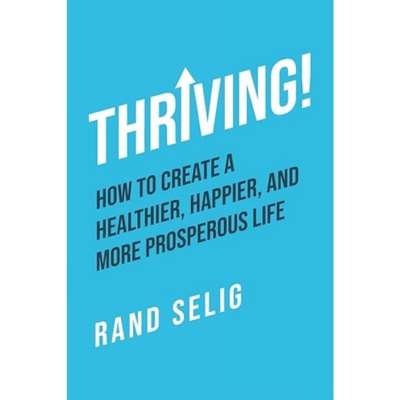
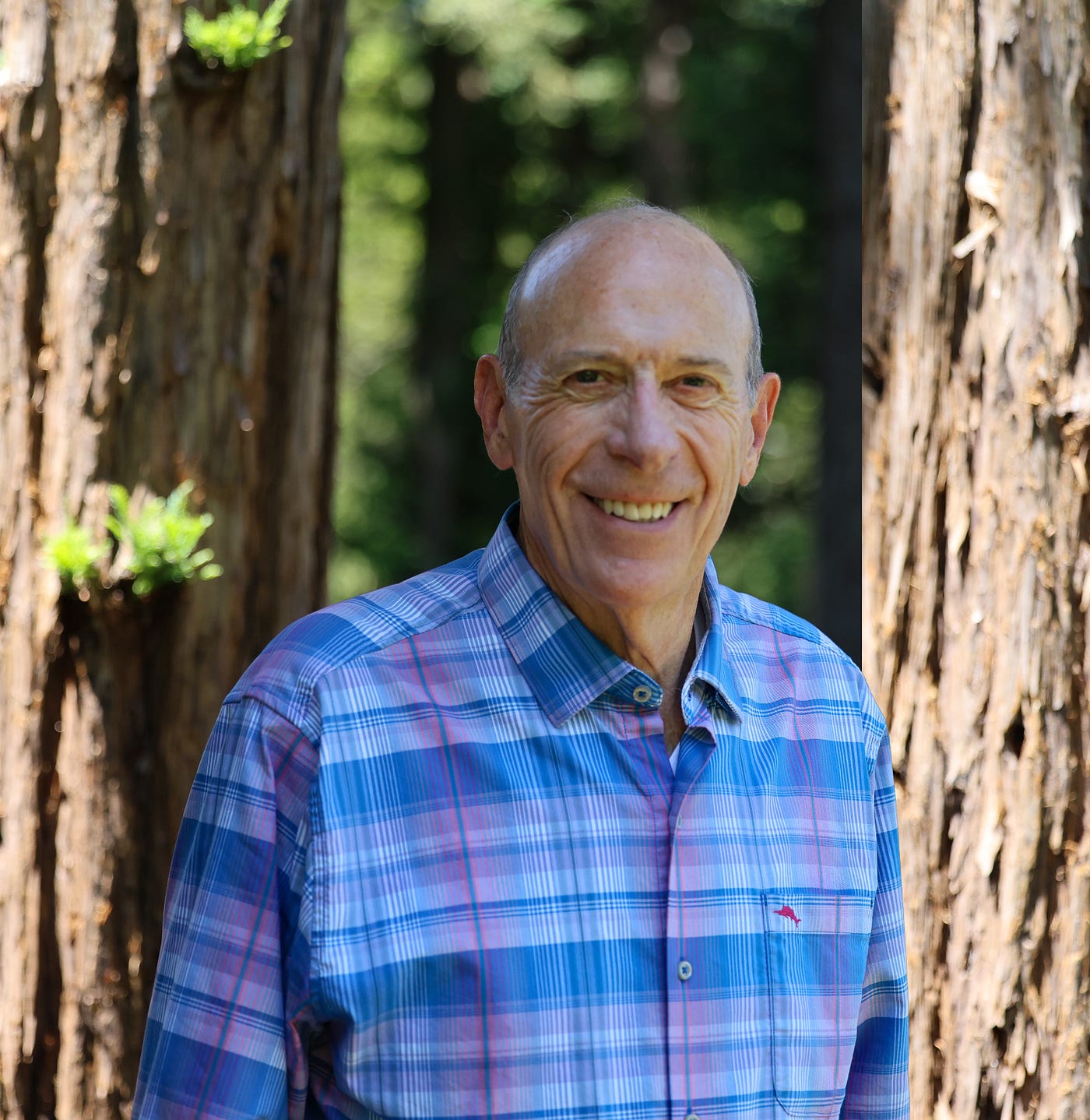
Podcast 1294: Thriving!: How to Create a Healthier, Happier, and More Prosperous Life

In this podcast, Greg Voisen sits down with Rand Selig—a “relentlessly positive” entrepreneur, conservationist, and Stanford MBA—to explore the profound difference between simply succeeding and truly thriving. While many people feel like they are just getting by, Selig’s work, Thriving: How to Create a Healthier, Happier and More Prosperous Life, serves as a powerful compass for navigating life’s transitions, setbacks, and new beginnings.

The Distinction: Surviving vs. Thriving

The conversation opens with a bold question: What does it actually mean to thrive?. Selig suggests that many people confuse “success” or “survival” with thriving, but he sets a much higher bar. He uses a weather metaphor to explain the concept: Thriving is the “climate” of your life—the average over time—rather than just today’s “weather”. You might have a bad day where you feel like you aren’t thriving, but the ultimate question is whether your life, on average, is trending toward health, happiness, and prosperity.

The “Bus” Framework: Taking the Wheel

The core of the conversation revolves around a life-changing metaphor: “Driving your own bus”. Selig explains that if you aren’t the driver, you are likely on autopilot or letting someone else dictate your path. To thrive, you must be the one deciding how fast to go, when to stop, and most importantly, when to make pivotal changes like turning right or left.

A critical part of this responsibility is managing your social circle. Selig notes that we must keep inviting supportive people onto our bus while being brave enough to invite toxic people off the bus to ensure the journey remains healthy.

The Four Pillars of a Prosperous Life

Selig assembles a thriving life using four distinct parts:

  1. Thriving Personally: This is the foundation of his philosophy, focusing on building character and deep self-awareness.

  2. Managing Yourself: Learning to be the leader of your own actions and decisions.

  3. Financial Wisdom: Managing money well and, more importantly, defining “enough” to ensure prosperity doesn’t become a source of stress.

  4. Relationships: Selig identifies relationships as a bedrock component of thriving. He shares that his 44-year marriage is built on deep trust, communication, and allowing each other to have separate lives alongside their joint life.

Resilience and the “Rubber Ball” Effect

Life inevitably knocks us down, but Selig argues that thriving requires a specific kind of resilience. He distinguishes between an “iron ball” and a “rubber ball”. An iron ball might be tough, but it doesn’t bounce; it simply hits the ground and makes a dent. A rubber ball, however, deflates momentarily upon impact and then re-inflates as it bounces back up. Choosing to be the “rubber ball” allows you to return to your full form after a setback.

Emotional Housecleaning: Forgiveness and Letting Go

To move forward, Selig emphasizes the need to reprogram our subconscious and address limiting beliefs. He offers three essential components for emotional health:

  • Stop Self-Sabotaging: We must move away from the “I’m not good enough” narrative and take chances, even if there is only a 1% chance of success.

  • The Power of Forgiveness: Holding onto resentment is like carrying a heavy rock in your backpack. Forgiveness—both for others and yourself—is the act of throwing that rock away to lighten your path.

  • The Art of Letting Go: Selig shares a physical exercise where you squeeze your fist tight until your knuckles turn white, representing control. By choosing to open your hand and wiggle your fingers, you feel the blood flow again and your hand naturally rises, no longer weighed down by the need to control every outcome.

The Science of Positivity and Longevity

Being “relentlessly positive” is more than just a personality trait; it is a survival strategy. Selig cites scientific studies showing that maintaining a positive mindset can add 8 to 9 years to your life. He warns that the media often focuses on “if it bleeds, it leads,” which can create a defeatist attitude. To combat this, we must consciously choose to see the good and the beautiful in our daily lives, such as expressing genuine gratitude to a person serving us coffee.

Leaving a Legacy

Finally, Selig discusses the concept of legacy, which he views in two parts:

  • Little L Legacy: The immediate impact you have in a specific job or relationship.

  • Big L Legacy: The contributions that last long after your death, such as how you raised your children or your service to mankind and Mother Earth.

Ultimately, Selig hopes his legacy will be helping people define success on their own terms. He reminds us that success is found in the world of “being”—being a good listener, being kind, and being respectful—rather than just “doing”.

Connect with Rand Selig

Rand is dedicated to helping individuals shift from merely surviving to truly thriving by co-creating a life filled with health, happiness, and prosperity. To explore his work further, learn about his tools for positive thinking, or access his insights on building enduring relationships and a lasting legacy, visit him through the following official channels:

Book: Thriving!: How to Create a Healthier, Happier, and More Prosperous Life

Website: www.randselig.com

LinkedIn: www.linkedin.com/in/randselig/

You may also refer to the transcripts below for the full transcription (not edited) of the interview.

Welcome to Inside Personal Growth podcast Deep Dive with us as we unlock the secrets to personal development. Empowering you to thrive here. Growth isn't just a goal, it's a journey. Tune in Transform. Take your life to the next level by listening to one of our podcasts. Well, welcome back to Inside Personal Growth. This is Greg, voisen and host of Inside Personal Growth.

And joining us on the other side of the screen for those of you who are listening on audio only. Well, too bad because you don't get to see you don't get to see Rand Selig. He is the author of this wonderful book. And the reason I say that is because I had a chance to meet him in person and actually get it autographed and spend some time with him over coffee in Mill Valley, California.

Rand, how you doing today?

00:00:53:02 - 00:00:58:01
Speaker 2
Hey, Greg. Just terrific. So happy to be here with you. Looking forward to our conversation.

00:00:58:06 - 00:01:27:12
Speaker 1
I am as well. And I want people to really realize one thing. The book is called Thriving How to Create a Healthier, Happier and More Prosperous Life and Where You Can Go to learn more about his book is just Rand Selig, and that's E. I l i. S sorry s e. L i g dot com s e. L i g dot com.

00:01:27:20 - 00:01:53:10
Speaker 1
There you're going to see about the book testimonials. Bill He's got a free section. So let me point this out to you. If you put your name and your last name and your email address, he'll send you a free PDF from Thriving Tools for Positive Thinking, which I think is just a great opportunity for individuals. So I would encourage you to go up there and sign up for those free tools.

00:01:54:09 - 00:02:20:13
Speaker 1
And again, you can get that at his website. You can learn more about him there. You can look at his recommended books for reading, okay, audio materials and to connect, but random and let him know a little bit about you. I'm really thrilled to have him on today because I had the pleasure of meeting him over the holidays, which I don't always get that opportunity.

00:02:20:20 - 00:02:59:17
Speaker 1
And I when I can, I'll go out of my way to meet authors if I'm even close and Rand is just this relentlessly positive guy. And so that's this book. And he's an accomplished entrepreneur, coach, conservationist, board member with an MBA from Stanford. Throughout his career, he's excelled at managing complex projects on the global scale. But what really, truly sets Rand apart is his unwavering belief that we can all and I'll underline, be the author of our own story.

00:02:59:23 - 00:03:31:01
Speaker 1
Okay? His new book that we just said, Thriving How to Create a Healthier, Happier and More Prosperous Life is a powerful compass, I would say, for navigating life journey through challenges, setbacks, endings, and new beginnings. It is filled with wisdom, practical tools, as they said, go up and get those tools. Thriving illuminates the power we have to make positive choices and affect ourselves and others and the world around us.

00:03:32:04 - 00:04:03:13
Speaker 1
In today's conversation, Rand and I will explore how to shift from merely surviving to truly thriving and discover the mindset. I know we talk a lot about mindset on the show, but the mindset and practices that can transform our lives from the inside out. So whether you're facing this, this. Hang on one second. Rand, so my guy can edit this.

00:04:03:24 - 00:04:26:11
Speaker 1
So in today's conversation, we'll explore how to shift from merely surviving to truly thriving and discover the mindset and practices that can transform our lives from the inside out. So whether you're facing a transition, seeking greater fulfillment or simply ready to step one more step further toward your potential, this is the episode you're going to want to listen to.

00:04:27:02 - 00:04:59:06
Speaker 1
So, Rand, let's start off here. Your book makes a bold promise. Thriving is a really, really big word, right? A lot of people think that they're just surviving. They're not thriving. To be thriving healthy with more happiness and prosperity. What is thriving mean to you and how is it differ from from simply kind of succeeding, you know, and and surviving?

00:05:01:02 - 00:05:30:22
Speaker 2
Well, it's it's a great lead off question, Greg. Of course, I've I've been thinking about this and studying this topic for quite some time. So I have actually a fairly high bar for thriving. And I should tell you, for the people listening or watching our show today that don't don't be overwhelmed by this question of thriving. Thriving is the average over time.

00:05:30:22 - 00:06:06:24
Speaker 2
It's it's the climate. It's not today's whether you may be having a bad day. And so you wouldn't necessarily be thriving on that bad day. But on average, this is the question on average, are you thriving? I have four parts that I assemble to create a thriving life. The first is thriving personally, that is so foundational. That is half the book and it's covers an enormous amount of saying is it's about building character, which means you have to know yourself.

00:06:06:24 - 00:06:35:18
Speaker 2
You have to take the time to really understand what, what, what you're good at, what what your preferences are, what kind of personality you out. It talks about managing yourself and at the end being a leader for what you're doing. It goes on to managing your money well and we can hopefully talk about a little bit more about defining success and having enough.

00:06:36:03 - 00:06:40:22
Speaker 2
But I'll save that point because it's a big one for a later question, Greg.

00:06:41:10 - 00:07:14:04
Speaker 1
Well, you of all people with your capital group over three years, you know, three decades, and you were named the best sustainable investment banking firm in San Francisco Bay Area. So, look, obviously, you've seen so many clients thrive and you've obviously seen the opposite side of it, which is people who maybe went bankrupt and didn't thrive, but they took risks and managing risk.

00:07:14:04 - 00:07:47:20
Speaker 1
That's part of what you do. And I always say, you know, for someone like yourself, when is enough enough? Yeah, right. So that's another one. But what inspired you to take and write this book now? And what do you hope that the and I'm not going to call them average readers, I'm just going to say, the readers of your book who would be enticed to pick up a book like this that says thriving and usually, as we know, the book title is what gets it picked off the shelf or taken from Amazon.

00:07:49:05 - 00:07:52:06
Speaker 1
What are you hoping the readers are going to take away from it?

00:07:53:12 - 00:08:14:23
Speaker 2
Well, I I've been collecting materials since high school, and I had this four foot high stack of materials in my office, and I would look at it regularly and think, Boy, there's a couple of books in there and there's a couple of books in me. And finally, about five years ago, I said, Okay, now's the time. I'm going to write this kind of as a legacy project.

00:08:14:23 - 00:08:40:22
Speaker 2
And I wisely sent the manuscript to three people knew me really well. Several were authors already and said, Please let me know what you think. Tell me what What? You didn't agree with her, what you thought was left out. I don't care about the typos. And they all came back after a pretty careful review and said no. And I thought, oh, gosh, oh gosh, I spent a lot of time with this.

00:08:40:22 - 00:09:07:05
Speaker 2
And they're saying no. Well, they said, no, it's not a legacy project. It's something much bigger. You've got to get this published. You've got to get this enhanced as as many as many people as you possibly can. What I'm really hoping for, Greg, was people who read the book or listen to this podcast or many, many others that I've been on is this idea that we can be the driver of our own bus.

00:09:07:11 - 00:09:32:20
Speaker 2
We can decide when to stop. I like to hold up my little double decker bus and say, if you're driving your own bus, you're not on autopilot, Somebody else is not driving your bus for you. Then you're deciding how fast to go, when to stop, not to be overwhelmed, when to make those pivotal changes turning right or left.

00:09:33:10 - 00:10:01:08
Speaker 2
Very importantly, who to invite on your bus. You keep need to keep inviting people on your bus. Strengthen in your relationships. And sometimes it's it's the fact of the matter there's some toxic people in your life and you need to invite them off the bus and make this work for you. So that's that's my really overarching point is you can be the driver of your own bus and be in charge.

00:10:02:17 - 00:10:29:22
Speaker 1
Well, you know, it's interesting. I can see the gentleman's face, but he wrote a book about driving your bus. I don't remember if he gave an endorsement to your book, but I know Chip Connelly did. And Chip's just an amazing guy. Talk about somebody who has learned how to drive the bus, right? Yeah. So one of the things that stands out to me is, you know, you have this really interesting background.

00:10:29:23 - 00:10:59:11
Speaker 1
It's it's similar in some respects to mine. I have an undergraduate degree in finance and I have a degree a masters degree in spiritual psychology. You have a degree in mathematics and psychology, plus an MBA from Stanford. That's a pretty interesting combination. And people tell me that too, when I'm, you know, out there doing succession planning, which I still do, it's like, whoa, that's a kind of a strange combination to have the psychology degree and have this.

00:10:59:22 - 00:11:31:07
Speaker 1
And how did these different disciplines, in your estimation, inform your approach to thriving and creating a prosperous life? Because I think, look, it's it's spirituality, not religiosity. That is really it. And I think most people are, when I say spiritual, a degree, a masters in spiritual psychology, it's truly that more not the study of religions, but of how we become spiritual beings.

00:11:32:06 - 00:12:10:08
Speaker 2
Yeah, well, those three degrees are have really been very, very valuable to me in my life and how I've approached engaging with lots and lots of people throughout decades and decades of time. Method honed my thinking, my critical thinking, my problem solving skills, which of course is I've been able to apply in my in my business role doing transactions in my investment banking career, but but also in my life generally.

00:12:10:20 - 00:12:40:05
Speaker 2
Sometimes they're complicated problems that you need to have different parts. It's not necessarily creating a formula, but you need to solve it to the degree in psychology has been a great addition to that because it let me begin to begin seeing other people understanding where other people might be coming from. I'm on cognitively very empathetic, but emotionally I had to work on that.

00:12:40:05 - 00:13:00:18
Speaker 2
And I think having that degree supporting me and my understanding was that was a good gateway. And then having an MBA, it just opened a lot of doors. And when I went to Wall Street and I met a lot of folks there, I saw that well, the kind of thing I can say is they were amoral. And I said, That's not me.

00:13:00:24 - 00:13:30:12
Speaker 2
That's not why I'm here. And so fortunately, after, you know, a lot of experience and a real careful investigation of what I really wanted to do in life, I created my own firm. And so that that led to me having a lot of financial freedom and a lot of freedom because part of setting up my company was to have the time to do other things besides just transactions for clients.

00:13:30:12 - 00:13:37:19
Speaker 2
I could do. I could be the scoutmaster, I could work on conservation projects. And so you.

00:13:37:19 - 00:14:04:07
Speaker 1
So your firm has become this sustainable investment banking. And I think our listeners would want to know is how does the concept of sustainability extend beyond business into the personal framework for thriving? I know what it is, but I'm not certain listeners do. So what connections do you see between Sustain able investing and sustainable living?

00:14:05:08 - 00:14:33:17
Speaker 2
Well, sustainable is is a word that, you know, people might generally understand, but it has different applications. I've done a lot of work with environmental organizations and that's been my pleasure. I've worked with the nature conserving Sea and RDC and other big environmental groups that have also done other smaller startup helping companies move on in in that world.

00:14:33:17 - 00:15:05:05
Speaker 2
So sustainability can be applied to the environmental world, but in a broader sense, sustainability can be thought of as sort of creating something that will stand the test of time. So it's it's in a way kind of permanent. And when I think about thriving and all the conversations and the work I've done, that's what I'm talking about is creating something that's going to work for you now and in the future.

00:15:05:19 - 00:15:25:02
Speaker 2
And so by assembling all these different elements to thriving, personally, thriving out in the world, thriving with others, and thriving as we move ever forward in life, that's that's the the package that I think has leads to so many good benefits.

00:15:25:15 - 00:16:03:12
Speaker 1
You know, what you're talking about just reminded me of Jane Goodall's last message. And I obviously I think many of my listeners, if you haven't listened to go to Google and just put in Jane Goodall, the last message. She had the foresight to record a very short message and it could only be released after her death. And for someone who spent her whole life focusing on sustaining the earth, sustaining our species, sustaining what it is, she said in the message, Have you heard it?

00:16:04:13 - 00:16:04:24
Speaker 2
And I have.

00:16:05:06 - 00:16:28:22
Speaker 1
You know, she said, We're in dark times, but forget that kind of as a human species, we need to thrive. We need to move forward. We need to have optimism. There is still hope for us, even though we see all these dying species and all this, there is still hope for this planet. So don't ever, ever, ever give up.

00:16:29:04 - 00:17:02:10
Speaker 1
Is what she said. Kind of in in essence, I'm paraphrasing here, but I thought her words were so meaningful and so poignant at a time, so important. Now, in your book, you're addressing health, happiness, prosperity, and in your experience, which of these three tend to be the most challenging for individuals out there listening to achieve? And why? And how do they enter, connect and support each other?

00:17:02:13 - 00:17:17:12
Speaker 1
I mean, people might say, Well, that's simple. I know if I'm not healthy, I can't have prosperity. I know you know, if I'm not happy, I'm going to be a Debbie Downer. But tell us from Rand's perspective how that is important.

00:17:18:12 - 00:17:46:14
Speaker 2
Well, you know, it's important to realize that each of us is different. We're built differently. We have different lived experiences in life. So, you know, I think I think regardless of how how a person would say, this is my biggest challenge, I would say, got to take care of yourself. Self-care is really important for prosperity. A critical ingredient is to define success.

00:17:46:14 - 00:18:09:20
Speaker 2
You're your own way. Don't necessarily listen to the messages coming to you from the marketing channels and all the other social media things that are part of us. But to answer that key question, Gregg, and it's a great question to me that the most elusive and difficult one, the one that people ask me more about than any other, is the happiness questions.

00:18:09:20 - 00:18:43:05
Speaker 2
And I spend some time about happiness in my book. There's a there's a chapter on emotions. And, you know, I lead in after an introduction talking about happiness. And I the beginning of that subsection has a brilliant quote by Hermann Hesse, the German author. And happiness is a how, not a what. It's a talent, not an object. So happiness is something we can be.

00:18:43:05 - 00:19:04:08
Speaker 2
I think people like Abraham Lincoln said now, people are about as happy as they allow themselves to be. It is so key that it leads to things like your longevity and your health. And we see that. We see people who are unhappy and then later they become unhealthy.

00:19:04:11 - 00:19:46:13
Speaker 1
What advice and wisdom would you have for the multiple generations that listen to this podcast? Because boomers listen to it, Gen Zs listen to it, but the the reality is, as Jane Goodall was referring to, we're living in such what seems to be tumultuous, kind of chaotic times, and that can drain on you, especially if you listen to the news or you get this feed across your phone that you know, something else has changed or this has changed and they don't feel like there's a foundation underneath their feet, feet.

00:19:47:02 - 00:20:19:15
Speaker 1
They feel like there's like a constant shaking of the earth. Right. And I think that's an important one for us because look for somebody like yourself, you've seen like me, so many things happen through the decades. Some of good, a lot of them bad. But we're still here. Right? And how do you help people get away from this defeatist kind of attitude, this anger and frustration they have right now toward what's going on, What advice would you give?

00:20:20:13 - 00:20:46:23
Speaker 2
Well, I think these again, it's a very central choice. It's a very critical ingredient. Are you? But people may not realize it, but they're choosing to be angry or frustrated, you know, resigned about certain things or they can choose to be positive. Being positive adds science, as scientific studies have shown, adds 8 to 9 years of your life.

00:20:46:23 - 00:21:18:22
Speaker 2
And I think they're going to be happier years as well. So it's it's kind of a choice around daily things, you know? Are you digesting all that bad news? I mean, you got to remember that the media is all about selling. And the reason the way they're going to sell is by, you know, selling bad news. There's a famous line about newspapers is that if it bleeds, it leads.

00:21:18:22 - 00:21:49:08
Speaker 2
It's the headline story. So, yeah, you know, people who I know are very invested in the current political situation here and in many other places around the world. And they just were listening way too much. And then they slowed it down, stopped it took a break. They were so much more, you know, happier with their world goings. Nature is another choice we can make.

00:21:49:11 - 00:22:25:05
Speaker 1
Still, you're going to tell my listeners can see those beautiful trees off to the right. He lives in almost like a forest there. And he said he was going to go do a hike after this. So yeah, more And that that leads me to this. You know, you describe yourself as this roll up your sleeves conservationists. And I'm curious as to what drew you to conservation work and how does actively engaging in this environmental stewardship contribute to the kind of prosperity that you write about in the work in the book?

00:22:26:07 - 00:22:58:05
Speaker 2
Well, I feel very grateful. I like to say that I picked my parents well. I had an amazing father, a very I learned a lot from him, discipline, having a focus, caring about other people and from mom who just passed away on her hundredth birthday. Well, I learned of a curiosity, a love of reading and a love of nature and animal sweep.

00:22:58:11 - 00:23:28:11
Speaker 2
I spent early years in my life in New Mexico and New Mexico. The the name of the state is the Land of Enchantment. And I think it really is. So it became something early on, a lot of really happy experiences with my sister and my mom. Dad was on assignment in Europe, so thrips would go off and do that and so I realized that I have another choice I can make.

00:23:28:11 - 00:23:56:09
Speaker 2
Will I be contributing dollars to organizations that are doing good things for the environment or for animals? What will I do besides sitting on a board? Can I actually do a physical? It's what I call roll up your sleeves work. My wife and I are the environmental stewards of our local marsh and she kicks me when I say that publicly because she says, you know, we pick weeds, we we clean the place up.

00:23:56:16 - 00:24:00:09
Speaker 2
And I said, Yes, we do. We do. Yes. That's called stewardship.

00:24:00:17 - 00:24:26:04
Speaker 1
I said, Yeah, well, it's simple things like that that bring more joy and happiness. And, you know, you mentioned you didn't say this, but I'll say it. You've been married 44 years, enjoys life adventures with your wife, whether it's picking weeds or walking through the forest. And that's pretty remarkable in today's world. You know, this doesn't usually happen that way.

00:24:27:09 - 00:24:50:05
Speaker 1
I told you when we met, I've been married 47 years, so it's kind of we got similar paths here, Right. What role has this long term partnership clip partnership played in your ability to thrive and what advice would you give about integrating relationships into creating a prosperous life?

00:24:50:16 - 00:25:19:11
Speaker 2
Well, you know, our conversation would absolutely not be complete if we didn't talk about relationships. Relationships are such a bedrock component to our lives. I one of the best decisions I made my life was marrying, marrying my wife. And it is certainly not easy throughout this long, long period of time. There are times when we always scratch and disagree about things.

00:25:20:06 - 00:25:49:03
Speaker 2
But in general, she's been right with me through thick and thin and happy moments and sad moments, you know, burying my parents at Arlington National Cemetery. These kinds of things is is part of what how how she supports me. And I really appreciate that. You know, I've announced this question a lot. How what's the secret sauce around being married for so long?

00:25:49:03 - 00:26:25:08
Speaker 2
And I'd say it's four things. One, you just have to have trust, deep trust. There's no secrets. There's no bank account or, you know, money. I'm spending that that my wife doesn't know about. We give each other permission to have separate lives as much as we have joint lives. She she's a fantastic artist and she's a great docent, so she has a big every week set of things that she does in that world, which is very different than the world that I'm involved with.

00:26:25:08 - 00:26:42:00
Speaker 2
But we we talk about at the end of the day, you know, what did what did you enjoy about your day work? You know, who and I, I know all of her friends. She knows all of mine. And I'll invite her to come along with me. She says, no, you go off with wine or you have a good lunch.

00:26:42:00 - 00:27:06:01
Speaker 2
Tell me about what you talked about later. So that's another really key thing. You have to keep communicating and communicating sounds the obvious, but when you're upset, you need to learn how to communicate through that. Sometimes you need to take a break, you need to say, I'm not ready to talk about it right now. I'm just full of of emotion and I can I cannot present myself very well.

00:27:06:01 - 00:27:21:10
Speaker 2
I'll say something that I'll regret later. So you need to take a breath. Cool down. Sometimes when I have something important I want to talk to my wife about, I'll say, Hey, is this a good time? And she says, What do you want to talk about? I'll tell her. She says, Let's talk about it tomorrow. And I go, Fine.

00:27:21:15 - 00:27:46:05
Speaker 2
That's that's that's perfectly fine. So communication becomes really good. And you have to also, you know, give give thanks. You have to let the other person know how much you appreciate them and for what you know, merely saying, oh, I appreciate you or thanks. You got to go into a multiple level of why it mattered, how you felt about it.

00:27:47:11 - 00:27:53:01
Speaker 2
And so we do those things and I feel very, very grateful.

00:27:53:19 - 00:28:19:18
Speaker 1
Well, I think the way you treat your wife and the reflection of your growth, of the relationships you had around your business, I think if you're authentic and you're open and you're kind and you're compassionate and you're loving, and you can do that, and sometimes in a business, it's with a little more, how do you want to say forcefulness, right?

00:28:19:18 - 00:28:42:09
Speaker 1
In other words, it's a direction, but you're doing it with love and kindness and compassion because, you know, you have to meet certain goals and expectations. And I think in all of your relationships as you reflect in the book, relationships is a big and a big thing, especially those relationships that we make in business and in our personal life.

00:28:42:18 - 00:29:06:24
Speaker 1
Now, one of the things that when I was having coffee with you in Mill Valley I really respected is that, you know, you're kind of relentlessly positive no matter when anything is going one direction, you're going to always find the pot of gold at the end of the rainbow. That's what you're looking for. You're you're saying this is great, it's there.

00:29:08:01 - 00:29:48:20
Speaker 1
How do you maintain a mindset when you're faced with challenges and difficulties in both Either business or personal life? And what ideas, thoughts, things would you share with our listeners? Principles that can help them stay grounded in positivity, you know? And nobody likes a negative Nelly, right? So we rather have a positive read and a positive. Greg And I know that people used to say to me, Rand, It was like, I go into businesses and they go, Well, you're the undercover evangelist.

00:29:49:10 - 00:30:24:12
Speaker 1
And the reason was, is that because I was always, I believe it was my role in business to incentivize people to bring. And the reason I don't say motivate is because my role was to inspire. Right. And I think the key here is inspiring ourselves and others constantly. Right. To look at it from a different way, put on a different pair of glasses, shift how you're looking at the problem.

00:30:24:12 - 00:30:32:00
Speaker 1
You'll find that there's opportunities in every problem that you're given along the path of life.

00:30:33:06 - 00:30:58:05
Speaker 2
Very sorry. Well said. Yeah, well, I'm with you totally, Greg. No surprise that being inspiring and encouraging is a really important gift we can give to others. And it. And it comes back to us as well, You know, when we're inspiring somebody else and they smile at us, it makes us feel good. So not that that's why we do it, but it is one of the outcomes of it.

00:30:58:16 - 00:31:35:22
Speaker 2
The truth is there are a lot of truths in life, and I think people know many of these truths. If what we see, what we choose, what we see, if you want to see something ugly, yeah, you're going to find it. If you want to see somebody acting badly or rudely. But guess what? You'll probably find that. But if you choose to see the good, if you choose to see something beautiful, if you choose to see somebody who's gone out of their way to to help somebody they don't even know, these are things we can choose.

00:31:36:14 - 00:31:58:00
Speaker 2
And seeing them is is really key. And I even go to the point of giving, giving thanks to people who are bringing me a cup of coffee. Do I have to do that? No, that's their job. But so what? You know, appreciating them for. For what? So I see them as they are because they have their story too.

00:31:58:21 - 00:32:20:09
Speaker 2
I think it helps to have resilience. You know, there are a lot of things going on in life where, you know, each of our lives, where, boy, that that was tough or what do you do? It's not how many times you get knocked down, it's how many times you get back up. So being resilient is really important and I like to talk about resilient like a rubber ball.

00:32:21:00 - 00:32:52:03
Speaker 2
So if if you filmed a rubber ball bouncing in slow motion, what you'd see is it actually deflates as it hits the ground, makes that little popping sound rubber, and then as it bounces back up, it re inflates to its full form. That's the kind of resilience we want to have, which is, of course, very different than the bowling ball, the iron ball or something that is really tough.

00:32:52:09 - 00:33:15:00
Speaker 2
But when it hits the ground, it it may make a dent or chipped some concrete or something like that. And does it bounce? Probably not. It's just going to roll away. So you can choose to be the rubber ball. And I want to end this this part we're talking about with gratitude. You know, people say, well, how can I be grateful?

00:33:15:00 - 00:33:41:04
Speaker 2
I just got a really bad phone call from my doctor or something else. I said, you know, I spent some minutes with them talking about what happened and expressing my, you know, my sympathy and my concerns for them. But then I say, take a minute and think when you're ready about being grateful for other things, like, do you have a good doctor?

00:33:42:15 - 00:34:13:08
Speaker 2
Could it have been worse, a worse piece of news? Do you have support? Do you have somebody who's going to help you through this difficult time? You know, these are the kinds of things that expand a bad piece of news in your own personal life into something broader that you can say, Yeah, I'm not delighted with this piece of news, but I know that I can do other things about the world I'm living in.

00:34:13:08 - 00:34:16:24
Speaker 2
And I related to this issue that I can be grateful for.

00:34:17:17 - 00:34:39:17
Speaker 1
Yeah. And sometimes, as you know, you have to, instead of pushing the pain away, I think the Buddha said, you know, there's going to be pain and suffering. Suffering is the option. And the key is to go into the pain which most people don't want to do. They They want to divert it. They want to push it off somewhere easier said than done.

00:34:39:17 - 00:35:14:15
Speaker 1
But this brings me to a way where I think you can help people right now who are listening kind of address this. And with our degrees in psychology and our background, we understand the power of the subconscious. We understand the concept of limiting beliefs. You write about limiting beliefs in the book. I would like to have you kind of address the importance of reprograming our subconscious and reprograming our limiting beliefs.

00:35:14:15 - 00:35:42:11
Speaker 2
Well, let me let me address that with this what I think are three essential components about being emotionally healthy. The first is to stop self-sabotaging. You know, I see people all the time who are self-sabotaging. They say, Look, I can't I can't do that. Or if I apply for that job, they won't take me or I'm not good enough.

00:35:42:11 - 00:36:02:03
Speaker 2
I personally don't experience that, but I did see that when I was getting my master's degree and I was a math tutor and people would come in and say, Oh, I'm not good at math. And I said, Well, let's work some problems. And after a couple of sessions they were able to solve the problem by themselves and they'd say, Well, math is fun.

00:36:02:14 - 00:36:36:04
Speaker 2
So in a very short period of time, by building confidence and building some some tools, they can shift away from that self, that very bad idea of self-sabotage. I say, even if you have only a one in 100 chance of it turning out the way you want to take that chance. The second is to forgive. I've yet to meet anybody who hasn't had something happen to them where they felt that they deserved an apology, that they didn't get.

00:36:36:04 - 00:37:01:22
Speaker 2
And I say, okay, take a look at that. Look deep, right? That be honest. Yeah. What were you in in that story at all? Was there anything you contributed to that situation? Okay, just to understand the situation, then I say, Right, write it down. Write down of what happened. Write down how you felt. This is different than what they made you feel.

00:37:01:23 - 00:37:33:12
Speaker 2
It's how you felt. You made you you accepted that feeling and then write down, I deserved an apology that I didn't get. Take a breath, maybe stand up and then come back and say, And now I forgive you. It's kind of like taking a big, heavy rock out of your backpack and throwing it away. Your your your journey or thriving path will be so much better if you can try to give somebody else.

00:37:33:17 - 00:37:54:20
Speaker 2
And the same applies to yourself and everybody who's done something that they look back and say, Boy, I wasn't my best self. I wish I hadn't done that. I wish I hadn't said that. So you have to look at it. You can't point the finger saying the boss maybe, no, you can't say I did it because my wife was doing something ridiculous.

00:37:55:01 - 00:38:20:22
Speaker 2
Nope, you have to take responsibility for and then forgive yourself and turn that missed. Call it a mistake into a valuable lesson. And that gets us to the third thing. It's letting go For me, of these three, that was absolutely the hardest because given my career and all of the things I've done in my life, I thought it was all happening because I was in control.

00:38:21:03 - 00:38:48:09
Speaker 2
I love being in control. Yeah, but thanks to my terrific wife and two amazing children, they showed me again and again that, Hey, Dad, I was not. You are not really controlling much as you think you are. So I said, Whoa, a wake up call on this one. And so the idea of letting go so I like to do a little exercise for for you, Greg, and for you and your people watching.

00:38:48:14 - 00:39:06:15
Speaker 2
You might like to do this exercise. So you're holding on to something. Go ahead. Hold up. You're now think about this thing you're holding on to. You're holding on tightly and you look at your fist. You see your knuckles, little lighters and the rest of your hand. You're holding on tightly. You keep saying, I wish I could let go of that, but I have it now.

00:39:06:15 - 00:39:24:09
Speaker 2
Turn your fist over and your your knuckles. You hear knuckles are still lighter and then you decide in kind of one instant. And I like to joke maybe because you read Rand's book, you decide to let go. And so you open your hand, you wiggle your fingers, you will now.

00:39:24:11 - 00:39:26:12
Speaker 1
Feel the blood running through your fingers again.

00:39:26:22 - 00:39:54:19
Speaker 2
Yeah, Yeah. And what happens magically is your hand kind of rises because it's no weighed down by that heavy thing that you wanted to let go of. You've now let go of it. And it's a very, very quick exercise. I used to do this a lot and and I'd always smile when I did it. Now I think because I'm a little more humble and a little more honest with myself, I don't have to do it as often.

00:39:54:24 - 00:39:59:00
Speaker 2
But when I do, I really enjoy doing it and it helps me.

00:39:59:10 - 00:40:23:18
Speaker 1
I think some of that too. You know, obviously we we studied psychologists and we understand that, you know, the ego's there to protect us and sometimes that letting go is coming to a mutual agreement with the ego that it's okay to do that. We're always going to have to see you go right. It isn't going anywhere. The reality is, is to actually work in unison with it.

00:40:23:19 - 00:40:53:07
Speaker 1
Yeah, right. And that's that's one of the bigger things, one of the bigger lessons we can have. So what do you think is there's people out there today that have listened so far, made it this far through the podcast and they want to move from just surviving to succeeding and truly thriving. What first step would you recommend that they take today?

00:40:53:16 - 00:41:19:19
Speaker 1
In the next 10 minutes, in the next hour or tomorrow morning or whenever it's going to be to actually practically take the ideas from this book? I mean, hold it back up again for my listeners. Right? And go to that website of Rand's and pull down those free that free guide that he's giving you. And I highly recommend that it's in the book, though.

00:41:19:20 - 00:41:27:04
Speaker 1
It's in the book, but the reality is, is what would you inform people to pay attention to?

00:41:28:13 - 00:42:02:18
Speaker 2
Well, there's absolutely no substitute to becoming self-aware just knowing yourself. And that that takes some time. You can't do it instantly. It takes time. You got to come back to it. And even if you really got to know yourself five years ago, the world's changed, you've changed. You can kind of revisit that from time to time. What's what's really essential is on the question of thriving is what's holding you back?

00:42:02:18 - 00:42:25:20
Speaker 2
And it could be you could pay attention to certain things. Notice, for example, what words you're use that are using the word should or you were using the word. Could. Are you using the word I have to or are you saying I get to are you saying I'm busy or are you saying I'm delightfully scheduled?

00:42:26:10 - 00:42:26:15
Speaker 1
Yeah.

00:42:27:17 - 00:43:01:20
Speaker 2
I think these are all and there are many, many more. What what voices do you hear in your head? Are they the voices from mom or dad? From a former teacher or a boss? Hopefully many of those voices are full of encouragement and inspiration and in some cases even love. But what about the voices that are telling you that you can't do something or that you're you know, you're you're not you shouldn't do a certain kind of thing.

00:43:01:21 - 00:43:31:08
Speaker 2
You shouldn't be a certain kind of person. Now, they may have said those things to protect you or to give you, you know, some expression of their love for you. But if that's not who you are or who you want to become, you've got to stop listening to those voices and instead replace those voices with with not what you hear yourself say, but what you the talk you make to yourself.

00:43:31:13 - 00:43:56:12
Speaker 2
And those can be absolute words of, you know, positivity, but self-love. Hey, you know, I'm I'm improving. I am a good person. I just did something great and maybe nobody noticed that or nobody said, thank you, but I'm glad I did it. And I'm smiling and I'm I'm I'm here to help other people.

00:43:56:12 - 00:44:25:19
Speaker 1
Yeah. Positive self-talk, you know, a very much a positive psychology kind of thing. And I think that I'm reflecting back on Carol Dweck book, right? You know, mindset. You know, mindset is something you talk about in the book as well, but I mean it is extremely important how to shift to this positive mindset. Great. And all those things are, mindsets.

00:44:26:10 - 00:44:56:15
Speaker 1
So in kind of bringing this to a conclusion, our podcast and leaving our listeners with some words of wisdom from you, if you look back over the three decades in business, your diverse roles and how you shaped your insights, put it into this book, what do you hope your legacy will be one and what impact do you want most to have through this work?

00:44:56:16 - 00:44:58:11
Speaker 1
This work in thriving?

00:44:59:19 - 00:45:24:18
Speaker 2
Well, I talk about legacy in my book because it's really important. It's an important thing, not just when you get to age 70 or 80 or older. It's something that is important for people to consider much earlier than that, even in their forties or maybe even earlier than that. And I talk about the little legacy and the big legacy.

00:45:24:22 - 00:45:52:24
Speaker 2
Little legacy is the impact you've had in a particular point in time, maybe at a job you had or in a relationship you had when you were doing something and you can see the impact you had on people or in your organization. The Big L is the stuff that lasts maybe long after your death. That's rare at the very, very few people who can have a legacy that survives them.

00:45:53:24 - 00:46:29:16
Speaker 2
You know, I think there is my a lot of parents spend a lot of time and consideration about their own children as that is their number one legacy. And for most people that is the case. But other people, it's something else. They've done, some contribution they've made to mankind or Mother Earth. So I would hope for me that I will have moved the needle just even a little bit in terms of helping people to define success.

00:46:29:16 - 00:46:34:05
Speaker 2
Their way of art culture is very messed up around us.

00:46:34:05 - 00:46:34:14
Speaker 1
Yeah.

00:46:35:09 - 00:46:58:13
Speaker 2
Success is is not achievement. There are different things. Success when you're in the world of being rather than doing is very much about a set of things. Each of us is different, so you have to define it yourself. But it's, it's things like being peace being fulfilled. It's a series of, of things like being a certain kind of person.

00:46:58:13 - 00:47:28:22
Speaker 2
Like, are you a good listener? Are you kind are you respectful? Those are the successes that come out of being as opposed to the doing. So defining a success would be one. The importance of forging relationships and how to do that. One of the great gifts my father gave me is have relationships with people of all ages, and he modeled that he had people who were, you know, in their thirties and forties who were friends, true friends of his.

00:47:29:23 - 00:47:49:23
Speaker 2
And so I've I've taken that heart. I have people like down. I have people who are much older than I am, who I consider friends. So how did do that? I talk about that also in the book because a lot of people really don't know how to build a relationship, to create it, to form it, and make it deeper and more enduring.

00:47:50:19 - 00:48:19:17
Speaker 2
And the third thing is the whole complex of aging well, And I'm speaking mostly psychologically because the medical world is evolving just as we speak about aging well, health span, and not just longevity, because what we want to do is not not live forever, but live with vitality. That's that's the key to this whole thing. So I hope I will have moved the needle a little bit.

00:48:19:17 - 00:48:32:01
Speaker 2
And those ingredients and that people will smiles now. And when they think of me as a person who was was helpful, inspiring, positive was a person of service.

00:48:32:22 - 00:48:54:05
Speaker 1
Well, you have given my listeners a lot of practical advice while at the same time providing them with inspiration right? Like, hey, if I'm going down this path, it would be a good opportunity for me to shift gears. Right? As you said, the bus you held up the bus, you know who's driving that bus. And that's an important point.

00:48:54:23 - 00:49:22:16
Speaker 1
We're all driving our own busses. We're all responsible for our own 100% responsible for our thoughts, aren't thinking where we are, everything we do. And you can't play the blame game. You can't say somebody else did it to me. You have to realize how you've put yourself where you are, okay, no matter where that is. But also, as you've said, be grateful for what you've been able to accomplish so far.

00:49:23:01 - 00:49:44:02
Speaker 1
And as you said, it doesn't always have to be measured by money. It can be measured by the good things you're doing in the world. And you have to appreciate that those good things are having an impact on other people's lives and on your life as well. Rand It's been an honor and a pleasure having you on. For all of my listeners.

00:49:44:02 - 00:50:10:12
Speaker 1
Go to W the VW Grand Selig and it's s e l i g dot com download that you can find him on LinkedIn as well. Same thing. Just type in that name and you'll get there an honor to have you on a no mistake to you. Thank you for being here with our listeners and sharing some of your wisdom and insights again for everybody.

00:50:10:20 - 00:50:21:06
Speaker 1
Here's the book. You can go get this at Amazon. You can order it off of his website and all the best booksellers around. Thanks, Rand.

00:50:22:05 - 00:50:29:17
Speaker 2
Greg, it's been a pleasure. I do have one more plug. There's an audiobook version as well. Which I narrated.

00:50:30:03 - 00:50:43:00
Speaker 1
All right. So you can if you're if listeners want to listen some more, there's the audiobook version of this off of Amazon that you can get. So appreciate that so much. Rand You take care.

00:50:43:08 - 00:50:52:16
Speaker 2
Thanks, Greg. Great host.

powered by

Leave a Reply

Your email address will not be published. Required fields are marked *

Inside Personal Growth © 2026