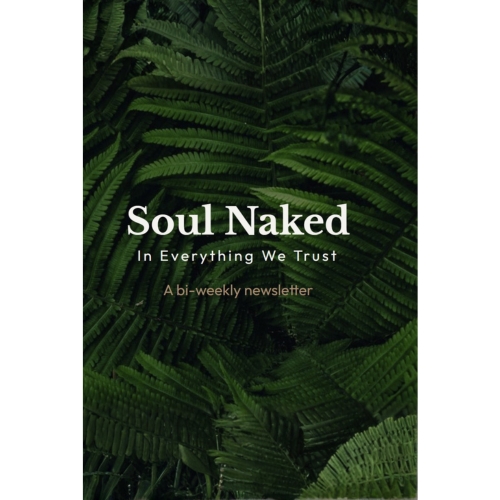

In this podcast episode of Inside Personal Growth, host Greg Voisen sits down with Sylvia Solit, a woman who masterfully bridges the gap between the high-stakes world of global finance and the ancient depths of shamanic wisdom. As a Chartered Financial Analyst (CFA) who has managed massive wealth in family offices, Sylvia Solit is far from your typical spiritual guide. She has spent over two decades training with indigenous healers and has participated in over 200 Ayahuasca ceremonies, leading her to a radical realization: our most overwhelming moments—bankruptcy, divorce, or illness—are not obstacles to our growth, but the very medicine we need.
In this deep-dive conversation, Sylvia previews her upcoming book, Soul Naked: In Everything We Trust, and introduces her “Circadian Method” for transforming darkness into evolution. If you have ever felt trapped by the Western epidemic of “worthlessness” or the relentless pursuit of “more,” Sylvia Solit provides a provocative, grounded operating system to help you strip away the ego and connect to the motherboard of consciousness.
The Architecture of Awakening
Sylvia’s journey didn’t start in a temple; it started with a “heroic psychedelic journey” at age 19 that shattered her one-dimensional New Jersey life. This experience revealed a hidden layer of worthlessness that she realized was not just hers, but a universal human disability in the West.
Rather than abandoning the material world for a cave, Sylvia Solit chose to master it. She argues that we are “machines designed to transmute suffering into awakening.” By holding a CFA and working in family offices, she proves that spiritual awakening is not for the marginalized—it is for the “ordinary” person navigating motherhood, careers, and capital.
The 4-Pillar Operating System
To facilitate this transmutation, Sylvia Solit outlines a “spiritual toolkit” that requires no money and no intermediary. It is a form of “free technology” available to everyone:
-
Stillness: The most fundamental principle. It is the frequency that allows us to receive guidance from the “motherboard” of creation.
-
Gratitude: Not just a “thank you” for the good things, but a profound appreciation for the ordinariness of existence.
-
Forgiveness: This widens the aperture of healing, allowing us to see the chessboard of life from a higher level of consciousness.
-
Prayer: The literal alchemy of words. Sylvia describes prayer as “casting spells” to shift reality.
The Mystical Scale: Science Meets Spirit
One of the most fascinating segments of the interview touches on the “Mystical Scale.” Sylvia Solit explains how clinical studies on psychedelics at institutions like Johns Hopkins are now tracking ego dissolution to predict positive outcomes for PTSD and depression.
By reaching higher states of union with the divine, individuals can heal the root cause of “worthlessness”—which Sylvia defines as our separation from the divine. She notes that in the indigenous cultures she studied, the word “I” didn’t exist, only “We.” By reconnecting to that “We” and the motherboard of consciousness, we can finally unplug from the materialistic disease of “not enough.”
Solving for Death
Sylvia’s work as a death doula informs her belief that we should all be “solving for death.” Just as a great entrepreneur starts a company with the end in mind, a human should live with the end in mind. This finite perspective strips away the superfluous and forces us to answer the only question that truly matters: “Who am I?”
What You Will Learn in This Episode:
-
Spiritual Fitness: Why Sylvia Solit advocates for “turning toward” pain rather than flinching, and how this builds the resilience required to master both money and spirit.
-
The Illusion of Worthlessness: How the replacement of the divine with materialism has created a psychological crisis in the West.
-
Awakening Capital: Why traditional financial mindsets must be challenged to honor consciousness and spark curiosity.
-
Medicine in the Mess: How to stop running away from your problems and start using them as the raw material for your evolution.
Connect with Sylvia Solit
If you are ready to find the “medicine in the mess” and live a life that is both grounded and transcendent, connect with Sylvia and explore her work:
-
Order the Book: Soul Naked: In Everything We Trust
-
Follow her Journey: Instagram
-
Official Website: thesylvia.com
You may also refer to the transcripts below for the full transcription (not edited) of the interview.
Speaker 1
Welcome to Inside Personal Growth podcast Deep Dive with us as we unlock the secrets to personal development. Empowering you to thrive here. Growth isn't just a goal, it's a journey. Tune in Transform. Take your life to the next level by listening to one of our podcasts. Welcome back to Inside Personal Growth. This is Greg Voisen the host of Inside Personal Growth.
00;00;26;05 - 00;00;55;19
Speaker 1
And Sylvia, all the listeners know who I am. They don't know who you are. So today joining us from Miami, Florida is Sylvia Solit . And Sylvia has a new book that's going to be released kind of in a little while from now. It's going to be in June of this coming year and we're going to be talking to her about not only what it is that she does and I'm going to let our listeners know, but about the book.
00;00;55;20 - 00;01;23;09
Speaker 1
So be prepared because it's really an interesting book. She sent me kind of the pre edition version of the book, and I really want to welcome you to the show because you were referred to me by Bob Parr. Fat and Bow is a gentleman who I coauthored a book with called The Precipice of Life not that long ago, and they know each other from a group called Tiger 21.
00;01;24;15 - 00;01;52;06
Speaker 1
But besides the fact that Sylvia and her website, I want to make certain that we direct everybody to the website. It's just that Sylvia dot com, the Sylvia dot com. So please go to that website to get more information. But she's got a fascinating background and it's not often that we get people that take the journeys that Sylvia has to get to where she is.
00;01;53;10 - 00;02;22;00
Speaker 1
She holds the CFA, which is a chartered financial analyst certificate or degree. She spent many years in wealth management work in family offices. But here's where her story kind of takes a fascinating turn. She spent over two decades appreciating the indigenous healers around the world. So it's kind of an uncommon blend. You don't find a lot of wealth managers going out with the indigenous people.
00;02;22;09 - 00;03;00;28
Speaker 1
This uncommon blend of financial position and ancestral wisdom give her perspective on personal transformation that's both grounded and transcendent. She works as a speaker, a death doula, a guide for people facing life's most overwhelming moments, whether it's divorce, bankruptcy, illness, the loss of a loved one. And Sylvia speaks to wealth managers, family offices, financial firms about what she calls awakening capital, challenging the traditional mindsets in finance to honor consciousness and spark curiosity.
00;03;01;13 - 00;03;33;14
Speaker 1
Her approach, which she calls the circadian method, helps us transform darkness into evolution. Finding our compass in chaotic times, which many of us are experiencing and discovering medicine in the mess in her words, awakening is the most vital part of human life. Don't waste it. Well, Sylvia, welcome to the show. I you have you have this book which we're talking about, which is coming out called Naked Soul.
00;03;34;10 - 00;04;05;18
Speaker 1
So that soul naked I'm sorry. It's like naked soul. Soul naked. It'll be out in June. So for all of your listeners, kind of mark your calendars, that's there. So if you would, I think it's really important. It'd be a four week dive into Soul Naked. I want to start with you. You write so often openly about being broken, searching, waking up through these lived experiences.
00;04;05;18 - 00;04;18;09
Speaker 1
What where was that moment or series of moments when you realized your own pain was not something to heal from, but something to heal through?
00;04;18;09 - 00;04;40;21
Speaker 2
When I was growing up, I didn't have any sense of being traumatized or that I was broken. I thought I was just like every other typical girl, you know, New Jersey girl, going to high school, running track, getting good grades. And I was living what I would call kind of a one dimensional life, which is very appropriate when you're a teenager because that's when your ego is really forming.
00;04;40;21 - 00;05;19;23
Speaker 2
So I wasn't playing, you know, Battleship with my ego at 16. I was just forming it and I, in my freshman year of college, was initiated into psychedelics somewhat accidentally, and I had never even been drunk before. I had never been stoned before. So my first experience of altered consciousness was a heroic psychedelic journey. And inside of that journey, I began to feel this deep sense of worthlessness inside of me.
00;05;20;11 - 00;05;49;18
Speaker 2
MM And even to the point of self-hatred. So for someone who is really just coming out of the teenage years, that was such a surprise to me that I could harbor feelings of worthlessness underneath the surface of my personality. And I got really curious about that. Why was that there? Where did that come from? Was it a universal feeling or was it just me?
00;05;50;13 - 00;05;58;13
Speaker 2
And that experience was really what started a spiritual journey for me.
00;05;58;13 - 00;06;02;10
Speaker 1
But I know you're saying at 16, right?
00;06;03;04 - 00;06;34;21
Speaker 2
This is like a little older. I'm like 19 by then 1980 and, and I did it like a 19 year old does not really want to be a spiritual person. Are like, like spiritual people to me were older, tended to be wealthy. They had too much time on their hands. They were superfluous to society. I considered myself an activist, especially at that time.
00;06;34;21 - 00;07;08;20
Speaker 2
I was a feminist. I was an environmentalist. I was all of the if you could possibly be. I was marching on Washington on a regular basis. I was, you know, only riding a bike. I was recycling. I was very dedicated to being basically very political and very involved in changing the world as I knew it. But to me, a spiritual person looked like somebody who wasn't changing the world and in fact was a parasite because of all they did is submitted to it and they weren't contributing.
00;07;09;11 - 00;07;18;25
Speaker 2
So to have what I would call a spiritual awakening So suddenly it wasn't a welcomed moment. It I fought it for quite a long time.
00;07;18;25 - 00;07;54;14
Speaker 1
Was there do you think those biases came from I mean, you know, it's not like you left the bicycle and the marches. Those are still part of Sylvia and you didn't grow through them. You let them grow into who you are today. Because, look, I could say, wow, that's amazing. Psychedelics at 16 doing all the things you've done and and then you end up becoming this chartered financial analyst.
00;07;54;14 - 00;08;10;20
Speaker 1
It's like, what a dichotomy. How did that all come about? I mean, because that's like, okay, I step from one world into this other world and this other world is where you would like to see this awakening uncertain.
00;08;11;22 - 00;08;38;08
Speaker 2
Right? Absolutely. Well, and the reason why I tell the story about rebelling against spiritual culture is because it does hold the seeds of who I am today, because I'm very passionate about a spiritual culture that is ordinary and normal and cool and just grounded because the world needs that today. We really can't have the spiritual people just hanging out in silent retreats, sitting in caves, meditating.
00;08;38;28 - 00;08;48;28
Speaker 2
There does need to be more integration in terms of not just what we're waking up to, but then how what we're waking up to moves and changes what we're doing in the world and those where it is.
00;08;49;08 - 00;09;15;24
Speaker 1
But it's a shift, Sylvia, as you know, to from religion to spirituality and most young people your age, when I say young because you're quite a bit younger than I am, are spiritual, they're they're following some path. They're doing somatic breathing, they're meditating, they're doing something. But I wouldn't particularly call them religious right. In other words, they're finding their own path, just like you did.
00;09;15;24 - 00;09;18;04
Speaker 1
That's exactly what you've done, Correct.
00;09;18;27 - 00;09;42;12
Speaker 2
It's so for me, the difference in spirituality, in religion and spirituality is direct experience of the divine. And in religion, there's an intermediary, that intermediary, maybe a rabbi, a priest, a church service. And the reason why psychedelics are having such a renaissance and why I think that's actually igniting a lot of people's innate spirituality is that psychedelics are, by their very nature, designed to give us a direct experience of the divine.
00;09;43;04 - 00;10;14;04
Speaker 2
That's their biggest use case. And in fact, a lot of the clinical studies involving psychedelics, if they're looking at why does it have a positive impact on anxiety, depression, PTSD, they use something called the mystical scale, that mystical scales of 1 to 10 scale. Ten is you had complete dissolution into God consciousness and clinical studies are tracking this level of ego, dissolution and union with the divine because they know that it's correlated to positive outcomes in human behavior.
00;10;14;15 - 00;10;15;12
Speaker 1
Right?
00;10;15;12 - 00;10;35;12
Speaker 2
So that's why psychedelics are really helping people to discover not that you throw away Christianity, but instead of just blindly reading Bible verses is can you actually understand the teachings of Christ as they live here and now in your own heart? Really experience it. And so.
00;10;36;02 - 00;11;09;02
Speaker 1
I. So how many times have you been down to South America and done ayahuasca or something like that to have one of these experiences, or have you? I mean, look, I've had so many authors on here writing about, you know, literally they're experts with in this arena of psychedelics that are being used. And I get that there's the guided kind of experience, right, where you can go some place and you can lay in a really nice bed and have somebody take you through that experience.
00;11;09;02 - 00;11;34;24
Speaker 1
Or you can go down to South America and do ayahuasca and throw your guts up. If you want. But the reality is, is that however one does it, they're entering a new world and a complete transformation of their experience of this life. Right. And and that's it's an awakening. But you're also doing this without the psychedelics.
00;11;36;00 - 00;11;52;08
Speaker 2
Correct? So it's a two fold path. So it you know, you're what? There's two questions in there. One is how many times have I done it? Well, I train. So I've probably I've had I've done kiosk over 200 times. So like a lot also like a lot. I don't think I've ever had.
00;11;52;08 - 00;11;55;13
Speaker 1
Another guest on here who's done I was good to it or die.
00;11;55;13 - 00;12;16;16
Speaker 2
So that's because I was in a formal training and you know, again, for our listeners, like, what I'm talking about is not something that's happening in the U.S. It's currently in the U.S. It's only legal within Native American churches to do this kind of work in in South America. It's a pillar of the culture. And I was living in South America.
00;12;16;16 - 00;12;23;25
Speaker 2
So it's just part of the culture. And it's completely it's not a it's not illegal, essentially, through.
00;12;23;28 - 00;12;49;16
Speaker 1
I have been told and I don't know if I'm correct, but I would love your take on this through people who've written books to help with PTSD and they psychedelics that there are these churches that have formed in the U.S. that are like the nonprofits that literally focus on the use of ayahuasca and these types of things. Now, I'm I'm sure it exists.
00;12;49;26 - 00;12;58;26
Speaker 1
I just not I haven't been any people don't have to go down to South America to do that. They can find these organizations on Google, correct?
00;12;59;25 - 00;13;26;11
Speaker 2
I actually don't know. I don't do this work in the U.S. ever. Okay. And part of the reason is that it's it's good to I believe and again, this is one person's opinion and there's other opinions out there. But I think there's something about drinking ayahuasca in the place where it was grown with the people that grew it in its in in an indigenous setting and container.
00;13;26;20 - 00;13;34;04
Speaker 2
There's it's such a powerful medicine that I prefer to respect it by going and drinking it and it's in its home.
00;13;34;23 - 00;14;01;20
Speaker 1
All right. So I honor that. Now, one of the things that Soul Naked does is it really when people read this book, they're going to say, wow, this was super radically honest and you are extremely vulnerable. What did you have to let go of, Sylvia or risk losing in order to write this book without any kind of armor?
00;14;01;21 - 00;14;03;26
Speaker 1
Because you are very, very vulnerable?
00;14;04;12 - 00;14;06;27
Speaker 2
Thank you. I had a good editor.
00;14;09;12 - 00;14;31;08
Speaker 2
My best editor was my husband and he treasures my vulnerability and he encourages self honesty in our relationship. So he was a great reader because he knows me so well. And he'd say, Look, I think you didn't cut close enough to the bone here. Yeah, you're going to lose readers because the readers know that you're skirting around the issue.
00;14;31;08 - 00;15;00;02
Speaker 2
So you need to get back in there and rework the section so it's helpful, you know, And that's it. Yeah, that goes for all of us. Like we we encourage each other to be more vulnerable when we give one another. That kind of mirroring. And it was no different with the process of writing this book. I think what I had to let go of in many ways was just accepting really who I am sort of once and for all.
00;15;00;02 - 00;15;19;02
Speaker 2
Because once you put something out there like that, you can't take it back. And so how many versions of myself did I try on before realizing that this is the truest version of myself and it's the one that has the most utility in the world and is the most service in the world. And so it's like doubling down on my commitment to this version of myself.
00;15;19;02 - 00;15;55;10
Speaker 2
And, you know, you asked me before and I didn't I didn't answer quite as how did it end up that I could both have a foot in the world of finance and a foot in the world of healing and being a shaman. And the I think that everybody has a gift. We all have a profound gift. Like we really all came here and took form in a human body because we had something magnificent to offer where people get tripped up as they think that that magnificent thing to offer is going to look like something that is going to get you followers on Instagram or that it's going to extraordinary well for that.
00;15;55;19 - 00;16;15;17
Speaker 2
Like there, there are outliers, but outliers are just like really, really high notes in the symphony. And they're nice to hear, like, I like to hear like a really, really high pitch soprano. And that's an outlier, somebody who can sing that note. But the human race is a symphony and every note matters. And a lot of us are in these middle notes that are so beautiful.
00;16;15;17 - 00;16;35;20
Speaker 2
They're the life sustaining notes of humanity. And those are just as important as any other. And that's the gift. And so all of us have this gift. I think the gift is sort of like a frequency of who you are. And for some reason, I was born into this really weird frequency where I both could be capacitated as a healer.
00;16;35;20 - 00;16;56;16
Speaker 2
And for some reason I carry a gift as a healer. And I've carried that gift really since I was quite young. But at some point in my journey and in my awakening process, I said, Well, I can't just be a healer because I notice a healer. You're really marginalized in society. We don't pay healers well. We also don't take healers seriously.
00;16;56;22 - 00;17;07;18
Speaker 2
Some of us even question whether healing is real. And so I wanted to make sure that I had a foot in the world that people give the most importance to, which is money.
00;17;07;18 - 00;17;09;25
Speaker 1
Which is the financial world. Yeah, yeah.
00;17;09;29 - 00;17;27;23
Speaker 2
The financial world is the thing that we think it's the really the only thing that matters. Like there's a great saying, people only care about two things. The first is money and they don't remember the second. So how much credence and importance we give to money in human consciousness in the West today? So it was, it was like giving myself a challenge.
00;17;27;23 - 00;17;48;06
Speaker 2
I mean, I felt very guided and giving myself that challenge. I didn't feel like I was bringing me along the way, but I said, Well, then I better master money, because if I can master money, then people will hear, listen to what I'm saying. But really, I'm just going to go back to talking about waking up because that's the only thing that.
00;17;48;08 - 00;18;18;28
Speaker 1
It's interesting though, the way you had your analogy a minute ago about the high notes and the rest of the notes. You know, many people you talked earlier about the ego, and that's not where the ego got challenged, is it Was this interesting? That's I was listening to an interview with Oprah the other day with Jane Pauley and the book is called Enough What.
00;18;19;26 - 00;18;20;27
Speaker 2
I love that title.
00;18;21;02 - 00;18;45;17
Speaker 1
Yeah. And and and that's where I see that challenge in society. We've been so socialized that that people think they're not enough yet. They're the middle notes. They're not the high notes. I like what you did. You went out and got this chartered financial analyst, which is very difficult to get. I mean, there's not very many people in the United States that even have that designation.
00;18;46;03 - 00;19;23;06
Speaker 1
So that that world could recognize you in this world. Right. It's it was almost like, hey, this separation. So when I look at this, I said, you know, you weave together this shamanistic wisdom, this spiritual ceremony and this lived human experience. So how did the years of working with trauma, healing and consciousness shape the structure of soul naked, really as a map for awakening rather than a traditional self-help book?
00;19;23;23 - 00;19;41;07
Speaker 1
Because all of my listeners out there are going to say, Well, Sylvia is really on to something, but I need help getting there. Right? And and you're not giving people just another self-help book. You're giving them a roadmap.
00;19;42;11 - 00;20;05;14
Speaker 2
Thank you. Yeah. Thank you for seeing that. That was something that we worked really hard to make sure came through, is that there are it's a it's a roadmap. There are tools. It's it was the part of the book that in some ways was really sexy to write. I just wanted to write all the cool stories. But it was the is in some ways the most important is like, what is the operating system that I'm using in my work and how can you learn it for your own life?
00;20;06;13 - 00;20;42;13
Speaker 2
So those are the those are the tools and they're they're really easy examples that we could talk about here. When I mentioned my first experience about ayahuasca, talked about how it revealed so much worthlessness inside of me, and I could really feel that. And one of the really important tools is when you feel something inside of yourself, it's really important to understand that it's not just you that these are universal disabilities that we have in terms of our self-regard and our self-love and our development as a human race.
00;20;42;13 - 00;20;51;15
Speaker 2
And so I have yet to work with a person in whom I couldn't track down some residue of worthlessness. For example.
00;20;51;23 - 00;21;22;02
Speaker 1
You know, they're everywhere. Doesn't matter. It doesn't matter if it's Bill Gates or whoever it is. There is that level in everybody. It's part of our life experience. And even, you know, even Marshall Goldsmith, who's been on this show so many times, you coaches, you know, billionaires and cetera, he says one of the biggest challenges I have is, you know, I could be speaking with somebody that has $3 billion and houses and cars and it's never enough.
00;21;22;02 - 00;21;49;11
Speaker 1
It's like it never stops. And you and he says to them, you know, is there anything you regret about your life? Right. And then when he starts talking about that, they really open, Oh, yeah, I didn't spend enough time with my kids or I divorced too many times or whatever that might have been in the process. Right. So I think what were on to here is this map, a road map that you can give to people no matter what their life experiences have been up to.
00;21;49;11 - 00;21;52;15
Speaker 1
Now you're providing them a tool.
00;21;53;14 - 00;22;21;01
Speaker 2
Yeah, it's like a primer for awakening or somebody who wants to be very, like, just ordinary, practical, well, and really wake up, right? It's like. It's like we're not talking. We're not dancing around awakening. We're not, you know, describe being awakening. These are tools to actually experience awakening. So how a worthlessness and the disease of not enough interrelated in society.
00;22;21;09 - 00;22;49;03
Speaker 2
Well, from my work in a lot of years of investigation I believe that worthlessness is essentially the separation that we have from the divine right. When we look at like the indigenous culture that I studied with for over a decade, didn't have the words for I knew in their language because it's a pre Spanish language, they only had the word we know.
00;22;49;11 - 00;23;22;19
Speaker 2
So that's inherently a culture that has more fusion between your consciousness and another person's consciousness. It's a more fuzed fuzed culture between your consciousness in the consciousness of the nature around you. And in those kinds of cultures, you don't often find worthlessness. In fact, I think you don't find it hard. To be honest. There's a great story of the Dalai Lama when he first came to the U.S. and somebody I think of, Sharon Salzberg, asked him a question about worthlessness in her students, and it took his translator 15 minutes to explain to him what worthlessness is.
00;23;23;03 - 00;23;23;25
Speaker 1
Right. Right.
00;23;24;08 - 00;23;50;07
Speaker 2
So that's telling us something. So I'm looking at these clues and saying, okay, so worthlessness is an epidemic in Western culture. It's because we have replaced the divine with things like money and power, serialism, materialism as an effigy for for divinity. And so the healing is to remember divinity. And in that there's a natural healing of the worthlessness.
00;23;50;07 - 00;23;55;13
Speaker 2
But then as a residue or a byproduct, there's also a healing of this disease of not enough.
00;23;55;23 - 00;24;28;20
Speaker 1
But how do people unplug from that? Like you're somebody who's shared all these personal stories, your time in India, your awakening experience, your heartbreaks, your struggles, your purpose, your love. So but you know, the thing is, is how do they unplug in the Western world? Because primarily, yeah, this podcast goes worldwide. I have listeners everywhere that listen to this, but in the Western world, which is predominantly materialistic in nature, we're not talking about India, right?
00;24;28;20 - 00;25;12;26
Speaker 1
Or people that are, you know, taking a more spiritual path. I have a team in Pakistan with Hindus and they don't look at it this way, Right? It's amazing the difference when you start going around the world and you see what's happening. And yet this world, this USA world, and particularly now with this just crazy thing that's going on with, you know, our administration today, it's it's all about materialism and greed and money, you know, But how do you get the the the listener right now who's sitting out there going, well, I measured by how high I climb in the corporate ladder, I'm measured by how much money is my checking account, my savings account.
00;25;13;04 - 00;25;26;06
Speaker 1
I'm measured by all these things when you already know, which probably you're just fine with all of that, that that isn't a measure of one's worth there. There's a lot of.
00;25;26;17 - 00;25;27;15
Speaker 2
A lot of biases there.
00;25;27;29 - 00;25;31;17
Speaker 1
Before I put it, I was going to throw it all at once. One big picture.
00;25;33;04 - 00;25;53;14
Speaker 2
Is, is I measured by like my my worth. So this isn't about forsaking abundance and wealth. It's not about becoming a renouncing it and being like, I'm okay with nothing. I am spiritual, I have nothing. So let's just correct that. If anyone thinks that that's what we're talking about, they.
00;25;53;14 - 00;25;54;22
Speaker 1
Know it's not. Yeah.
00;25;55;03 - 00;26;22;02
Speaker 2
And so what? But what we are talking about is like, what if you could tap into the motherboard of creation itself, right? What is what is the field of abundance Like what? Where, where does manifestation even begin? And manifestation and abundance And all of these frequencies that we talk about begin in the mind and the motherboard is in is basically the mind is in between us, in the motherboard, because the motherboard is source consciousness.
00;26;22;02 - 00;26;47;20
Speaker 2
And to be able to be in the presence of source consciousness requires stillness, because stillness is the frequency that can receive guidance from source. Stillness is the frequency that can create from source. And like stillness, for example, like if you're feeling very overwhelmed and busy, you're inherently not in an in a still consciousness. Correct. The first piece is, is to begin to ask yourself.
00;26;47;20 - 00;27;11;12
Speaker 2
The question is like, what do I really want in my one single precious human lifetime? Like that is the question that unlocks everything. Who am I and what do I really want in my one single precious human lifetime? You've only got one human lifetime. As far as we know. Everybody's got a death sentence at the end. So your time is finite, and so your attention is a unit of your time.
00;27;11;16 - 00;27;14;02
Speaker 2
What you pay attention to is how you spend your time.
00;27;14;12 - 00;27;45;29
Speaker 1
So let's assume it's peace and contentment. Okay? But yet somebody out there listening, you know, doesn't have the level of peace and content that they would want in their life. Now, in soul naked, you name specific limitations, which heartbreak, money, illness, addiction, war, sex, death. So why is it so important to name these experiences rather than avoid them?
00;27;46;18 - 00;28;04;09
Speaker 1
Right. Because I think a lot of people would just say, Hey, I want to just brush it under the rug and people want to deal with that. I want to run the other direction. I always say, What are you running towards or what are you running away from? And I think a lot of people are running away from stuff.
00;28;04;09 - 00;28;30;29
Speaker 1
So what happens when we stop whispering about our pain and start honoring that pain as medicine? Because that is you hit on a key point here. When you start honoring the pain as medicine is when you can actually heal the pain. Right. As Buddha always said and you know this, that he said there's going to be pain and there's going to be suffering.
00;28;31;19 - 00;28;44;29
Speaker 1
Well, you're going to experience the pain, but really the suffering is optional practice. Right? But we all have a tendency to go down in the suffering, the woe is me kind of situation. Right.
00;28;45;12 - 00;29;17;27
Speaker 2
Well, if that's literally what we're designed for. So we're human being and so we are lit. We literally take human form to understand suffering and to learn to transmute, suffering into deeper frequencies of love and awakening like we are literally machines designed to transmit suffering into awakening. So what it means to be human. And so if you're looking for a book that's going to make your life have no problems ever again, this is not the book for you.
00;29;19;07 - 00;29;38;05
Speaker 2
If you are already in a place where you say, I understand that life is actually in some way designed to give me trouble, I'm like, like it's designed that way. Until I take my last breath. I'm I'm certain that trouble will continue because it's it's part of the design is how much trouble can I transmute into love in my lifetime?
00;29;39;09 - 00;30;05;17
Speaker 2
But what I don't have to do is suffer. And. And that's because suffering creates more suffering. It feeds on itself. And so these are the tools to face any trouble without the suffering. And if you can do that, what you what you receive is an abundance of wisdom and depth.
00;30;05;27 - 00;30;28;19
Speaker 1
So you're plugged into the motherboard that I think when you can circumvent. So one of the questions I had for you and it was really one of the most powerful refrains in the book is the shift from victim consciousness to what you called being anointed by tragedy. That's what you just said, kind of, you know, it's like, hey, we're going to we're going to have that suffering.
00;30;28;19 - 00;30;51;09
Speaker 1
But if we can plug into the modern motherboard. So what changes inside someone when that shift finally happens? In other words, you're speaking to the person out there today on this podcast. It's like, Hey, Sylvia, I want to know your view. Been there 200 times of ayahuasca. You've been there through all these tragedies and challenges in your life.
00;30;51;20 - 00;31;01;08
Speaker 1
Tell me what I can expect if I let go, because the suffering is something people like to hang on to.
00;31;01;24 - 00;31;33;29
Speaker 2
Yeah, and great turn towards instead of let go. I feel like the West were not really designed for surrender and letting go, and I'm not going to argue with that. I personally really don't like to let go either. So I find that more useful to turn towards. Okay. One of the I appreciate you bringing it to the forefront this question of victim consciousness, because yes, there are out there world wars and circumstances where you have diaspora, you have populations that have been victimized that people can find themselves inside of.
00;31;33;29 - 00;31;57;10
Speaker 2
And and we're not talking about that. What we're talking about is when you have been hit with something that is really challenging and I can tell many, many stories about that, whether it's cancer, bankruptcy, litigation that you get to choose how you're going to respond to that. It's it came to your doorstep. You're going to open the door to that problem.
00;31;57;10 - 00;32;19;22
Speaker 2
And when you open the door to that problem, you need to let the universe know or God or divine consciousness or source or whatever you call it, whatever you call that mystery, you need to let it know how do you want to play the game this time and give it your operating instructions? Because the universe is very responsive to our operating instructions.
00;32;19;22 - 00;32;42;06
Speaker 2
And so if you get hit with that problem and you say the first thing, your first response from it is, okay, great spirit. This isn't what I expected and I don't understand why this is at my doorstep, but one, I'm going to count it as a blessing already because I know you've always got blessings for me. I just don't.
00;32;42;06 - 00;33;02;01
Speaker 2
This is a blessing in disguise, but I'm a trust that it's a blessing. I am not a victim. I am a student. And I want you to teach me in exactly the ways that I need so that I can be of incredible service on this planet and that all of a sudden changes the entire way that that circumstance is going to unfold.
00;33;03;04 - 00;33;05;25
Speaker 1
And obviously because you're more accepting of it.
00;33;05;25 - 00;33;07;04
Speaker 2
But I think.
00;33;07;08 - 00;33;49;27
Speaker 1
That point, the point is, though, that I think many of these things you talked about cancer anxiety that depression and bankruptcy, you could put all the negative ones in an area. For many people, it actually kills them inside forever. They allow it to kill them inside. And I want to get to these guiding principles because these principles that you talk about in the book are the principles that will lead them away from dying inside.
00;33;51;04 - 00;34;20;19
Speaker 1
They're actually dying inside, and one of them is stillness. The other one's gratitude, forgiveness and prayer. So why do these emerge as the core pillars of your work, and how do they function together as a living system rather than isolated practices? Because I think a lot of people think of like, Oh, wait, I was good at it. I say they wake up and give gratitude and I say, No, are you gratitude?
00;34;21;20 - 00;34;30;08
Speaker 1
Not. Did you wake up and have gratitude? Are you gratitude? You know, So tell us how all that works from your viewpoint.
00;34;30;21 - 00;34;54;00
Speaker 2
That's a great place for us to end today. So let's talk about this for operating principles and how they work together. So stillness is the most fundamental principle says stillness is everyone's true nature. Stillness is actually the source of true love. It's that which needs nothing to be different than it is in this moment. That's the still place.
00;34;54;13 - 00;35;21;14
Speaker 2
And when we cultivate stillness, we cultivate a certain quality of awareness that is very receptive to transformation. It's very it's very ripe for being taught. So stillness is the most high amplified field of consciousness with which we can be guided because the universe operates on a frequency of stillness to everything else that is more forgiveness. Well, that's that's coming later and forgiveness.
00;35;21;14 - 00;35;39;20
Speaker 2
So the next one is gratitude. And gratitude is also a quality of presence we're not talking about. I'm grateful that I'm only facing a bankruptcy and not that I'm facing death. Like, that's something I know that that kind of gratitude may have its place in other systems, but what I'm speaking about is the gratitude that says like that.
00;35;39;20 - 00;36;05;05
Speaker 2
I can just be so grateful for this pen and holding this pen in this moment in my hand. And I'm actually so profoundly grateful for this pen in this moment, so beautiful that that quality of gratitude food is an important qualifier for the universe to guide us, because it's the one thing that we can give back to the universe as a gift.
00;36;05;05 - 00;36;28;24
Speaker 2
Is it the appreciation of this existence? And you know, anyone who's a parent, it's much nicer to teach your kids and you want to give more to your kids when they appreciate you, not when they're acting like spoiled brats. So think about that. If the universe is this great guy, this great teacher, gratitude as it is, is an elegant way to to, to to greet it.
00;36;29;03 - 00;36;57;20
Speaker 2
You know, I don't know why I'm in this problem right now, but thank you. Thank you for giving it to me. And then the third is forgiveness. And so what forgiveness has, whether that's self forgiveness or forgiveness of others, is forgiveness widens the aperture of the healing, and it amplifies the breadth of that healing so that then that healing is not just for you, but is for others also.
00;36;57;20 - 00;37;25;05
Speaker 2
And so it's a form of generosity that just widens the healing and and I think it's obviously a very important part of all healing because it's in every single cultures that forgiveness is an important part of healing. So forgiveness to God is not what you did is okay. Forgiveness is I'm looking at this through a higher level of consciousness and understanding all of the players on the chessboard from a different perspective.
00;37;25;11 - 00;37;44;20
Speaker 2
And in that perspective, I have more empathy for everyone involved. That's what forgiveness is. It's rising into a higher level of consciousness, not saying everything was okay. That happened because there's a lot of stuff out there that's really like super not okay. But we're seeing it from a different level of consciousness. And then the fourth is, is prayer is is literally alchemy.
00;37;44;20 - 00;38;09;12
Speaker 2
It's like abracadabra, like your words really do alchemy situations. And when we learn to pray, I think of all the people I know who pray. Michael Beckwith is the most powerful prayer sayer that I've ever known. They want to learn how to pray. Go listen to some of his prayers. Like he he's he's a magician. He's is he's casting spells when he prays.
00;38;10;03 - 00;38;33;06
Speaker 2
And so that's it's free technology. You can't you can't diagram all of it like you say. I just get like that is your entire spiritual toolkit. You don't need a teacher. You don't need to buy anything. It's free. It's available, it's open source, it's universal, and it will help you no matter what you're facing in your life. And I guarantee you that money back guarantee on my book.
00;38;33;13 - 00;38;39;06
Speaker 2
This will help you with your disasters 100%. How do I know that? Because it's helped me with mine.
00;38;39;16 - 00;39;09;21
Speaker 1
Well, I all of those principles are perfect for people to use mainly and not in isolation, in other words. So then I recently just did a podcast that will really sing with Dr. Steven Post, and he's written a lot of books and on unconsciousness. But this last one was on one Unlimited Love. And I keep thinking about the term because I'm reflecting on the dialog that I had with him about unlimited love.
00;39;09;21 - 00;39;35;02
Speaker 1
And I think if you were to, in essence, put all of what you just said it together stillness, gratitude, forgiveness, prayer, it would be a space of unlimited love. It would be a spot where you are forgiving, where you are grateful, where you are in contemplation and prayer, where you are still right. And that's what's really very cool.
00;39;35;14 - 00;39;58;00
Speaker 1
Now you speak about expanding the nervous system. We understand this capacity to withstand pain, but not flinching and medicine in your life, right? So why is learning to stay prison growth, which we're been talking about and is comfort such a critical part to awakening?
00;39;58;27 - 00;40;13;27
Speaker 2
It's like sphere to fitness. You know, we work our bodies out all the time, but we really don't work our spirits out. We don't work our mind out. And part of when you say, well, you drink ayahuasca 200 times, what that really means is I did something really incredibly difficult 200 times.
00;40;13;27 - 00;40;14;08
Speaker 1
You did.
00;40;14;27 - 00;40;38;05
Speaker 2
And at that spiritual fitness. So what does that mean? Is that when something difficult happening in my own life, I have more resilience, I'm more spiritually fit to face that. And that that has even translated for me in terms of the physical body, the mind body connection we all know is a real thing. A lot of people are missing spiritual fitness in their life and therefore their bodies are disasters.
00;40;38;05 - 00;41;05;12
Speaker 2
You know, they have chronic stomach issues or they have chronic anxiety. And and I have used that both times to give birth. I gave birth naturally twice with the all of the techniques I learned went out the window. The one technique that stayed was turn and face the pain. Do like face what's difficult head on and don't flinch, breathe into it and move because that's spiritual fitness.
00;41;05;12 - 00;41;19;24
Speaker 2
You're just no matter how strong it is that's coming my way, I'm going to be completely present with it. And that was the key to unlocking natural birth for me, was being present with pain.
00;41;19;24 - 00;41;47;19
Speaker 1
Well, and I think that when people are experiencing, whether it's natural birth pain or other severe pain or going through chemotherapy, when you hear the stories that people tell, they'll say, when I face the pain is when I healed, right? It's like you didn't move away from it. You moved into it, you embraced it just like you just said.
00;41;48;03 - 00;42;16;28
Speaker 1
And I have a question for you, because if someone feels kind of after so far what we've talked about that that they're they're kind of waking up, the truth is stirring inside of them, but they're really afraid to speak it or fully live it. What permission do you believe that Soul Naked would offer them? If they're kind of arising, They're awakening right now.
00;42;16;28 - 00;42;41;26
Speaker 1
But there's this fear. I mean, because look, you're you're you're a financial analyst. There's there's this whole issue of you can talk about finitude, people reaching toward that point of death and dying. The fear. Right. There's risk. You've dealt with risk all of your life. And I think some people will embrace that. You're somebody who runs toward it.
00;42;42;10 - 00;43;01;11
Speaker 1
It's like you're probably not afraid of risk. You're probably not afraid of those things. But fear is a natural part of life. So if somebody if this is stirring inside of them, what permission does soul naked offer them the ordinariness.
00;43;02;07 - 00;43;30;28
Speaker 2
So it was really my I feel like it was I've tried and worked so hard for decades now to give an example of awakening that looks ordinary. I'm a mother and wife. I work, I hang out with the moms at school. I have friends. I am living, embodied and embedded. And I think that sometimes people are afraid of awakening because like, Oh, how am I going to work in my job or how am I going to be married or how am I going to how am I going to function?
00;43;31;16 - 00;43;38;00
Speaker 2
And so I really tried to make my life a living work of art of that example.
00;43;38;00 - 00;43;58;20
Speaker 1
So you're living it every day, which I think is and this is that's how practical this book is. So in kind of wrapping things up, Sylvia, and again, I want to let our listeners know there's a just an amazingly beautiful website that you'll want to go to. And I want to bring it up here soon as I can.
00;43;58;29 - 00;44;04;14
Speaker 1
I can find it on my screen again, it's just the Sylvia dot com, right?
00;44;05;02 - 00;44;05;10
Speaker 2
Yeah.
00;44;05;20 - 00;44;33;16
Speaker 1
Yeah. So just go to that Sylvia dot com you're going to find speaking about a newsletter Death to contact Beauty really really well done Web site worth going to to read her story Sylvia now do you have a spot in there for people to get the newsletter obviously, but what about getting a chapter of the book or something like that?
00;44;33;16 - 00;44;36;08
Speaker 1
Is there anything there for that?
00;44;36;08 - 00;44;43;04
Speaker 2
We can create a special code for your listeners where I would to do a pre release of a chapter for anyone who.
00;44;44;15 - 00;45;14;16
Speaker 1
I think that'd be a good idea because it's a it's such a great compelling book that obviously giving them a chapter would be great. And, and I would like to see that if it's possible and you know, it's it's totally up to you. So look, if our listeners could walk away with just one insight, I always say this I'm famous for saying this from the conversation because I think it really comes down to the little things in the end.
00;45;14;16 - 00;45;26;25
Speaker 1
What one shift that would help them move from suffering to wisdom, from fear to truth. What would you most want them to remember from this conversation we've had?
00;45;28;00 - 00;45;31;01
Speaker 2
You were born to wake up.
00;45;31;01 - 00;45;36;06
Speaker 1
Okay? That was like, that's that is is is it comes that.
00;45;38;13 - 00;45;39;06
Speaker 2
I'm here to help.
00;45;41;09 - 00;46;12;00
Speaker 1
And most people aren't a lot of people my audiences are familiar with awakening what what would you say about the awakening process? Is it just the acceptance that I was born to awake that simple? Or do you believe that there's more of a process? Like you're somebody who really went at it 200 times ayahuasca to actually have this happen, But you're here to tell people that isn't what they have to do, right?
00;46;12;21 - 00;46;30;02
Speaker 2
No, no. But we're all solving for death. We're all solving for death. You know, any every great entrepreneur says, oh, you have to start a company with end in mind or we should be living our lives with the end in mind that like, like you can call it, you could say, I don't say I'm sorry over the weakening.
00;46;30;03 - 00;46;44;21
Speaker 2
I don't know the spirituality. That sounds weird to me. Oh, we agree. Forget everything we just talked about it and let me just do this like, solve for death. Like you are going to die. It's a terminal sentence. We've all got it. Unless you think you're going to be one of those longevity people that lives forever. God bless you.
00;46;44;21 - 00;46;57;13
Speaker 2
But both that brain and if that's the case, so for death and the way that you solve for death is you ask yourself the question, who am I? And That's a universal, beautiful question that we should all be working with.
00;46;57;14 - 00;47;18;01
Speaker 1
I that is a great way to end this podcast. You know, and as long as you're not out there going to have some cryogenic chamber somewhere to put some of yourself and do it, freeze yourself and wake up in another world sometime, believe me, this is the real part of it, because there's not that many people that are going to do that.
00;47;19;09 - 00;47;50;20
Speaker 1
But what you've brought to me is in so naked, allowing people to kind of have this, I'm going to say tool kit, right you've really practically given them toolkits you woven in your own stories, you woven in your own experiences, your own challenges with all this to accentuate what it's like to kind of grow through this and accept these things.
00;47;50;29 - 00;48;13;28
Speaker 1
And I think you did a wonderful job with this book. I can't wait for it to be released. For all my listeners, it's going to be June. Keep it on your checklist. Go to Sylvia's website in the show link below. You'll see. And we don't know exactly when that chapter will go up, but it will go up and you'll be able to get a chapter of that website.
00;48;13;28 - 00;48;40;18
Speaker 1
So and also what I would do is sign up for her newsletter so that you can stay in touch with Sylvia and she'll obviously be telling you more as the book gets vetted, ready to be released. So Sylvia, thanks so much for being on INSIGHT. Personal growth, sharing your experiences. The book again is Soul Naked and I reason I don't have a book to show you is because I don't have one yet.
00;48;40;28 - 00;48;49;17
Speaker 1
I don't even have the cover yet, but she'll have one up there for you. I'm sure the covers being worked on now, so thanks for being on the podcast.
00;48;50;09 - 00;48;52;04
Speaker 2
Thank you. Have a great day. No, I'm.
00;48;52;14 - 00;49;03;15
Speaker 1
Not. I'm a stay to you. Thank you, Sylvia. I appreciate it.
Sign up to receive email updates
Enter your name and email address below and I'll send you periodic updates about the podcast.











Leave a Reply