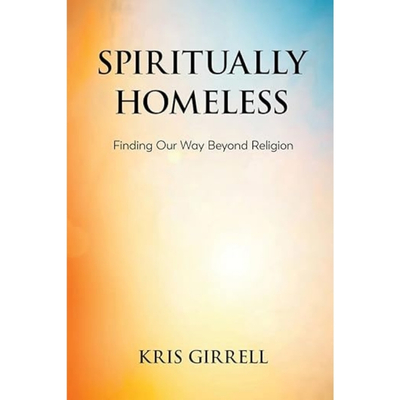
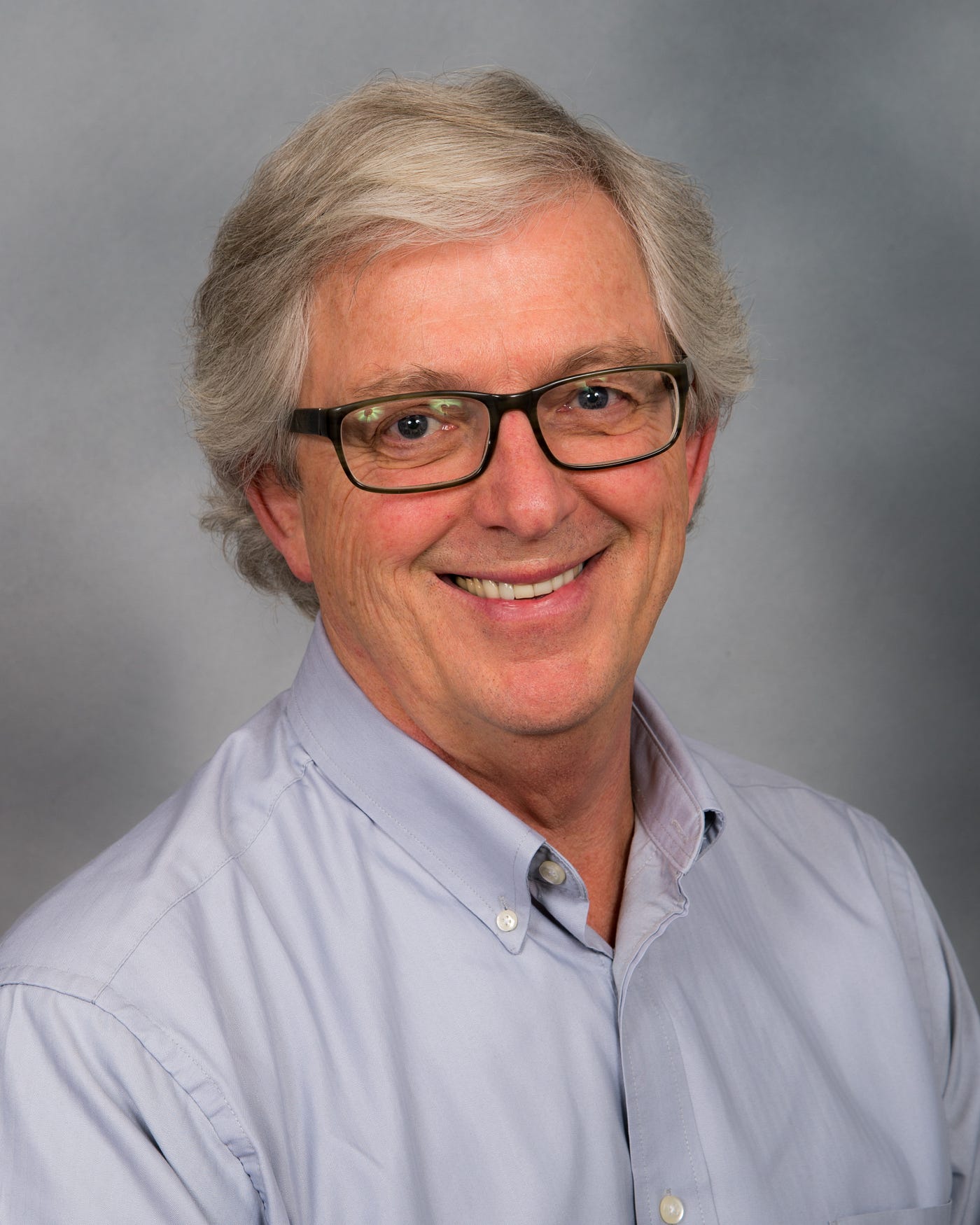
 In this powerful episode of Inside Personal Growth, Greg Voisen explores the landscape of the “spiritual but not religious” with Kris to unpack his latest book, Spiritually Homeless. If you’ve ever felt like you’ve let go of one trapeze bar but haven’t yet reached the next, this conversation is for you.
The Evolution Beyond “Black and White”
Why do so many people find themselves drifting away from traditional pews? According to Kris Girrell, it’s often because our natural human development forces us out of dualistic thinking.
-
The Religion of Childhood: Built on binaries—Good vs. Evil, Us vs. Them, Heaven vs. Hell.
-
The Reality of Adulthood: As we age, we encounter “multiplicity.” Life becomes a series of grays, complex questions, and nuanced experiences that simple platitudes can no longer answer.
When an institution insists on “command and control” through fixed doctrine, the maturing soul often feels forced to leave in order to keep growing.
“Most contemporary religions are still stuck in a sense of dualism… But as life gets more complex, the questions we ask get more complex. We need an emergence of the soul, not just an adherence to the rules.” — Kris Girrell,
The “Purifying Fire” of the Dark Night
The transition from religious certainty to spiritual curiosity is rarely easy. In Spiritually Homeless, Kris describes the Dark Night of the Soul not as a punishment, but as a necessary purification. It is the process of burning away:
-
Inherited Beliefs: The ideas we were told to believe but never truly experienced for ourselves.
-
The Ego-Self: The “little self” that needs to be right, certain, or superior to others.
-
The Need for Answers: Shifting from a person who knows everything to a person who wonders about everything.
Finding Your Way Home
If you find yourself in this “homeless” state, Kris suggests that the goal isn’t necessarily to find a new building to sit in, but to find a new way of being:
-
Embrace “Unknowing”: Practice being comfortable without a label for every experience. Awe and wonder are your most vital spiritual tools.
-
Trust Your Gut over Your Head: Learn to distinguish between the ego’s chatter and the soul’s resonance.
-
Seek New Community: You aren’t alone. As Kris Girrell notes on LinkedIn, there is a massive tribe of seekers—”another group of blokes on the bus”—who are finding connection through shared curiosity rather than shared dogma.
Deepen Your Journey
Ready to explore the space between religion and true spiritual emergence?
-
Grab the Book: Spiritually Homeless
-
Explore the Work: KrisGirrell.com
-
Join the Conversation: Connect with Kris on LinkedIn
You may also refer to the transcripts below for the full transcription (not edited) of the interview.
00;00;00;04 - 00;00;12;14
Speaker 1
Well, welcome back to Inside Personal Growth. This is Greg Voisen in the host of inside personal growth and joining me and you're where Kris exactly in Boston.
00;00;13;07 - 00;00;13;20
Speaker 2
Yes.
00;00;14;00 - 00;00;15;18
Speaker 1
That's what I thought as.
00;00;15;18 - 00;00;15;29
Speaker 2
North in.
00;00;16;07 - 00;00;36;27
Speaker 1
Boston. And I want to make sure I don't mess up your as your last name. So tell everybody I've met Chris here in San Diego through a mutual friend. He came out here and we were in a meeting. And you guys are in for a great surprise today because we're going to be speaking about one of his many books.
00;00;37;07 - 00;00;44;10
Speaker 1
And we'll make that a surprise for just a few more seconds. So make sure you tell me exactly how to pronounce your last name and I won't get it wrong.
00;00;44;25 - 00;00;47;09
Speaker 2
It's with a hard jiggle girl.
00;00;47;18 - 00;01;13;11
Speaker 1
Okay, So here's a little bit about Kris, and we're going to be speaking today about his book. And you can hold that up. Kris called Spiritually Homeless. There it is. And he writes some very, very books to get you to think deep. But Kris, his background spends 40 years as organizational consulting and executive leadership coaching. He's a sought after speaker.
00;01;14;01 - 00;01;44;07
Speaker 1
He has spoken Ted Ex Nick's 2017 is the author of nine books. I said there were a lot of them. When you go to his website, you can click on it and see the other books that he has written as well. His variety of topics are from spirituality and personal transformation to emotional intelligence to marital relations. He's a globally recognized executive leadership coach and he's a long time competitor.
00;01;45;09 - 00;02;08;14
Speaker 1
Whether years ago in rugby Pitch or competing at Tie. Quando are running the Boston Marathon. Kris has done it. He's received both a Bachelor's of Science and Master's of Education and Psychology and Counseling from Pennsylvania State University and took courses toward a doctorate at the University of Maryland. I presume he didn't finish the doctorate, did you?
00;02;08;14 - 00;02;10;10
Speaker 2
I did not finish. Okay.
00;02;11;28 - 00;02;39;17
Speaker 1
Virtue Chris is got a very creative flair and you're going to thoroughly enjoy our podcast today. I know you are. And so this book, I always like to ask authors, you know, you had seven predecessor books. I presume this is your aid y spiritually homeless. And why now, Chris Why did you try to to tackle such a deep, deep topic?
00;02;40;16 - 00;02;47;20
Speaker 1
I think I can imagine why now, but only because of the times we live in. But tell the listeners.
00;02;47;20 - 00;03;10;25
Speaker 2
Well, it's kind of two of the themes that come together in one. It's my own journey. I have been on a quest of spirituality and trying to dig into why I believe what I believe and why other people believe what they believe. Ever since I was a little tyke. So it's always been something that I've been curious about.
00;03;11;04 - 00;03;42;09
Speaker 2
And then secondly, I just run into more and more people every day who claim they are spiritual but not religious. That is, they don't go to church, they don't go to synagogue, they don't go to the mosque. But they do have a deep spiritual connection to something. And and so it was kind of those two things. One, having been on that journey and to recognizing other travelers on the road, I wanted to write something that really addressed how we got here and how we find our way out.
00;03;42;29 - 00;04;25;25
Speaker 1
Well, I agree with you. There are so many people that I've had on this show that I would say are I don't even know if it's in transition, because that wouldn't even be the right word. They literally have moved from being religious to spiritual. And you and I are going to discuss that. But you discuss and if you could, how many people outgrow their religion developmentally and can you explain how our natural human maturity in understanding complex complexity can often folk forces us out of the dualistic, the black and white thinking, and often defines traditional doctrine?
00;04;25;25 - 00;04;55;14
Speaker 2
Yeah, I mean, that's really a great point because as as we mature, you know, if you think of of logic or moral, ethical development, you know, we all start off with a sense of kind of dualism. This is not that, you know, kids books are always, you know, big and small. TOLMAN Tall and short and, you know, black and white and all in dual duals, you know, and language itself is a kind of a sense of a dualism, a table is not a chair.
00;04;55;14 - 00;05;19;25
Speaker 2
So we label something, a table, you know, we know it's not that. So when we start out, we all start off with that kind of sense of this is not that. But as we mature, we move beyond dualism into what's called multiplicity. There are shades of black and white and shades of good and bad, and then we move into through our teens, we go into something called contextual relativism or nihilism, one or the other.
00;05;20;08 - 00;05;50;19
Speaker 2
And then eventually, as adults, we emerge saying, Well, there is no right or wrong her say, but I choose this for myself. And so that's kind of what we do as we develop and mature as adults. But unfortunately, religion has to speak to the majority and and cut down a path down the middle in most of the time that has stayed with platitudes and dualistic good, bad distinctions.
00;05;51;00 - 00;06;03;25
Speaker 2
So much of religiosity, much of contemporary religions are still stuck in a sense of dualism. This is the good stuff. That's the bad stuff. And here's the real rub.
00;06;03;25 - 00;06;49;14
Speaker 1
But isn't that isn't that a pardon me for interrupting, but yeah, that doctrine that what do you want to call it? What they're attempting to do, again, is separate you from God. Now, I believe we're all one now. And I think 90% of my listeners do as well. Right. The reality is it doesn't matter if it's the Catholic Church or it's some other place you're worshiping this sum being what it whether it's Mohammed or Buddha or whatever you want to call it, or God, which is supposedly separate.
00;06;49;14 - 00;07;13;24
Speaker 1
Right? So there's this separatism and this this the way that they've I'm going to just say it this way. It's a harsh word, but kind of brainwashed people is to believe that because if I'm standing from the pulpit and telling you these things from the pulpit, from a religious standpoint, I'm in kind of a command and control position.
00;07;14;05 - 00;07;22;28
Speaker 1
I don't want you to have that freedom to do that. Would you say that I'm off base or would you say that I'm on point?
00;07;23;02 - 00;07;49;17
Speaker 2
I think, unfortunately, you know, the history of religion was really, you know, kind of designed around those principles. They had really good ideas to start with. But eventually, you know, maintenance of of the institution became its focus. And so they wanted people to be, you know, controlled. So there are a lot of mandates do this and you'll be say do this and you'll find heaven do this.
00;07;49;17 - 00;08;22;03
Speaker 2
You know, like there's there's kind of a simple answer to life's complexities that just doesn't work for a lot of people. Because as life has gotten more and more complex, the questions they ask are more and more complex. Religion needs to address those kinds of things if they want to stay, you know, vital and and vulnerable. Unfortunately, my opinion and it sounds like between the lines, your point is that, you know, most most really disorders haven't done that.
00;08;22;03 - 00;08;29;07
Speaker 2
And so they're still playing. There's still blood in it and peddling platitudes and simple answers to life's complexities.
00;08;29;22 - 00;09;03;19
Speaker 1
But I think as people evolve consciously, whatever evolution, a conscious or vibrate at a different level of consciousness and are seeking unity, they're actually, as you said, you described this as a spiritual path, as one of emergence of own self thing. So what is it to be an self and what is the difference between the natural inner awakening and your dramatic spiritual emergency?
00;09;03;19 - 00;09;28;29
Speaker 2
There's like three questions inside there, and let me try to unpack it. First off, you know, this developmental path, this path that we're on of spiritual emergence, if you will, is one of seeking of curiosity, of of saying, what is this that I feel? The second part of that I want to highlight is that it's my feeling, it's my experience.
00;09;29;12 - 00;09;57;03
Speaker 2
What churches offer is somebody else's experience. Here's what the prophets say, here's what the what the martyrs say and the saints. But they don't recognize the individual differences of my experience in your experience as unique to us and yet very validly spiritual. So what then the third part of that, your question is what is this unselfishness or this emergence?
00;09;57;09 - 00;10;26;20
Speaker 2
What is emerging is as the as the ego gets disassembled or its power structure at least gets disassembled through our spiritual practices, we recognize that we are no longer the center of the universe, that we are aren't really that important, or at least our ego self is not that important. What's emerging is the soul and and what Jung called the capital big self, not the little self.
00;10;27;06 - 00;10;47;03
Speaker 2
And and so this unsettled thing is an unselfish the eagle ego is really dethroning it and allowing the soul to speak as as the manifestation of the divine or spirit through us as our experiences, our true experience of the divine.
00;10;47;19 - 00;10;50;19
Speaker 1
Yeah, well, it's the non duality, right?
00;10;50;19 - 00;11;12;18
Speaker 2
Yeah. It's really coming to that is really the oneness that we experience with the divine, with all others through that thing, you know, it's wherever. What does it say in the Bible where every two or three are gathered in, in me or in my name or in the spirit. That's where I am. Well, yeah, absolutely. The Divine a new meets divine in me and there's a spark there.
00;11;13;02 - 00;11;25;22
Speaker 2
We feel that immediately when we connect with other people. And that's the non dual connection. That's the, that's the, the oneness that we're all aspiring to in this spiritual quest.
00;11;25;26 - 00;11;50;22
Speaker 1
Like was I agree with you and now you've say in the book when a seeker and that's probably most of the listeners here has a moment of profound spiritual spiritual or you know, they're they're out in nature and they're disconnected to their body and they have this oneness experience, but they lack, as you say, the religious vocabulary for it.
00;11;50;22 - 00;12;21;29
Speaker 1
They don't know how to explain it. They don't know how to make sense of it. How do they integrate the transcendent, expose orients into their ordinary or non religious life? Because, look, you're taking somebody who could have this. Let's just call it a near-death experience and NDE, right? And that woke them up to something way beyond what they'd been having in this dualistic world.
00;12;22;12 - 00;12;33;24
Speaker 1
You showed them the other side that exists. Okay? Right. So how do you integrate that transcends. And some people don't ever do it.
00;12;35;05 - 00;13;04;11
Speaker 2
And I'm just wondering, you know, is it necessary for us to name everything and and, you know, have an idea to to categorize or clarify what it is that we're experiencing? You know, the beauty of awe and wonder is sometimes we are rendered speechless. You know, the first time I walked into a great valley in Yosemite, I didn't have words, you know, it just it was breathtaking.
00;13;04;11 - 00;13;27;07
Speaker 2
It you know, and and there are a lot of experiences in nature in in just being with other people where were rendered worthless. So I don't think it's such a bad thing that sometimes we don't have words to classify the experience. What what does happen is people start to integrate. It is that they recognize, how do I say this?
00;13;27;07 - 00;13;48;27
Speaker 2
When I when I was in high school, I had a part time job at a steel prefab place and my job was spot welding brackets into place on I-beams, so that then the master welder would come and put the full beard around it. I call these things spot weld moments. So there's this moment where, you know, I have a moment of awe, wander and it's just sacred.
00;13;48;27 - 00;14;03;16
Speaker 2
There's no other way to describe it. And that spot welds into place. And then then there's another one over here and another one down in the and eventually we start drawing lines in between and connecting the dots. And we go like, Oh, that's what I believe.
00;14;04;00 - 00;14;07;16
Speaker 1
Yeah. But so it is connecting the dots. I get that.
00;14;07;29 - 00;14;11;12
Speaker 2
And sometimes we just don't have a name for it and that's okay.
00;14;12;04 - 00;14;36;25
Speaker 1
I think I agree that it's okay. It's like, but there's this emotional side of the experience. And then I want to talk about because we've had lots of people on here where people even Ron Doss was on the show many years back before he passed away. You know, we we talked about duality in that discussion. We talked about a lot of things, which was fascinate adding.
00;14;37;06 - 00;15;05;01
Speaker 1
But the thing is, is that you talk about in your book The Dark Knight and Detachment and The Dark Knight of the Soul, too many kind of sounds terrifying. I know when people go on ayahuasca retreats, live frequently. This is what happens. There's a dark night of the soul. There's an awakening, there's a purging. You say it's not punishment, but a purification.
00;15;05;01 - 00;15;17;28
Speaker 1
And that's exactly what occurs. What exactly is the purifying fire burning away? And how does that process ultimately lead to a deeper sense of humility?
00;15;18;17 - 00;15;41;02
Speaker 2
Yeah. So on on a simple level, what's what's being burned away are old beliefs. You know, many of our beliefs as we're growing up are inherited beliefs. There are things that our society has told us, our family has told us, our church has taught us in. And what happens is at some point our experience doesn't match up, doesn't line up with that.
00;15;41;18 - 00;16;10;28
Speaker 2
And and what gets first jettisoned in the early stages of the dark night are those beliefs. This just can't this doesn't compute for me anymore. And so there's this moment or this series of moments, this period of time where you're like the trapeze flier who's let go of the one trapeze and turned around and yet hasn't grabbed the other one and then is a scary spot because there's nothing underneath you.
00;16;10;28 - 00;16;37;27
Speaker 2
And there's there's there's a place where you shocked off all of those beliefs in your head have not yet fully codified your own set. So that's one level. The next level under that, what really is being disassembled along with those core beliefs that we used to believe in, are also our beliefs about ourselves. And you know, we refer to it as the ego.
00;16;38;15 - 00;16;59;24
Speaker 2
It's our it's it's the self that we see or the self that we project to other people. And get into the shadow self that we try to hide from other people. You know, So this whole icon or idol that we have fabricated about who we are needs to die. Eckhart totally calls that ego side. You know it's it's the death.
00;16;59;24 - 00;17;01;10
Speaker 1
Of egos side. I love it.
00;17;01;21 - 00;17;29;22
Speaker 2
Yeah it's the death of the ego as we know it in the birth or the emergence of the pure self or the big self, the soul that isn't in need of of things to satisfy satisfied self. So when they say disassociation or detachment from things, it's like I love to hear the birds in the spring singing their they're mating songs and everything.
00;17;29;22 - 00;17;53;18
Speaker 2
It makes me happy. I just love the morning. But if I define my happiness is dependent on the on the birds singing and I can only feel happy if those birds are singing then I'm dependent on I'm attached to that. In the same way we can be attached to different concepts about the Spirit, about the Divine, about God, whatever you want to call that.
00;17;54;22 - 00;18;15;14
Speaker 2
We can be attached to that in a way that we need to let go of. I can be happy without the birds singing. It's my choice, you know? But I don't need to have them sing. I don't need to have the church, you know, verify or validate my experience. I'm enough without it.
00;18;16;08 - 00;18;44;17
Speaker 1
Well, non-attachment is is an important point. Are you? You describe this practice of detachment, which is a Buddhist concept as an act of letting go. We hear people say, letting go all the time and letting go of this. I'm letting go of that. The question is, are you really letting go? Are you really are you really okay? Because in reality, it takes a lot to let go and it takes a lot of this.
00;18;45;11 - 00;19;14;04
Speaker 1
What I'm going to say, just awareness that you have when I say the first sign is I have an awareness that I can let go. So my question for you is how can the listeners distinguish between healthy spiritual detachment and simply checking out or avoiding necessarily necessary emotional investment in their relationships?
00;19;14;17 - 00;20;02;01
Speaker 2
Yeah, I think you named it as you were posing the question, and that is it's the self awareness. All of this is is contingent on a level of self-awareness and self-discovery that is, you know, a step beyond our walking. You know, what was the Eagles song Everyday Average Joe or whatever that goes bowling on Thursday nights and stuff, you know like we have to emerge out of that that sleepwalk into a level of self-awareness and and each each layering, each stripping away of those those beliefs about ourselves is another step closer to self-awareness.
00;20;02;01 - 00;20;38;16
Speaker 2
The deepest level of self is our divine nature. So you know what? What's the difference between just checking out and, you know, this emergence that we're having of detaching from all these dependencies, you know, to make my ego feel good? The difference is my self-awareness. I'm coming from a place of where we who are on this this journey are coming from place of discovery, of who I am, really at my core, what is my divine nature, what is my spirit, my soul?
00;20;38;29 - 00;20;45;01
Speaker 2
Seeing into speaking into me or through me as that I'm a member of this society?
00;20;45;24 - 00;21;14;23
Speaker 1
Well, I think the environments in the world in which we live in this is a commentary is designed, and I'm going to just say that to attract us toward the next shiny object or thing that we think we need in our life that's going to make us happy. We live. I've always said that if you're seeking happiness outside of yourself, you're never going to be happy because it's an internal job.
00;21;14;23 - 00;21;41;10
Speaker 1
And most people right now with this loneliness epidemic, this depression, the anxiety, the stress, the things are dealing with, they are seeking for happiness, but they can't find it because they can't find it outside. Buying a new car didn't do it. Buying a different house, didn't do it. Having this widget or that widget didn't do it because those are short term adrenaline rushes, right?
00;21;41;24 - 00;22;09;01
Speaker 1
So you speak about letting go of the need for answers. And I think that is that plays along with this. How does choosing to embrace unknowing? Hmm. Okay because and mystery actually expand our spiritual understanding beyond the need for certainty because we live in these ambiguous times. I'm going to use an example. Thomas Moore was on here, famous author.
00;22;09;01 - 00;22;29;08
Speaker 1
You know, Thomas Moore written tons of books and this will this relate to the to the listening audience flies all the way to power bookstores and up in Portland and going to do a book signing sat there nobody showed up.
00;22;29;25 - 00;22;31;03
Speaker 2
At Thomas Moore no.
00;22;31;23 - 00;22;52;01
Speaker 1
Thomas Moore. So and the manager said, Well, Mr. Moore, you might as well just go back to your hotel because, you know, one coming to this book signing, he's like, he was like initially he was like, pissed. The first reaction was, God, you know, if we were all the way over here from Michigan or wherever he was from into Oregon to do a book signing, no one shows up.
00;22;52;08 - 00;23;19;16
Speaker 1
And on his way back, walking to the hotel because he was aware, self-aware, he reflected on emptiness and he said, What did this lesson teach me around emptiness? Because we're always trying to fill a void. We're always trying to fill something up when we don't know. So if we don't know, we try and fill it up. And I said to him, We were doing the interview.
00;23;19;16 - 00;23;22;29
Speaker 1
I said that is really, really quite profound.
00;23;23;13 - 00;23;23;18
Speaker 2
How.
00;23;24;02 - 00;23;31;02
Speaker 1
People can live with emptiness and know that what happens is the ego wants to fill it with something.
00;23;31;21 - 00;23;53;14
Speaker 2
Yeah, absolutely. And it's like that old, old Zen story of the the student who comes to the master and wants to be taught. And the master said, Well, let's have a cup of tea first. And he starts pouring the tea and it's smoke over the top. Soft serve you serve all that's the way your mind is. How can you learn anything if it's so full already?
00;23;54;24 - 00;24;22;18
Speaker 2
So, so true confession. Greg? I am. I'm an intellectual, I'm an academic. I love learning. I love books. I have more degrees than even that you listed. And and and that knowing is is in the way of my experiencing life. What you know, I think Joseph Campbell said the best way to ensure that you won't have a religious experience is to study at the forehand.
00;24;23;09 - 00;24;48;02
Speaker 2
You know so you know that's my sin. My my error is is knowing. And so you ask a really great question, which is how do we get to this place of unknowing? Because when as long as I know, I'm only going to see what I know, what my brain allows me as it's filtered to see through. So everything that I see actually doesn't come into my eyes.
00;24;48;02 - 00;25;25;02
Speaker 2
It comes into my brain, my eyes are just receptors. And so I have to first let go of my knowing. Right. And so a lot of that is having answers. But the real hard part in this journey is letting go of the questions. I'm actually sitting with just being just being in nature, being present to other people, allowing my my judgmental brain to shut up for a while and just listen to the other person from a place of curiosity, of wonder, of awe.
00;25;25;20 - 00;25;50;17
Speaker 2
These are the spiritual tools that we learn in this journey is like often wonder are the are the the foundation tools. So if I sit with somebody and I listen from not knowing, I actually can hear them. You can hear what they're saying, not what you think they're saying, but actually listening to them. And they felt heard maybe sometimes for the first time.
00;25;50;17 - 00;25;51;22
Speaker 2
So those that.
00;25;51;26 - 00;26;18;05
Speaker 1
Would that be what you refer to in the book is this unit of awareness versus have actually heard of that. You know, you said they reach this and feel a deep state of oneness. How do they they all of us. Yeah, reconcile with that. And that is when you do reach that unity of or oneness, a universal love.
00;26;18;19 - 00;26;48;15
Speaker 1
Yeah, it's often messy and dualistic realities of the world. So my question for you is when somebody attains this level of awareness with this oneness, how do they sustain it? Because it's often not sustainable. Yeah. And what would be some of the things you might recommend to hold on to that? Uh, a state of all.
00;26;49;00 - 00;27;11;00
Speaker 2
Well, I know you meditate, so it's sort of the same thing as meditation. Any your brain is, is to the chatter going on all the time and then you finally get to a quiet place in the brain, still is down, and all of a sudden it says, Oh, I'm meditating. Oh, and immediately you're not meditating anymore. It's sort of the same thing.
00;27;11;08 - 00;27;43;23
Speaker 2
You know, I don't know that we can, as human beings live in this state of unity, of consciousness. I think it's it's it's an endpoint that we move towards that we're always looking for. It's like presence, you know, we can't our brains are just too active to stay fully present in the moment all the time. It's a gift when we are as it's a gift when we when we see that, that or feel that, that one of, you know, kind of the unity of consciousness.
00;27;44;03 - 00;28;17;04
Speaker 2
What do you mean by unity of consciousness is simply that I and you and the divine and everything else around us are all of one fabric, one there's and within that is my conscious awareness that you're sitting in Encinitas and I'm sitting in, in Dover, Massachusetts. And with 3000 miles apart. And yet there's this one, this too. So there's kind of a dichotomy that that, you know, is always present in our awareness.
00;28;17;19 - 00;28;47;09
Speaker 2
But the the beauty of this spiritual journey is when we find those connective places where there isn't a boundary between me and you, I and now whatever you want to say about that, there's there's like I see myself reflected in your eyes. I see you see me reflected in my you reflected in my eyes. And we in that moment, we recognize our oneness.
00;28;47;28 - 00;29;31;00
Speaker 1
Right? And I and I have been thinking about, you know, just the whole book, right. And its essence of what it's teaching, what people are able to actually extract from between the pages and you come to this point where you've spoken about co-authorship with the divine, you become practically for someone who is now taking full responsibility, full responsibility, 100% responsible for their own actions, for their spiritual path, How does that belief change daily decision making?
00;29;31;00 - 00;30;00;01
Speaker 1
Because, you know, look, we're all here every day having to make a thousand decisions, but we are always calling on the divine or the one for the decision our ego thinks it's making the decision, and that's the best decision for ourselves. I think it's probably pretty infrequent that most most of us stop and take a deep breath and go, okay, based on this decision, can you give me to this correct spot?
00;30;00;02 - 00;30;07;13
Speaker 1
Right. But the reality is, is that we're on autopilot and we're on autopilot mostly.
00;30;08;16 - 00;30;37;00
Speaker 2
Most of the time. And and yet part of the quest is trying to discern or to learn the difference between my ego's voice in my head and spirit or my soul's voice in my in my guts. You know. And and it's a long journey to learn to trust the wisdom of this part of my body down here, as opposed to the knowledge and the labels and everything that's up here.
00;30;37;14 - 00;31;08;17
Speaker 2
So when I talk about, you know, co-authorship, what I mean is, you know, it's founded on the belief that I hold dearly, which is that the divine lives in me and you and every living thing in the universe. And that in fact, we are expressions of that for each other. So when I say I'm coauthor of My My Future, that's when I get in touch with that and they say, What am I here for?
00;31;09;00 - 00;31;34;18
Speaker 2
What is the thing that my soul wants to have me do that is part of this connective tissue called life? How do I express that? That's a that's a difficult challenge to to, you know, to work on to you, to live. I you know, I'm not putting myself up as some, you know, guru or mentor or, you know, a ascended master.
00;31;34;18 - 00;31;49;27
Speaker 2
I just am, you know, another bloke on the bus who's deeply curious about what's this all for and why am I here? And as best as I can tell, I'm here to be in service to other people. So, yeah, I.
00;31;50;18 - 00;31;51;18
Speaker 1
I see what.
00;31;51;29 - 00;32;02;26
Speaker 2
That is like. All right, so how can I write my script? I'm going to make this decision that's going to put me one step closer to being in full service to other people at all times. That's what I want to be.
00;32;03;03 - 00;32;30;06
Speaker 1
Able to be in full service to other individuals on this planet. However, it might be during this lifetime, you've had to have had this awakening that that is your calling, that is your purpose, That is why you're here. Some people are asleep long enough. They never figure out that purpose, that they can definitively say that I'm here to serve others or I'm here to do that.
00;32;31;23 - 00;33;01;15
Speaker 2
And like I've said before, sometimes it takes a near-death experience, a diagnosis of cancer, you know, like what? A loss of a loved one. It takes some kind of, you know, traumatic, life changing experience for us to wake up. You know, unfortunately, that's the case for a lot of people. You know, And I've had some of those dark night experiences, my own experience with cancer, and those are all part of my awakening.
00;33;01;15 - 00;33;01;26
Speaker 2
You know.
00;33;01;27 - 00;33;41;29
Speaker 1
Look, the spiritually homeless book is a I'm just going to say more of a of a guide, know a way to take some introspection and contemplation on things that you might not think about contemplating, but you do guide people through it quite masterfully. So congratulations. So I want to say for the listener who's just starting to feel spiritually homeless, what is the first practical, disciplined or habit that you'd recommend they adopt to nurture their emerging spiritual path?
00;33;41;29 - 00;33;53;20
Speaker 1
And okay, you and I could say, Oh yeah, meditation, yoga, you could say all of these things. Yeah, yeah. I have something in my mind which is a bit different.
00;33;55;21 - 00;34;16;17
Speaker 1
And I think one of the things, whether it's micro journaling or journaling, is one of the areas that can actually awaken you as quick as anything that you can do. Not that meditation wouldn't be there. What would be Chris's experiments?
00;34;18;03 - 00;34;45;21
Speaker 2
A couple of things. And I think that there are many roads to get on to this path. One of them is just simply walking in nature, you know? Yeah, that part said that the nature was the first holy Scripture was the first Bible. So there's something for me that happens in nature where I'm I'm not a human anymore.
00;34;45;21 - 00;35;13;05
Speaker 2
I'm just a breathing entity. You know, something's passing askew like the other animals in the air and stuff around me. Definitely journaling. But I think the focus that I would suggest is that we start first by looking at our pains, you know, the things that we think have have beaten us up or the the challenging times in our life.
00;35;13;16 - 00;35;41;18
Speaker 2
And and instead of looking at them as pains and setbacks and challenges and whatevers, try to find the lesson inside of them saying, like, what if what if everything that's happened in your life is part of your developmental process? You know, what's what is true about the darkness of the soul is that it is painful, mentally painful, emotionally painful, or sometimes physically painful for people.
00;35;41;29 - 00;36;06;14
Speaker 2
And it's in that pain where we start finding compassion for ourselves. We can't have compassion for other people unless we first have it here, have to know. Otherwise it's just platitudes and nice nicely. Oh, it'll all be better. But when I feel my own compassion for the pain that I experienced and I say, It's okay, Chris, I'm with you.
00;36;06;18 - 00;36;15;26
Speaker 2
I'm still here, then I know that I can, but I can't say anything that will take your pain away. But I can be present to you.
00;36;16;16 - 00;36;21;06
Speaker 1
So the suffering optional from the pain. When you have that realization.
00;36;21;21 - 00;36;24;28
Speaker 2
Right? That's where suffering becomes optional. Yeah.
00;36;25;07 - 00;36;43;14
Speaker 1
Right. In other words, you're saying, Yeah, we're going to have pain. You had the pain that in fact I'm having the most surgery on my hand tomorrow, so they're going to hit me with that. But my point is, is that that so there's going to be minor pain, but, you know, and then it might be I don't know.
00;36;43;14 - 00;37;11;03
Speaker 1
The reality is, is that I'm doing affirmations every hour right now because I set myself up for that. And then I program my subconscious before I ever go under the knife for anything. Right. So I think the reality is you can reprogram your subconscious and it can be manifest in the way in which you've articulated and reprogram the subconscious.
00;37;11;21 - 00;37;12;27
Speaker 1
So this, huh?
00;37;13;20 - 00;37;20;17
Speaker 2
Yes, exactly. I just before we end, I do want to say a word about the title of the book and that word.
00;37;22;07 - 00;37;22;16
Speaker 1
Okay.
00;37;23;13 - 00;37;55;05
Speaker 2
And can we I just want to like people ask me why spiritually homeless. I think when you get into like, what is, I think, fundamental to, the human experience is community, is that we we have our families, that we have our tribes, we have our our people. And when And that's one of the things that religions and churches and synagogues and mosques offer us is a community.
00;37;55;05 - 00;38;37;19
Speaker 2
Unfortunately, sometimes we have to sign away our own belief system to adhere to a credo of somebody else's belief system in order to be a member of that community. So when we leave, there's the sense that we've left home that we have this yearning to find our people yet. So part of the message of the book is really about, you know, defining what I or what I need and want as a spiritual being, not as a needy little, you know, blob of of stuff of of faded little clay of what this what this George Bernard Shaw say in the brief candle of fetid ball of clay demanding that the world meet my needs.
00;38;37;19 - 00;38;47;11
Speaker 2
You know, I don't want to be that height, but I do want community and I do want family, and I want to find my people. And there are a lot of us out here.
00;38;47;20 - 00;39;14;28
Speaker 1
I think I think that's a great statement. And to add on to that, that community, if I go back many years and look, I'm almost the same age as you, it was harder to find than it is today. Today, we've seen so much transition to what you're calling spiritually homeless. We're not homeless. We have seekers along the path that are at the same spot we are.
00;39;15;08 - 00;39;40;07
Speaker 1
They're all over the Internet. They're everywhere out there listening to shows like this one. Right. And they're finding books like yours. The only difference is if they're sitting down for tea or crumpets or whatever they're doing. They're doing it maybe in a smaller group, right? It's not like this big, gigantic a congregation of people, but they're still getting spiritually felt.
00;39;41;00 - 00;39;55;23
Speaker 1
Okay because they're meeting with like minded people. I know. Look, I'm a devotee of Self-Realization Fellowship life and feel like the meditations in the room in the temple are just amazing because of the vibration that exists there right now.
00;39;56;21 - 00;39;57;13
Speaker 2
Kind of people.
00;39;58;11 - 00;40;22;05
Speaker 1
When you walk out and you leave there isn't this huge sense of camaraderie with SRF people where they just kind of like, go hang out and do this or do that. You're kind of on your own. The guy Go do what you're going to do. That might not be the place you want to find it, but I've found a lot of silence there, and it's a it's a wonderful place for me.
00;40;22;17 - 00;40;49;25
Speaker 1
But, Chris, I know you got to run and I appreciate you being on the show. Appreciate you spending this time with our listeners. Again, hold the book up, if you would, please. It's called Spiritually Homeless. Don't take that wrong that this means that you are on the path of return and you are on a path of transition out of the dogma and the ego into you.
00;40;49;26 - 00;41;12;25
Speaker 1
The freedom, as Eckhart totally would call. Because really, that's all anyone seeking is are seeking their freedom. And you are on the path to teach people. Here's some ways to get free, to let go, to detach, to get away from the Dark Knight of Soul, to be, if you want to call it spiritually homeless. But the reality is he wanted to make the point about community.
00;41;13;00 - 00;41;19;27
Speaker 1
And you did. You will find the community, whether it's a bunch of small ones or one big one will find it.
00;41;20;08 - 00;41;33;12
Speaker 2
So I think it's right. You know, you're absolutely right. It's often smaller groupings of people that we find, but we do find on this path, you know, even just saying the phrase spiritual but not religious, people say, Oh, that's me. Yeah.
00;41;33;25 - 00;41;36;01
Speaker 1
Yeah. That's 90% of the people.
00;41;36;01 - 00;41;49;00
Speaker 2
That I wanted to come to at a time. And and that's your community. Those are your people. So I wish everybody who's on this path, grace and love and no mistake to you next day.
00;41;49;00 - 00;42;02;26
Speaker 1
Chris, thanks so much for for being on the show. You're a great author and everybody go out and get a copy. We'll have a link below to Amazon. You get a copy of the book and we'll have a link to Chris's website as well. All right.
00;42;03;11 - 00;42;05;01
Speaker 2
Thank you. Have a great day.
Sign up to receive email updates
Enter your name and email address below and I'll send you periodic updates about the podcast.











Leave a Reply