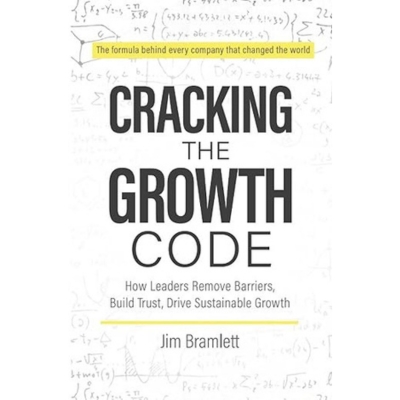

In this episode of Inside Personal Growth, Greg Voisen sits down with serial entrepreneur, executive coach, and author Jim Bramlett to discuss his latest book, Cracking the Growth Code. With over 40 years of experience in transportation and logistics and a career spent launching eight successful companies, Jim has identified a universal pattern that separates dominant companies from those that eventually stall.
Many leaders are experts in their industry but have received little to no formal training on how to engage employees or build a scalable culture. Jim’s mission is to bridge that gap with his Aligned Leadership Operating System, a practical framework designed to help leaders achieve sustainable growth without the burnout of the perpetual “hustle.”
The Amazon Inspiration: Why Customer Centricity Wins
The conversation begins with Jim’s fascination with the Amazon story. While Wall Street spent years criticizing Jeff Bezos for burning through cash, Bezos remained laser-focused on one thing: the customer.
Jim notes that while mid-sized companies may not have the multi-billion-dollar buying power of a giant like Amazon, they can apply the same core philosophy. Most companies focus internally on quarterly earnings and profit margins. In contrast, dominant companies look outward, engineering every process around what the customer truly wants.
The Four Pillars of the Growth Code
According to Jim, every successful organization must master four universal pillars. If a business owner can excel in these areas, growth becomes a byproduct of the system rather than a result of sheer luck.
1. Convenience
In a world where time is the most valuable currency, convenience is king. How easy is it for a customer to do business with you? Jim challenges leaders to look at their friction points. If your competitors are more accessible or faster to respond, you are losing ground regardless of your product quality.
2. Price Transparency
Jim offers a counterintuitive take on pricing: it’s not about being the cheapest; it’s about being competitive and, more importantly, transparent. “We buyers want to know what we are spending in advance,” Jim explains. He points to the frustration consumers feel with “resort fees” in hotels or “hidden quarters” on discount airlines. By being 100% upfront about costs, a small business builds a level of loyalty that a larger, “nickel-and-diming” conglomerate never can.
3. User Experience (UX)
Jim believes user experience is the pillar most under a leader’s control, yet it is often the most neglected. UX isn’t just about a website; it’s about the entire journey. It’s about the courtesy to call a customer if you’re going to be late for a quote. It’s about meeting commitments. When leaders fail to prioritize UX, they leave the door wide open for new competitors to step in and fill the void.
4. Trust
Trust is the foundation of every long-term business relationship. This involves warranties, guarantees, and the consistency of your brand. In Jim’s view, small and mid-sized businesses have a unique advantage here—they can be on a first-name basis with their clients, creating a bond of trust that scale-heavy corporations struggle to replicate.
Overcoming “Hand-Me-Down” Leadership
One of the most profound segments of the podcast focuses on why leadership fails. Jim introduces the concept of “Hand-Me-Down Leadership.” Imagine a stellar accountant who gets promoted to manager. Because she was never trained in leadership, she leads exactly the way she was led—which often results in a “Command and Control” style. This micromanagement and intimidation are the primary drivers of employee disengagement.
Jim argues that management (organizing tasks) and leadership (inspiring people) are fundamentally different skills. To crack the growth code, leaders must transition into a Coaching Leadership style.
The Staggering Cost of Disengagement
Citing Gallup statistics, Jim points out that disengagement costs the global economy hundreds of billions of dollars annually. Only about 30% of employees are truly engaged at work.
“It’s not the employee’s fault they aren’t engaged; it’s leadership’s fault,” Jim asserts. The fix? Radical responsibility. Leaders must stop avoiding difficult conversations and start engaging their teams. Jim suggests that 80% of business challenges are people-related, and the solution lies in Reflective Inquiry.
Instead of telling employees what to do, a coaching leader asks:
-
“What would you do if I weren’t here?”
-
“What do you believe is the best path forward based on your experience?”
When employees come up with the answer themselves, they are infinitely more committed to the outcome.
The 30-Day Action Plan
For those feeling overwhelmed, Jim doesn’t just offer theory; he provides a roadmap. His book, Cracking the Growth Code, includes a 30-day action plan and a 90-day roadmap.
The first step? Start listening. A leader’s job is to be an active listener who pays attention to emotions and body language. By “coaching the person, not the problem,” leaders can unlock the untapped brainpower of their organization and pave the way for sustainable, long-term expansion.
You may also refer to the transcripts below for the full transcription (not edited) of the interview.
Welcome back to Inside Personal Growth. This is Greg Voisen, the host of Inside Personal Growth. We have a returning author that's coming back to the show.
We did a podcast with him back in December and look in the show notes below and you'll see. And since then, he's come back out with a new book. Jim, do you have a copy of that book there or anything that you can hold up to?
You're not there on order. Had something to do there on order.
Okay, so we've got him without the book, but that's okay. It's called Cracking the Growth Code, right? That correct is all right. Correct. And all of you can check that out at Amazon. We'll put a link in the show notes below to get that. His website is just Jim Bramlett and that's been framed. Little icon great website. He's basically at that website has assessments, his books, his courses, his podcast itself.
00:01:37:05 - 00:02:07:07
Speaker 1
So I'm going to encourage all the listeners to go there. I'm going to tell them a little bit about you. Jim is a serial entrepreneur, executive coach, author and leadership educator dedicated to helping leaders build stronger organizations and achieve sustainable growth. He founded his first company while still in college and has since launched eight companies over his career, giving him firsthand experience with the challenges of building and leading companies.
00:02:07:07 - 00:02:36:20
Speaker 1
Through those experiences, Jim noted a common pattern Most leaders possess deep expertise in their industry, but receive little formal training in how to fully engage employees and deliver what customers truly want to address. The Gap I created Aligned Leadership Operating System A practical Framework to Help Leaders Align. He's also the author of The Unconventional Thinking of Dominant Companies Stop the Hustle.
00:02:36:20 - 00:03:01:01
Speaker 1
And this new one. We're going to talk about code cracking the growth code. He also has served as a vestige chair and now works as an executive co coach, helping leaders strengthen their teams, cultures and strategy. Well, Jim, pleasure to have you back on again. And it's always good because you're quite what I'm going to say, a really curious person.
00:03:01:11 - 00:03:25:15
Speaker 1
And anybody who keeps kind of writing books and going back to the well and always interests me. So, look, you spent 40 years in transportation logistics before becoming this executive coach and author. What was the aha moment that made you realize that the growth code framework wasn't just working on the industry, it was universal.
00:03:27:16 - 00:04:05:07
Speaker 2
Great question. And Greg, it's great to be back with you. I love your show and I think the aha moment was towards the tail end of my career and I got very intrigued by the Amazon story and they became a juggernaut and kind of a unicorn, blew past Walmart and that intrigued me. And so I started studying what is it that makes them so different, unique, and how do they how do they dominate their space?
00:04:06:04 - 00:04:34:04
Speaker 2
And one of my one of my favorite books is called The Everything Store, which chronicles the Amazon story. I started one of my companies just maybe a year or two after the Jeff Bezos founded Amazon, and I distinctly recall they were throwing rocks and Wall Street was throwing rocks at them going, Oh my God, he's burning through cash.
00:04:34:04 - 00:04:47:19
Speaker 2
You'd never know, This isn't going to work at night. You can't just sell books online because that's how he started and he was so hard headed and persistent. And he was right and.
00:04:48:12 - 00:04:55:07
Speaker 1
But didn't take Amazon like 15 years to be profitable. I mean, I don't know what the next was. A long time.
00:04:55:07 - 00:04:55:18
Speaker 2
Long time.
00:04:56:01 - 00:04:56:10
Speaker 1
Yeah.
00:04:56:12 - 00:05:25:06
Speaker 2
Bernie Cash very popular at Wall Street because they want you to make a profit right away. But but but the one thing he did that was really intriguing to me, he didn't care about Wall Street. He didn't care about investors. He cared about the customer at the center of my universe. And we're going to engineer everything around that customer and what the customer wants, because if that works, the shareholders, Wall Street, they'll all be happy.
00:05:25:23 - 00:05:54:16
Speaker 2
And it took a while because selling books now, now you can even order one. I was crazy, crazy to think about it. But but I love that, you know, they're obsessed about the customer and and leaders. They have 16 principles. And the top one is we're obsessive about customers, and we're going to do everything in our power to satisfy them.
00:05:55:17 - 00:06:19:11
Speaker 2
And and I think when I really started researching that, that light bulb went off in my head and said, you know, I think he's right. I think, you know, so many companies help quarterly earnings. We we got to focus on what's going to happen and we're going to close the quarter well and all internal thinking. What do we do versus Amazon saying what do we need to do for the customer?
00:06:19:15 - 00:06:45:15
Speaker 1
So what is so in your estimation? You know, you've spent your life working with mid-sized companies and smaller companies, not not the Netflix and not the Amazon and Uber and all that. So how does a business owner that's listening to this running maybe a $5 million company apply the same formula that Jeff Bezos Bezos did without the billions of dollars?
00:06:45:15 - 00:07:00:12
Speaker 1
Because, you know, if this is you, you say there's four pillars convenience, price, user experience and trust. So which one of those or all of them do you find that business leaders most consistently underestimate or neglect?
00:07:01:09 - 00:07:31:08
Speaker 2
I think. I think far too many businesses focus on cost or pricing far too much. Look, you know, I tell Airbus, you're not going to have the buying power that Walmart has or even Amazon had. You're just not your small midsize business. So so fine. But the other side of that pricing is be 100% transparent. We buyers want to know what we're spending in advance of making a purchase.
00:07:31:08 - 00:07:51:01
Speaker 2
That's why we don't like dealing with doctors and hospitals and lawyers or we know the rate per hour, but we don't know how many hours the airlines and they're nickel and diming. You know what? We're going to charge you for extra bags. Oh, you want to get on board earlier than anybody else and you want the extra room.
00:07:51:24 - 00:08:24:19
Speaker 2
We just want to know up front. But when you don't have the purchasing power, you have to overcompensate on the other three pillars. Be more convenient, give them a better user experience, be on a first name basis, and be more trustworthy. Give them guarantee warranties, you know, give them more then the big conglomerates can give because they have to operate at scale.
00:08:25:05 - 00:08:33:15
Speaker 2
Smaller business to build that relationship overcompensate on the three and and people will pay for that.
00:08:34:11 - 00:08:58:11
Speaker 1
Well so you just said that it's not about being the cheapest. It's about being competitive and transparent. Right. So that's kind of counterintuitive for a lot of entrepreneurs out there that for years have said, you know, for me to be competitive, I need to be cheaper, I need to do this. And they default to discount. Right. Or trying to beat the competition.
00:08:58:23 - 00:09:06:09
Speaker 1
Can you walk us through how pricing transparency actually will build loyalty for these smaller businesses?
00:09:07:22 - 00:09:36:03
Speaker 2
Yeah, I think I think all too often there are companies out there, oh, gosh, we're not we're not hitting our quarterly earnings, so we have to increase revenue. So we're going to install a bunch of add ons and, you know, hotel well, we're going to have a resort fee. Why they are because we discount our our lodging stay through third party applications.
00:09:36:12 - 00:10:02:12
Speaker 2
And so we're going to have a lodging fee because that's going to boost our earnings. Well guess guess what? We hate that as consumers. And so that that pricing, yeah, it's important but when you're completely upfront and share. Exactly what the cost is, total cost, I believe we consumers like that more. And I'm going to give you a good example.
00:10:03:23 - 00:10:36:14
Speaker 2
There are discount airlines and I've you may have seen the ads fly from Chicago to Orlando for $37, but it's never $37. Oh, you want a seat? Oh, you want you got a bag to even carry on or check in. And so they it's full representation and advertising and marketing. It's a gimmick. And they don't charge $37 when the small business comes and say, look, our flights cost $200.
00:10:36:14 - 00:10:59:11
Speaker 2
It's all inclusive. You don't have to worry about anything. We take care of your luggage. You say you're board. I think they can leverage it the other way. Nobody likes surprises, Greg. They're there. One of my favorite Southwest ads, and it wasn't on very long. They showed a businessman getting on a board of their flight, and he's in.
00:10:59:11 - 00:11:23:24
Speaker 2
He's trying to put his stowaway up in the overhead compartment, and it wouldn't open because there was a slot for a quarter. He had to put a quarter in. And then he sat down trying to trying to lean back in his seat and won't budge. And then the armrest is a slot for a quarter. And then and then and then he reaches over to lift up the window shade.
00:11:24:24 - 00:11:43:13
Speaker 2
It won't budge and there's a slot for a quarter. And I love that ad because we all southwest bags fly free there. It wasn't first class, you know, It was you go in, you make a purchase, and that's exactly what you pay. No surprises.
00:11:43:13 - 00:12:05:14
Speaker 1
And I think that's important for any business owner to understand that, you know, obviously, there's been so many people in that industry in particular who've followed this, hey, we're cheaper. But no, we don't include all of the accouterments that you want, right? If you want to go to the bathroom, we don't even have a bathroom on the plane.
00:12:05:14 - 00:12:11:24
Speaker 1
I remember that's one of them in Europe that I flew. I was like, You guys even have a bathroom, you know?
00:12:12:04 - 00:12:13:04
Speaker 2
Oh, my goodness.
00:12:13:04 - 00:12:44:22
Speaker 1
Yeah. So, look, you you say the user experience. Experience is the pillar most under our control, right? So that's user experience. That's like software UI. Yet you also say it's the most neglected. What's getting in the way? Is it a leadership problem, a culture problem, or something else to create the best user experience? Because I've look, we've all called people for quotes and then they don't show up.
00:12:45:07 - 00:13:08:02
Speaker 1
They're supposed to come to your house and quote on blinds or flooring or whatever, and or they're late and whatever, and you just say, screw it. You know, it's like, I'm not going to use and I don't care if it's a vendor that's a Costco or if it's a vendor somewhere else. The reality is 90% of it is just showing up, isn't it?
00:13:08:02 - 00:13:33:10
Speaker 2
It is. Part of the user experience is living to your commitment. If you're dealing doing business with a company and they make a commitment to you, if they don't live up to that commitment, it's a bad experience. It can be, Oh, I'm going to deliver your washer dryer on Thursday afternoon between one and five. If they don't show up between one and five, I don't care what the excuses guy took off work.
00:13:33:22 - 00:14:03:07
Speaker 2
That's a bad experience. So you're original question. My my answer to your original question is yes, it's both leadership and culture, because leadership has to set the culture. And I think there's a great deal of confusion about what is culture and and culture is this culture is a common set of values and beliefs that translate into acceptable behaviors.
00:14:04:02 - 00:14:32:08
Speaker 2
So unless you're a solopreneur, you have employees. Well, how do they how do they behave? How do they treat each other? How do they treat customers, vendors, investors? And I believe in a in a very intentional culture. So as a leader, if you set a very intentional culture and say this is how we're going to treat customers, these are the commitments we are going to make, here are the penalties we pay to the customer if we don't live up to our commitments.
00:14:33:00 - 00:14:56:22
Speaker 2
That's when you get the kind of user experience that we buyers appreciate. And you've been urged to go, Hey, I was wrong. You told me you were going to deliver on Thursday afternoon and I took off work. Oh, sorry. That's how the cookie crumbles. Now I need. I need more than that. You know what? What are you okay?
00:14:56:22 - 00:15:05:05
Speaker 2
I'm going to give you a $25 Amazon car. Okay? I feel a little bit better, but now, whatever commitment you make to deliver, you really need to meet that.
00:15:05:05 - 00:15:28:14
Speaker 1
If I think it's just a matter of pardon me, but it's really just a matter of having the courtesy to renegotiate. Right? It's like all I needed was a call that said, Guess what? Our guys can't make it today. We're really sorry. Can we reschedule versus just not showing up? Right? That's just you see. So much of that going on and it's just so exasperating.
00:15:28:19 - 00:15:53:10
Speaker 1
And one of the things that you use in the book is this NFL analogy. Throughout the book, coaches who study game films versus CEOs who go into the game blind. Right. And in your vestige work, how often did you encounter leaders who generally don't know what their competitors are doing across these four pillars? I mean, it's a lot, right.
00:15:53:16 - 00:16:14:00
Speaker 2
All the time. All the time. It's almost like I don't care about the competitor. I just care about me. And I go, No, that's why I use the analogy in NFL team is we're going to show up on Sunday. You go, Well, I wonder who are playing and I wonder if they like to run the ball. Pass the ball, A.D., I don't know.
00:16:14:00 - 00:16:45:24
Speaker 2
I guess we'll find out. You know, they study and they they try and leverage the weakness of the competitor. Well, I believe every business has to do the same. Look, if if you agree and businesses agree that those four pillars, convenience, price, user experience and trust are important, how do you stack up against your competitors? If you are shining and above them, you're probably going to do pretty well if you're not.
00:16:45:24 - 00:17:03:13
Speaker 2
And even the competitor isn't doing a very good job in any one of those, that's when new competition shows up and saying, We're going to we're going to meet a need that's not being fulfilled today by what's existing in the market. Yeah, that's what happens.
00:17:03:13 - 00:17:34:20
Speaker 1
Well, I'm sure during your vestige groups, you got an opportunity to speak, tell stories, coach, and get CEOs to better understand. Now, you you referenced in this new book David Friedman's culture wise framework and the idea that culture is what you tolerate, not just what you preach. How do leaders hold the line on culture fundamentals when the exception involves a top performer or long term employee?
00:17:34:20 - 00:17:57:13
Speaker 1
Because what happens is if you do get a shining sales star, right, they're the ones that get treated differently than many people. And the reality is we know that shouldn't be the case, but we do know that when a certain sales person or marketing person outperforms, they get treated differently.
00:17:59:02 - 00:18:39:06
Speaker 2
They get treated differently. Oh, the owner's daughter, she gets treated differently. Oh, you know, Charlie's been here 30 years. Charlie gets treated differently. I had a speaker once say this profoundly Exceptions will become your culture If you tolerate that, if you're really going to have an intentional, disciplined culture where everybody's behaving the same, there cannot be exceptions, as hard as that is, because, yep, at the superstar salesperson, they've got to behave or there they are, they become toxic.
00:18:39:06 - 00:18:53:04
Speaker 2
They're the cancer in the locker room and we just ignore them. Then everybody else says, Well, if it doesn't apply to them, why does that apply to me? So it got to be considered a throughout the organization talk.
00:18:54:06 - 00:19:08:05
Speaker 1
So let's let's talk about this. We've heard all these statistics for many years now. It's just that the numbers keep creeping up. And you cited Gallup's staggering statistic around disengagement, costing.
00:19:08:17 - 00:19:09:02
Speaker 2
Four.
00:19:09:02 - 00:19:47:09
Speaker 1
Hundred and 50 to 550 billion annually. I bet it's more than that now, but that that's a statistic you used because I remember that statistic from a few years back. So for a podcast audience that's made up mainly of LinkedIn people, business people, right? What's the single most actionable thing they could do in your estimation? Jim Brown Briggs visited coach coaching and someone to move the needle on employee engagement inside of their company.
00:19:48:22 - 00:20:35:14
Speaker 2
The number one thing is there's lots of things, but the number one thing is it's not the employee's fault. They're they're not engaged. It's leadership's fault. They are not engaged. Leadership has to openly communicate with employees. A lot of employees will tell you, I don't even know what's expected of me. And part of this problem is a lot of leaders and I'm talking front line supervisors, mid-level management, senior management, the CEO, a lot of leaders don't want to have conversations with employees because they think it will turn into a difficult conversation.
00:20:36:12 - 00:21:00:06
Speaker 2
And I don't like I'm uncomfortable with difficult conversations. So I'm just I'm been to let it go. Well, if you don't engage them, they're not going to engage the company. They're going to show up mostly they're going to punch the clock. You know, they're going to they're not going to be doing their best work because they don't they're not buying in.
00:21:00:06 - 00:21:33:02
Speaker 2
They're not care about the company. They just care about themselves. So it's a leadership thing. I think I think leadership development is continuing education. That is sometimes largely ignored. The first thing that gets cut in the budget and and it is an important skill that has to be learned. Leadership is not is taught in colleges and universities. Management is and management and leadership are two different things.
00:21:33:02 - 00:21:33:19
Speaker 2
You can manage.
00:21:33:19 - 00:21:35:15
Speaker 1
To fundamentally different. Yeah.
00:21:36:06 - 00:22:01:06
Speaker 2
Totally different. But we don't nobody trained on well how do you how do you influence, inspire and motivate people? How do you engage them? They don't they don't learn that. And so I think leadership development is largely ignored and it shows it in the percentage of engaged employees in the workforce. 30%. They think 30 to 31% of employees are engaged.
00:22:01:21 - 00:22:04:24
Speaker 2
And I go, Oh my goodness, That means that the employee.
00:22:05:01 - 00:22:28:21
Speaker 1
That means 69% are. So, you know, it's been around for a very, very long time. But you and I can discuss it. You know, the Greenleaf model of leadership is an upside down pyramid, and we all know it. And it's really the concept of, you know, is the employee here to serve you? Are you there to serve that meaning as a leader?
00:22:28:21 - 00:22:51:06
Speaker 1
Right. I mean, that's easiest way to explain it. In your estimation, why is it that you believe leaders, not all leaders, but many leaders get that model so wrong and then when they do, how detrimental it is to the culture?
00:22:51:06 - 00:23:20:10
Speaker 2
Yeah, I, I believe most leaders get their leadership style in what I call hand-me-down leadership. And I want to give you an example, Greg, and I use this. I say I show people a picture of a young lady in cap and gown and she she went to a nice university, great kid, great student, and she likes numbers. So she goes into accounting.
00:23:20:10 - 00:23:37:13
Speaker 2
And in four years she gets her accounting degree, top 5% of her class, and she gets offered a really nice job at a top firm as an account. Two years go by, they come to her and say, Mary, you've done a great job. You're killing it. We're going to promote you to senior account. No, thank you very much.
00:23:37:24 - 00:24:00:06
Speaker 2
You give her a nice bump. Two years more go by, They come back to Mary. Mary, you once again. You're a stellar employee. We're going to make you a accounting manager. And here are your six people. Now, I guarantee you, in accounting school, nobody ever talked to Mary about that leading people, right. And so what does Mary do?
00:24:00:24 - 00:24:24:06
Speaker 2
Because I guess I the only thing I can do is I'm going to lead them like I was led. Okay, That's a cross your finger. That's what I call hand me down. And and it could be very possible that she was led in a command and control style. There's that which is micromanaging, intimidation, threatening. You don't like it Here.
00:24:24:06 - 00:24:47:22
Speaker 2
Here's the door. I don't pay you for your opinions. I pay you for this work. That's command and control. It's not the modern style of what I call coaching leadership. And so that's that's where the whole problem starts, where disengagement is, because they don't value the employees. They don't want to ask them what their opinions are. How would you do this?
00:24:47:22 - 00:24:52:08
Speaker 2
And it gets totally disconnected. So that's where I think the main problem starts.
00:24:52:12 - 00:25:21:00
Speaker 1
I just had Dr. Marcia Reynolds on here, wrote a book and obviously many coaches use different techniques, but reflective inquiry, Right. In other words, how do you use in reflective inquiry properly is so valuable? Because, look, you're not there to tell them they're there to actually find out for themselves what they can do better. Your job is to pull it out of them.
00:25:21:12 - 00:25:43:21
Speaker 1
And I think this whole concept of using reflective inquiry questions because she actually did it on me and I've done it a zillion times with people, is let them start to tell you, well, what does it look like for you? What does it feel like for you? What would you do? Not you saying, Well, if I were you, I would do this right?
00:25:44:02 - 00:26:24:05
Speaker 1
So you you are giving them there are a autonomy, their ability to be there versus the command and control. So one of the things that you do at the end of the book, you give this 30 day action plan, you give a 90 day roadmap, and for we got a lot of listeners and if there's a listener out there right now, which is in leadership, which I can't believe that there aren't lots of people right now in this current economy and this current state of our country feeling overwhelmed, feeling overwhelmed by a lot of different things.
00:26:24:05 - 00:26:55:18
Speaker 1
Right? Musical chairs of people, people getting fired, downsizing, right sizing, all this kind of stuff by the four pillars and the five disciplines. What are the ones that they should put in place and start working with tomorrow morning when they come in? Hopefully they're listening to this and they get the message and they go get your book, you know, cracking the growth code, because there's more to this than just this.
00:26:55:18 - 00:26:58:11
Speaker 1
But this is a really important element.
00:26:59:17 - 00:27:36:18
Speaker 2
Yeah. So I am teaching a group of leaders now to become coaches and I'm telling them this, this is not going to come natural for you. It's going to feel awkward for you, but you are presented a number of issues and challenges every day, and probably 80% of them are people related. And when they come to you and say, I've got this problem, we humans are natural instincts say, Oh, I want to help solve it for you.
00:27:37:10 - 00:28:01:02
Speaker 2
And and I tell them I need you to pause and I want you to put your coaching hat on and I want you to start asking questions. Okay? First, the first job of coaches to empathize. Okay. Sounds to me like you're very troubled by this or you're depressed or you're angry. You just get confirmation. Tell me the story.
00:28:01:14 - 00:28:26:07
Speaker 2
And then like you said, Gregg, okay, if I weren't here, what what would you do? What do you think should be done based on your experience? What do you believe is going on? I teach I teach them that people make decisions on their values and beliefs, and a lot of these beliefs are formed at a young age. Okay?
00:28:26:07 - 00:28:48:09
Speaker 2
And I gave this example to my leaders. I said, Look, I'm a boomer. My parents grew up in the Great Depression. As kids. So they believed at an early age that money was like, you know, gold and I can't waste it. I got to hold on to it. And that becomes a belief, if not maybe a self-limiting belief, but people make decisions based on that.
00:28:48:09 - 00:29:12:17
Speaker 2
So as a coach, I want you to pause and start asking these open ended question because you nailed it. You said when a coach can get the person they're talking to to come up with the answer, they're going to be much more committed to it. Right? Use the brainpower of the organization and the people you're working with, the pretty smart people, if you get down to it, if you let them.
00:29:13:01 - 00:29:15:13
Speaker 2
So yeah, that's probably the number one thing.
00:29:15:15 - 00:29:55:02
Speaker 1
Well, I think that add to that is coach the person, not the problem is right. So that that's actually the title of her book. But I think what's so important here is that we're all human beings. We're not we need to look at each other, not as doing beings. We've really got to get deep with people to crack the code and crack their own code toward growth because they've had their own issues about, you know, sweeping stuff under the rug, not bringing it out, not making it aware, not being transparent.
00:29:55:13 - 00:30:25:14
Speaker 1
And so those things are really, really important so that you can you're going to be uncomfortable, just like you said, that's it. You are going to be uncomfortable because this isn't a position that you're used to doing. But in the day of I today, listening in on calls and moving things faster and being able to actually be coaches, right, that a I now is coaching, you need to bring a human element to this which is much deeper than what I can do.
00:30:26:04 - 00:30:53:03
Speaker 1
I can give an answer, but it can't really coach. It can give you a direction, it can give you something, but it doesn't hear the inflections in your voice. It doesn't see Jim and his facial expressions. It doesn't hear all of the kind of little nuances that he would. And you need to listen for that, right? You need to listen, like you said, for that.
00:30:53:03 - 00:30:53:22
Speaker 1
Would you agree?
00:30:54:00 - 00:31:16:17
Speaker 2
Hey, man. Yeah. Coaches, you know, one of the jobs of a coach is to be a top person or what is that? A listener is an active listener, but they're. Look, they're listening for emotions. What are they Is a person talking? Are they depressed, frustrated, mad, angry. And when they hear something, they start asking questions about where did that come from?
00:31:17:02 - 00:31:32:20
Speaker 2
What makes you feel that way? What are you in control relative to your emotions? Right. So you hey, I cannot deal very well with emotions. It takes a human a lot of emotions. You're going to read in body language.
00:31:32:20 - 00:31:56:21
Speaker 1
Yeah, but I also, if you've been dealing with it, what you have, whether it's clod or anthropic or a chatty beta or whatever, it's it's programed to make you feel good. It doesn't it doesn't answer. It doesn't ask the hard questions. Well, Greg, I hear that you're pretty upset today. And, you know, the reality is what's making you upset?
00:31:58:08 - 00:32:22:19
Speaker 1
You and you're like sitting there going, I isn't going to ask that question. So and if it does, fine. But it still isn't going to be able to read through the emotions and the things that are going on. So that's it. Well, for everybody out there and the book is called Cracking the Growth Code. So, Jim, at your Web site now you're offering courses.
00:32:23:16 - 00:32:45:13
Speaker 1
You've got all of these things that people can have access, got an assessment. Some of it's free, some of it's paid for. What's the best place somebody could start when they come in besides getting your book and buying it off of Amazon to actually get to know you better and to know your business and what you do if they wanted to get in touch with you.
00:32:45:24 - 00:33:22:12
Speaker 2
Yeah, they can obviously get in touch me through my website. Jim Bramlett dot com a very active user on LinkedIn. I love having conversations. I'm very passionate about leadership and leaders are responsible for the growth growth of the organization, sales of their people. You have to make your people grow because that's what they're, they're looking for. So I want just having conversations and the one thing I'm doing in my course, Greg, is I offer it's a ten session or ten module course.
00:33:23:03 - 00:33:30:18
Speaker 2
I pulled it out of cohorts, a five week period to two hour sessions per week. I offer that first session free.
00:33:31:06 - 00:33:31:17
Speaker 1
Okay.
00:33:32:06 - 00:33:54:11
Speaker 2
Learn what you learned the situation about the leadership gaps, the gaps in employee engagement, and then you decide, Yeah, I want to. I really want to learn how to how to become a coach. So that's what I offer. I have free assessments on my site for growth. And if somebody just says, Jim, I just want to have a conversation.
00:33:54:12 - 00:33:57:00
Speaker 2
I just want to pick your brain. I'm happy to do that.
00:33:57:06 - 00:34:02:07
Speaker 1
And what's the assessment for your coach, for your course? What's your.
00:34:02:08 - 00:34:05:10
Speaker 2
Business? Yeah, the investments, 40 $500.
00:34:05:10 - 00:34:08:12
Speaker 1
Okay. And that goes over how many weeks? Again.
00:34:09:00 - 00:34:09:21
Speaker 2
Five weeks.
00:34:10:02 - 00:34:13:01
Speaker 1
Five weeks to 2 hours sessions.
00:34:13:01 - 00:34:13:23
Speaker 2
And per week.
00:34:14:03 - 00:34:16:06
Speaker 1
Per week. So that's 4 hours per week.
00:34:17:03 - 00:34:18:02
Speaker 2
4 hours per week.
00:34:18:05 - 00:34:19:05
Speaker 1
For five weeks.
00:34:19:14 - 00:34:36:15
Speaker 2
20, 20 hours. Extensive workbooks, videos. I have an online community where we can all engage each other, ask questions, share best practices. I don't I don't have all the answers I look for. Other leaders say, Hey, what's worked for you? What is it? That's what this community is all about.
00:34:36:21 - 00:35:02:06
Speaker 1
Well, it's quite an offer because not only will they get you to help them and assist them and guide them, but all the material. But then you get the community, so they'll make those connections with all those others that are in that course with them as well, which is equally as important because they're going to learn from one another, going to learn by collaborating, and they're going to they're going to see the challenges that other businesses are happening as well.
00:35:02:19 - 00:35:27:22
Speaker 1
Well, again, for everybody, the book is Cracking the Growth Code. Jim Bramblett b r a m l e t t. You can click that in on the web, your browser, and it'll be on our show notes below. So look in the show notes below for that as well. You'll also can get the book on Amazon in our show notes below as well, and go check out Jim's new website.
00:35:27:22 - 00:35:42:03
Speaker 1
It is awesome. Go look at those courses. Go look at the references that he's got. And Jim, again, appreciate having you back on again. It's always a pleasure. I look forward to doing this again with you in the near future.
00:35:42:20 - 00:35:45:08
Speaker 2
Greg Love you. Do I love your show. Thanks for having me.
00:35:45:15 - 00:35:48:11
Speaker 1
You're quite welcome.
00:35:51:16 - 00:35:52:09
Speaker 1
I think it's going.
Sign up to receive email updates
Enter your name and email address below and I'll send you periodic updates about the podcast.











Leave a Reply