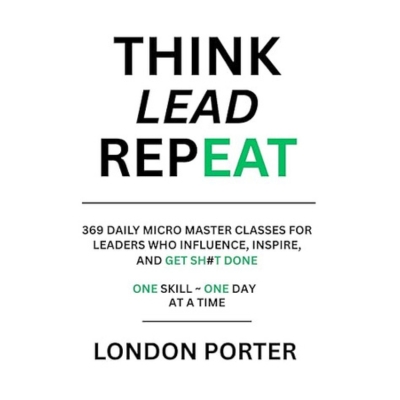
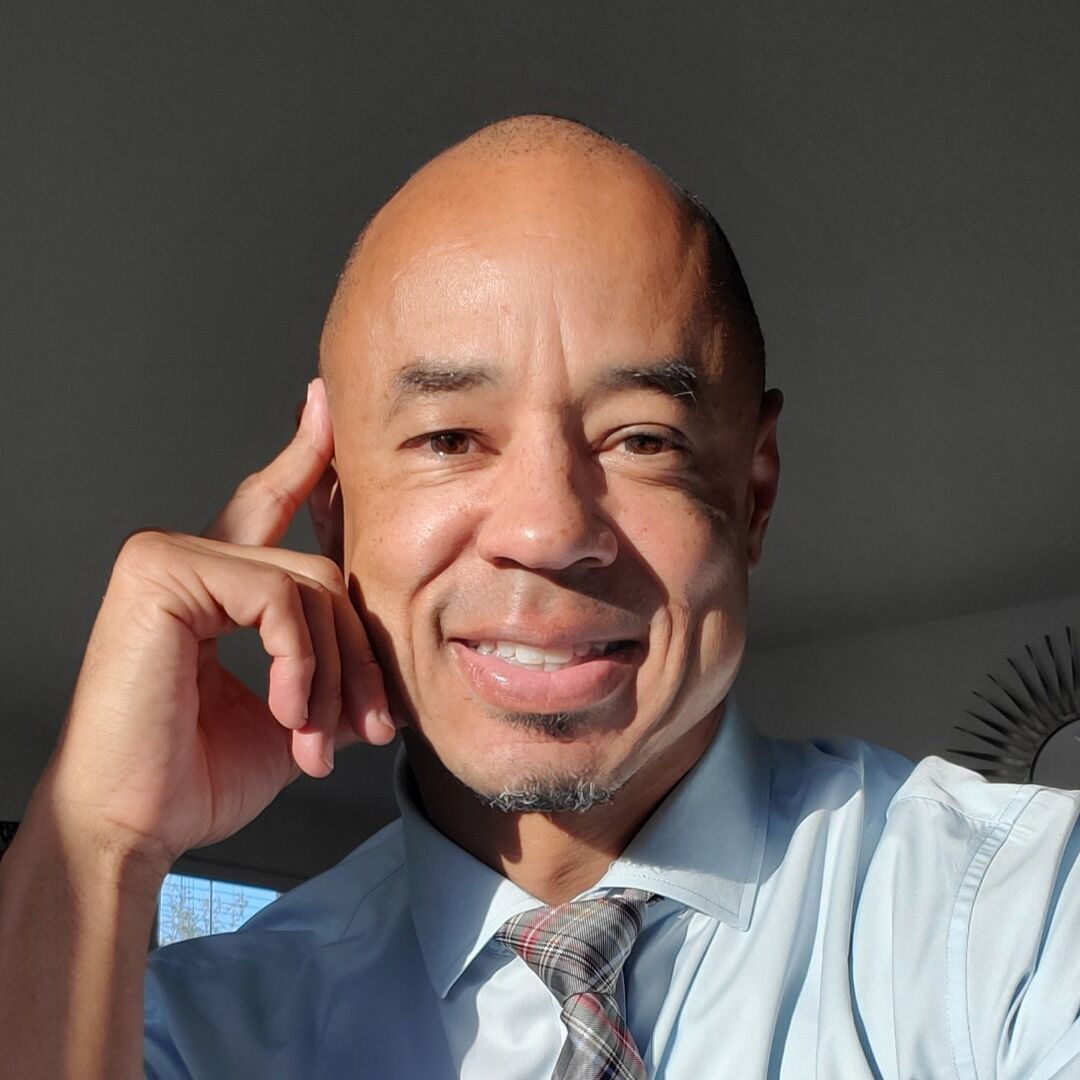
In this episode of Inside Personal Growth, Greg Voisen sits down with London Porter to discuss his transformative new book, THINK LEAD REPEAT: 369 Daily Micro Master Classes For Leaders Who Influence, Inspire, and Get Sh#t Done. Rejecting the traditional, dense management manual, Porter designed this book as a “Personal Leadership Gym” to meet over-stimulated leaders in the “messy middle” of high-stakes environments. By providing 369 daily micro-doses of wisdom—rather than the standard 365—Porter emphasizes that leadership is a relentless, compounding daily practice. It is a guide for those who want to move past the “pinnacle of complexity” and clear their mental runway to lead with both strategic data and deep human empathy.
Porter, a 2025 Human Resource Professional of the Year with over 25 years of experience, shares how his career navigating difficult decisions at the City of Henderson, Nevada, led him to a “straight-whiskey” style of coaching. He believes leadership isn’t just a title you hold; it is a vibration you broadcast every single day. This long-form exploration dives into the core philosophies of his work, from the art of “inner standing” to the “emotional badassery” required to thrive in modern business.
The “Personal Leadership Gym”: 369 Days to Mastery
Most leadership books are designed to be read once and filed away. Porter rejected this model entirely. He argues that leaders are currently facing what he calls the “pinnacle of complexity.” Between the constant pull of technology, the “attention amnesia” caused by smartphones, and the rapid shift in workplace dynamics, a 400-page theoretical tome isn’t what the modern executive needs.
Instead, Porter created a system for mindful repetition. The choice of 369 days—rather than the standard 365—is a nod to the fact that mastery has no offseason and no finish line. By engaging with a “micro-masterclass” every single day, a leader forces their brain to stay in a state of active growth. It is about moving from “knowing” to “being.” As Porter explains, the leader you are becoming is already inside you; you are simply using these daily prompts to clear the mental runway so that leader can finally take off.
Beyond Understanding: The Art of “Inner Standing”
One of the most powerful reframes Porter offers is the concept of “inner standing.” While most people strive to “understand” others, Porter argues that “understanding” often implies standing “under” a concept—a detached, intellectual exercise. To “inner stand” is to be inside the situation, meeting the other person exactly where they are in that distinct moment.
This deeper orientation allows a leader to read the room beyond the literal words being spoken. Porter suggests that in high-stakes negotiations or difficult HR interventions, the “words” are often just the surface. “Inner standing” requires a leader to sense the energy behind the communication. Is a question born of genuine curiosity, or is it rooted in disgust? By practicing this level of presence, leaders can navigate the “messy middle” of human conflict with a level of precision that data alone cannot provide.
Leadership as a Daily Vibration
Porter is on a mission to raise the vibration of the workplace. He notes that energy often walks into a room before the leader does. If a leader enters a space filled with anxiety, nervousness, or the scattered energy of “attention amnesia,” that low vibration permeates the entire team. You can’t hide a bad vibration behind a fancy title or a polished slide deck.
To combat this, Porter advocates for a holistic approach to energy management. He doesn’t just talk about spreadsheets; he talks about the intersection of brain, heart, strategy, and empathy. He personally utilizes tools like somatic breathing, grounding in nature, and even the metabolic shock of cold plunges to regulate his own internal state.
The goal is to ensure that when you walk into a meeting, you are broadcasting clarity and focus rather than reactionary fear. Porter believes that raising the vibration of a single conversation can eventually raise the vibration of an entire organization, and ultimately, the planet.
Choosing Courage Over Comfort: Emotional Badassery
A recurring theme in Porter’s philosophy is the constant choice between courage and comfort. He bluntly states that “comfort zones don’t pay bonuses.” Many leaders stagnate not because they lack talent, but because they have chosen the safety of the status quo over the discomfort of growth.
Porter shares his own story of leaving a secure organization because he realized his creativity was being stifled by his own complacency. Taking that leap was an act of courage that “slingshotted” his professional life. This path requires what Porter calls “emotional badassery.” This isn’t about being “tough” in the traditional, aggressive sense. It’s about having the “compassionately firm” grit to tell the truth and the self-awareness to practice professional forgiveness. Porter views holding onto workplace grudges as “drinking poison and expecting the other person to die.” Choosing to forgive and move forward is a high-vibration decision that reclaims executive energy for what actually matters: outcomes and integrity.
Shortening the Distance: AI and the Human Element
Even as a seasoned HR executive, Porter is forward-thinking about technology. He addresses the integration of Artificial Intelligence not as a threat, but as a tool to “shorten the distance between mistakes and mastery.” However, he offers a vital warning: AI will not replace leaders; it will expose them. If a leader is unauthentic or lacks a clear vibration, AI will only make those flaws more visible. For AI to be a force multiplier, the leader must first have their “inner standing” and “attention on intention” dialed in. The future of work belongs to those who can live at the intersection of data and humanity—using the machine to handle the logic while the human provides the “heart” and the “vibration.”
Final Thoughts: The Practice of the Daily Rep
London Porter’s message is clear: Leadership is not a destination; it is a daily practice, a decision, and a vibration. Whether you are an executive in a boardroom or a new manager in the “messy middle,” your success depends on your ability to show up with intention every single day. By committing to the “369” mindset, you aren’t just reading a book—you are training for the most important role of your life.
Connect with London Porter:
➥ Buy Now: a.co/d/03iML85H
➥ LinkedIn: www.linkedin.com/in/londonporter/
You may also refer to the transcripts below for the full transcription (not edited) of the interview.
Well, welcome back to another edition of Inside Personal Growth. London Porter is joining us from the Las Vegas area, Henderson, Nevada. London, thanks for joining us on the show today. How are you doing?
00;00;16;27 - 00;00;21;01
Speaker 2
I'm doing outstanding, Greg, and I appreciate you having me and share some space.
00;00;21;11 - 00;00;51;26
Speaker 1
Well, I appreciate having you because you've written a new book that I'm going to hold up for my listeners. We were just talking about how their repeat match is my green screen. So it's in front of my face now. It's not in front of my face. But your book is Think lead, repeat 369, not 365. Daily Micro Masterclasses for leaders who influence Inspire and get their shit done.
00;00;52;13 - 00;01;25;29
Speaker 1
So one scale, one day at a time. It's a great book, great inspiration, daily one day and I'm going to let our listeners know about a bit about you before we start talking about your book and all the great inspiration that's inside of there. He's a senior H.R. executive. He is Sherm, senior certified professional, is a 2025 Human Resource Professional of the Year with over 25 years of leadership experience at the city of Henderson, Nevada.
00;01;26;25 - 00;01;56;07
Speaker 1
And for all of you who want to know, that is the second largest city in the state of Nevada. London has been his career in the messy middle of high stakes conversations, difficult decisions, and moments when leaders choose courage over comfort or comfort. He's armed with a bachelor's degree in finance from the University of Texas at Austin and a master's in public administration, University of Nevada, Las Vegas.
00;01;56;24 - 00;02;27;28
Speaker 1
He lives at what he calls the intersection of brain, heart strategy and empathy, data and humanity and outcomes and integrity. I love that. If you've spent any time on LinkedIn, you may have seen London's witty, popular 90 seconds leadership videos. His style has been described as part professor, part coach and part. Did he just say that out loud?
00;02;28;21 - 00;02;53;29
Speaker 1
A friend who tells you the truth and what he calls a compassionately, firm way. He believes leadership is not a title. It's a daily practice, a decision and a vibration. And he is on a mission to raise the vibration of not only individual companies, but of the planet, the workplace, one conversation at a time. So this is the book right here, everybody.
00;02;54;14 - 00;03;19;22
Speaker 1
And it's London Porter got a guy that initially is going to take you to Amazon to get a copy of the book. There you can purchase a copy of the book. Well, London, you and I have we talked quite a while back and your book came and I went through so many of these great daily inspirations that are in this book.
00;03;20;03 - 00;04;01;15
Speaker 1
I think the question is we'll start with the origin. You talk about something called Inner Stand ing, right? You say that you didn't set out to be an H.R. guy. You set out to inner stand of people, not understand inner stance. So that means you really want to get deep. That's a powerful Refaim Can you unpack what inner standing means to you and how that deeper orientation has shaped the way you approach leadership and the thousands of high stake conversations you've had over the past couple of decades doing this work?
00;04;02;17 - 00;04;22;26
Speaker 2
Great. See, that's why I enjoy talking to you, because you get the deeper meaning of things. You go right at it and the core of it. And and you're so correct. You know, inner standing is a play on words. And it's also a deeper meaning. You know, when you understand something, you're you're standing underneath the concept of the topic.
00;04;23;07 - 00;04;49;08
Speaker 2
When you're inner standing, something from me more than just the play on words. You're inside. So you're inside the situation, the conversation, if you will. So it's really when you're engaging with somebody, it's it's inner standing, exactly what they're sharing you beyond the words. So, for instance, if somebody says, well, why did you ask me that? It's different than, well, why did you ask me that?
00;04;49;28 - 00;05;24;00
Speaker 2
You know, there's a difference between disgust versus curiosity. And so when you're just just engaging with somebody, it's not, you know, psycho semantics or trying to figure somebody out, but it's really meeting somebody where they're at in that very moment, in that very day. And we all show up differently at different times during the day. So inner standing, somebody or inner standing, the situation, the conversation, reading the room, you know, being in negotiations, being in an interview, whichever side of the table that you're on, you know, it's really inner standing, the moment in time that you're in.
00;05;24;07 - 00;05;29;14
Speaker 2
And it really is a practice. I'm not always perfect at it, but but I try to do my best every day.
00;05;30;13 - 00;05;58;12
Speaker 1
You know, you as you say, that inner standing, I'm reflecting on a little Netflix, his last words. And I think many people out there know that Eric Dane just passed away from ALS and he did his last words. Right. And and the gentleman, Brad, who was interviewing him, asked him to reflect on his life and things like that.
00;05;58;12 - 00;06;29;09
Speaker 1
And then he spoke to his daughters. And you really got an inner standing of what the disease made him slow down and made him reflect really deeply because he had had a kind of a troubled past and reflect on life. And I think inner standing is the ability for one to have that empathy and compassion, to understand the other person and really be where they are.
00;06;29;09 - 00;07;01;18
Speaker 1
We didn't say live in their their shoes. We said to have empathy. Now, you describe the think lead repeat as a personal leadership, Jim. I love that. And it is 369 micro classes, one for each day of the year and a few extra. What do you why do you believe that you chose this daily micro dose format over traditional leadership book?
00;07;01;18 - 00;07;10;17
Speaker 1
And how does the idea of mindful repetition compound into mastery over time?
00;07;11;09 - 00;07;35;29
Speaker 2
Well, breaking that down, Greg, it's real simple. I chose this style because this was where we're at. You know, let's build on that concept of inner standing. You know, we've got how much have you heard about ADHD running rampant and people's focus times and your attention is to in 60 seconds, 3 seconds, 30 seconds increments. So leaders are busy, especially really good ones.
00;07;36;05 - 00;07;49;26
Speaker 2
And they're busy because they're sought after. And so leaders need to take things in. The leaders desire to take things in the short chunks. Give me the bullet points, kid. You know, I don't need all the fluff. Just get right to the heart of the matter.
00;07;50;02 - 00;08;13;20
Speaker 1
May I intersect here? Why do you think it's so challenging for a leader? Whether it's a cheerleader or it's any leader in a company to be here now, to be present. We only have this moment, you and I. We have nothing else. You know, we're not promised tomorrow. You know, my mom used to tell me yesterday is a canceled check.
00;08;13;20 - 00;08;33;13
Speaker 1
Tomorrow's a promissory note. Really? All you really have is right here. Yeah. So if that's the case, why do you think people go into amnesia about that? It's almost like every leader I know is amnesia. Well, the phone is one. The two phones. Yeah, right. Yeah, yeah, yeah.
00;08;33;27 - 00;08;49;00
Speaker 2
Simple as that. You know your attention to that phone? There are. How many, You know, if. If an individual just looks at their phone. Just look at how many apps you have on the first screen. And do you even scroll to a second screen.
00;08;49;06 - 00;08;50;13
Speaker 1
Or third or fourth?
00;08;51;16 - 00;09;14;25
Speaker 2
Right. And so that's the competition. You know, I'm doing my best to meet people where they're at. And I'm also meeting myself where I'm at, too. You know, the book isn't just for other people. I wrote it initially for me to really structure my year, you know, moving out into the rest of my life that that that's how I wrote the book at first.
00;09;15;11 - 00;09;38;09
Speaker 2
And then, you know, I was encouraged to release it. So short chunks because that's where we're at. You know, ADHD, Adderall, Ritalin, Vyvanse, you know, really getting to the heart of it. And at the executive level, those bullet points, no fluff. So that's what that's what's needed. That's why I wrote the book. And I also.
00;09;38;09 - 00;10;13;19
Speaker 1
Wanted to put that, aren't the people certain for interrupting when I think about this? You know, I've been on many, many, six day silent meditation retreats. Right. And I always come back so energized and inspired and at peace. Okay. Yet in our work world and you work in it managing all the employees that you do and things, we had this like I my term is pinnacle of complexity.
00;10;14;29 - 00;10;35;24
Speaker 1
And I think that the world has reached this where let's we're moving so fast. We haven't been designed to keep up. We we don't know how to make this machine keep up it. And the question is, do we need to keep up?
00;10;38;08 - 00;10;42;04
Speaker 2
That's going to be up to the beholder. Do you want to keep up?
00;10;42;15 - 00;10;42;27
Speaker 1
Right.
00;10;43;08 - 00;10;45;09
Speaker 2
You don't need to do anything.
00;10;45;11 - 00;11;23;13
Speaker 1
I think achievers always want to keep up and then some. And our system has molded us as achievers, every leaders and achiever to always be more. More than not. Not that we're not enough, but more than. So if the more then has taken over and the phones help the more than right, what how do people find mindfulness in their actions every day and what did London do to do that?
00;11;24;08 - 00;11;25;24
Speaker 1
And it might be beyond this book.
00;11;27;03 - 00;11;58;00
Speaker 2
Is the conversation went macro real quick. Great. You know, the universe is always expanding. We're always evolving well, always rotating around something, coming down to the micro. We're always expanding in our learning. Okay. You were talking about the the past in us, you know, the five, the seven, the ten day silence retreat where you get a chance to go within while you're expanding silence, you're expanding awareness.
00;11;58;23 - 00;12;10;03
Speaker 2
So what I've done is I wanted to help individuals expand their level of focus and clarity at the start of the day. Simple as that.
00;12;10;13 - 00;12;50;28
Speaker 1
Then. And that's what you do now. What does London do to manage London's energy? So what happens is, during the course of the day, in your author's note, you wrote that you've spent over two decades watching extraordinary people lose momentum, okay? Not from lack of talent, but from lack of daily intention. Was there a specific moment or person that made you say, I have to write this book and I have to help people manage their energy?
00;12;50;28 - 00;13;18;29
Speaker 2
What is their specific moment? Greg But definitely a collection of moments, you know, and I'll start I start with myself. You know, I was in I was in a high stakes interview for a director position. And for whatever reason, Greg, I did not I did not have practice interviews before that. It had been about six years since I've actually been on an interview because I was I was comfortable at the company.
00;13;19;24 - 00;13;38;24
Speaker 2
And when I was in that interview, I have no idea where my where my mind went great. But it wasn't with me. It was not with me. I mean, I wasn't clear. I wasn't focused. I was rambling, I was stammering. I couldn't organize my thoughts. I wasn't answering the questions in a clear, concise mind. I was like, Who am I?
00;13;39;07 - 00;14;17;03
Speaker 2
I was having an OBE, an official OBE in the moment, out-of-body experience. And that was because if you don't use it, you lose it. If you don't use it, you lose it. And so as to with many of our work competencies, even the interpersonal dynamics, you know, the empathy, the compassion, the deep listening that we're talking about. So that was one moment, another moment was where I saw an executive yelling at a teenager and I walked up on the situation and it was over when this person returned this book.
00;14;17;03 - 00;14;37;20
Speaker 2
It was the most ridiculous thing I ever saw. And, you know, and I was embarrassed for him, just like I was embarrassed for me in that moment, because in that moment, what I lost was I lost the opportunity to create more revenue. I lost a little bit of respect from my peers because they were seeing me in this crash out moment.
00;14;38;04 - 00;14;57;06
Speaker 2
So for this individual that I was witnessing, there was a little bit of respect lost and there was a little bit of reputation lost. Now what it was, that individual emotion, intelligent. Absolutely. But if you don't use it, you'll lose it and then you'll lose it in a moment that matters.
00;14;57;23 - 00;15;07;10
Speaker 1
What would you tell the listeners right now that are hearing us speak how to put more attention on their intention?
00;15;08;28 - 00;15;13;24
Speaker 2
Oh, I love that this is what we're talking about.
00;15;13;27 - 00;15;30;02
Speaker 1
I understand that's what this book is about. This book is about people putting more attention to their intention and you want to get people focused. That's about the best way you can do it, right? Yeah, yeah.
00;15;30;25 - 00;15;51;26
Speaker 2
Yeah. And I'm telling you, great. That's just consistency, right? Yeah, You should. You show up whether you want to or not. You know, you're tired, you're late, whatever. You know, you read that page and it's very similar to the gratitude. You know, when you wake up in the morning, are you focused on that breath? You know, I like to say no wheelchair, no eye patch, no crutches.
00;15;51;26 - 00;15;55;18
Speaker 2
We're human today, baby. We're humming.
00;15;55;18 - 00;16;28;19
Speaker 1
But if people are going to have that gratitude and they wake up with it and they do, I don't care if it's just somatic breathing, breathing, meditation, 2 minutes, whatever, to recalibrate where they are in the moment so that they don't forget what it is that they intend to do. You know, you know, one of the things that I love about this is you cover so many topics in this book, and I think for my listeners, you should you should definitely go pick this book up.
00;16;28;19 - 00;16;56;28
Speaker 1
But one of the recurring themes is that leaders face daily moments in which they choose courage or comfort. Now, I've been told many times that discomfort actually helps people get out of their comfort zone, right? And to grow. You've seen the chart. If we're going to stay in flow, that's great. But if you're going to push the boundaries and kind of grow, meaning grow, you're going to go out of their comfort zone.
00;16;56;28 - 00;17;22;00
Speaker 1
And you write that comfort zones don't pay bonuses. Can you share a time in your own career when you chose courage over comfort and what that decision cost you or gave you years? What did you actually get a reward from that for internally? Not bonuses, not money. What did London get out of it?
00;17;22;13 - 00;17;50;16
Speaker 2
The you know, Greg went remember that the organization I was telling you about that I stayed at for a while and I got comfortable. The courageous thing was to step away from that company. There wasn't growth internally, internally in the company, and there came to be not growth internally in London because I became a little bit complacent. And what that cost me was my creativity.
00;17;50;27 - 00;18;12;26
Speaker 2
What that cost me was my my ability to produce products that help other individuals like this book. I've had these ideas for a long time, but I wasn't acting on them. I wasn't executing. I wasn't I wasn't learning. I wasn't I wasn't actually doing I wasn't taking the chance to be on a podcast like this. And so that's what it cost me.
00;18;12;26 - 00;18;45;01
Speaker 2
It cost me that time. So when I took that courageous step and I left that organization to reach, to stretch, to grow, to really just like, you know, to expand business, you know, you fight the neurons that fire and wire together. You know, I started to learn in a new organization with new people and a new system. And it really it really put a slingshot on my creativity, you know, month that the London was back.
00;18;45;11 - 00;18;55;01
Speaker 2
And that came from taking that leap of faith. And that leap of faith wasn't into that new organization. That leap of faith was into that new that new sense of self.
00;18;56;05 - 00;19;29;07
Speaker 1
Right? So when you tap into this higher power, call it your intuition and you listen to that intuition, which was to choose courage over comfort. What was it the one thing that happened to you for you to be able to get in touch with your higher intuition and to listen to it and be willing to override the ego which frequently says you're not enough.
00;19;29;22 - 00;19;54;12
Speaker 1
But then this time you basically had a discussion with it and said, okay, this is London calling, right? My Yoda inside is telling me that it's time for me to move. Were there a couple of steps you did before or something that finally just welled up inside of you that you said, I'm going to take the courage here and jump?
00;19;54;12 - 00;19;59;29
Speaker 2
Yeah, a couple of things, Greg. I started doing ice fast.
00;20;00;14 - 00;20;00;28
Speaker 1
Okay.
00;20;01;10 - 00;20;02;01
Speaker 2
And Copeland.
00;20;02;01 - 00;20;08;10
Speaker 1
If that works and I found that will get you out of your comfort zone.
00;20;08;10 - 00;20;24;12
Speaker 2
And I found that from when half you know, he did of course on, on inside time or you know the ice man for all those that don't know. So I start doing cold plunges you know first it was the cold shower, then it was cold plunges. And you want to you want to see your shadow sign. You want to see what your built up.
00;20;24;19 - 00;20;43;11
Speaker 2
You want to see the body try to die in front of you. And then come back alive again. So that was that was one of the things that I've been practicing cold plunges now for the last eight years or so, you know, doing somatic breathing. Two somatic breathing as well. Absolutely.
00;20;43;11 - 00;20;44;20
Speaker 1
And you do meditation.
00;20;45;10 - 00;20;46;27
Speaker 2
And meditation and.
00;20;46;27 - 00;20;48;19
Speaker 1
You go into nature frequently.
00;20;49;08 - 00;21;09;25
Speaker 2
Absolutely. You know, the tree, the tree, the trees are my friend. Definitely used grounding technology to take off my shoes, go walk over in the park, ground myself. But that water is so all encompassing because there's nowhere to hide. Yeah, the back of the neck between the legs under the arms, there is nowhere to hide.
00;21;10;20 - 00;21;42;16
Speaker 1
Well, the good part is that, you know, to release, you know, we talk about in these stressful situations, you get in the work environment, cortisol versus releasing oxytocin, you know, you know, already from those cold base that oxytocin are flooding your body and you're removing the cortisol. And, you know, there's something I want to talk about because, you know, here I'm sitting across from you on Zoom.
00;21;43;05 - 00;22;10;15
Speaker 1
Uh, you're a well versed man, well-written, well-read, intelligent person. Yeah, we all have a history. And you talk about multiple scenarios to forgiveness in the workplace, calling. And I'm not going to just call the workplace. I'm going to talk about outside the workplace as well, calling it emotional badassery rather than weakness you even revisited is forgiveness 2.0 later in the book.
00;22;11;25 - 00;22;42;29
Speaker 1
And we've I've had so many shows talking about forgiveness. Why is forgiveness to learn and so important it's in a professional context. And why did you feel it necessary to address this more than once? Because forgiveness. I mean, look, if you can't do it, it's very hard to move on whether it was your parents who said, Hey, London, if you don't get good grades, you know, you're not going to do good enough in the world.
00;22;43;06 - 00;22;50;27
Speaker 1
Or it was somebody else who did something, said something to you. But at some point you've got to learn forgiveness, right?
00;22;51;24 - 00;23;13;13
Speaker 2
Yeah, brilliantly. You know, one of my favorite quotes about forgiveness is from Mark Twain. And he says, you know, forgiveness is the fragrance. Forgiveness is the fragrance on the the forgiveness is the fragrance that the violet sheds on the heel that is crushed. It.
00;23;13;13 - 00;23;14;27
Speaker 1
And I like that.
00;23;16;25 - 00;23;41;06
Speaker 2
And so if you just think about just that metaphor, you know, when you're when you're crushed by a situation, you know, something squeezes out of you that's different and you become different. And so to embrace that, that transition of becoming something different, a little bit more elegant, a little more, a little bit more brilliant, a little bit more forgiving, you go into another version of yourself.
00;23;41;23 - 00;24;06;23
Speaker 2
So whatever. Whatever happened to you, you can leave that old version behind and you can step into that new version. So it's just a way I call it a mine truck and truck rhymes with another word, but it's a way to it's a way to psychologically leave the pain behind while accepting it and then moving into the lesson and then using the lesson as building blocks moving forward.
00;24;07;13 - 00;24;14;05
Speaker 1
And so why do you think self forgiveness is so challenging for most people?
00;24;14;05 - 00;24;45;19
Speaker 2
Practice? Remember, you were talking about the attention on intention. You have to you have to put the attention on forgiving yourself when when, when damaging moments happen. You know, and there are many studies on it about how the psyche splits. I also think pain is like a tsunami for the first wave hits and then it subsides. You think you're okay, You go a couple of days and then another wave hits and then you have to revisit it again.
00;24;46;08 - 00;25;09;10
Speaker 2
And so forgiveness is a constant. You know, I'm taking the taking the water out the boat. It's constant because it continues to come back to challenge you just to make sure that you have really forgiven and and if we don't, it's just like drinking the poison and expecting somebody else to be sick. Yeah. So we're drinking the poison.
00;25;09;25 - 00;25;31;08
Speaker 2
So, you know, just like you were talking about cortisol, let's go into, you know, hormones in the body. So what, they race around the the freeze, fight, fight, flight, you know, those hormones that race around the body lasts for about, what, 3 to 5 minutes and then it starts to subside because our cortisol kicks in, our stress levels come down, we start to breathe a little bit better.
00;25;31;20 - 00;25;41;19
Speaker 2
And so 3 to 5 minutes. But after that, what what heightens that emotion? Again, you know, we start thinking about it, obviously.
00;25;41;19 - 00;26;19;14
Speaker 1
Yeah. I think what happens is we burn out our adrenal systems. So in the process, the adrenal glands are overworking and they're out. And the reason they are is because what you just pointed to, when you have a subconscious that literally, you know, people would reprogram it, they would find out the power of it. Right. And that then sends the signal and that starts a lot of I can tell you, because I suffered from panic attacks for a long, long time, The panic attacks are very real.
00;26;19;14 - 00;26;43;14
Speaker 1
And there might be people out there today that are experiencing that. And now the question is, are those panic attacks a result of PTSD of some experience in your life, which you just really didn't even know you related to it that way? Right. But you've relived it. And so the key is to get help. Now, just tell people.
00;26;44;11 - 00;27;07;15
Speaker 1
And when you get professional help, you can overcome that in and much of that will be for me. I'll just tell you I learned and I spent a long time at scripts with electrodes on my head, actually seen my brainwaves to see who was doing, what was I doing to myself. And when you see what you're doing yourself, it's nothing in the external world.
00;27;07;18 - 00;27;34;11
Speaker 1
It's how you're reacting to the external world. Okay, So once you learn to control that and slow down and get into the flow and the vibe, you're good to go, right? I haven't had any panic attacks for I seems like a hundred years now. But the good thing is, is you can get rid of these symptoms from something that was caused and was embedded in that subconscious.
00;27;34;29 - 00;27;35;08
Speaker 1
Okay.
00;27;35;21 - 00;27;41;15
Speaker 2
What was was just real quick, what was that point? So, you know, at Scripps Electro on the.
00;27;41;15 - 00;27;42;28
Speaker 1
Head, biofeedback.
00;27;43;08 - 00;27;54;13
Speaker 2
You're seeing the biofeedback. So you're seeing it visually. You know, it's science based so you can trust it even more. Right? And then and then what was the shift for you internally, though?
00;27;55;05 - 00;28;33;12
Speaker 1
Oh, the big shift was starting a deep practice of meditation. MM hmm. And I knew that if I could start to control what the mind was doing because it was racing. Right. We call it the monkey mind. Right? Right. But mine was racing all the time with constant thoughts about, you know, I have a great friend, he's he's my hypnotist and hypnotherapist and he says a great statement, Worry is a misuse of your imagination.
00;28;33;12 - 00;29;00;02
Speaker 1
Now, think about it for a minute. Worry causes stress, anxiety, all of that. We're worried about something in the future. We're worried about something that happened in the past where we're worried, but it's a misuse of that imagination because what we've done is we've stuck it in there and go, Yeah, well, let's let it round out. Right? So I found a way how to reprogram my imagination.
00;29;00;20 - 00;29;02;07
Speaker 2
Right?
00;29;02;07 - 00;29;31;00
Speaker 1
So I want to get to your leadership as vibration. There's a fascinating line in your bio where you say leadership is not a title, it's a daily practice, a decision, it's a vibration, everything's vibration, everything. You and I right now are on a vibratory level that hopefully is bringing out all these great questions. You also say you're obsessed with raising the vibration on the planet in the workplace.
00;29;31;00 - 00;29;53;19
Speaker 1
Well, there is a thing called vibratory attunement, color, light sound, whether people believe in this or not. But the reality is you look at the frequencies of music, you look at them, you look at behind, you've got guitars, you've got all the things hanging on the wall that's solace for you. That's a piece. That's where it's bringing you comfort when you go play those notes.
00;29;54;05 - 00;30;04;23
Speaker 1
So what does that mean to you practically? How does a leader rise, raise their vibration or even the vibration of a team in an organization? Yeah.
00;30;05;21 - 00;30;16;03
Speaker 2
Greg, in the book there's a I remember one of the quotes that I found which is it says that, you know, your energy walks into the room before you do. And so.
00;30;16;29 - 00;30;17;21
Speaker 1
Definitely.
00;30;18;17 - 00;30;18;28
Speaker 2
Right.
00;30;19;11 - 00;30;39;18
Speaker 1
Well you've been in cultures. Look I, I'll start but I this you you bring out a lot in me I've walked through the doors of organizations and I think I said this to you in our pre-interview where I always say this, I felt like I had a knife and I could cut the air. I could cut the air.
00;30;39;18 - 00;31;07;06
Speaker 1
Now, think about that. Air is supposed to be fluid and move around, but it's so dense. And so you walk outside after you're done working in that establishment, you're like, Oh my God, They're just like taking the energy out of me. There's sucking it out of me. And we've all put away. I think for my listeners, I hope you don't work in those today, but if you did at one time, you can remember back when you worked in them.
00;31;07;19 - 00;31;30;21
Speaker 2
Oh, absolutely. Yeah. Like you said, you know, you can cut it with a knife and those analogies are so real, even though you can't see it, you can feel it. It's the vibration. That's why you get those goose bumps on the skin. You know, you get a physiological response, you know, Have you ever been in an organization where there's a there's an individual or two?
00;31;31;04 - 00;31;50;07
Speaker 2
They're just fun to be around? Yeah, It's not like they're saying anything special. You know, It's not like they're acting different. It's not like they're trying to be smart or trying to be Mr. or Mrs. Popular. It's just when they speak general conversation, they're just they're just good to be around. You know, those individuals.
00;31;50;08 - 00;32;16;08
Speaker 1
Have good vibrations. Yeah, they've got to get up. Good vibrations at work. Yep. Meg That's true. Yeah, it really is. Because I don't know about you. I think you'd be the same. Well, you're the kind of guy that would walk in a company and everybody. Oh, I want to be around him, Right? Because you've got this really peaceful, calm, healing energy.
00;32;16;08 - 00;32;38;21
Speaker 1
Right? And what my clients used to say to me is, I don't know who said this. I can't even remember the the guy in the company. He goes, You're the undercover evangelist. And I was like, it's like it was supposed to be this big. It's what was you're like the guy who's up there going, rah rah, rah, rah.
00;32;39;03 - 00;32;44;12
Speaker 1
I'm like, Well, that's one way to look at it.
00;32;44;12 - 00;32;58;08
Speaker 2
Oh, my goodness, that is bloody great. But but it's so true. I mean, it is so true. You know, for leaders, you know, you do not have the opportunity to have an off day the entire day.
00;32;58;16 - 00;32;58;27
Speaker 1
Right.
00;32;59;08 - 00;33;27;18
Speaker 2
You can have an off day for 5 minutes, be authentic and say, hey, team, you know what? I need your help today. I'm operating on fumes, but I'll give you everything I got that's authentic, that's real. So and at the same time, you don't have you don't have the the opportunity. Like the what I was talking about earlier, you know, the executive yelling at the young kid, That can happen.
00;33;28;17 - 00;33;53;13
Speaker 2
You don't have that. You don't have that opportunity. So when it comes to the vibration, okay, like when you're when you're walking in, you know, your shoulder from your body language to your posture, you know, to your facial expressions. Right. You know, you set the tone. The leader sets the tone for the day. And so if you come in anxious and nervous, you know, running around, fidgeting, you know, your team is going to pick up on that.
00;33;53;23 - 00;34;12;15
Speaker 2
The organization picks up on that. And so that's what this that's part of what this book is about, you know, setting your mental intention for a little bit of focus, a little bit of clarity. How do you want to show up today? Let's take a little scan. You know, what percentage are we at today? You know, are we at 70%, 80%?
00;34;12;15 - 00;34;53;24
Speaker 2
Are we really vibing at 95%? And we have enough energy to hold space for problems, emergencies, tasks, as many people that we need to speak to. And so that's what I'm talking about when I'm talking about raising the vibration of yourself first, because we can't give to others what we don't have. You know, raise your own vibration, set that tone for the first 30, 60 to 90 seconds, reading that page, asking that reflective question, walking out into your environment, influencing your team with that in an authentic way with competency, compassion, direction and focus, and then that starts to permeate out into the organization.
00;34;54;03 - 00;35;20;21
Speaker 2
So for me, the book is one too many. You know, you and I can talk and you know, you and I can talk, and this is 1 to 1, you know, people listening, that's one too many. The book is one too many. So, you know, for me, you know, my purpose is to help raise the vibration of the planet through whatever natural gifts and tools that I've been given that I've chosen to work on, and I've chosen to expose myself, too.
00;35;21;03 - 00;35;54;12
Speaker 2
Because like you said, Greg, you know, people in the organization, I say I like to be around London. You know, other people in the organization may say London and all that, he and all that. And so it's really interesting. But what I can do is help raise the vibration. And that's what I think leaders, you know, often, including myself in the past, you know, every single day, like you mentioned, integrating the attention on your intention, we start to practice that daily.
00;35;54;12 - 00;35;58;01
Speaker 2
It starts to become a lifestyle. It starts to become who you are.
00;35;58;14 - 00;36;25;11
Speaker 1
Well, okay, so I think it's authenticity, right? That's one thing. And to bring that into the workplace, I just did an interview with Raj Sedona on Healing Leaders. He's he's written like 15 books. He's the guy that started the Conscious Capital movement. Yeah. He and John Mackey of Wholefoods, the whole nine yards. Right. Know what it took for him?
00;36;25;28 - 00;36;48;25
Speaker 1
Every degree in the world all these years. 60 some odd years old. Right. And then Lynn Twist says to him, Hey, Raj, I want you to come to the Amazon with me and go meet the shamans, because he intellectually, the guy was just phenomenal. Right. But he said he never had the heart. And so he did, didn't.
00;36;49;07 - 00;36;49;26
Speaker 2
Raj said.
00;36;49;26 - 00;36;51;13
Speaker 1
That? That's right. That's right.
00;36;51;14 - 00;36;51;22
Speaker 2
Okay.
00;36;52;14 - 00;37;19;22
Speaker 1
He never felt that maybe he and the externally people thought that. Then he says to me during this interview that he went to a silent meditation retreat in Upper New York. He'd never been to one. He then went to the Himalayan. Is he never done that? And then he ended up going down to the Amazon with Lynn Twist and a group of people, and he does an Iowa skied experience.
00;37;19;22 - 00;37;40;23
Speaker 1
Never had done that right. He said his whole world opened up to what was possible, what he could do. And if you read this book, you'll see it's kind of a memoir, too, about a guy who all these years intellectually, everybody thought, oh, there he is, great. It's fantastic. He's here. He's there, but he really gets it now, right?
00;37;40;23 - 00;38;00;11
Speaker 1
Yeah, But it took it. He was 68 years old, right? I'm 78. So this is the point. You you talk about. I'm going to say this is the London porter of Ryan holiday. Okay. Stoicism. Practicing stoicism.
00;38;00;21 - 00;38;01;03
Speaker 2
Yeah.
00;38;01;29 - 00;38;32;17
Speaker 1
What role does stoic philosophy play in your own leadership practice and how can today's professionals apply it without becoming emotionally disconnected? Now, I've read well, Ryan's been on my show a couple of times, great guy, written tons of books on Stoicism, probably brought it back into the 21st century. Tell me where that sits with you and how you think people should apply it.
00;38;32;17 - 00;39;21;29
Speaker 2
I think and and in plain terms, you know, stoicism is so good during high stakes emotional situations and also emergencies, because you don't overreact. Right? Or you do your best not to overreact as much as your natural instinct wants you to. So you're able to think a little bit clearer, you're able to think a little bit more objective, and you're able to not let your impulse hijack the moment very much like, you know, when I had that crash out of that interview or when that executive yelled at that young that young kid, you know, those are moments where stoicism would have helped, where you have this level of emotion and let's take it back to
00;39;21;29 - 00;39;43;13
Speaker 2
something basic. You know, you have support, you know, a direct report, walk in and say, you know what, not that great. I'm not feeling it. I think I'm going to quit. So if you give that test, that pause and you're not reacting to it and you're listening and you say, Well, tell me more about that.
00;39;44;01 - 00;39;44;10
Speaker 1
Mm hmm.
00;39;45;12 - 00;40;20;06
Speaker 2
Tell me more about that. And then you give that person a chance to speak so that conversation can go one of two ways. You know, that conversation. Maybe there's something to be healed there and that individual stays on board with you. Right? You know the training you don't you don't waste. I don't want to say waste. You forgo a recruitment training talent, integrating a new person into the team, burning out the team while you're recruiting for the next 6 to 3 months, however long it takes to fill that position.
00;40;20;21 - 00;40;27;13
Speaker 2
All because you weren't digging a little bit more in that conversation. You weren't thinking face.
00;40;27;19 - 00;40;56;11
Speaker 1
I think what you're doing and I told you this, I think on the pre-interview I interviewed you interview with dean carter, the recent h.r. For patagonia. He now has a company called in still that i you write about a.i. and human element and what and still does and this leads to this your your place in the book here it listens to the conversations that you just said.
00;40;56;27 - 00;41;24;10
Speaker 1
Yeah. And it says you may want to have this conversation in a different way, the way that you did it there. You may want to reframe, you may want to listen with this way or that way. I think it's brilliant. Now you include a section on AI implementation of the book, which feels very forward thinking for kind of leaders Guide As an H.R. leader, how are you seeing intelligence reshape?
00;41;24;10 - 00;41;39;12
Speaker 1
I just gave an example. This is still a high workplace, and what's the one thing leaders need to get right as they integrate AI into their organizations, especially in the human resources arena?
00;41;39;12 - 00;42;12;01
Speaker 2
Right. I very simply is kind of shorten the distance between mistakes and mastery. Boom shortens the distance and if you if you don't shorten that distance, then you'll continue with the mistakes and people will see it. So A.I., A.I. with leadership is not going to take over leaders. It's going to expose leaders. Real quick and or and it depends on the organization that you're in.
00;42;12;04 - 00;42;39;05
Speaker 2
If you're in an organization that is not A.I. friendly, the first thing a leader is going to have to have is transparency, because they're going to have to teach. They're going to have to overcome that fear, people's fear. Okay, why is this being implemented? How were decisions being made? And also, what does that mean for me, plain and simple, You've got to overcome individual fears and give them the why and where where, where are they in that?
00;42;39;13 - 00;43;01;19
Speaker 2
Where are they? What what type of cog are they in that wheel? And so that's if if an organization is anti-hate, anti AI or slow to adopt it, if you have if you have an organization that is embracing A.I., the biggest thing that that leader needs to do is to be involved in that. You've got to walk the walk.
00;43;01;25 - 00;43;02;05
Speaker 1
Yeah.
00;43;02;17 - 00;43;25;05
Speaker 2
Or people will run circles around you. So you have to have the transparency of being the early adopter. If if you're in excuse me, if you're in an organization where A.I. is is is being received well. So that's an environment where A.I. has not received well, an environment where AI is received well.
00;43;25;23 - 00;43;57;16
Speaker 1
Well, I think all along you've been saying this is a better way of if you look at human, if you're to say this is our human capital and it's so valuable to the organization, how do you see these people as humans versus as machines trying to produce for the overall corporate environment? Right. Yeah. And I can tell as an H.R. leader, you really have this very humanistic approach to leading.
00;43;58;03 - 00;44;20;05
Speaker 1
Right? Some leaders don't some leaders don't need to get that right. They need to bring it into their DNA to really want to understand and pick someone up and spend the time to coach him and councilwoman, do the kind of things that it takes. They just want you to see them as them and they want to be them.
00;44;21;00 - 00;44;27;13
Speaker 1
You don't want to see them as a doing being. You want to see them as a being being thematic.
00;44;27;13 - 00;44;28;01
Speaker 2
And Greg.
00;44;28;11 - 00;44;34;27
Speaker 1
You don't want to see them as a doing being. You want to see them as a being being. Hmm.
00;44;35;15 - 00;44;36;15
Speaker 2
I'm bar on that one.
00;44;37;03 - 00;45;18;02
Speaker 1
Okay, you can borrow, but so you choose the book's intro by saying the leader you are becoming is already inside you. You're simply clearing the mental runway. If someone picks up, think lead, repeat tomorrow and commits to one page a day, what's the first shift that you think they're likely to feel as a result of? And I'm going to hold this up for our listeners here it is that they're going to feel as a result of reading your book and understanding the words in between the words.
00;45;18;02 - 00;45;58;14
Speaker 2
Greg I think the first thing that an individual might, might experience is awareness. Awareness. It circles back to our earlier earlier point in our conversation, how to somebody have attention on their intention. This book is not revolution free, it's reflection area. It's not revolutionary, it's reflection. And an individual might experience a new level of awareness because at the end of each page is an action item and a reflective question, and the action item causes you to naturally think about, okay, what am I going to do next?
00;45;59;04 - 00;46;02;28
Speaker 2
And the reflective question is, how am I going to do that?
00;46;03;13 - 00;46;03;23
Speaker 1
Mm hmm.
00;46;04;05 - 00;46;28;11
Speaker 2
So you're you're in with your own thoughts. And so the awareness, the heightened level of awareness is what I believe. You know, individuals, if they're open to it right, if they're open to it, might might get when they start reading a couple of pages, when they start reading a page a day and they get through the first three days, the first ten days, they might see their level of awareness heighten.
00;46;29;08 - 00;46;58;28
Speaker 1
I think that's a great if if that's all you do with this book, that's wonderful. You know, to create a practice that creates awareness is it is all it needs to do. So for all my listeners, pick up a copy of the book, click on the link in the show notes below. Think Lead Repeat. London is a wonderful author and he put together a perfect book for anybody in leadership, anybody, anywhere, actually.
00;46;59;17 - 00;47;20;08
Speaker 1
So, hey, as we wrap this up, Lynn, what's next for you? You're going to have a companion workbook or are you going to be out speaking or a leadership cohort group? What can the listeners were? How can the listeners connect with you? And we know how they can grab a copy. They're going to click the link at London Porter Dot Air.
00;47;20;08 - 00;47;38;20
Speaker 1
It's going to take them directly to Amazon to get a copy of the book any way else that they could reach out to you. I know obviously LinkedIn will put a LinkedIn link to his LinkedIn. You can reach to him, reach him that way as well. What's up for you next? What's next?
00;47;39;18 - 00;47;59;02
Speaker 2
Well, you just explained that the best way to reach out to me they can reach out to me on LinkedIn and what's next is expansion. And we talked about, you know, expanding and expanding awareness. I'm definitely going to expand myself and you're going to be my you're going to be mine. My book author, speaker, coach. You know, I'm adopting you.
00;47;59;02 - 00;48;01;17
Speaker 2
I'm adopting you, Craig, Adopting you.
00;48;02;00 - 00;48;27;24
Speaker 1
Thank you for that compliment. Well, I want to thank you for being on the show and letting our listeners gain some of your wisdom today, and not only your wisdom, but also your heart. I think you're a big hearted guy. I love that. I see that in you. Namaste to you. Blessings to you. Thank you for being on inside personal growth and sharing it.
00;48;27;24 - 00;48;28;24
Speaker 1
Any last words?
00;48;29;17 - 00;48;53;24
Speaker 2
Yeah. Greg, you're talking about, you know, what's next. And number one, you know, thank you for having me on the show. I believe the book will be turned into an an audiobook. So the audiobook is coming. Like you said, it leans into a workbook. Also, the book, you know, I'm a I'm a teacher on on and on Inside Timer, a meditation app.
00;48;54;06 - 00;49;41;07
Speaker 2
And that is going to be the book is going to be a really good course for mindful wellness at work. So that's another thing. And then there are a couple of other book projects that are that shoot off of think, lead, repeat. So already I believe there's a few speaking engagements and but the expansion is to just continue to help raise the vibration of the planet, you know, through, you know, clarity, through empathy, through mindfulness of how your core competencies, those things that you bring to it work, those KPIs, how do you take those KPIs and turn that into a vibration, and how does that vibration actually do actually affect the aura y of the
00;49;41;07 - 00;50;15;01
Speaker 2
organization? You know, your people, your retention, your recruitment, your results, the bottom line, the balance sheet, So on and so forth. I mean, where does practicality meet presence? And because when people are thinking about, you know, being at work, you know, money comes into play, titles come into play, personalities come into play, Can this book help you turn those emotions and thoughts that you have into the desires that you want to receive out of work?
00;50;15;26 - 00;50;40;26
Speaker 1
I think it's great. I think it's the book, but it's the shift that people will take in their leadership styles as a result of applying the wisdom that's in the book. And so I just want to say that in other words, if you practice what's in here, you will make a shift. So. London, thanks so much for being on the show.
00;50;40;27 - 00;50;56;04
Speaker 1
Thank you for again, writing a great book and something that people can pick up every day. Looking forward to it in the audio book and the companion guide book that you'll be coming out with. And so you take care. You've got lots of work ahead of you.
00;50;56;22 - 00;50;59;24
Speaker 2
Yes, sir. Yes, I do. Thanks, Greg. I appreciate you.
00;50;59;29 - 00;51;01;13
Speaker 1
All right. Blessings, buddy.
00;51;01;24 - 00;51;03;01
Speaker 2
Blessings notwithstanding.
00;51;03;09 - 00;51;04;01
Speaker 1
I'm a stay.
Sign up to receive email updates
Enter your name and email address below and I'll send you periodic updates about the podcast.











Leave a Reply