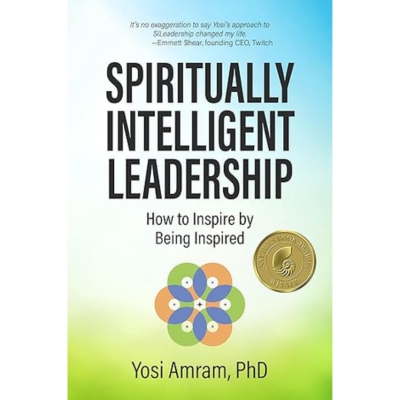
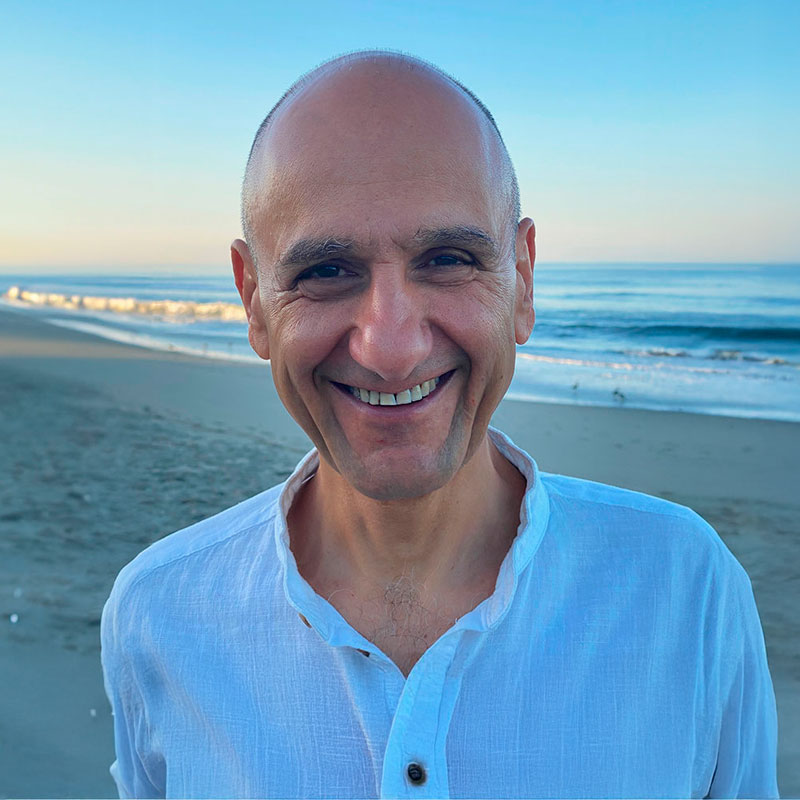
In this podcast, Greg welcomes back Yosi Amram, PhD, a licensed clinical psychologist, CEO leadership coach, and award-winning author whose background spans from an elite Israeli military sergeant major to an MIT and Harvard-educated tech CEO. His life took a radical, life-altering turn on a massage table when, after leading two companies through successful IPOs, he experienced a spontaneous spiritual awakening that “blew a fuze” in his mind. This traumatic catalyst—which initially led to him being pushed out of his own organization—inspired Yosi to pioneer research into Spiritual Intelligence (SI).
Why Spiritual Intelligence is the New Bottom Line
For decades, the corporate world relied solely on IQ to measure potential. Later, Emotional Intelligence (EQ) taught us to manage our emotional resources. However, Yosi Amram, PhD argues that Spiritual Intelligence is the final frontier. SI is the ability to draw on, cultivate, and embody spiritual resources—such as purpose, service, and integrity—to enhance our daily lives and well-being.
The results are not just philosophical; they are measurable. Research shows that leaders with high spiritual intelligence produce better financial results for their business units, and banks with higher SI among employees see a better return on assets. Furthermore, inspired employees are twice as productive as those who are merely satisfied with their jobs.
The Seven Dimensions of the SI Framework
Through research interviewing 71 teachers across the world’s major traditions, Yosi identified universal virtues that cluster into seven domains:
-
Meaning and Purpose: Mobilizing a sense of “why we are here” and who we are serving.
-
Grace: Cultivating qualities like gratitude, joy, and beauty to multiply motivation.
-
Community: Building shared intention and alignment so energy is multiplicative rather than divisive.
-
Presence: Bringing full attention and intention to the moment despite an “ADHD culture”.
-
Truth: Leading with honesty and “ego-looseness”—prioritizing what is right over being right.
-
Wisdom: Tapping into inner knowing and intuition to guide high-stakes decision-making.
-
Inner-Directedness: Following an inner compass and “North Star” rather than external validation.
Forging Leadership in the Heat of Adversity
One of the most compelling parts of Yosi’s story is the role of struggle. He points to historical giants like Lincoln, Gandhi, and MLK, who all experienced profound struggles. Yosi believes that “metal is forged in the heat”. When a leader’s ego is “cracked” by failure, they have the opportunity to move from being driven by external markers like fame and status to being driven by internal integrity.
Actionable Steps for Development
You don’t need a spontaneous awakening to develop these skills. Yosi Amram, PhD suggests a practical, “muscle-building” approach to spiritual intelligence:
-
The One-Month Focus: Pick one quality (like gratitude or joy) and practice it intentionally for a full month to build that “muscle”.
-
The Future Self Interview: When facing a crisis, imagine yourself 10 or 15 years in the future and ask that “future self” what values are most important now.
-
Tracing the Longing: When striving for external goals, trace that yearning back to its source within your heart to find the “spark of the divine” that already exists.
What You Will Learn
-
The SI Advantage: Why spiritual intelligence is the essential evolution beyond IQ and EQ for modern leadership.
-
The Power of Adversity: How profound struggles and “twice-born” experiences forge resilient leaders.
-
Business Results of “Soft” Qualities: How cultivating trust and joy can double employee productivity.
-
Mobilizing Meaning: Practical ways to align personal purpose with organizational mission.
-
Harnessing Intuition: Techniques to access “future-self” wisdom and trust your internal “truth meter”.
Connect with Our Guest, Yosi Amram, PhD:
-
Explore the Book: Spiritually Intelligent Leadership: How to Inspire by Being Inspired
-
Purchase: Buy Now on Amazon
-
Official Website: yosiamram.net
-
LinkedIn: Connect on LinkedIn
-
YouTube: Awakening Spiritual Intelligence
-
Instagram: @awakeningspiritualintelligence
You may also refer to the transcripts below for the full transcription (not edited) of the interview.
Welcome back to Inside Personal Growth. This is Greg Voisen the host of Inside Personal Growth. And we're back on again with Yosi Amram. And he is a fascinating man. He's in the Bay Area of San Francisco Bay Area. And Yoshi good day to you.
00;00;24;16 - 00;00;25;07
Speaker 2
What was that.
00;00;25;21 - 00;00;27;00
Speaker 1
A good day to you?
00;00;27;04 - 00;00;34;12
Speaker 2
Oh, great. Good day to you. A good week, a good month, a good year and good life. You're out there. Good.
00;00;34;17 - 00;01;05;16
Speaker 1
It's good to have you back on. And for all of you, he's got a beautiful Web site and you're going to go to y0siamr and dot net. He just told us he did a TED talk just the other day. So definitely go look for that because it's got ted X Sugar Hill. He's got a read list. Watch and listen to section around podcasts and papers he's done.
00;01;06;00 - 00;01;39;24
Speaker 1
And we're going to be speaking today about spiritually intelligent leadership, which he has done a wonderful job, this one on Notchless Book Award as well. How to be inspired by being inspired. Well, so let me tell the listeners a little about you and then we're going to get in your history. He's appeared, Steve licensed, clinical psychologist, the CEO of leadership coach and a bestselling award winning author.
00;01;39;24 - 00;02;11;18
Speaker 1
We said previously founder and CEO of two companies that he led through successful IPOs. Yossi has coached more than 100 CEOs. Many of them have built companies with thousands of employees and revenues in the billions. He's got an engineering degree background from MIT, an MBA from Harvard and a Ph.D. in psychology from Sophia University. He is pioneering research in the field of spiritual intelligence.
00;02;11;18 - 00;02;35;14
Speaker 1
His research has received over 1000 citations as a C-suite, Amazon and Barnes Noble bestselling author novels Book Award that we said. He also is involved as the founder of several nonprofits, including True masculinity dot org. I in engineering.
00;02;35;29 - 00;02;36;28
Speaker 2
Is engendering.
00;02;37;07 - 00;03;07;00
Speaker 1
Or engendering how do I have it wrong will fix that in this podcast Engendering love dot org and awakening as I dot org and for further information, as I said, go to his website, look in our show notes below, which you'll see also he's out there on YouTube. He's quite the presence so definitely do that. Well, Yossi, you know your journey from Israel.
00;03;07;00 - 00;03;33;29
Speaker 1
We've had this discussion before. Our military sergeant major at AMA majored in MIT and Harvard and a tech CEO and all this really cool stuff. And then transpersonal psychology, it's kind of you don't find too many people that have your background. Could you kind of share the catalyst of what you know helped you want to write this book and get it out to the world?
00;03;33;29 - 00;03;37;22
Speaker 1
And why? Why now?
00;03;37;22 - 00;03;56;22
Speaker 2
Jeez, let's see if I can tell my whole life story in 2 minutes. But basically these are the things I'm passionate about. I got passionate about leadership in the Israeli military, where I had the fastest promotion record in the history of my regiment. But despite my success, the command and control model necessary in that I'll really chafed at my soul.
00;03;57;05 - 00;04;26;25
Speaker 2
So that inspired me to build an organization that would be rooted in humanistic values, and that led me to study at MIT and Harvard and all that with the goal of starting my own company. And I was fortunate to do that. And I took my first company public. And one day while I was getting a massage, trying to relax from the hectic days of the early Internet, I had a spontaneous spiritual awakening on the massage table as I relax, relax.
00;04;27;07 - 00;04;50;13
Speaker 2
And that kind of blew a fuze in my mind and got me ungrounded and unrooted and you might say even threw me into a manic episode that you know, which can happen when you have a kundalini awakening and your vessel is not strong enough to contain it. Like I didn't have the vessel that can hold that level of energy.
00;04;50;13 - 00;05;12;23
Speaker 2
So I was pushing my team and my board harder than ever to realize the company's vision. And that led to me getting pushed out of the company, which was traumatic. But that led me to then ask the questions about what? What was that all about? Was this awakening real a delusion? And why was I so identified and driven about my company?
00;05;12;23 - 00;05;44;27
Speaker 2
Even though I started out with very humanistic, aspirational values? I think along the way my ego got hooked into the power and into the game and into the winning and my identity became tied to that. So I had to look at all those questions and ask myself, you know, those things, which ultimately got me to go back to school and study transpersonal psychology, which integrates spirituality in psychology to explore the higher potential of our human psyche.
00;05;45;11 - 00;06;10;00
Speaker 2
So it's really this book is really the synthesis of in my journey in life and my passion and interest in leadership, in psychology and in spirituality. And I think it's so critical these days when you look at our world, our human IQ is obtained, such marvelous results. You know, we've landed on the moon, we've struck the atom, we've deciphered the genome.
00;06;10;00 - 00;06;39;28
Speaker 2
Now we've developed a AI. But if you look at, you know, collectively, we're facing soaring rates of loneliness, anxiety, depression, addiction, mental health difficulties. We have external threats, political polarization, wars, environmental crises. So, you know, something is missing and we need something beyond IQ and IQ, which is both are important. And I think spiritual intelligence is the critical missing piece.
00;06;39;28 - 00;07;04;12
Speaker 2
And so, so many people work is the biggest community where we spend the bulk of our waking hours. So helping people and helping leaders create communities that are aligned in their mission and in their vision and shared set of values. One is good for the well-being of everybody involved with that sense of purpose, sense of connection, sense of community.
00;07;04;21 - 00;07;34;24
Speaker 2
And then when that happens, you have much higher performing organization and purpose of the bottom line. You know, leaders with higher spiritual intelligence. The research has shown that they produce better financial results for their business units. And it's even been shown that banks with higher ASI among their employees produce better or rely on their assets. So this is good for us emotionally, psychologically, spiritually, and it's good for the bottom line.
00;07;34;24 - 00;07;42;27
Speaker 2
So and I think where the world stands today was so much, you know, wars and whatever.
00;07;42;27 - 00;08;22;17
Speaker 1
Yeah. The things that intrigues me about your experience on that massage table was this powerful, non dual awakening that you had. And not everybody has that during their lifetime, right? They're there. They want to get there. So if you were kind of looking back, what did that Obviously that was a huge turning point for you. You woke up to what it was like to not be separate from this powerful source of energy and abundance and all these things that it brings you.
00;08;22;21 - 00;08;56;15
Speaker 1
What would you tell people today who are so caught up into, you know, basically their identity? A, you know, hey, I'm rich, I got the cars. I'm, you know, and it's never enough. You learned it the hard way because you got kicked out of your own company, Right. So what would you what advice or what would you draw them to or what would you suggest they might do to have a more realization of this?
00;08;57;22 - 00;09;22;00
Speaker 2
Well, that's a great question. And I work with that with my clients and and everybody. But I think the main thing is to ask oneself, okay, well, what's important to me about whatever it is that I'm striving, aiming at, and whether it's more money, more fame, or a bigger car being your house, you know, whatever it is we're striving for.
00;09;22;00 - 00;09;44;04
Speaker 2
And most people, when you do inquiry into what's underneath that, then they're going to feel better, they're going to feel happier, they're going to be worthy of love and I think at the root of our motivation is we want to feel love for ourselves, love for from our partner, love from God. And we're working hard and hard to attain it.
00;09;44;12 - 00;10;12;02
Speaker 2
But then when we feel into that energy, that impulse, that desire, and we trace it back to its source, like, Oh, I feel this longing for love or for whatever it is, when you feel into that energy, that longing, that yearning, and you trace it within yourself into your source, you find, then it's coming from deep within your heart, from a point of light, from a spark of the divine that lives already within us.
00;10;12;02 - 00;10;32;25
Speaker 2
So as you trace it back, you and you stay with that actually that impulse that thinks, Oh, I need something external to me, actually, you find that our nature is love, our nature is non dual, so, you know, but you have to do this inquiry and you have to and people are amazed when they're willing.
00;10;33;21 - 00;10;56;29
Speaker 1
To do that. And pardon me for interrupting, but you're not asking people to renounce them going after their goals or their money or whatever their they can have both. Right. It's not a, it's not an or oh I'm going to go be a recluse and go meditate and go to an ashram in India. And that's where I'm going to go hide away and in their caves.
00;10;57;10 - 00;11;30;05
Speaker 1
It means that they could have this here. And I think we're in the Western world. Many people get mixed up. Is that that I that big guy, meaning me, becomes paramount and it's that ego side and to awaken like you did and then bring these introduction of this spiritually intelligent leadership into a business, right into a business that's functioning, to earn money and bring products and services to people.
00;11;30;22 - 00;11;57;20
Speaker 1
You you say it's built on seven dimensions. Can you walk the listeners through what spiritual intelligence means in business contexts and how it differs from emotional intelligence? Because, you know, Daniel Goleman talks about emotional intelligence. You know, it's it's it's all over the place, but you don't see a lot of people talking about spiritual intelligence.
00;11;58;02 - 00;12;19;15
Speaker 2
Yeah, great. Okay. There's so much I can say about what you just said. But yeah, first to your first point, I want to dumble underline that we're not talking about becoming an ascetic in and meditating in a cave. This is the middle way as you get to be in the world than not of it. So we're not trying to deny our physicality or human needs.
00;12;19;15 - 00;12;46;08
Speaker 2
It's natural, but but really integrate that and and bring the divine into all aspects of our life. And in reveal the divine sparks in everything that we're doing. And and that transforms our life. You know, we can enjoy our food, we can enjoy sex, we can enjoy walking on the beach. We could do all those things. But they they think deeper and richer thing.
00;12;46;15 - 00;13;23;24
Speaker 2
So that's first point. Singapore in emotional intelligence. Spiritual intelligence, Yes. Emotional intelligence was a huge step forward in telling humanity there is more that to us than our cognitive ability. But what is emotional intelligence is the ability to draw on emotional resources to help understand and manage emotions in ourselves and others. Okay, So now spiritual intelligence. Spiritual intelligence by analogy is the ability to draw on, cultivate and embody spiritual resources to enhance our daily life and well-being.
00;13;23;24 - 00;13;51;17
Speaker 2
So what are these spiritual resources? These are universal qualities that emerged through my research, interviewing 71 teachers across all the world's major traditions and that highlight common, timeless virtues that are being celebrated across all the traditions for millennia. So what are these? These are qualities like purpose and service and trust and gratitude and compassion and humility and integrity.
00;13;51;27 - 00;14;19;04
Speaker 2
So, you know, there are these qualities and they cluster around these domains. So now that's spiritual intelligence in general. Now let's talk about spiritually intelligent leadership. So then you look at these same qualities through the lens of leadership and how and why they're relevant. So you ask me, what are these seven domains? So I was mentioning the qualities of spiritual intelligence, couple like purpose and service.
00;14;19;04 - 00;14;47;04
Speaker 2
Well, those are hugely meaningful in the in the business leadership context, because what the leaders do, one of the things they do is they mobilize as meaning and how do we mobilize meaning for organization for our team is we we have a sense of purpose of why we're here. A call for service. And, you know, we're here to serve a market, need a set of customers, whatever it might be.
00;14;47;08 - 00;15;08;10
Speaker 2
And then we have a vision of a world in which, you know, we are fulfilling that mission. So the first domain and the first one of the top jobs of of a leader is to mobilize meaning for people. And like, why, why we're here, why we've gathered up, What are we trying to do? What is our purpose? Who are we serving?
00;15;08;12 - 00;15;34;27
Speaker 1
It isn't that you see that is it? That's our why. Simon Sinek would call it your why. So in your case, what's your advice for a leader who kind of feels like disconnected from the purpose? I mean, companies do purpose, vision, mission values, all that stuff. They hang it on the wall, but it becomes like useless pieces of paper because nobody's living it.
00;15;35;12 - 00;15;49;07
Speaker 1
How do you go inside the DNA of a company and get the people to get aligned on a common purpose and values so that they can create magic in the world?
00;15;49;29 - 00;16;10;28
Speaker 2
You know, that's a that's a great point and question. And so, yeah, companies can do, as you said, define their purpose, mission, vision, etc. put it on a plaque, put it in their conference rooms. But unless it's internalized, unless there is some resonance and that resonance has to come from within, from the heart, from the spark of life.
00;16;11;02 - 00;16;38;09
Speaker 2
So there has to be an alignment between my individual purpose as a leader and my organizational purpose. And then I feel fired up. And then people that resonate with that purpose can are drawn. And then we have this shared intention and that starts the formation of a community. So it's not just words on a on a poster that's plastered in the hallway and in the O.
00;16;38;17 - 00;17;05;27
Speaker 2
But one thing is to engage people, involve them, and this could be at the level of the corporation, but it could be at the level of any department. So imagine you are in running an airline and you have a mission to provide secure transportation, etc. At the corporate level and as the CEO, etc.. But now think about a team leader of the mechanics at the at the San Francisco airport.
00;17;06;03 - 00;17;29;17
Speaker 2
What is that person's personal purpose? Their purpose might be, you know, the actualization of their capacity to to work with their hands and their craftsman chip and their liking to solve problems. So their purpose now is they want to figure out how can they use their unique skills and talents to serve others, to to make the world a better place.
00;17;29;24 - 00;18;03;24
Speaker 2
And they do them by having a standard of excellence for, you know, having safe and timely travel so that when people are trying to fly at the airport, the airplanes work reliably and they fly on time. So but this thing is like, I really like to solve problems. And I have you know, this is my art form and someone else in the same airline who is in the finance department, their personal skills and talents and gifts has to do with numbers and metrics.
00;18;04;05 - 00;18;33;00
Speaker 2
So they analyze the the crowds and then determine the optimal pricing and whatever. So, you know, each person has to find the alignment between their personal purpose, their unique skills and talents, and the gifts life has given us. When you give someone a gift, a friend, you want them to use it. So life asks each of us the same thing unwrap the gifts that life gave you and put it to good use.
00;18;33;09 - 00;18;46;13
Speaker 2
So you have to find these. Go inside. Like what do I feel my skills and talents and how can I align them with the bigger purpose, the purpose of the organization.
00;18;46;13 - 00;19;06;02
Speaker 1
Now, I heard this said, and you might resonate with this. We're all leaves on the same tree. So in other words, if you're drawing your nourishment right, and think about it, you've got all these leaves on a tree, which is the guy in finance and the guy that's, you know, going down and the mechanic or the CEO or whatever it might be.
00;19;06;02 - 00;19;32;01
Speaker 1
But we're like at work. We're growing together, right? We're growing together as a tree. Each of us has our own little department we work in, but we're headed toward the growth upward of this of this organization for for this. Now, you in your framework, you include dimension of grace with competencies like trust and beauty and compassion and gratitude.
00;19;32;01 - 00;19;58;24
Speaker 1
And I love that. Now, when you look at it, in most businesses, they're not out there talking about grace. They might be talking about gratitude. So how do these softer qualities, as you have brought up in the book, translate into measurable business results? Because you said spiritual intelligence returns time and time again, more grit, better profits for the company, right?
00;19;59;06 - 00;20;10;25
Speaker 1
So what have you observed in organizations that cultivate grace and beauty and trust in compassion and gratitude?
00;20;11;11 - 00;20;34;18
Speaker 2
Yeah. Okay, great. So so you mentioned gratitude, and we know that when people are appreciated, they're motivated, their energy multiplies and they'll do more good things. So I think that, you know, that's kind of one or one of management. Appreciate your teammates, appreciate your employees, express gratitude that will motivate a you know, another quality of grace is is joy.
00;20;34;18 - 00;21;02;04
Speaker 2
And all the research shows that people that are joyful, having fun, they're more creative. And this is backed by research and use. You see a lot of tech companies, whatever they they create playrooms, they do things. The design firms will have these casual lounges that people are having fun socializing, that creates community, creates joy, they have fun and then they're more creative.
00;21;02;04 - 00;21;27;02
Speaker 2
And that's that's been shown trust, you know, hugely important. If you don't trust your leader, their integrity, their motivation, you know, people get cynical and demotivated and you have to trust the future that that leads to optimism and hope. If you don't trust that what we're doing is going to ultimately be successful, Why? Why would I go the extra mile?
00;21;27;02 - 00;21;57;06
Speaker 2
It's going to be feel futile. So, you know, research by Bain and Company, one of the top management consulting companies in the world, looked at what what produces good leadership and they and what the effect of employees that are inspired versus employees that are just doing their job and they find that employees that are inspiring are twice as productive as people that are just coming to work, doing their thing, to get by and earn their paycheck and go home as quickly as they can.
00;21;57;17 - 00;22;13;26
Speaker 2
So what are the qualities that lead to inspiring employees? Are inspiring leaders that the cult that are servant leaders that have high integrity, that can be trusted and so on, so.
00;22;13;26 - 00;22;46;14
Speaker 1
You know, I it's interesting you say this because I'm reflecting on two things. One, I just did an interview with the lady who wrote a book. Ken Blanchard has been on the show many times. And one of the things that she says is I find people doing something right, not wrong. Right. In other words, don't always look for what they're doing wrong, look for what they're doing right and give them compliments and give them some accolades for that.
00;22;46;21 - 00;23;22;14
Speaker 1
And that will go a huge way. And that comes into this whole thing with gratitude and compassion. Now, one of the things that you explained when we first started off here was kind of this rough, challenging situation. You had been kind of kicked out of your own company, the challenges and struggles. And you mention that all these great leaders Lincoln, Churchill, Gandhi, MLK, who was just his birthday just a few days ago, experienced profound struggles right?
00;23;22;14 - 00;23;51;21
Speaker 1
What do you believe it is about adversity that can forge spiritually intelligent leadership? That's part of my question. And then part B of my question is how do you come to grips with a suicide party where the consciousness of this society actually put the kind of people that are in our administration right now?
00;23;51;21 - 00;23;59;05
Speaker 2
Yes, that's true. I wouldn't go into the politics of our gun administration or whatever.
00;23;59;05 - 00;24;07;07
Speaker 1
I certainly don't have any spiritual leadership. Let's just face it. There is no spiritual intelligence going on in there, if you ask me.
00;24;07;13 - 00;24;35;23
Speaker 2
I Yeah, okay. Yeah, fair enough. My my point, though, is and to go to the heart of your question is like, what what does adversity do? And it builds resilience and it forces us to, you know, to, to, to find our our depth. And what do we trust when we have everything else is, is broken and everything around us is is going to hell in a handbasket, so to speak.
00;24;35;23 - 00;25;17;03
Speaker 2
And that forces us to to find our inner spark which will lead to the next dimension we can talk about. But this being inner directed. And so we have to be we have to trust ourselves as leaders to, you know, to take the make the difficult calls and in and follow our Northstar and our inner compass. So it's only when the shells, as they say, are cracked that you can go into the essence and then and then when you find your essence and you find your true spirit that that that gives you the strength and the confidence and the faith in yourself.
00;25;17;13 - 00;25;44;11
Speaker 2
So as they say, you know, metal is forged in the heat or what is the give light must endure burning. And that is, you know, a quote from Viktor Frankl, who survived the Holocaust and the concentration camps. You know, Abraham Zelazny was a professor of leadership at Harvard Business School, and he was a psychoanalyst. And he studied a lot of great leaders.
00;25;44;11 - 00;25;54;27
Speaker 2
And what he found is this quality that he called twice born. So you have to let your ego die. You know, I mean, we can look at it spiritually and whatever, You.
00;25;54;27 - 00;26;22;26
Speaker 1
Know, that's a great way to look at it. Yeah. So in other words, I want to show my listeners to on page eight of the book, there is a graph. Okay. And what that does is this particular graph takes all of these dimensions ions that are part of this and puts it into a context for you. So now you've talked about the first three and so community is next presents truth and wisdom.
00;26;23;10 - 00;26;47;03
Speaker 1
So community is something that I think we're really missing. And I'm going to show him another page as well. There is even a better outline of that for all of those. You need to get this book because this lays out the domains and the competencies of each of it. So if you would explain to us the importance of this community that you've spoken about.
00;26;47;24 - 00;27;20;21
Speaker 2
Yeah, well, we know when you have shared intention and alignment in an organization, the energy is multiplicative. People feel they are part of something that's bigger than themselves. And you could see that in a sports team. You know, if you have a sports team all made of stars that are all trying to get the to score the points themselves and just get their own glory, they're not passing the ball very well to each other, but when they're like working, that's why we say work as a team.
00;27;20;28 - 00;27;43;16
Speaker 2
Ryan It's kind of a cliche, but when you watch a beautiful basketball team and where they're really passing the ball back and forth and they're all coordinated, there's actually beauty to it, which goes back to this quality of grace. One of them was beauty. But but, you know, otherwise you get an organization where there's a lot of politics and different people are pulling in different directions.
00;27;43;16 - 00;28;07;25
Speaker 2
They're trying to elevate themselves at the expense of others. And that creates a toxic environment. And people don't feel feel the care of each other. So, you know, in this framework of of community, there's an alignment, there's a shared vision, there's a shared sense of values, and then people's energies are multiplied as opposed to depleted fighting each other.
00;28;07;25 - 00;28;35;03
Speaker 2
We taking our energies together and pooling them to to fight, so to speak, the war in the marketplace or to satisfy our customer is or and that's just all multiplicative as opposed to divisive. And that so means that there's valuing of each department. You know, oftentimes in the in businesses I mean, there's all this tension between marketing versus sales versus engineering versus finance.
00;28;35;12 - 00;29;01;00
Speaker 2
Each department has its own perspective. And, you know, it's so important for leaders to get everybody to feel valued, which motivates them. And so then you get into this notion of synthesis because engineers wants to build the best product, most reliable, most innovative. But that takes a lot of time sales, months, very flexible and just cut prices or whatever.
00;29;01;00 - 00;29;06;05
Speaker 2
And marketing wants time to market and finance wants, you know.
00;29;06;05 - 00;29;33;08
Speaker 1
What are you give you give you see some great dimensions. But this next one I want to make a comment about, you know, I go back to the days of Peter Singer and he wrote about presence. So many books that I have on my shelves around presence. And it involves bringing full attention to every moment. Okay, So Eckhart Tolle, we all can we could refer to that as well.
00;29;33;26 - 00;30;00;23
Speaker 1
Yet leaders are faced with constant distractions. It's like everywhere there's information and emails and texts and things they've got to do and proposals they've got to get out whatever. So what are the most To me, this is probably one of the most important of your dimensions. And I'm going to say it for this reason. If you can't focus, you can't get clarity.
00;30;00;23 - 00;30;30;09
Speaker 1
If you can't get clarity, you can't shoot for the outcome. The other thing is you're when you're in presence, you're in touch with a higher spirit that's helping you with your intuition and what step you might take next to make a decision. So how do you help people develop the capacity in this crazy world they're working in inside of this company to actually be more present?
00;30;31;02 - 00;30;51;21
Speaker 2
Yeah, no, it's a great issue and it's important in companies. It's important in a relationship, it's important at home. And you know, people you single people go to a restaurant and you see people on a date and and each of them is on a phone and you know, how much intimacy are you going to have or what quality are you going to of dinner are you going to have with your kids growing up?
00;30;51;21 - 00;31;17;24
Speaker 2
If everybody is distracted, etc.? Men going back to the business context, if you're a manager and you're doing your one on a weekly one on one or your monthly one on one with their teammates and you're not paying attention to them, they're not paying attention to you, what how are you going to get aligned on what the priorities and objectives and what's going to be the quality of the interaction and the problem solving?
00;31;18;03 - 00;31;46;09
Speaker 2
So, yeah, you need to pay attention where we are in the attention economy now, that's our scarcest thing and is in everybody is competing for for our attention and our eyeballs and and our attention spans are shorter and shorter. So yeah, Eckhart Tolle and Peter saying it and everybody is talking about presence. So that means, you know, managing our attention and also being clear on our intention.
00;31;46;13 - 00;32;08;18
Speaker 2
What is my intention for this meeting? I'm a sales guy, okay? I'm coming in to meet with the prospect. What is my intention? My intention is to understand their requirements. My intention is to build rapport with them so I can give them a proposal that that addresses their needs. If I can't manage my attention and intention, you know, they'll talk.
00;32;09;03 - 00;32;29;26
Speaker 2
I come in, they say something I am. How was your weekend? They tell me something. I went to watch the football game and it's nice. Okay, so I can reflect back something about Oh, I also watch it. That was great. That was a great moment, etc. But I got to remember why I'm there so I can bring the conversation back to okay.
00;32;29;27 - 00;32;55;00
Speaker 2
Wood So what are your requirements? And so on. So I have to have the context of what my purposes would is my intention to keep the conversation on track. And we are in an ADHD culture. And so, you know, unless we can manage our attention, be clear in our intention, then then our meetings are not so effective.
00;32;55;10 - 00;33;32;13
Speaker 1
Now, you had and it is and you I mean, again, practicing presence and staying present is so important. But there's also this other one, which is that dimension you called truth, and it emphasizes motivating by truthfulness, which includes powerful concept and a lot of listeners. We're going to have a challenge with this, this ego looseness, right? So when the ego is driving, it has a tendency to make stuff up that isn't coming from the highest source.
00;33;32;13 - 00;34;02;02
Speaker 1
And this seems especially challenge for leaders who think about our world, right? You were brought up in this military background. You were the highest achiever. Our world tells people in business that you're being measured by your achievements, okay? How much you achieve, how much money you make, how much whatever you do. It's not telling them that they're being measured by their truthfulness and their honesty and their community and all these other values.
00;34;02;02 - 00;34;39;04
Speaker 1
And it's saying, and here's the competing forces. The one competing force is telling X, Y, Z vice president to go do X because he's got to make a decision. And I'll give you an example. This I was listening this was the 40th anniversary of the Challenger going exploding. Okay. And the engineers who worked on that project knew that those O-rings and to make this example that at below 53 degrees because they were trying to prove new that those would explode.
00;34;39;24 - 00;35;03;17
Speaker 1
Yet they went to the key leadership and this was such a big deal to make this craft lift off. Right. That they went against what the engineers said because they knew there was going to be a leak in those O-rings at that certain temperature. So what happens? It shuts off a minute and something into it the thing explodes and they're to set an example for kids.
00;35;03;28 - 00;35;31;07
Speaker 1
So all the children are watching because the teacher was aboard. Right. And it explodes midair. Now, my point is, if you were truthful, you would have listened to the engineers who told you those O-rings needed to be fixed before you ever launched it, or you launched it in an environment where the temperatures were in excess of 53 degrees, which they weren't, it was colder than that.
00;35;31;07 - 00;35;58;29
Speaker 1
Okay. So when I get into this thing, it seems like these leaders knew to help with being truthful and standing up and like we're having in this country right now standing up against what's wrong. Okay. Can you help us guide us, if you would, about how to hold our position on what truth is and stand up for what's wrong?
00;35;59;17 - 00;36;24;10
Speaker 2
Yeah, well, that's what you were saying. But the so, yeah, I mean, I'm glad you brought this example because it's a good example of, of the risks of of not being open to truth and like defending a position. I assume the people ignored what the engineers were telling them because they stake their reputation and they said, Oh, we're going to launch this thing on such and such a day actually.
00;36;24;14 - 00;36;59;23
Speaker 2
And they didn't want to. And so their egos got involved. It's like, okay, well, I mean, this prediction I don't want to revisit. So people get into wanting to be to prove themselves right, as opposed to doing what is right. And there's a subtle difference. But all over the world, all the world of difference, if I'm trying to prove myself right, I'm coming from a place of ego that's that's trying to shore myself up, which suggests that there's underneath said some self doubt or lack of security about who I am.
00;36;59;23 - 00;37;26;10
Speaker 2
And I need to prove to myself and the world that I'm right. But in the process of doing that, I'm not doing what is right in. But we pay the price. Some part of us knows we're out of integrity. Get in. And so you said, well, we're measuring by money, measured by status, we're measured by how many likes we get on social media, whatever, all those external measure.
00;37;26;14 - 00;37;52;04
Speaker 2
But the most important measure is our self assessment and how we're an integrity and wake up at 3 a.m. in the morning. How do we feel about ourselves or when we look in the mirror and do we are we living in integrity? And I submit that some part of us, our soul, our essence, knows when we're out of integrity, when we're motivated by something not driven by truth.
00;37;52;04 - 00;38;08;02
Speaker 2
And it's basically our ego. So but that's okay. We all have egos. I have egos. And I said egos like multiple is that there's me, myself and I yeah, I try and make I make.
00;38;08;11 - 00;38;34;13
Speaker 1
You better check in with Freud on that one. So it well one of the things you see that you talk about and I love it and it's your last one, it's wisdom. And I believe as you and I have aged you being close to my age, I think we're the same. You tap into this inner knowing and this intuition a lot more.
00;38;34;13 - 00;39;07;25
Speaker 1
You get a feeling, you get a sense, you know, people say a gut feeling that's intuition or you you some people see something, they go, Oh, are you crazy? No, I saw something. I visualized something. And it's it that intuition or intuitive helps us make decisions right? But a lot of times when it comes that way where it's like, I had a voice I heard in my head or I saw something or I had a gut feeling.
00;39;08;04 - 00;39;18;09
Speaker 1
People go against it. How would you help people utilize that intuition to guide them along to making better decisions in their life?
00;39;19;05 - 00;39;43;01
Speaker 2
Yeah, no, this is hugely important. And the great leaders and great business people, I mean, listen, let's look at somebody that wasn't necessarily greatly spiritually intelligent in many domains, but in some of them they were great. And that's like Steve Jobs and Steve Jobs talked about that his biggest inventions and the biggest decisions he made were listening to his integration.
00;39;43;28 - 00;40;08;28
Speaker 2
And Einstein said the same thing. You know, it was his imagination, his intuition that was. And then he would get these intuitive ideas and then he would use his analytical mind to to come up with the mathematical backing behind it. So but we do then gradually, we learned to trust our intuition and make notice to it and notice what happens in our body.
00;40;09;10 - 00;40;32;10
Speaker 2
Now, when we thinking of an idea or something, is there an openness? Do we get more relaxation, more spaciousness, or are things tightening up in our body? Is kind of has a truth meter built into it through our consciousness, through and so on? And then related to that is this other thing that we might call the higher self.
00;40;32;18 - 00;41;00;04
Speaker 2
We have a higher self, which is, you know, could be access to, to higher power, to source, it could be to a spiritual teacher, it could be our grandparent, or oftentimes the direct path to get to our higher self is to imagine ourselves ten, 15 years from now when we've gone through this crisis and we've lived through it and we've attained what we want to and interview our future self and say what would be the important values?
00;41;00;04 - 00;41;29;00
Speaker 2
And it's amazing that no trick of shifting our consciousness, looking at this problem, the way I'm going to look at it in ten years, the kind of insights that we get, and then we start to realize, Oh, I already have this wisdom of my future. So yeah, you know, I, I had to wait, you know, a few decades to, to have no hair and whatever love is left, as is white hair now and now in my twenties.
00;41;29;00 - 00;41;33;15
Speaker 2
But I could have had this wisdom I have now when I was ten years ago. Now I'm.
00;41;33;18 - 00;41;34;19
Speaker 1
Kind of. Yeah.
00;41;34;22 - 00;41;36;25
Speaker 2
So you are more than in my look.
00;41;36;25 - 00;42;05;22
Speaker 1
You had your awakening and the reality was that was the massage chair massage incident for you that shifted you. And I want to give a quote here to the to the listeners, the spiritually intelligent leadership. And everybody knows we've had Chip Connelly on this show two or three times. He said this is a groundbreaking book and heartwarming. It said Josie's approach to leadership and spiritual intelligence offers practical wisdom for us all.
00;42;06;01 - 00;42;36;07
Speaker 1
A great quote. There's a lot of this is a wonderful book. And in closing here, there's all these dimensions, right? And I believe for you, it's been a very holistic approach to kind of get getting all of these put together. It took you many years to put this book together, not just overnight. And it's through your experiences and your you're giving this wisdom away in the pages of this book.
00;42;36;25 - 00;43;07;10
Speaker 1
If you were to leave the listeners with one key element you have see about the book, about your life, about what they could gravitate toward becoming, not, but becoming or being, what advice would you give them and how would you advise them that they then can open up to this Essence book?
00;43;07;12 - 00;43;30;28
Speaker 2
And that's a great question. So I would say a couple of things. One is think about, you know, I've talked about these 20 some qualities and these multiple dimensions, etc.. Now when you think about getting physically fit, then you want to build a strong body, etc., and they tell you, you know, as you get old strength training, resistance training, you can't build all your muscles at once.
00;43;31;06 - 00;43;57;05
Speaker 2
But building any one muscle supports them all. So the same thing with this is pick one of these side qualities and practice it for a month. So embrace joy and you'll become more joyful. Practice gratitude, you know, for a month and you'll be grateful for it. So I think pick any of these qualities and focus on it and for a month.
00;43;57;05 - 00;44;24;11
Speaker 2
And so the book is not you can read the theory and whatever and this framework and the research and that's all nice. But the what I think the key part about this book that I that people find powerful what is there are case studies would bring this to practical things with real CEOs, with real business decisions and crises and how developing a particular quality unlocked a solution to their problem.
00;44;24;11 - 00;44;45;04
Speaker 2
And then the other thing is do the exercises. You get read a book about fitness and and get said, no, you got to go to the gym or run on the track or whatever it is you're going to do. So same with spiritual intelligence. Pick a quality, do the exercises, and it's a lifelong journey. So.
00;44;46;02 - 00;45;17;08
Speaker 1
Well, I want my listeners know to Yossi that on February 20th you have an event called Sacred Love. They can go to your thing. It's called Awakening ASI community gatherings and register, right? Yeah. And that is will give you, I say, a splash into who Yossi is the man that you're hearing here today. But these events are will be happening consistently.
00;45;17;20 - 00;45;50;15
Speaker 1
He also has assessments and research and I'd ask you to kind of go to his newsletter, sign up for his newsletter so he can send you out more information regarding that. Yossi, it's been an honor having you on the show now on a stage to you today. I really appreciate the time you've spent, you know, providing my listeners with your wisdom and your intelligence and speaking with them about something they don't hear a lot about, which is the spiritually intelligent leaders.
00;45;50;15 - 00;45;59;15
Speaker 1
And I'm only praying from my words to your words to the other words that we can get some of that in our current administration.
00;45;59;15 - 00;46;42;24
Speaker 2
So I must say, Brother Greg, name in another state to you, okay, we're in this together, so we're this together. You know, we we got to actualize ourselves, find the freedom, our own liberation. But, you know, we're we're on a journey collectively. And so I think. Yeah, and just just leave it at that is we got to work on our personal freedom, but we got to work on our collective freedom and and understand our interconnectedness, which is one of the dimensions of spiritual intelligence, understanding how each of us is a unique cell within this larger organism.
00;46;42;24 - 00;47;06;11
Speaker 2
And that calls on us to take care for our individual cell, but play our role in service of the larger whole, because the cell, the cell dies. If the organ that's embedded in the community or the society, the bigger organism is sick, the cell is going to get sick and ultimately wither away. So it has to be a win win on a global level.
00;47;06;11 - 00;47;28;13
Speaker 1
Well, it's enlightened souls like yourself that are going to help to awaken others to this. And one by one, little by little, we will grow this illumination across the planet. And the globe. And I appreciate the work you're doing because the more these books get out, the more people that awaken, the better it's going to become. So thank you, Armistead, you.
00;47;28;13 - 00;47;35;12
Speaker 1
Thanks for being on the podcast today and sharing your insights, your wisdom and your personal story.
00;47;36;04 - 00;47;40;14
Speaker 2
Thank you, brother. My leverages my privilege and pleasure.
Sign up to receive email updates
Enter your name and email address below and I'll send you periodic updates about the podcast.











Leave a Reply