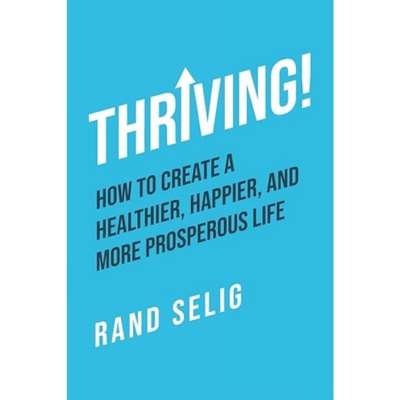

In this podcast, Greg Voisen sits down with Rand Selig—a “relentlessly positive” entrepreneur, conservationist, and Stanford MBA—to explore the profound difference between simply succeeding and truly thriving. While many people feel like they are just getting by, Selig’s work, Thriving: How to Create a Healthier, Happier and More Prosperous Life, serves as a powerful compass for navigating life’s transitions, setbacks, and new beginnings.
The Distinction: Surviving vs. Thriving
The conversation opens with a bold question: What does it actually mean to thrive?. Selig suggests that many people confuse “success” or “survival” with thriving, but he sets a much higher bar. He uses a weather metaphor to explain the concept: Thriving is the “climate” of your life—the average over time—rather than just today’s “weather”. You might have a bad day where you feel like you aren’t thriving, but the ultimate question is whether your life, on average, is trending toward health, happiness, and prosperity.
The “Bus” Framework: Taking the Wheel
The core of the conversation revolves around a life-changing metaphor: “Driving your own bus”. Selig explains that if you aren’t the driver, you are likely on autopilot or letting someone else dictate your path. To thrive, you must be the one deciding how fast to go, when to stop, and most importantly, when to make pivotal changes like turning right or left.
A critical part of this responsibility is managing your social circle. Selig notes that we must keep inviting supportive people onto our bus while being brave enough to invite toxic people off the bus to ensure the journey remains healthy.
The Four Pillars of a Prosperous Life
Selig assembles a thriving life using four distinct parts:
-
Thriving Personally: This is the foundation of his philosophy, focusing on building character and deep self-awareness.
-
Managing Yourself: Learning to be the leader of your own actions and decisions.
-
Financial Wisdom: Managing money well and, more importantly, defining “enough” to ensure prosperity doesn’t become a source of stress.
-
Relationships: Selig identifies relationships as a bedrock component of thriving. He shares that his 44-year marriage is built on deep trust, communication, and allowing each other to have separate lives alongside their joint life.
Resilience and the “Rubber Ball” Effect
Life inevitably knocks us down, but Selig argues that thriving requires a specific kind of resilience. He distinguishes between an “iron ball” and a “rubber ball”. An iron ball might be tough, but it doesn’t bounce; it simply hits the ground and makes a dent. A rubber ball, however, deflates momentarily upon impact and then re-inflates as it bounces back up. Choosing to be the “rubber ball” allows you to return to your full form after a setback.
Emotional Housecleaning: Forgiveness and Letting Go
To move forward, Selig emphasizes the need to reprogram our subconscious and address limiting beliefs. He offers three essential components for emotional health:
-
Stop Self-Sabotaging: We must move away from the “I’m not good enough” narrative and take chances, even if there is only a 1% chance of success.
-
The Power of Forgiveness: Holding onto resentment is like carrying a heavy rock in your backpack. Forgiveness—both for others and yourself—is the act of throwing that rock away to lighten your path.
-
The Art of Letting Go: Selig shares a physical exercise where you squeeze your fist tight until your knuckles turn white, representing control. By choosing to open your hand and wiggle your fingers, you feel the blood flow again and your hand naturally rises, no longer weighed down by the need to control every outcome.
The Science of Positivity and Longevity
Being “relentlessly positive” is more than just a personality trait; it is a survival strategy. Selig cites scientific studies showing that maintaining a positive mindset can add 8 to 9 years to your life. He warns that the media often focuses on “if it bleeds, it leads,” which can create a defeatist attitude. To combat this, we must consciously choose to see the good and the beautiful in our daily lives, such as expressing genuine gratitude to a person serving us coffee.
Leaving a Legacy
Finally, Selig discusses the concept of legacy, which he views in two parts:
-
Little L Legacy: The immediate impact you have in a specific job or relationship.
-
Big L Legacy: The contributions that last long after your death, such as how you raised your children or your service to mankind and Mother Earth.
Ultimately, Selig hopes his legacy will be helping people define success on their own terms. He reminds us that success is found in the world of “being”—being a good listener, being kind, and being respectful—rather than just “doing”.
Connect with Rand Selig
Rand is dedicated to helping individuals shift from merely surviving to truly thriving by co-creating a life filled with health, happiness, and prosperity. To explore his work further, learn about his tools for positive thinking, or access his insights on building enduring relationships and a lasting legacy, visit him through the following official channels:
Book: Thriving!: How to Create a Healthier, Happier, and More Prosperous Life
Website: www.randselig.com
LinkedIn: www.linkedin.com/in/randselig/
You may also refer to the transcripts below for the full transcription (not edited) of the interview.
[fusebox_transcript]











Leave a Reply