
In a recent episode of the Inside Personal Growth podcast, host Greg Voisin sat down with a long-time friend and legendary leadership expert, Kevin W. McCarthy. Kevin is the “Professor of On-Purpose,” the man who pioneered the purpose-driven business movement long before it was a corporate buzzword.
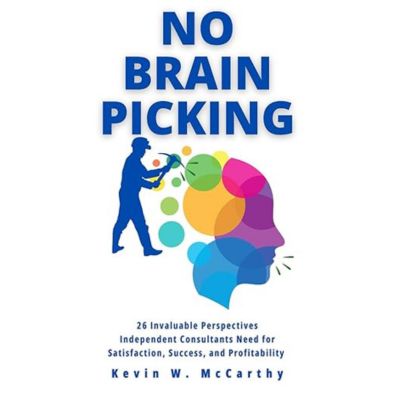
Now, he’s back with a provocative new book that every independent consultant needs to read: No Brain Picking: 26 Invaluable Perspectives Independent Consultants Need for Satisfaction, Success, and Profitability.
The “Dopamine Hit” vs. The “Dollar Dilemma”
As consultants, we are wired to help. We love solving problems and hearing, “Wow, that’s a great idea!” Kevin calls this the Dopamine Hit. It feels great for about five minutes.
The problem? You can’t pay your mortgage with a dopamine hit.
“I went to so many lunches that all I was doing was getting fat and broke,” Kevin shared during the interview.
Many consultants struggle because they are at the top of their expertise but at the bottom of their business competency. They view themselves as consultants who happen to have a business, rather than business owners who happen to provide consulting services.
From Tools to Transformation
One of the most powerful metaphors in Kevin’s book is: Don’t sell the nail gun when the client needs a roof.
Consultants often get obsessed with their “nail guns”—their certifications, their proprietary frameworks, and their methodologies (like DISC or StrengthsFinder). But a client doesn’t care about your tool; they care that their house is leaking.
To move from being a “commodity” to a “high-value partner,” Kevin suggests a shift in focus:
-
The Expertise Competency: What you know.
-
The Business Competency: How you price, market, and protect your time.
-
The Leadership Competency: Your ability to guide a client to a solution they can’t see.
-
The Purpose Competency: The “Why” that fuels everything else.
Protecting Your Intellectual Assets
Kevin’s message isn’t about being stingy; it’s about being professional. By setting boundaries—saying “No” to brain picking—you actually increase your value in the eyes of the right clients. When you value your own time, they will too.
Connect with Kevin W. McCarthy
Ready to stop giving away the farm and start building a profitable, purpose-driven practice? Check out Kevin’s resources below:
-
Read the Book: No Brain Picking on Amazon
-
Official Website: KevinWMcCarthy.com
-
LinkedIn: Follow Kevin
-
YouTube: Watch more insights
You may also refer to the transcripts below for the full transcription (not edited) of the interview.
[00:00.5]
Welcome to Inside Personal Growth podcast. Deep dive with us as we unlock the secrets to personal development, empowering you to thrive. Here, growth isn't just a goal, it's a journey. Tune in, transform, and take your life to the next level by listening to just one of our podcasts.
[00:19.8]
Welcome back to Inside Personal Growth. This is Greg Voisen with another edition of Inside Personal Growth. And joining us from Orlando, Florida is a very good friend. We were just talking. It's at least been 30 years since he and I worked together on the On Purpose person.
[00:38.9]
You can see behind him the pictures. Today we're going to be talking about a book that he has out called no Brain Picking. You can see in the left hand corner if you're watching on video YouTube. He has chief Leadership Officer.
[00:55.5]
He did a podcast with us which we're going to put a link on this as well. That was just in 2024, so last year. I, don't remember the exact number of that podcast, but look for it below in the show notes.
[01:10.5]
We will put that there so you can learn more about Kevin. Kevin, good day to you. How are you doing? Thank you, I'm great. I think this is my fourth episode with you. I think I was like your third episode. And then we did the On Purpose person again and then we did Chief Leadership Officer and this will be my fourth.
[01:28.1]
Well, it's, it's because of our good friendship and the way we started out and I've had many authors that have come back. I've been very blessed that way that they say, hey, you do some of the greatest podcasts. And I was telling Kevin, which my listeners know it's been 19 years and almost 1300 podcasts.
[01:47.6]
So I'm proud of that and I think a lot of the other people are as well. Kevin, welcome back to the show. I'm really thrilled to connect with you and I'm thrilled to connect regarding this book. As, we told the listeners, this journey goes back at least 30 years and you were a guest, as you said, three times.
[02:08.7]
But you've been a pioneer in the world of purpose driven leadership and business strategy. He's the founder of the On Purpose Partners, which he established back in 1983, and is rightfully earned the title of the professor of On Purpose.
[02:28.1]
With an MBA in the prestigious, prestigious Darden School at the University of Virginia. Kevin has spent over four decades helping business leaders, entrepreneurs and independent consultants find clarity and meaning in their work which it's so important today.
[02:45.1]
Kevin, you know More than ever, he's the best selling author. You can lick it out. We'll have a link below in the show notes to the on purpose person, the on purpose business, books that literally started the conversation about knowing your person, purpose and leading with your, this is your why before Simon Sinek, not to put that down, as an 8th grade class president he negotiated the first ever Coca Cola fountain, concession for his school lunchroom.
[03:19.4]
He's been a tennis teaching, professional greeting, card publisher, a commercial real estate developer. And through all this in his strategic thinking, he's always kept purpose at the forefront of his mind. Welcome back to the show again.
[03:35.5]
We are going to be talking about a book that he knows a lot about called no Brain Picking. And the subtitle of this book is 26 invaluable perspectives for Independent Consultants. A Need for Satisfaction, Success and Profitability.
[03:52.0]
Well, Kevin, I can only imagine why you wrote that book because as somebody, you have probably gotten, oh, literally thousands of questions over the years, from people who are taking a path to do this.
[04:08.9]
How did you, after all this purpose work, decide you were going to give 26 invaluable lessons in this book to our listeners out there? Well, it really sort of speaks to how I do most of my books and that is I sort of observe and see what's going on and as people start asking me questions and particularly as a business consultant who does strategy work, I had, I've mentored a number of people to become independent consultants.
[04:37.5]
And you, know, I was sort of at a place where it was like, you know, I've never had a target audience with the on purpose person because it's sort of everybody has a purpose. And I just really wanted to hone in on a group to say who can I help the most in a very specific way.
[04:53.3]
And so about two years ago I sat down in the middle of the summers when I do a lot of my writing and, and I started crafting together this idea of serving independent consultants and trying to give them advice on what it really means, what it takes to be one, if you are one, maybe some ways to improve your practice.
[05:16.9]
But that's basically it was just a desire to serve, which is coming out of everything I've done. Really. Yeah, well, you know, when I first saw this title, it reminds me of many of my clients who would say, well, I just want to pick your brain.
[05:32.0]
Right. And, and you call it no Brain Picking. It just kind of stopped me in my tracks. Right. Because I can't. You know, if I had a dollar for every time somebody said that to me, I just like to pick your brain or even a better way.
[05:49.8]
Well, can you give me some advice on this? And the word give is in there, you know, obviously. Right. Which you don't mind doing. This has got to be a give give world. That's what you and I are all about. It's almost confrontational away. And so tell us the story behind why you chose this particular phrase as an anchor for, you know, 26 perspectives.
[06:12.8]
And, what really moment made you realize that this needed to be a perspective? Number one. Yeah. As you were saying, so rightly, a lot of times clients will call you up and say, hey, I just want to pick your brain. And if they're a client and they're paying you and they want to pick your brain, it's fine.
[06:31.6]
I mean, I'm not opposed to having your brain picked. What I'm really looking at is there's a number of people who will come at you, or maybe it's a former client who's no longer paying you, and they keep calling and calling and calling and picking your brain. And at some point, if, if you don't recognize what is happening, which is basically you're being either abused or used.
[06:55.5]
And if, if you don't, you know, you're, you're. We as consultants are generally geared towards serving and providing expertise and, and moving people along. And so we, we are often happy to be asked to give our, our thoughts.
[07:12.9]
But at some level, if we don't have a defensive perspective, protection or a mechanism in place to protect ourselves, the way I described it is I went to so many lunches that all I was doing was getting fat and broke. Right, right, right, right.
[07:28.0]
And sometimes I was picking up the tab because it was a former client, you know, type of thing. So it was like, yeah, this just isn't making sense. So when I stopped, when I created a boundary, so to speak, for, you know, and every consultant needs to figure out where that boundary is.
[07:43.6]
Where you say no brain picking versus yeah, happy to. But it's important to just understand that there's a, there's an inflection point. And once you identify that inflection point for you, then to be able to have a strategy and structure, to be able to address it, well, you know, you wouldn't be the on purpose professor if you didn't want to give.
[08:07.3]
And I think there is this, as you called it the dopamine hit that we get versus the dollar dilemma. People like ourselves, you know, we're driven to help people solve problems. We're driven to be the best we can be.
[08:26.1]
So we devour books, we read things, we're constant learners. We're always on. On the edge. You know, we're always looking for ways we can help our clients. So in the book, you talk about how consultants will get this dopamine hit, from feeling, you know, kind of needed.
[08:44.2]
And I'd say that's true. You know, you like to be needed. And it lasts for one to five minutes while dollars are helping you pay the bill. I was used to have a client that used to say, well, that's great, but I still need to fill my rice bowl. You know what I mean? So that's such a visceral way to frame the problem.
[09:02.8]
Can you talk us through what you've observed in consulting and who they struggles with this? And what is this? The. What does this look like when someone's addicted to being helpful rather than being profitable?
[09:17.9]
You just said, hey, I went to all these lunches. I was picking up the bill. That's kind of what it looks like. But it also looks like, hey, my p. L. And my balance sheet don't look so good. And yet I've been working, giving out lots of advice, right? Yeah.
[09:34.0]
Well, I mean, basically, I like to describe that there are really four competencies. One is our expertise. That's our competency that we like to share. And where we're in our strengths, there's the business competency, which a lot of consultants, particularly if they've come out of a corporate job, don't have business competency.
[09:51.8]
And I mean, owning a business, entrepreneurial skills. And then there is leadership competency, which, again, if we're going to be a consultant, we need to be able to lead our clients to solutions that they may not be able to see for themselves.
[10:08.3]
And then the. The core of that is the purpose piece. So what happens is when you recognize that you may be at the top of your expertise, but you're at the bottom of your profession as a business owner. Therefore, you need to have methods and systems in place, to protect yourself.
[10:27.5]
Again, a lot of this comes back to I'm trying to protect consultants who, who get hung up on the idea of using their expertise and having a client for which they're not getting paid or for which they're being underpaid. And how do you get the value proposition right?
[10:45.4]
And One of those things is to understand that you are first a business owner who is a consultant now, as opposed to a consultant who happens to have a business. It's so true. You know, I know that some of the things that I work on, and I'm working on one right now, there needs to be in succession, planning, even, like, a success factor.
[11:09.4]
Right? Like, pardon me, I will cut this out. You know, you get, like, a little bonus at the end of your consulting. Right. And I've always kind of been horrible at that. But when it comes to doing, the sale of a business and you facilitate the whole transaction as a client advisor, there needs to be something at the end of that.
[11:35.8]
And you talked about this. You said. And I think it was really kind of a cool analogy, you said, one of my favorite perspectives is, don't sell the nail gun when the client needs a roof. Okay. But the consultants love our.
[11:51.1]
As consultants, we love our tools. We've got lots of tools, right? We've got lots of, certifications, methodologies, and we're trying to use those to solve problems. How do you help consultants make the mental shift from here's what I do to here's what you will get?
[12:12.2]
Yeah, this is similar to that, those four competencies I was talking about. And that is to begin to think more and more like a business owner. And so a business owner is trying to look at it from the point of view of, what am I. How am I positioning my business? In the mind of the customer.
[12:29.4]
And, you know, if. If you are a, human resources or an organizational development consultant, and you want to talk about. I'm DISC certified, and I'm strength finders, and I'm this and I'm that, and I'm not, you know. And you have a list of all of these credentials that you have, right, that are basically, they're great credentials.
[12:47.8]
Nothing wrong with them. But if that's what you're leading with as opposed to understanding, you know, as I said, you're selling your. Your nail gun when the client truly does need a roof, the client's looking at it and saying, I've got a leak. I have a problem. And I don't care, whether your nail gun is a Milwaukee one or whether it's a.
[13:08.4]
It's, you know, Black and Decker or whatever it is. And you're telling me all about how it's the best of what it is. And all I'm saying is, look, my roof's leaking, my furniture is getting wet. My floors are getting ruined. And, help me fix this roof.
[13:24.0]
That's really what's going on. And so it's really a matter of, being able to see yourself through a marketing lens. Now I have a friend of mine that does personal branding, and she taught me this expression. Her name is Mary Maloney, and Mary's awesome. And she said, kevin, it's really hard to read the label from inside the jar.
[13:43.7]
And so what happens is we're surrounded in our jar with all of our little tools and everything. We want to talk all about them, but the truth is there's a label, and if we can get outside the label and see what the jar is. Now this is where something AI, chat, GPT or something, whatever tool you use can be really useful to say, I have all of these things, all of these things I love to do.
[14:06.5]
How would you market me to somebody that has a problem and what are their problems? And then you can begin to really think through the how, how to state it in the language of the client or the perspective. And I, I'm glad you mentioned that because to every consultant listening, and I'm sure most of them are, are utilizing the tool, with the advent of AI, it's been probably one of the biggest tools we've all gotten, to be able to put things together, help create proposals, look at all the varying solutions, weigh out the risk factors.
[14:41.4]
I mean, it's just a phenomenal tool. And I'm glad you mentioned it. Not that people listening here aren't already using it. I think the adoption rate is pretty high. You do offer something in the book, though. These, 26 invaluable perspectives.
[14:57.9]
And one is you recommend offering 15 minutes of free consultation over the phone instead of accepting those. Let me pick your brain over lunch invitations. Great. You won't get fat that way and you won't pay a bill. So that takes a real discipline.
[15:15.0]
Have you ever had someone push back on that boundary? And how do you handle it without burning any kind of bridges? Well, the nicest way to handle it is to say, you know, if somebody calls me up, certainly if they're a friend of mine, Greg, if you were to call me up and say, hey, Kevin, I want to pick your brain on some stuff.
[15:32.6]
Stuff, it's great, you know, you're. And absolutely, I'll help you any way I can. But if this is a stranger, you know, somebody that connects with you on LinkedIn and they say, hey, I was looking at your credentials and I want to pick your Brain. The first thing that I do is I'll say to them, you know, I'm happy to give you 15 minutes, but this is the way I make my living and it's my expertise that people pay for.
[15:53.0]
And I'm happy to send you a link to, have a conversation. And then, then after that we're, you know, we're going to talk about what it looks like and just so you're aware and what I is people will either back off or they'll embrace it.
[16:10.1]
And so it's really called how much are you going to value your own time? You know, it's. And again, one of the ways to value your own time. Well, you're setting boundaries, though. You're actually setting boundaries, which I think if you were to look at this book, right, and you were to tell consultants out there, no brain picking, this is about you being available yet letting the client know what your boundaries are so that you can grow your business profitably, you know, in the end.
[16:44.6]
Correct. That's the way I like to think of it is, Greg, is we're not necessarily, we are setting boundaries, but what we're really doing is we're training people how to work with us. They don't know. So I'm going to give them the benefit of the doubt of, you know, at some level I'll give them the benefit of the doubt until I know otherwise that they are genuinely interested.
[17:07.0]
And if they're genuinely interested, I'm genuinely interested in helping them. However, if I don't have a mechanism in place to be able to screen to some extent the seriousness of it, or are they just a salesperson who's trying to pitch me on something? You know, it's a reverse compliment me and then try to pitch me on something type of thing.
[17:29.9]
It's a matter of protecting my time. And one of the ways to protect your time is to look at it and say, what time are you getting home at night from your office? If you have an external office or an internal office in your home, are you working till 6 or 7 o' clock at night? And does that person who takes an hour in the middle of your day, would that get you home to your family, your children, to the tennis courts?
[17:51.8]
I'm a tennis player. To, you know, something else in your life that you would like to do that would round out your life greater? So a way of thinking about it is the trade off. I could be out riding my bicycle, in the light, as opposed to having to have A light on the bike because it's now getting dark.
[18:10.4]
Yeah. And it's safer for me and all the things that are going on simply because I gave somebody an hour and now I'm squeezed at the end of my day. So you look at the personal trade offs as well. Yeah. And it's easy for scope creep.
[18:25.8]
I mean, you know, you. When I say scope creep, obviously that's when a job starts. But many clients can be abusive of whatever you wrote in your agreement that the scope creep occurs. I just kind of had that conversation with a client, and it ended up that we kind of terminated for a while, because it was of and of and beyond.
[18:53.0]
And I literally lost thousands of dollars because of the scope creep. So as one of the advice I'd give people is watch the agreements you send out there and look for scope creep and let them know that there's an upcharge every time you do something different in a project.
[19:09.6]
Yeah. You know, if I may, Greg, one of the other real threats to our profitability as a independent consult is our love of learning versus our love for earning. I like that. I like it. Because we're experts. We like to dig into things, we like to read articles, we like to try new things.
[19:29.5]
We're experimenting all the time with new tools and technologies and things. And we justify it by learning. And again, I'm a lifelong learner, so I'm not opposed to learning. But at some point you have to say, you know what I am. This almost sounds like that Saturday Night Live thing.
[19:47.1]
Affirmations. I'm good enough. I'm capable enough. God dash, gosh darn it, people like me, you know? Yeah, I like that one. That is, you sort of get to the place where you just say, you know what, I gotta. I've got enough here. Because you're never going to know it all.
[20:05.5]
Yeah. But you know, a bunch of. And that enoughness comes from, as we know, you know, we've. Everybody's got an ego. If you have this need to be needed, you know, the ego is obviously going to say you're never enough, so you're just going to keep doing it.
[20:20.9]
But I think you get to a point after, as, old and wise as you and I are, which is why you're a good person to write a book like this. Because we've been through a lot of it. Right. And we understand already what happens now in the book, you include a perspective on what you call the three problem.
[20:44.2]
Pattern. Pattern. Without giving away all the Secrets. Here we go again. I'm going to ask you if I can pick your brain
[20:55.3]
Without giving away all the streets, can you give us a glimpse of what this pattern is and why recognizing it is critical for consultants success and satisfaction? So we're talking about the three problem pattern.
[21:11.2]
Yeah, the three problem pattern is one tough to say, is one that basically the client calls you up and says, you know, our sales aren't where they need to be. I need you to come in and do some sales training for me. Or I need to, I need you to work with my sales manager. And generally speaking, that problem is what is identified.
[21:32.0]
That's the felt need. But typically underneath that is there could be a deeper problem. It could be a technology problem, there could be a process problem, There could be a people problem. Maybe the sales manager is not as good.
[21:49.8]
It could be a strategy problem, a marketing problem. Maybe their marketing isn't bringing in the right people. Or it could be a strategy where they're just, they're off in a different direction. So what happens is you've got the initial problem, the identified problem. Then you've got the underlying issue is the second problem.
[22:08.0]
But the third problem underneath it is, you know, because I generally worked with owners of businesses or CEOs, and what's really going on is they're freaking out because they're going, holy mackerel, I got a tuition payment coming up for my kids and this is going on.
[22:25.4]
And the business is there and I'm having to fund money from my, my private savings into the business in order to keep things going on. And they have all these issues. So until you are able, if not, let's put this. But once you are able to sort of understand what the problem is and then the underlying issue, that may be where it really sits.
[22:45.4]
The solution may sit, but also understand what is really going on for the human side of the business. Then you're not only are you getting to what's really going on, because there may be a lot of different ways to solve that problem than just sales training.
[23:05.1]
So it's kind of the tip of the iceberg kind of thing. There's only 1, 2, 3 at the bottom. There's really much more in the way of a question or problem that needs to be solved. Other than this, what you're seeing at the tip of the iceberg, would that be correct?
[23:21.4]
Absolutely. And again, you've got so many things that are going on. I mean, that person would be thinking themselves you know, I'm going to be a failure. I'm going to lose this business. I told my parents I was going to be able to take care of them in their old age, or whatever it may. You know, you got all these narratives going on that are genuine, but, at some point when you get to that, that's where actually, at some level, as a consultant where you are extraordinarily assuming you can solve a problem, you're extraordinarily valuable because you are solving three levels of problems, and you're now becoming a trusted advisor.
[23:59.2]
Well, and you're asking the most important questions to get to that depth of what the true problem is. And I think there's a real, talent in that, to say the least. Obviously, I've been asking questions now for 19 years, so I've gotten pretty good at asking questions.
[24:17.6]
And it is an art and a science. And I want to talk about this because, when you and I started, we started with the On Purpose Person, and we were doing, workshops and those kind of things.
[24:34.3]
And over the years, you know, with Simon Sinek, what's your. Why you, were in this game, just like I was in the podcast game before most people were doing purpose stuff. As a matter of fact, just about a month ago, Gabrielle, Boshi was on the show, and her podcast hasn't even broken yet.
[24:57.6]
But they have this big purpose assessment. You pay for it. And now she's involved with all the, John Maxwell coaches. So there's 3,000 coaches at Maxwell. So this is really taken hold.
[25:13.1]
It's taken Wildfire. And I took the assessment, and I was very impressed with that short little assessment and what it delivered. But I want to go back to you. You know, you kind of made this a household phrase.
[25:28.5]
You are the professor of this. You've seen all these people come and get in this space, and it gets crowded. How has the conversation around purpose changed over these decades? And what do you think people still get wrong about it?
[25:49.5]
This, is. I mean, this is a shift from this book, but it's really not. If a consultant out there doesn't know their purpose, they're in trouble. Okay, if you're just doing it for money, forget it. You might as well get out of the game, right?
[26:07.6]
Well, I mean, the shift was, you know, in the late 80s, whenever I first started talking about this with clients, before I wrote the On Purpose Person, they, would look at me like I was crazy. They didn't know what purpose was because back Then everybody was doing mission statements. Yeah. And again, and today, you know, fast forward 30.
[26:24.9]
Well, gosh, almost 30, 40 years. Yeah. 40 years later, now everybody's talking about purpose. And everybody that's writing a new book has purpose in the title or everybody that's a speaker has purpose in the title. I still think we're very purpose illiterate.
[26:41.6]
From my perspective, I mean, I, I, I, I, well intended. Well intended, but purpose illiterate. And what I mean by that is purpose is actually extraordinarily easy to know. But if it sounds because it's hot, because it's inside of us, excavating it seems like it should be a very laborious process and a very thoughtful process and all those sorts of things.
[27:04.8]
But in fact, I've got a tool that in three minutes people can know, they're, they're two word purpose. Two word purpose. Yeah, yeah. So, you know, and see the thing that they get. I'm not, I don't want to say wrong.
[27:18.8]
They have had their journey. And what I recognize is purpose is the easy part. On purpose is the hard part. So my goal when I started this way back when was how do I help individuals and organizations rapidly articulate their purpose so that they can now start to implement it or put their purpose to work or be on purpose so that they can be testing it and further refining it.
[27:49.5]
Where a lot of people have, on the front end of finding your purpose, they have all of this stuff they have people doing, gazing at their navels and considering their childhood and all these other things. Not to say that they aren't useful, but it's, but at some level, if it's this easy, a three minute exercise, why would you not at least do it and then begin to implement it?
[28:13.6]
And, and then, you know, Greg, I remember your, your purpose statement. So I'm not. Two word purpose statement, if I recall, is inspiring passion. Yeah. I exist to serve, to inspire passion. And you've had that for 30 years since you and I got together. And it was a result of the work you did with me.
[28:30.3]
You counseled me through it. Right. And back then it would take me an hour to work through somebody on, you know, clarifying their purpose to two words. Part of it is there's a generic beginning to it, which is, you know, I exist to serve by an inspiring passion.
[28:46.4]
And there's tests, I mean, there's lots of ways I have, once somebody has articulated that to help them refine it. So I spend my time now more on the refining Piece and the strategies and structures piece of how to give expression to your purpose, in your life, in your work, in your marriage, in your health, in your whatever, wherever you want to give expression to your purpose, which is every facet of one's life, in theory.
[29:14.1]
I'll make a note to that, Kevin, and a compliment to you. You know, I didn't have a podcast show when I first knew you. Right, Right. And inspiring passion to me is the gift that I give of taking things like what you have here, no brain picking, or the Chief Leadership Officer, and helping people more easily understand.
[29:38.9]
Right. So passion can be taken as I'm inspiring passion for somebody, to me, that's giving them the gift of creating clarity, understanding, and the ability to use the tools or the book or whatever it is that I've done.
[29:54.8]
So for 19 years now, I've been on a path of every morning I wake up, I exist to serve to help somebody by doing another podcast and helping that podcast helps and serves people understand with, inside them what they have.
[30:11.1]
Right. Through all these podcasts. Right. So you helped create this. Congratulate you on that. Well, I mean, you did the work. I just did some of the. I did some of the deep work, the foundational work. Yeah. And that's the part of it that's tragic for me is if it's so easy to do this foundational work now, that used to take, you know, hours or months in some cases.
[30:36.0]
Some courses I see are months and thousands of dollars. And for 20 bucks and three minutes of your time, you can know your purpose and now move on. Get on with it. You know, get. Get on with your life. Because there's life before purpose and then there's life after purpose.
[30:51.1]
Live your purpose. Yeah. And I saw people spending too much of their money, time and energy trying to find it. So again, it only took me 30 years to develop an online technology that it could do it in three minutes. Well, you gave, you gave our listeners a gift, which we'll post.
[31:07.5]
There was a little PDF you had just sent to me, and we have a link. They can go to the website to do that. Right. And if I remember correct, tell me if I'm right or wrong, what is the. The fee for that? It's. It's $20 for that.
[31:23.3]
$20 on purpose. Me is the, the website if they go to on purpose, not me for 20 bucks. And not only that, they get a course that comes with it, very, you know, email course. And then anytime, once a month, they can go on To a refine your purpose event that I do.
[31:41.9]
It's, it's coaching, live coaching, like live radio. Eight to 10 people show up at a time and I just walk them through whatever question they have about being on purpose or their purpose statement. So we're offering this to all of our listeners. Very minimal investment.
[31:58.7]
Please go to the onpurpose me and you will be able to get your three minute on purpose plus downloadables. Right. And ongoing support for that. So we'll make sure that's in the show notes below.
[32:14.0]
So look for that in the show notes. You know, look, you kind of switching back and forth here, but you've got 26 perspectives here. And I think the purpose is really important. But you call it the studio approach and collaboration.
[32:30.3]
You have a perspective called the studio approach that talks about collaboration. This seems almost counterintuitive for independent consultants, who chose to be independent. How do you reconcile being independent with being collaborative?
[32:47.3]
And what's the studio approach really about? Well, the studio approach is one where you partner with other independent consultants. And so the studio approach for me was one that I look at the way Hollywood makes movies. They don't have a bunch of, people on payroll.
[33:07.8]
What happens when a movie makes us? They're called a movie studio. When they make a movie. They get all the different actors, they get all the different camera crew, the stunt people. They're all independent contractors. They bring them together based on their ability and talent to pull off the project.
[33:25.9]
So what would happen for me is I would come across a client. Real example, I had a construction client of mine, did about $100 million a year in business. I did their deep strategy work of purpose, vision, mission and values. And then, based on that, I start put together the strategies and structures, sort of the architecture for what they needed to do to move forward.
[33:47.0]
But what you generally find is a lot of people who are in their profession or their business, they have expertise in their area, but they don't know how to find a good, graphic artist or a good marketing person for what they need or, And I know these people.
[34:06.1]
So what I do is I pull them together and I say, look, here's the client, here's the situation. I'm the owner of the client. I'm the director of the movie. I generally have a project manager who comes alongside of me to help organize everything, and keep everybody sort of going on the same path.
[34:25.6]
And I in essence become, in that case, sort of their outsourced chief marketing officer. From strategy to marketing officer. And I have this team assembled. And the beauty of it is, is when we need a public relations person for something, I can bring in the PR person, have them do a, an event or whatever it may be, and then they're dismissed.
[34:48.7]
And so we're just, you know, really just in time, sort of, people for the specific needs that are going on. And it really works well. Yeah, I've done it as well. I know, I know what you're talking about because I never called it the studio approach, but I think that's, it's a good way for collaboration because there's so many things you can observe as an advisor slash consultant that you see need to be done.
[35:17.8]
And you also have this expansive reach of subcontractors you can bring together with a project manager and help them accomplish that. And I think it's a, it's a great way not only to expand and help someone solve a problem, but for you to also help, that client solve a much larger problem that they maybe didn't even see in the beginning.
[35:38.9]
You said marketing. I think that's, that's a big one. So look, in kind of pulling this all together, I have a couple of more questions, but the final one is perspective. Is this beautifully honest perspective, the grain of salt.
[35:57.4]
Take it with a grain of salt. You acknowledge that readers won't follow all the advice. They'll pick and choose what works for them. Okay. And I think, you know, again, that's pretty refreshing coming, from someone who could easily position themselves as the ultimate authority here on every One of these 26 perspectives, what do you hope people take away from, from one non negotiable perspective from this book?
[36:27.1]
So if, you know, we held them up, we said, hey, it's 26 in here, right? And you don't have to use them all. But if there's one in here that actually really works for you, and is there one in particular? If you were to say out of all of these in the book, the 29 or 26, which is the one.
[36:48.7]
Yeah, the one that you actually, we talked about earlier, which is the. Don't sell the, Sell the nail gun when your client needs a roof. That is perhaps the biggest mistake. And generally speaking, it's a marketing and it's a strategy and marketing mistake where it.
[37:06.2]
Because all of our LinkedIn profile is going to reflect it, our marketing material is going to reflect it. When we talk with relatives at Christmas, or at events, what we say if we talk about our tools instead of the solutions we provide.
[37:25.6]
We are not going to get referrals. And ultimately what this is about is 90% of your business is going to come from referrals. And it's people that know you, but they need to know what you do, not what tools you own. So that, that really is the sort of the deep underlying message here is you're really trying to build a business by referrals rather than, you know, you can try to do the social media thing.
[37:53.4]
I'm not opposed to it, but that's a cold market strategy. And I'm really more about a warm market strategy. You, you will rarely outstrip your warm market because as you meet one person, they introduce you to another person.
[38:09.7]
If you hit it off with that person, they're likely to introduce you to somebody else. And so this idea of working the war market is really important. Well, and you know, I've always said this to my social media people. You know, there's, there's breadth and there's depth.
[38:27.5]
And much of this is based on trust. The thing that I've found doing podcast, as a correlation, here, the frequency at which you release a podcast actually shows your consistency.
[38:42.8]
It shows that the person is in the business, not just playing in the business. Many people start podcasts, they fail after three months or one year or whatever. So I think that's true with anything that holds true with either. Getting, a client is what, is this person's history?
[39:04.1]
Can you trust them? What's their integrity? Right. How many other people, as you just said, have used your service? Other people that I know that recommended. And I think in, I just did a really interesting podcast, with David Homan, and it's called Orchestrating Connection.
[39:26.7]
And it was a very interesting point he said about give and give. You know, if you're with the right group of people, you don't mind giving. Right? Right. But the reciprocity has always been kind of the issue.
[39:45.1]
But if you're with the right group of people, you know, the reciprocity is going to occur. They're not just takers, but you have to have some gatekeeper in those groups that understands what's going on. And I think that when you move in this world of finding a referral or a prospect or networking or any of this stuff we're talking about, it's got to be done with a shift in mindset.
[40:14.5]
Like I'm not there to get, you know, if I come to a BNI group because I'M sure there's people that still go to those you can't be there to get. You've got to be willing to give of your time and you have to understand that the other person is going to give.
[40:31.7]
Right. Because usually the way that's measured, the metrics is, well, how many leads did they give Kevin today? You know, it's like, well, I went to those like you did before and you know, I would not get any.
[40:46.9]
Right. And I was like, why am I wasting my time here? I could just go to other clients and ask them. Right? Pardon me. Right. I would just ask them, hey, here's the situation. You know, I've worked with you for years.
[41:04.4]
I'd love to know people just like you who need services like what I offered. Are you willing to give me a name or whatever of a person that might be interested in speaking with me or do an email introduction? And I don't think you can be, so afraid to ask for that.
[41:22.9]
Right. If you do it in the right way, asking is okay. So look, in wrapping up, you've been doing this 40 years. If you were to tell your younger self something that you didn't know back then, that you know now, but still excites you about your work, what would you tell your younger self?
[41:49.0]
Well, from a business perspective, I would tell my younger self to, you know, to, to really dig into a niche. And a niche can be not just a technological niche or an expertise niche, but a niche of people to work with.
[42:08.1]
Sort of the good news for me is when the on purpose person came out and somebody had sold like 400, 000 copies and foreign plus foreign translations and still sells, I was pulled by all different sorts of organizations into doing things. So you know, one time I'm talking to this group, another time that group and that group.
[42:25.7]
And so as a result I never really developed a, a close knit community that that I could really take my next things to. So it was a matter of I was getting spread. So that's to some extent why I'm so passionate about consultants understanding the problems that they solve and who they solve them for and, and working deeply in that niche, where I ended up, not intentionally, but I ended up getting pulled a mile wide and an inch deep.
[42:58.9]
And I would dig another, I would dig another 2 inches deep about purpose. But from a business point of view, I wasn't thinking in terms of having a specific niche that I could really work with, like whether it was the insurance industry or whether it would be hospitals or some group of people that would then allow me to have a continual presence where I could test out my material, work it, develop it and then I could expand out from there.
[43:34.2]
And it's funny because I give that advice to my business consulting clients. You know, let's really find your market and build on that market. Build up what I call service model from the on purpose business person. I build service models. And how do you serve this audience and that audience's audience? And instead what happens is most of us get bored or we spread ourselves across multiple audiences because we think we can help everybody, which we can, but we really aren't because there's so many other people that can serve that audience.
[44:05.9]
So we, we've got. Well, you, it's, it's a difference between a product and a service. You know, you as a consultant are selling a service. You're selling. You, granted the two minute on purpose thing here, it could be a product, it's a 20 product.
[44:22.2]
Go in, push the button, get your thing and you're done. And if you're happy, don't ever come back, don't ever talk to Kevin again. Right, but, and, and a book is a product. That leads to that. And that's what you've done really well is write books that I think people are interested in reading and have continued to propel your message around the on purpose person, the on purpose business, Chief leadership officer, and now this, no brain picking.
[44:53.6]
So for all of my listeners, please look before you'll see all the links, you'll see the links to Kevin's website. It's really beautiful. New website. Kevin like it a lot. I noticed even you're working with a family office, there was a, an accolade there or testimony that just shows you that you found a niche.
[45:12.7]
Hopefully you're working with more family offices because that's a good place to be. But I thank you so much for being on the podcast, spending time with my listeners, especially the ones who are consultants and or advisors, to learn how to become better at what they do and give their clients better service and better benefits.
[45:32.8]
Here's the book, no Brain Pickings. We'll have a link to Amazon for that and a link to your website and also a link to on purpose Me, which will be the two minute, program that people can get their purpose statement.
[45:49.4]
Thanks so much Kevin. Thank you Greg. Always a joy. Blessings to you. Take care. Thank you for listening to this podcast on Inside Personal Growth. We appreciate your support. And for more information about new podcasts, please go to inside personal growth.com or any of your favorite channels to listen to our podcast.
[46:10.2]
Thanks again and have a wonderful day.
Sign up to receive email updates
Enter your name and email address below and I'll send you periodic updates about the podcast.


Leave a Reply