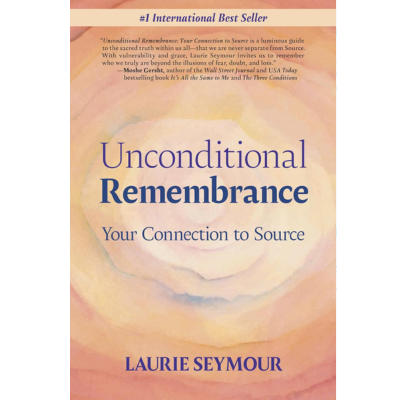
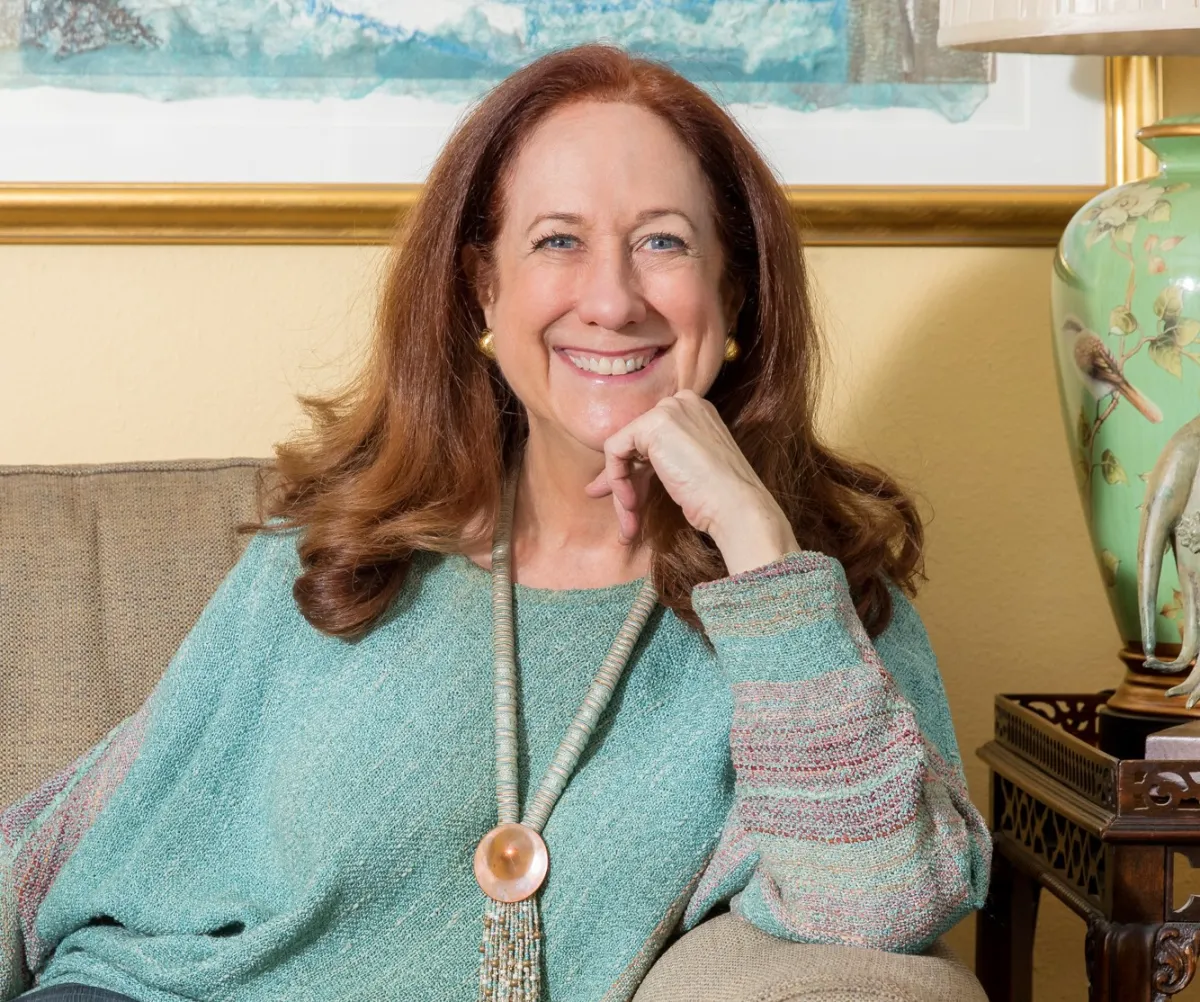
 In a world shaped by striving, fixing, and constant self-improvement, the idea that nothing is actually broken can feel radical. In this powerful episode of Inside Personal Growth, host Greg Voisen sits down with Laurie Seymour, author, spiritual teacher, and founder of the BACA Institute, to explore a deeper truth—one that doesn’t require healing, effort, or belief, but remembrance.
Laurie’s work centers on a simple yet transformative insight: we don’t need to become whole—we already are. What’s missing isn’t something to acquire, but something to remember.
The Essence of Unconditional Remembrance
Laurie Seymour’s book, Unconditional Remembrance: Your Connection to Source, is not a guide to self-improvement or a roadmap for fixing what’s wrong. Instead, it is an invitation to experience what has always been present beneath layers of conditioning, doubt, and separation.
She describes unconditional remembrance as the physical, embodied knowing that we are not separate from Source—that love, intelligence, and connection are not external goals, but internal realities. This remembrance isn’t conceptual; it’s cellular. It lives in the body, not the mind.
Unlike traditional healing paradigms that reinforce the idea that something is broken, Laurie’s approach gently dismantles that belief. Healing, she explains, can become a trap when it assumes there is something fundamentally wrong with us. Remembrance, on the other hand, restores access to our natural state.
Forgetting, Separation, and the Illusion of the Ego
A central theme in the conversation is forgetting—not as failure, but as part of the human experience. According to Laurie, we enter life with an innate knowing of connection, only to gradually forget it as we learn how to survive, belong, and meet our needs in the world.
This forgetting creates the illusion of separation:
-
From ourselves
-
From others
-
From Source
The ego, or “small self,” isn’t the enemy—it serves an important role. But when we believe it is the whole of who we are, we lose access to the larger Self: the aspect of us that exists beyond fear, striving, and limitation.
Unconditional remembrance doesn’t eliminate the ego; it places it in context.
Why Self-Doubt Isn’t the Problem
Laurie offers a refreshing perspective on self-doubt. Rather than seeing it as something to overcome, she frames doubt as a form of contrast—a way to recognize truth by feeling what isn’t true.
When we’ve experienced even a brief moment of unconditional love or deep connection, doubt helps us discern the difference between truth and conditioned belief. The heart, she explains, has its own intelligence. It knows.
The real issue isn’t doubt—it’s mistaking doubt for truth.
The Power of the Void and the Courage to Not Know
One of the most profound parts of the conversation centers on emptiness—the uncomfortable space that arises when something has ended but nothing new has yet begun.
Laurie explains that the void is not something to escape or fill. It’s a necessary stage of creation.
Nature itself abhors a vacuum, but if we rush to fill emptiness with explanations, distractions, or meaning, we interrupt the creative cycle. When we allow ourselves to stay with not knowing—without trying to fix or understand it—something new begins to emerge.
This is where genuine transformation happens.
From Personal Will to Inner Law
Another key insight Laurie shares is the difference between personal will and inner law.
Personal will is driven by control, safety, and expectation. Inner law arises from surrender—an openness to guidance beyond the ego’s plans. When we live from inner law, decisions feel clearer, action becomes aligned, and creativity flows from a deeper source.
This shift doesn’t require faith or spirituality. It begins with curiosity, stillness, and a willingness to listen inwardly.
When Pain Becomes a Gift
Many listeners resonate with the idea of being “bridge builders”—people who have moved through pain and now feel called to help others. Laurie offers a simple but powerful insight: if the thought of sharing your gift arises, it’s already time.
You don’t need to be fully healed. You don’t need certainty. The invitation itself is the signal.
Growth doesn’t move in straight lines. Quantum shifts happen when we pay attention to subtle inner nudges and allow ourselves to follow them.
A World Living in Unconditional Remembrance
When asked what would change if the world lived from unconditional remembrance, Laurie’s answer is clear: separation would dissolve.
The “us vs. them” mentality would lose its grip. Compassion would replace fear. Care for the planet, for one another, and for ourselves would no longer be optional—it would be natural.
To remember is to see through the eyes of connection.
Learn More About Laurie Seymour
-
Website: The BACA Institute
-
Instagram: Laurie Seymour on Instagram
-
Facebook: Laurie Seymour on Facebook
-
LinkedIn: Laurie Seymour on LinkedIn
Final Reflection
Unconditional remembrance is not about becoming someone new—it’s about returning to what has always been true. In a time of uncertainty, noise, and division, Laurie Seymour’s message is both grounding and expansive:
You were never broken. You simply forgot.
And remembering changes everything.
You may also refer to the transcripts below for the full transcription (not edited) of the interview.
[00:00.5]
Welcome to Inside Personal Growth podcast Deep dive with us as we unlock the secrets to personal development, empowering you to thrive. Here. Growth isn't just a goal, it's a journey. Tune in, transform and take your life to the next level by listening to just one of our podcasts.
[00:20.8]
Well, welcome back to Inside Personal Growth. This is Greg Voisen on the right hand side of the screen. On the left hand side is Laurie Seymour, the Bach Institute. Laurie, good day to you. Good day to you too, Greg. I'm very, very much looking forward to our conversation today.
[00:39.6]
Well, I want you to hold up a copy of your brand new book so that all of my listeners can see that unconditional remembrance, your connection to Source. And Laurie also is the founder of the BACA Institute. I'm going to tell them a little bit about you.
[00:58.3]
She is, the author of this book and she's an international speaker, a spiritual innovator and the host of Wisdom Talk Radio. Click the link before we'll have a link below in our show notes. She's also the founder of the Baca Institute.
[01:16.3]
Click below in our show notes and you'll see where she helps, leaders, innovators and, and visionaries access what she calls quantum connection, the creative intelligence that falls directly from source, which is what we're going to be speaking about today.
[01:33.4]
And in her book Unconditional Remembrance, Laurie invites us to rediscover the love that has always lived within us. Not as a concept or an idea, but as a living vibration in every cell of our being.
[01:50.8]
This isn't a book about seeking or fixing. It's a step by step activation that helps us remember who we've always been beneath the layers of self doubt and striving. So she's going to help us get beyond that conditioning that actually created the gap in us and our knowing, knowing who we are.
[02:12.5]
So this is really important. I had a podcast earlier, Lori, with Richard Barrett called the New Human and he writes similar about this. It's interesting, a lot of books are coming out about this topic now, but Laurie draws from decades of teaching us therapy and lived experience, revealing how selched out is really a form of forgetting love and how remembrance is the key to returning to this wholeness.
[02:40.7]
Her work genuinely dismantles the old paradigm of, of healing and replaces it with embodied understanding of our natural state, conditioned creation and unconditional love. Again, you can learn more about our work at the Baca Institute, explore the Quantum Connections quiz and can connect through the Wisdom Talk podcast.
[03:01.8]
Zori, welcome to Inside Personal Growth. It's great to be here to profile your new book and talk about it. And look, this journey for you. You just got back from a whirlwind tour in Europe, teaching these concepts and principles.
[03:19.0]
And you've been doing this for a long time. You've had a long career as a therapist and teacher, and yet the book feels like the culmination of something much deeper. Almost as if it was written from another layer of your life.
[03:36.8]
What was the sequence of events or like, the turning points for you that made you realize that this book needed to be written? I think our guests always like to know why another book and why about this? Well, you know, I left being a therapist a very long time ago, even though it's still a part of me, even though you know that that's not something you totally let go of.
[04:03.0]
I had moved into, being a teacher of a different sort, being a person who worked with people in different ways. And that pivotal point was meeting a teacher who changed everything in my life and who opened me in that very experiential way to the unconditional love that resided in me.
[04:28.2]
It was me. That is me. And so fast forward. I was also initiated by her, by my teacher, dawn, as the Tureya Grandmaster. And this was something that had come through her, and I was to carry this lineage forward.
[04:50.0]
So in why this book now? I had actually started it a number of years ago, and then it just, you know, life took over as that does happen. And then it was this really, this inner direction, which is how I live my life.
[05:08.0]
And to. The time is now. The time is now, and you need to do this, and you need to complete it. So first there was the completing of the writing of it, and then there was the completing of the actual publishing of it. And I never felt like I was directing it so much as, I was doing a vehicle for it.
[05:30.1]
A vehicle for it. Not only a vehicle for the writing of it, but a vehicle for bringing it out into the world. Because that was the piece that it could have, you know, died in my computer. It could have sat in my computer. But it was the, oh, who do I need to have this work with this?
[05:48.2]
Who's the next step with this? And every piece it was then it emerged into the world. Why do you, Laurie, think that individuals, including myself and you have this insomnia that really, And maybe insomnia isn't the right word.
[06:10.7]
We have this complete. We forget. We forget in Other words, it's like we get on the hamster wheel of life. And we forget what's really important and we put it aside for what we believe.
[06:29.8]
What we've been conditioned to believe is more important. And I think this is a very basic question, but it's a fundamental question that all of us would like to hear your response to. Because you were there as well.
[06:44.9]
I mean, you had times in your life where it wasn't always about making connection with the spiritual. You were running businesses, doing things. And so you remember those long nights in front of the computer or talking with clients, or doing the things you were doing.
[07:04.1]
I've always had some aspect of knowing, of inner knowing, but my life was such that, oh no, it was about struggle. It was certainly forgetting that experience of being loved. I think we come in with that.
[07:19.2]
We come into this, you know, each lifetime with that remembrance. And then life seems to do its magic and set us up to forget so that we go through whatever the process is we need to go through to remember.
[07:36.0]
And for everybody that's different. And it sounds that might be, Makes it sound simplistic, but it's the fundamental journey that we're on as human beings because we're here in physical body, so we don't remember spirit so much.
[07:52.8]
And even the people that are still feeling so tuned in, I think there's still an aspect of that forgetting, of that amnesia. Maybe that was the word you were looking for. It was. I think I said something else, but I meant it.
[08:09.3]
Yeah, but who knows what that was? I think that the thing is, is that you. So the question I have at a very deep level that should resonate is, why do you believe that we need to go through that first?
[08:30.3]
Because I think everybody does. And for some people there's a lot of pain, and for others there's a lot of pain and suffering. I think the suffering is optional. It's a choice. I agree. Right. But it's like self love.
[08:48.1]
You know, you talked about being loved well, and we're talking about unconditional remembrance. When did we forget? Or how did we forget to love ourselves? You know, it is about self love. It's all about. It's not so much, oh, can I love you, but can I remember that I am an aspect of source?
[09:11.2]
I am a piece of this quantum universe, and so therefore I am love. But we do forget that because we got to figure out, oh, how do I get my mom to feed me or my dad to feed me? How do I get my Needs met.
[09:27.9]
How do I, learn about what this is? And I think part of it is that we're all, with our experience, our existence is learning is new, discovery is going through whatever we need to go through so that we get closer and closer to that.
[09:48.8]
Unconditional remembrance. You use this frame, unconditional remembrance. It's a very unique term. If you had to define it in a single sentence, for someone hearing this for the first time, what would you advise them that unconditional remembrance is?
[10:16.5]
I think I know, but I want to hear yours. Okay. Will you tell me yours after? Yeah, I'd be happy to. Okay. Unconditional remembrance is the physical experience of knowing that we are an aspect of source, that there is no separation, that there is no separation.
[10:41.4]
I'll put a period at the end of that. So separation meaning that when we were youngsters, frequently, now I lay me down to sleep and pray to God that God is something separate from outside.
[10:57.5]
It's up there. Yeah, well, many people like myself included did that. Right. We did our prayers beside our bed. And I have no, negative things about that. What I do say though is as we mature, we need to understand this unconditional remembrance of the one source.
[11:22.3]
And what would you tell listeners would be a way to access that or advise them in things that they would do during the day. I've often said, Lori, if a camera followed you all day long every day and you played the video back, would you like what you saw?
[11:44.0]
Right, you're right with that question. My point is, is it how do I remember when I've forgotten so much? It starts with that little glimmer of curiosity and like, what if maybe that kind of inner questioning and it's turning our gaze to orient, excuse me, not to the outside, but to the inside.
[12:14.1]
So if we start to orient from what is it that's most important to me? What is it that my own precious self is wanting to reveal to me? What is my own heart wishing to share with me and start to pay attention to that?
[12:29.4]
And that starts to shift from the striving because we can still do. It's not about sitting back and sitting on a mountaintop and saying Kumbaya. It's that recognition that we are here to co create, that we're here in the physical.
[12:48.9]
So we're physical beings and we have this energy source that we are and that we are also here to take action, to create, to see what wants to be manifested through us.
[13:06.3]
So it's starting to explore, starting to Take some quiet time, just to get quiet and get familiar with what does it feel like inside myself. You're probably familiar with this term because you've studied many of the ancient philosophies, including Buddhism and Hinduism.
[13:25.3]
And a word popped up for me because, when I go to self realization, it's used frequently. The power that we call. They call Maya A Y a. The power at which the universe becomes manifest.
[13:41.6]
The illusion or appearance of the phenomenal world. I'm talking about the illusion. So the remembrance is to move away from the illusion of what we've created.
[13:57.1]
How do you help people deal in more of a meaningful way with Maya? Well, the illusion is that we are separate. If we bring it down to its basic piece.
[14:13.5]
The illusion is that we're separate, that we're not connected. So when I mentioned being, I don't know if I mentioned it. Maybe it was an earlier interview about being initiated as a Tureya grandmaster. What the Tureya does, what the Tureya work does, whether it's in meditation or in touch, is about awakening that remembrance.
[14:39.3]
Awakening the parts of your own blueprint that go beyond Maya. That go beyond the illusion that we're separate. Because as soon as we have an experience, and it can happen in a moment, in a flash, and then we have to keep remembering.
[14:57.6]
Once we have that within ourselves, once we've experienced that sense of I am love, I am connected, I am, you know, I am that aspect of source who is here in the physical, then everything opens up because we get to.
[15:14.0]
That's where inner guidance begins. Because we are part of that infinite quantum field that we get to query, that we get to, lay out what it is that we want to manifest.
[15:32.2]
But not through our ego. That's not the part of us that can ever get us there. Well, that's where you draw a sharp distinction between self small S and self large S. Why is living life from the egoic self alone so costly?
[15:52.6]
Spiritually and psychologically? Because it's those two that separate self, the small S and the large s. Right. Which understands we're one. Yeah. And we don't have to get rid of the ego.
[16:11.7]
That's not what this is about. Because the ego serves us. The personality is just fine. It's how we move about in the world. It's the remembering that that is not who we are. Or at least it's not the whole picture.
[16:28.5]
And when you start to realize how big the picture is, then you see, oh, well, the intellect, the mind cannot operate in those other dimensions. It doesn't know how to. It only knows how to do what it knows how to do.
[16:44.3]
And that's limited. And for those people who want to go beyond those kinds of limitations. Self imposed, small s. Self imposed. That's where the desire comes in first to say, I want to start to explore.
[17:01.9]
I want to look beyond. I want something more than what I already know. Well, so I mentioned earlier, forgetting. I meant to say amnesia and I think I used another word. But the reality is, to me it's forgetting.
[17:18.7]
And you say the problem isn't separation, but it's forgetting. No, that's the same thing. Okay, so the problem is separation and forgetting. We forget, therefore we feel separate.
[17:34.5]
I feel separate from other. It's not that I am separate. But that I feel separate, which is as good as being separate. That's where some doubt comes in. I'm not good enough. I can't really do this. There is no help. I'm in it alone.
[17:49.9]
All those kinds of belief systems, those separations. Right, Those separations. Especially the one about feeling like you're going it alone. I've always told people, if you're expecting someone else to make yourself happy, you're in trouble.
[18:07.2]
You're in trouble. Yeah. Because happiness is an inside job. It's a job you've got to work on. It's something you have to grow and appreciate that you can create on your own. Not that it's not, that. Not that it's something you don't want to share with somebody else in the world.
[18:24.6]
But the reality is, yes, you do want to do that. But if you don't have somebody, you can still be completely happy. So at the moment in your life, what moment in your life did you remember to move from an idea in your head to an experience in your body?
[18:44.7]
And what did it feel like for Lori? So at what moment in your life did you remember moving from this idea in your head to an experience in the body? We all have ideas in our head all day long.
[19:00.0]
All day long. So the question is, how does that move to a feeling that then translates into a language that we can remember that we are connected to? Source. Yes. If I understand your question, and I think I do, I can look at the moment when I was first initiated by my teacher.
[19:24.1]
And during that initiation. We shouldn't get off into what initiation is. That'll take us another whole period. But it was during that experience that I had the unmistakable undoubtable.
[19:43.1]
Physical, emotional, psychological, every Way possible experience that I was loved. And where I had felt so empty really before that, like there was something missing in me that everybody else knew about, but I didn't.
[20:00.4]
And that hadn't stopped me from being a psychotherapist, from being successful, from having a good marriage, from, you know, all the trappings, so to speak. But still I didn't have that. And in that moment I felt I knew without any, anything else, I just knew the truth of that.
[20:24.7]
I knew the truth of that. And so there it was, like that was the unconditional remembrance. And from that moment forward, truly self doubt. Just if it cropped up at all, I would know that it wasn't truth, that experience was truth.
[20:43.8]
Oh that's, that's nonsense. Well, there's truth and then there's untruth. Because somebody say, well what's. You have a small S and a big S.
[20:59.4]
Some people say a big T and a small T. Yeah, I agree. You know, and I think that I'm trying to remember her name. She's been on the show, she used to ask people in front of a stage and audience, they would come up with this belief and they'll say, is it true?
[21:15.9]
Well, is it really true? Is it really true? Sounds like Katie. It is. It's Byron, Katie. Byron Katie. I knew as I was saying it it was wrong. You were close. It's Byron Katie. And so Byron Katie, I remember she's been on the show a couple of times. And the reality is, I think that's true.
[21:32.9]
When you start to ask that question, is it true? Is it really true? You begin to realize the story you've been telling yourself that you've made up, that you're living, that truly isn't who you are. So you write that the healing paradigm can become a trap.
[21:49.0]
So why is endlessly trying to fix or heal oneself sometimes the very thing that blocks remembrance? Because I think from my estimation, in this question resides the word fix.
[22:09.2]
There's nothing to be fixed. Exactly. You've asked and answered the question. But the thing is, is most people think there is something to be fixed and something is wrong.
[22:25.0]
And healing has such a run around with that. Lori, why do we always continually run around? Something's got it, it's part of them. I think it's part of the the forgetting plan. And because healing has such a big something attached to it and it's such a wonderful thing and yet still that sense of I, it's going to take me a long time to heal as A psychotherapist.
[22:56.5]
I, I was, I, I supervised other therapists, I trained other therapists. That was something we'd say, you know, yeah, this is going to take a long time. And it's not to deny any of whatever has gone before.
[23:14.2]
It's that that belief system feeds into the narrative that we are broken and that we need to be fixed. Yeah. It's telling us that. Yeah. And so if we are of presence, if we are of source, if we are an aspect of this infinite quantum field, what do we do to fix that?
[23:41.5]
We don't, we don't need to. We do need to remember. We do need to go into and have awakened within us those aspects of us that really are like another dimension that are operating.
[24:00.3]
Well, speak about the duality in which we work. I mean, you say, you described doubt as a gift. I would say discernment even is a gift. Doubt, discernment. And it can become a trap.
[24:16.3]
Why? And I'm saying this doubt, I'm sorry, this doubt is a function on the path. It is a part of the path, but it is an obstacle to remove or a teacher to integrate it.
[24:33.1]
So let's ask the question, you described it as a gift, I get it is a gift. How does doubt function on our path? Individual path. And a way for it to remove or be the teacher that helps us integrate what we need to learn.
[24:59.1]
There's something about the way in which when we experience love, even if we just experience it for a brief moment, we get to have contrast. It allows us contrast. It allows us to feel the contrast between capital T truth, that truth of unconditional love.
[25:18.6]
And oh no, well, it's probably not true or it's not for me or you know, we can come up with hundreds of ways of saying the same thing, of having that doubt creep in. But when we start to have discernment, to know the feeling of what truth feels like in the body and the only, you know, the heart, it's one of the things about the function of the heart is the heart has the discernment.
[25:44.6]
So the heart can show us what is true and what is not true. And so self doubt can point us on the way, on the path of curiosity too. It can point us on the way to want to explore. But self doubt can also keep us in the loop that we create over and over and over again of staying within those same kinds of patterns.
[26:09.3]
Questioning patterns. Yes. Yeah, yeah, yeah. So look, you many people out there, whatever that are listening they might chase bliss or a spiritual goal.
[26:27.1]
And you caution against this, what is the danger of mistakenly bliss for awakening? Because hey look, I mean it's all about awakening. That's the first thing. And awareness that has to occur.
[26:45.6]
But many people are asleep. So you're asking them to awaken to what's really big T the truth for them and to be able to declare it. It's one thing to awaken to it, it's another thing to let the world know about it.
[27:04.6]
And there's another still to creating with it. So for me that's a big piece is taking action. Because how do we create in the world? I know Greg, you're all about innovation. How do we innovate? How do we bring something new into the world if we don't take action on what is given to us to be revealed or to bring forward, you know, to create?
[27:30.6]
And that act of co creation, it's not about co creating with somebody else. It's about using that energy of creation that we again are part of, that we represent and bringing, making something real in the world.
[27:48.8]
So doubt will stop us, doubt will, you know, get in the way. It will bring up every possible objection to what feels like it could be true. And for me that's what it was like. Well, that could be true.
[28:03.9]
I have this memory, I mean I had some knowing and it kept me going. And that's why I went into being a psychotherapist, because there was still that. I'm following something. I don't know what it is, but I'm following something now. So when people are in this contraction mode versus expansion.
[28:25.8]
When they are believing that they need to contract because they're afraid versus be expansive and open because they want to share, they have something great to give to the world.
[28:42.4]
Right. So how do you move people, Lori, from being so contractive in nature, holding things close to themselves, being afraid, having things be tight, to realizing the world wants them to awaken to what is available and the abundance that it has to give and the opportunities that it has for them.
[29:08.0]
But it needs to be a shift in their consciousness. How do you advise people to move to this direction? Well, we also, I think I want to put a little caution in there because contraction is also natural and necessary.
[29:24.5]
It's like the seasons change and things die off and we contract and we go inward. But is it different doubt? No, no, I don't think it is. So explain the difference between doubt and contraction.
[29:39.7]
Because I feel that our doubt leads to Contraction, it will definitely create a kind of pullback. But contraction is also. Where do I let something germinate?
[29:57.3]
Where do I let something come into being that's not quite ready yet? And so that feminine energy is one of the, can be one of contraction in a very, very positive and very life affirming kind of way.
[30:14.6]
It's not staying stuck in contraction, it's not staying stuck in expansion, which you brought up. I didn't really answer what you asked about bliss. That want for bliss can simply be that I just want to be expanded.
[30:32.2]
I don't want to manifest. I don't want to bring some boundaries into what it is that is here energetically. So, so it's that ongoing nature of creation that I'm about and that I think is the fundamental piece here.
[30:48.4]
Well, unconditional remembrance is about opening up. That's the way I think about it. So I look at that as an opportunity for people, as you said, to awaken. So you speak of an inner law that life is designed to work.
[31:08.0]
How does decision making and action shift when someone begins to live from this inner law rather than personal will? Ooh, what a big question. Well, when I work from my personal will, it's my personality, it is that ego part I looking to perhaps control, perhaps stay safe, perhaps do both.
[31:35.4]
I have an agenda and, or an expectation. So with any of that, with any of those aspects, I don't have availability to my own creative life force.
[31:52.8]
So what am I going to create? I'm going to create something that's already been done. I'm going to, you know, maybe there's a little iteration of something that happened before that's a little different. But I'm not going to be able to take that quantum leap into something brand new because that only happens when we go beyond the expectations.
[32:13.0]
When we go, when we, when we surrender, when we surrender to that greater will. It's not personal will to that inner law, to that, to that, that wants to. That is so available, that is so present and in such support.
[32:29.1]
We just, we have to be willing to surrender to it and take it. Well, you know, for a lot of people it requires a lot of pain and suffering before they allow themselves to surrender. You know, you see this happen when people are on their deathbed.
[32:47.0]
You see this when people have gone through messed up relationships, when their finances have failed, when whatever. And they just have to surrender and let go. The hardest part that I think people have programmed themselves, Laurie, is that letting go to not letting go because I feel out of control.
[33:08.1]
So for someone listening right now who feels deeply disconnected, what's the first micro step toward remembrance and what does not require belief, faith, or mystical capacity?
[33:25.8]
I could make this a very easy answer and say, you know, hey, read my book. Yeah, and we're going to tell them to do that anyway. Look to the link below. The book is in there. And go get the book. But, really the reason I say that is not about, I want to sell more books or whatever, but that I know so strongly in myself, within every cell of my body, that the energy that this book not just was written in, but the energy that comes through it is an energy of activation.
[34:00.4]
And there'll be things you'll say, what. What does this mean? I don't know if you read it just from your head, but if you. If you take a little time to, read from another part of yourself that's. Maybe it's tiny, but it's curious, it's questioning, it's seeking, it's wanting something.
[34:23.2]
Because the people that just are in struggle. And there has to be some opening, some question that says there must be something more. And it's from that place, no matter how big or tiny it is, that if you start to do your own inner journey, to take a breath, take a few breaths and see how your body feels as you breathe, notice how you feel as you maybe read a couple of pages.
[34:58.1]
How does this feel? Not, does it make sense? Because that's the old way. But how does it feel? How does it feel for me to read this? How does it feel for me to hear these words and then see what happens?
[35:16.7]
Because everything that we do in life is. We're the researchers, we're the experimenters and the adventurers, if we choose to be.
[35:28.6]
Here's. You're on mute, you know, Laurie, you're speaking to listeners who. Those listeners. Many of us feel like that we're bridge builders.
[35:44.3]
Yeah. Okay. And you are a bridge builder. That you learn through your own suffering and your own return. How does somebody know when their pain has matured into a gift, for others, rather than a wound to keep healing?
[36:06.3]
So where this whole sharing like you're doing. Look, you're a teacher. You're a psycho. We're a psychotherapist. You spent years always helping other people. And when do you think someone out there listening might be able to realize that there's a shift, that it's time for them to, beyond helping themselves, give their gift to the world?
[36:29.9]
Well, you know, if they have the thought of it, if the thought is there, follow that thought. Because the thought is there for a reason. That's where doubt can come in and undercut it all.
[36:45.8]
But if the thought is there, no matter again how big or small it is, if there's just a little glimmer of something, pay attention to it. Because this is how quantum leaps happen. We can't track them, we can't trace from point A to point B to point L to Z.
[37:03.1]
They happen. And we have to be attentive and pay attention to when they come forward, when they happen. So you don't have to call it Quantum Leap. But wait, there's this new idea, this new thought, a new feeling.
[37:18.9]
Instead of being totally, shrouded by whatever this pain was, there's something else. And that's when you start to get, you start to say, well, maybe there's something here for me.
[37:35.3]
Maybe there's something to share. Because for me it wasn't just about working through pain. It was knowing that I had forgotten, that I had forgotten what was true. And if I've forgotten, then you know what happens when we all collectively start to remember.
[37:57.9]
You know, as you're reflecting on this, I remember an interview with Thomas Moore, wrote all kinds of books on the soul. And he was talking about a trip to Seattle to do a book signing.
[38:13.2]
And nobody signed up to, nobody came, to the book signing. And he was very disappointed. And the book manager said, hey, look, you know, you might as well go back to your apartment or go back to your hotel. And he traveled all this way and he was walking the streets reflecting on emptiness.
[38:33.9]
And reflecting what lessons we learn because we're always trying to fill a void. Yes. We're constantly trying to put something in place when something goes away. Or is removed. What advice would you give for people to be able to stay in emptiness, reflect on emptiness, and understand the purpose of it?
[39:02.2]
This is a great question. And the understanding comes later. That's the first thing I would say, is don't try and understand it. Because we often try and fill the void with understanding. We feel something in the body, like some unsettledness and we say, oh, I must be coming down with something, or oh, it's because I had this fight before.
[39:24.8]
You try and make sense of it. So if you stop trying to make sense of something and just stay with that sense of I don't know what's happening. So for me, and it's been true for many years now, sometimes I'LL have this feeling of, I, just want to cry.
[39:43.6]
There's no content, there's nothing sad. I'm not upset about something. And it took me a while, but I now know it and know it intimately. That's the void. It's the void because something has ended, something has completed, I've finished, something, or I've moved through something and I don't know who I am now.
[40:09.1]
And to allow that not knowing to be okay, not only to be okay, but to recognize it is that that's the beginning of what's opening, what's unfolding, or what's going to unfold. But creativity, this creativity cycle is one of.
[40:27.1]
You have to have the void. And nature bores a vacuum. So you keep wanting to fill it. Let's not fill it. Let's let it be. To keep breathing. And every time you try and explain it to yourself, know that, oops, oh, I'm trying to fill it again.
[40:47.8]
And let me just let it be. Even if you have to do that, you know, every breath for the next, you know, two days, it's not gonna last forever because suddenly you're gonna say, oh, there's some movement here. There's something else unfolding.
[41:03.9]
There's something that I'm getting an idea about something, right. Well, that is the space where you frequently, if you stay in it, you then are awakened to the pleasure of it, versus the denial of it.
[41:23.8]
To fill the void with something that it's not supposed to be filled with because you created it, you made it up, you put it in there. So to wrap this interview up, if you were to operate, if the world were to operate from unconditional remembrance, what would disappear first and what would begin to emerge in its place?
[41:50.1]
So unconditional remembrance to me is unconditional love, is knowing that there is no separation. So everything that I see on the news right now is all about separation. It's all about us and them.
[42:06.7]
And even in my travels in this last month, I saw it in ways that surprised me. But with that remembrance that we are all part of this, that, something I do here affects somebody on the other side of the world. Oh, then what starts to happen is this feeling of connection and this remembrance of God is here and God is there.
[42:33.6]
And as I look through my eyes, my God eyes, I see the God eyes in you. And everything, how we take care of the world, how we, take care of the earth, how we take care of one another, it has to change.
[42:52.5]
Right? Right. Well, I Think that your book gives people an opening so that when they either reach the void or if they're in the void, it allows them to stay in it for the universe to actually the source to provide them with the, how do you want to call it, the information and guidance they need versus, their own ego doing that or their own, wiring their pathways, in their neural pathways, in their head.
[43:34.5]
Because it's a heart thing. It's moving from the head to the heart. And that's what your unconditional remembrance is, is really to move into that heart centered space. And I just want to thank you for putting out a book like this in a time like this to a world that needs this so that they connect to source and or reconnect, maybe something they forgot.
[43:59.7]
Okay. But it is a wonderful book for all of my listeners. Click the link below. You can go to the BACA Institute as well. Click the link to that below can learn more about Laurie. You can take the quiz and click that link to Amazon to purchase her book.
[44:17.0]
Laurie, any last words? Just thank you for your words just now. They're really meaningful to me, Greg. I feel, you know, when you're stepping out with a new message and I say new, it's not new to me, but it's new in the sense of the way in which I'm starting to take this out now with the book, but, but also with the salons that I'm doing in people's living rooms.
[44:42.4]
And that's not a always A comfortable thing to do. Right. But it feels so important. I also feel like I have no choice and I really deeply appreciate your words.
[44:58.6]
Well, you're following your heart and I think that's. Look, if you followed your reasoning in your pocketbook frequently, you wouldn't make some of these decisions. This is also true, right? Because you are investing in you and then you are investing in others and you are helping them see unconditional remembrance.
[45:22.1]
And that's what's important. And I want to thank you Namaste for being on the show. Thank you for spending time with, our listeners and I hope everybody out there, was able to pick something up. Even if only one thing that helps you make a decision or transform your life, that's what Inside Personal Growth is here about.
[45:43.6]
Lori, thanks again. Enjoy the rest of your afternoon. Thank you, Greg. Thank you for listening to this podcast on Inside Personal Growth. We appreciate your support. And for more information about new podcasts, Please go to InsidePersonalGrowth.com or any of your favorite channels to listen to our podcast.
[46:04.2]
Thanks again and have a wonderful day.
Sign up to receive email updates
Enter your name and email address below and I'll send you periodic updates about the podcast.











Leave a Reply