

with Susan Fowler
May 12, 2026
Inside Personal Growth
Listen on your favorite platforms
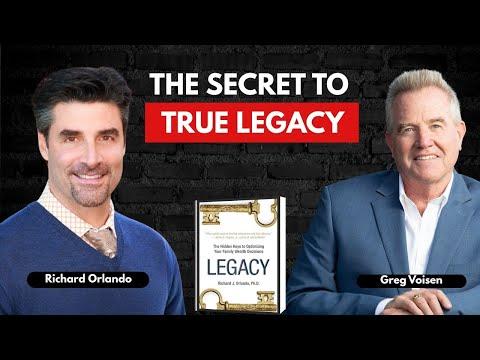
In this episode of Inside Personal Growth, Greg Voisen sits down with Richard Orlando, a man who has spent over two decades sitting at the kitchen tables and in the boardrooms of some of the world’s most successful families. Richard is the founder of Legacy Capitals and the author of the transformative book, Legacy: The Hidden Keys to Optimizing Your Family Wealth Decisions.
The conversation dives deep into a paradox that many high-net-worth individuals face: they have mastered the art of accumulating financial capital, yet they often feel a sense of dread when considering the future of their family and their impact on the world. Richard’s mission is to bridge that gap, shifting the focus from the technical "how" of estate planning to the deeply personal "why" of legacy living.
One of the most profound shifts Richard Orlando introduces is the distinction between "leaving" a legacy and "living" one. Conventional wisdom suggests that legacy is something crystallized in a will or a trust document—a final gift or set of instructions left behind after we are gone.
Richard challenges this, arguing that legacy is actually a living, breathing entity that is formed by the decisions we make in the present moment. "Legacy is about how we choose to live each moment of our lives," he notes. If a parent wants their children to be philanthropic, they cannot simply write a check at age 80; they must model generosity at age 40. If they want a family business to survive into the third generation, they must foster a culture of communication and shared values today.
To help families navigate the complexities of wealth, Richard utilizes a framework known as the Five Capitals (often remembered by the acronym FISHES). Most wealth management is focused exclusively on the first capital, but Richard argues that without the other four, the first is likely to disappear or cause family strife.
One of the most striking metaphors used in the podcast is the idea of wealth as a magnifying glass. Money does not change people; it amplifies who they already are. If a family has underlying tensions, unresolved conflicts, or a culture of fear, a sudden influx of wealth—such as a business sale or a large inheritance—will only magnify those issues.
This is why "Financial IQ" is not enough. Richard stresses the importance of "Life IQ"—the ability to be a resilient problem solver. He shares that families who flourish over 100 years are those who teach the next generation how to fail, how to learn, and how to stay grounded in values that are more important than the bottom line.
For many patriarchs and matriarchs, the primary driver in wealth decisions is fear: fear that the children will become lazy, fear of family conflict, or fear of losing what took a lifetime to build. Richard’s approach is to move families away from this "fear-based" planning and toward "purpose-based" planning.
He shares a moving anecdote about a ritual he performed with a family where they wrote down their greatest fears on biodegradable paper and threw them into the ocean. This ritual served as a psychological "reset," allowing the family to stop running away from poverty or failure and start running toward a shared vision of impact and generosity.
The discussion also touches on the difference between "check-writing" and true philanthropy. While large donations are vital, Richard encourages families to involve the younger generations in the act of giving. Whether it’s helping a neighbor start a business or volunteering for a local non-profit, engaging in "Agape" (love-based) giving helps heirs develop a sense of agency and purpose that money alone cannot provide.
Ultimately, Richard’s work at legacycapitals.com is about helping families create a "100-Year Legacy Blueprint." This isn't just a legal document; it is a shared mission statement that defines what the family stands for. It allows for different branches of the family to manifest their values in different ways while remaining anchored to a common North Star.
As Richard Orlando explains, "Just because someone is related by blood or marriage does not mean they can work together." Success requires intentionality, the willingness to have "messy" conversations, and a commitment to nurturing the spiritual and human capital of the family above all else.
Connect with Richard Book: Legacy: The Hidden Keys to Optimizing Your Family Wealth Decisions Website: legacycapitals.com LinkedIn: Richard Orlando
You may also refer to the transcripts below for the full transcription (not edited) of the interview.
Continue Listening