


with Progress: The challenge of nurturing humanity in the age of AI by Dr. Bartosz Adam Gonczarek
Dec 10, 2025
Inside Personal Growth
Listen on your favorite platforms
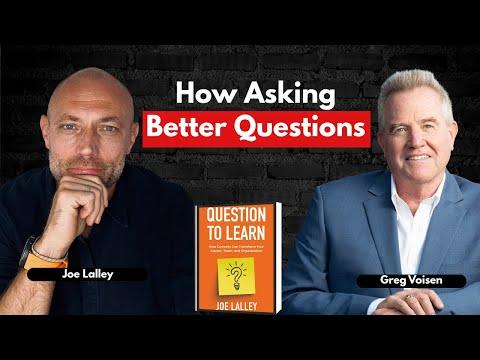
In this podcast episode of Inside Personal Growth, host Greg Voisin sits down with Joe Lalley, author of the book Question to Learn: How Curiosity Can Transform Your Career, Team, and Organization, for a deep and timely conversation about curiosity, leadership, and the power of asking better questions.
At a time when workplaces are obsessed with speed, certainty, and instant answers, Joe offers a different perspective: real progress doesn’t come from rushing to solutions—it comes from slowing down just enough to truly understand the problem.
As children, curiosity comes naturally. We ask questions freely, without worrying about how we sound or whether we should already know the answer. But as Joe explains, that instinct gradually fades. School systems reward correct answers. Workplaces reward decisiveness. Over time, curiosity becomes something people suppress rather than practice.
In organizations, this often shows up as premature certainty. Teams jump to solutions before aligning on the real issue. Leaders unintentionally shut down exploration by signaling that answers matter more than questions. The result is familiar: wasted effort, repeated mistakes, and innovation that looks good on slides but fails in reality.
One of the central ideas Joe introduces is the distinction between questions to learn and questions disguised as judgment. The former are asked with genuine intent to understand. The latter are often used to test, trap, or reinforce authority.
Questions to learn create space. They invite multiple perspectives and reveal assumptions that would otherwise go unnoticed. When leaders model this kind of curiosity—especially by asking questions they don’t already know the answers to—it changes team dynamics. Conversations shift from defending ideas to exploring problems together.
A powerful theme in the conversation is how hierarchy affects curiosity. Joe describes moments many listeners will recognize: a room full of ideas and energy goes quiet the moment a senior leader walks in. Suddenly, people start guessing what the boss wants instead of thinking freely.
Joe argues that great leaders actively work against this dynamic. They lower ego, create psychological safety, and show that curiosity is valued—not punished. When leaders ask honest questions and listen without judgment, they signal that learning matters more than being right.
Drawing from his background in design thinking, Joe emphasizes empathy and iteration. Instead of brainstorming solutions right away, he encourages teams to spend time asking questions—sometimes exclusively. One technique he shares is “question-storming,” where teams generate only questions, not ideas, to deepen understanding before moving forward.
This approach may feel uncomfortable at first, especially for experienced professionals used to offering solutions. But the payoff is significant. Teams align faster, build less waste, and create outcomes that people actually use.
The conversation also turns to AI and its growing role in work and decision-making. Joe is clear: AI is a powerful tool for speed and information, but it doesn’t replace human curiosity.
AI can summarize experiences—but it doesn’t have lived experience. It can suggest solutions—but it doesn’t care about the problem. When people outsource thinking too early, they risk outsourcing empathy and motivation as well.
Joe advocates for a problem-first mindset: use curiosity to deeply understand what’s wrong, then use tools like AI to support—not replace—that understanding.
Joe’s book, Question to Learn, is intentionally story-driven. Rather than prescribing rigid frameworks, it shares real experiences from careers, teams, and organizations, inviting readers to draw their own insights.
It’s a book for people who feel stuck, rushed, or pressured to always have the right answer. And it’s a reminder that curiosity isn’t a soft skill—it’s a strategic advantage.
In a world moving faster every day, this podcast episode offers a simple but profound takeaway: staying curious may be the most future-proof skill we have.
To explore more of Joe Lalley’s work, visit joelalley.com, connect with him on LinkedIn, or watch his insights on YouTube – Question to Learn
You may also refer to the transcripts below for the full transcription (not edited) of the interview.
Continue Listening