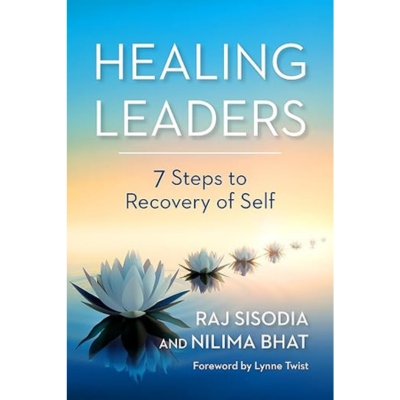
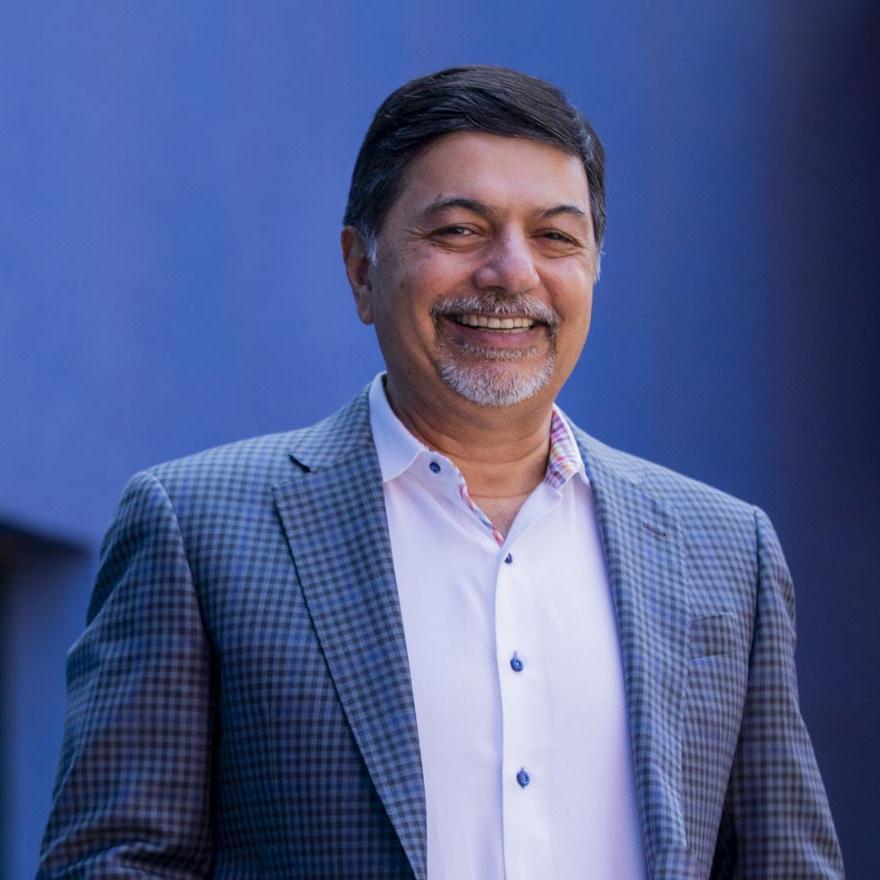
Podcast 1301: Healing Leaders: 7 Steps to Recovery of Self by Raj Sisodia

In this episode of Inside Personal Growth, Greg Voisen sits down with visionary thought leader Raj Sisodia to discuss his provocative and deeply personal new book, Healing Leaders: 7 Steps to Recovery of Self. Shifting away from traditional business tactics, Sisodia reveals a startling truth: most corporate suffering is “unintentional,” stemming from leaders who have yet to heal their own internal wounds.

Drawing from his transformative experiences with indigenous shamans in the Amazon and silent retreats in the Himalayas, Sisodia explains how a leader’s “cracked open” heart is actually the key to a thriving organization. This conversation serves as a wake-up call for anyone at the top who feels the weight of stress and burnout, offering a roadmap to trade ego-driven tyranny for a leadership style rooted in love and wholeness.

The Profound Crisis of the “Unhealed” Leader

Raj Sisodia begins by addressing a sobering reality: while capitalism has lifted billions out of poverty, it has simultaneously created a pandemic of stress, burnout, and emotional depletion. He cites staggering data—120,000 stress-related deaths annually in the U.S. and 600,000 in China—to illustrate that the current way of doing business is physically and spiritually lethal. We often celebrate the “hustle culture” without acknowledging the wreckage it leaves behind in the human soul.

The core thesis of the book is that an unhealed leader “leaks” their trauma into the organization. Whether it is a need for control, an obsession with external validation, or a fear-based management style, these behaviors are often unconscious projections of early life wounds. Sisodia highlights that many high achievers are driven by a sense of “insufficiency.” They spend decades building empires to prove their worth to a ghost from their past—often a critical parent or a childhood experience of exclusion. In the podcast, Raj shares his own struggle with his father’s perception of him as “defective.” By trying to be the opposite of his sensitive, trusting self to gain his father’s approval, Raj realized he had traded his authenticity for attachment. This trade-off is common in the C-suite, but it results in leaders who are effectively “hollow,” leading from a place of lack rather than abundance.

The Path to Conscious Leadership

During the interview, Raj shares that healing isn’t just about feeling better; it’s about leading better. The framework offered in Healing Leaders provides a sequential path for leaders to reclaim their humanity. It begins with “Knowing Your Self”—stripping away the “masks” of identity to find the unique essence nature gifted you. Many leaders identify so strongly with their title, their wealth, or their status that they lose touch with the human being underneath.

The second, and perhaps most difficult step for high achievers, is “Loving Your Self.” This moves past simple self-tolerance into radical self-compassion. Raj explains that you cannot truly love your employees or your mission if you do not love the human being you see in the mirror. When we lead from self-loathing, we demand perfection from others to soothe our own insecurities. Conversely, when we lead from self-love, we create a “psychologically safe” environment where others feel empowered to be authentic.

Business as a Force for Global Healing

Sisodia challenges the traditional MBA mindset that focuses strictly on the “head and the wallet.” He argues that when business includes the “heart and the soul,” it becomes the most powerful change agent on the planet. He refers to these as Healing Organizations. In these companies, work is not a separate, soul-crushing entity but a source of joy and fulfillment.

The financial data supports this “soft” approach. Companies that prioritize stakeholder well-being—customers, employees, and the environment—actually generate more sustainable abundance. Sisodia’s research shows that these “Firms of Endearment” outperform the S&P 500 by massive margins because they tap into the ultimate source of power: human potential. When people feel loved and cared for at work, they don’t just “perform”—they thrive, innovate, and remain loyal.

The “Self-Cleaning Oven” Metaphor

A key takeaway for listeners is the concept of the “Self-Cleaning Leader.” Healing is not a one-time destination; it is an ongoing practice. Sisodia compares a conscious leader to a self-cleaning oven: life will always create “residue” through stress, conflict, and loss, but a healed leader has the internal tools to process that heat through awareness rather than letting it accumulate as toxic resentment.

By the end of the conversation, it is clear that Sisodia isn’t just asking leaders to be “nicer.” He is calling for a fundamental evolution of consciousness. He invites every leader to embark on their own “Hero’s Journey”—to stop running from their shadows and instead use them as a bridge to a more inclusive, compassionate, and ultimately more successful way of being.

The Future of Capitalism

As we look toward the future, the interdependence of our global society requires a new kind of steward. We can no longer afford the “unintentional suffering” caused by leaders who are disconnected from their own humanity. Raj’s journey—from a structured academic to a man who found wisdom in the silence of the Himalayas and the medicine of the Amazon—serves as a blueprint for the modern executive.

The shift from being a “transactional” leader to a “transformational” leader is the ultimate competitive advantage. It requires the courage to be vulnerable, the humility to seek healing, and the vision to see business as a sacred trust. As Raj concludes, when we heal the leader, we heal the organization; and when we heal the organization, we begin to heal the world.

Connect with Raj Sisodia

To begin your journey toward conscious leadership and discover the steps to personal recovery, visit the links below:

Website: rajsisodia.com

LinkedIn: Rajendra Sisodia

Instagram: @rajsisodiaconsciouscap

The Book: Healing Leaders: 7 Steps to Recovery of Self

Twitter/X: @rajsisodiacc

You may also refer to the transcripts below for the full transcription (not edited) of the interview.

Well, welcome back to Inside Personal Growth. This is Greg Voisen,a host of Inside Personal Growth. And Raj, it's an honor and a pleasure to find you finally have you on our podcast show. We kind of missed in between. Good day to you. How are you doing?

I'm well, Greg. It is great to be with you today and it's taking a while. But I'm very, very happy to be here.

00:00:24:07 - 00:00:43:17
Speaker 1
And I'm happy to have you as a guest. And I know that all my listeners will definitely enjoy this interview. It's called Healing Leaders Seven Steps to Recovery of Self. And Raj, you want to hold that book up? It's right there in your hands. Now that one we can't see. But when you pull it this way, there we go.

00:00:43:24 - 00:01:09:11
Speaker 1
There are those. And your coauthors is Nikhil Amar. But that correct with a foreword by Lynn Twist. So Lynn has definitely been influential in your life, but I'm going to introduce you to our listening audience because there might be many out there that don't know you. But again, Raj is a visionary. He's a thought leader. An acclaimed author and co-founder of Conscious Capital Movement.

00:01:09:23 - 00:01:48:01
Speaker 1
It's a business philosophy that's revolutionized how thousands of companies around the world approach commerce, leadership and their role in society as a f e MSA Distinguished University professor of Conscious Enterprise and the chairman of the Conscious Enterprise Center in Mexico and chairman emeritus of Conscious Capital Inc, Rogers dedicated his career to a singular mission, bringing heart, healing, courage, soul, an awakening to business and leadership so that we can build a better world for all.

00:01:48:08 - 00:02:08:10
Speaker 1
Well, Raj, that is definitely a of an amazing thing. And for all of you, if you just want to learn more about Raj, you can just go to his website. It's just Raj, Sisodia, Sedona, Raj, Sedona. I'm saying that right?

00:02:08:10 - 00:02:09:18
Speaker 2
Raj Sisodia.

00:02:10:18 - 00:02:37:14
Speaker 1
Okay, just go there. Dot com. There. You're going to find about all of the books that he's written. Podcast the media. You can connect with him. He definitely has an extensive website. Also, you could order the book from there. Or you can go to your favorite bookseller, Amazon, which is a one. We'll put the link before in the show notes down here before you can go to it.

00:02:38:02 - 00:03:04:12
Speaker 1
Now, Raj, look, you have so many other books that led up to this book and you and your coauthor right, that if you do not consciously choose to be part of the intentional healing, you're part of an unintentional suffering. That's a pretty powerful statement, and it kind of frames everything in this book that kind of goes on after that.

00:03:04:17 - 00:03:20:13
Speaker 1
Now, obviously, you've written Awaken, you've written all these other books. People can see them. But can you help us understand what you mean by this and why healing has become such an urgent imperative for today's leaders, in your estimation?

00:03:22:02 - 00:03:44:24
Speaker 2
Yeah. So if you look at the world that we are in, you know, we've made an incredible amount of progress in the last 200 years. Certainly we talk about capitalism and what that has meant for humanity, where most people 90% people are living in abject poverty and now that's below 9%. Life expectancy is increase, literacy is increase all the technological marvels that we have.

00:03:45:05 - 00:04:06:14
Speaker 2
So that is the the the positive news, wonderful news about the impact of capitalism. At the same time, we have also paid a price. The price has certainly been in terms of natural resources, in terms of the environment, in terms of other lifeforms that we share this planet with. And even for us as human beings, there's a lot of suffering still.

00:04:07:12 - 00:04:25:03
Speaker 2
We may have more material prosperity than before, but there's two 3 billion people living on less than $5 a day. So there's that kind of suffering. But there's also other kinds of suffering that we experience. There's a lot of stress, there's a lot of burnout associated with the way in which we work, the way in which we run our businesses.

00:04:25:15 - 00:04:51:21
Speaker 2
There are a lot of consequences for the well-being, the health, physical, mental, emotional, social and spiritual health of people as employees, as customers, as community members, etc.. So we have to pay attention to all of that and recognize that in the process of trying to run successful businesses and make money, that we have created conditions in which people are suffering often quietly, but they are suffering nonetheless.

00:04:51:21 - 00:05:15:00
Speaker 2
And I talked about stress and burnout, heart attacks are 20% higher on Mondays. 120,000 Americans die from too much stress connected to their work. 600,000 Chinese die every year from too much work. So these are just some data points showing the amount of suffering that's out there. Of course, we look at the way in which we meet our needs.

00:05:15:00 - 00:05:34:12
Speaker 2
Something like 10 billion animals are killed in factory farms every year. There's a tremendous amount of suffering there, the suffering that we're imposing with other species as well, with the mass extinction that's going on of other species, the first one caused by human activity, because we weren't here for the last for the last six of those five of those six.

00:05:35:08 - 00:05:49:09
Speaker 2
So again, there's physical suffering. There's also mental emotional suffering, the levels of drug addiction, anxiety, depression, suicides, all of those numbers are high and getting higher.

00:05:50:12 - 00:06:19:11
Speaker 1
So it's it's definitely a complexity of issues. You know, I call it the the pinnacle of complexity. You know, we've got a society in a world which is become so interdependent. And in one sense, that's a really good thing. And on the other sense, everything that you just outlined in the last 2 minutes there, there's also a lot of hope for the future.

00:06:19:22 - 00:06:41:06
Speaker 1
There's also a lot that can be done. I know in companies like Patagonia, which is probably one of the best to work for, right? You go, Well, that's a great culture to work in as a company to to be involved in. You're talking about how people get treated and then the stress that they're under in these circumstances at their end.

00:06:41:14 - 00:07:11:10
Speaker 1
And you obviously have worked with all kinds of businesses, you know, from Whole Foods when John Mackey owned it to where we are today, where Amazon now. Speaking of Amazon, right, Lynn Twist invited you to go on a journey to the rainforest in 2018. And this was a turning point for you. You know, you'd been pretty much academic, you'd been teaching, you'd been out in the world working with businesses.

00:07:12:07 - 00:07:39:19
Speaker 1
What was it about the experience with the indigenous shamans and plant medicine that cracked you open in ways that decades of all of this study in academia and business success couldn't? And what did you discover about the wounds that you, Raj, had been carrying from early on in your life, all the way through to all this success that you've made of yourself?

00:07:41:13 - 00:08:01:16
Speaker 2
Well, well, that's a great question. So just to contextualize it, in 2018 was the year I turned 60 and that was a significant milestone, I think for for a lot of us, it's since the end of the second act of our life, the beginning of the final act. And it kind of creeps up on you right suddenly while you're doing the.

00:08:02:16 - 00:08:19:20
Speaker 1
I know I'm 71 and I think about it a lot. It is the second act, but Chip Connelly, who I think you know, wrote well, he you know, he does a good job of addressing this, but it's where you and I are at a point in our lives and many people that we're talking to today that we can have such an impact.

00:08:20:16 - 00:08:40:15
Speaker 1
You know, we can have such a positive impact, which is what you're doing right now through writing the books and lecturing and talking and going into the businesses. But personally, you really kind of cracked open your egg for the people reading this book because you wanted to say, Look, if I have this, how many of you out there experiences?

00:08:40:15 - 00:08:41:07
Speaker 1
Same thing.

00:08:42:12 - 00:09:02:16
Speaker 2
Yeah. So. So that year when I was turning 60, I was writing a book called The Healing Organization. So, you know, back of my mind, I had a lot of this is a big milestone that I should be thinking about how to make sense of my life. But on the other hand, I was busy with that book project and I had carved out the entire summer to work on that book in a series of writing retreats.

00:09:02:22 - 00:09:22:24
Speaker 2
And then four women basically stopped me in my tracks. Little interest was one of them. And really what the coauthor of this book and then two others, and they basically asked some version of the same question, which is you're writing a book about healing, but what about your own healing? Have you worked on your own healing? And my initial answer was flippant.

00:09:22:24 - 00:09:27:13
Speaker 2
And I said, Well, I don't have time for that. I've got a book. DEADLINE. This book is a big book.

00:09:27:21 - 00:09:33:16
Speaker 1
Yeah, don't bother me. Don't bother me with that healing stuff I'm too busy with.

00:09:34:07 - 00:09:52:02
Speaker 2
But you have to wait. Time is important. You cannot write a book about healing without working on yourself. So I had the good sense to listen to them and I said yes to the whole series of experiences that year, which I had already declined. So I said yes to a trip to the Himalayas on the border of India and Tibet.

00:09:52:07 - 00:10:20:10
Speaker 2
This is the seed of some of the deepest Buddhist wisdom in the world. And I had my 16th birthday there way up in the high Himalayas. In the midst of all of that Buddhist wisdom and all those monasteries, there's a tremendous amount of wisdom about suffering and about healing there. I said yes to a silent retreat in upstate New York with about 35 other people, including Peter Sangay and David Corporator and many others were really admired and looked up to professionally.

00:10:20:22 - 00:10:43:11
Speaker 2
And I had said no because I didn't have time, because I was writing the truth. And now I said, No, I'm coming. And in those four days, it was quite a revelation to me that just being in silence for two or four days allowed me to get connected to the source in some way and receive insights and wisdom, which which I wasn't I didn't have access to earlier.

00:10:43:11 - 00:11:03:18
Speaker 2
And so in those four days, I had about 45 pages of notes as I was walking around with the journal Nature. And the seven steps of this new book actually came to me in that four day period. I also worked with a coach for the first time that year, and she reframed my life in a way, significant way that had me make sense of it for the first time.

00:11:04:01 - 00:11:26:22
Speaker 2
And then I went to the Amazon rainforest at the end of that summer in August with Lindquist and about 17 other people as part of their founder's journey. And you go to the actual heart and there's a para people deep in the heart of the rainforest in Ecuador. They spent ten days with them and a lot of time with the shamans experiencing a variety of healing modalities.

00:11:28:11 - 00:11:54:09
Speaker 2
And one of those, of course, is the ayahuasca ceremony. And that was the midpoint of that journey. And I had gone there to learn about healing. And in that night, I, I received a lot of wisdom about healing. And it really opened my eyes and my heart to what we need to do in order to heal, not only for healing myself, but what we need to do in order to heal business, to heal leaders, to heal the world.

00:11:54:20 - 00:12:23:21
Speaker 2
And so those insights are also very, very central to me as to what I bought that time. And I also learned in that in the process of that year that there are things in my own childhood and young adulthood which I put behind me that I realized were still impacting me. And I have not actually heal them, which is why I was too reactive and wasn't wasn't quite clear as to why I did certain things the way I said certain things.

00:12:23:21 - 00:12:37:00
Speaker 2
Because again, it was coming from a place of love, trauma informed reactivity. And so that began the journey of trying to heal some of those traumas as well. So that's been my journey for the last five, six years.

00:12:37:14 - 00:12:58:03
Speaker 1
Well, I think many people out there listening can relate to what you're saying. In other words, we we all go through these childhood things, but they're way back in the subconscious and we don't know how much they're really affect the decisions we make, the comments to make, the person we we have become. So we cannot do one or two things.

00:12:58:03 - 00:13:21:12
Speaker 1
We can embrace them to say thank you for that experience and let it go, right? I mean, the term is kind of let it go. A lot of people out there listening probably have a hard time letting go because they've been programed to succeed. We're we're we're been programed to anybody who's in the business world. Like you got it.

00:13:21:20 - 00:13:46:11
Speaker 1
They say it's lonely at the top. It's really lonely when you're an entrepreneur and you're running a business and you're you're responsible for all these people. But you think this framework that you just mentioned is really important for us to have you kind of go through? Because during this awakening period for you, during this enlightened period where you became lighter as a soul, right?

00:13:46:11 - 00:14:12:24
Speaker 1
You literally let go of things yourself that you were carrying. You found out it was just okay just to be Raj, you know, and you found out who Raj was. But you have no you're no your self beyond the ego, which that's probably a big one that came out during that ayahuasca experience. Love yourself the hardest step. Be yourself authentic and leadership.

00:14:13:09 - 00:14:38:01
Speaker 1
Choose your self, agency and responsibility and express yourself. Finding your voice. So all of those I could see just kind of bubbling up in you as you've gone through this experience you just talked about. Because obviously this is the true voice that needed to come out after all these years to let people know, Hey, look, you know, these are the things.

00:14:38:01 - 00:14:56:13
Speaker 1
So what comments could you kind of if you were to take the seven step core framework of the book, would you tell listeners as they're taking a journey through your book, how might they use these things? How might they access this in a much easier way?

00:14:57:16 - 00:15:19:13
Speaker 2
Yeah. Yes. Well, the seven steps have a logical sequence to them and so we can go through them briefly, each of them. However, it is also possible for people to enter through any one of them. You know, we likened them to chapels within a cathedral. Any one of them can be an entry point and then you can go to go to the others.

00:15:19:13 - 00:15:37:21
Speaker 2
You might be called to work on loving yourself or you won't be called to work on completing your. SO whatever it is. But if you don't have that calling, then we suggest that you think about these things in that order, because the beginning of it is knowing yourself. You have to know who you are. You know, we are unique.

00:15:37:21 - 00:16:10:23
Speaker 2
Every one of us is different. Nature does not create duplicates. There are a billion of us alive on the planet today. Every one of us different. 109 billion of us have lived and died before now. So none of the 117 billion were alike with any of anybody else. So we have to know who is this unique being that in this lifetime I'm here to steward and shepherd that I just see this being as a gift from creation.

00:16:11:10 - 00:16:36:13
Speaker 1
What is the difference? Right. Pardon me for interrupting, but, you know, one thing I want to say is the difference between self that we project to the world. Because, look, you went through the world doing this yourself, projecting something different and the deeper self we're we're inviting the leaders to discover who. And I know it sounds kind of trite, but it's really true.

00:16:36:13 - 00:16:59:00
Speaker 1
Who are you truly can you really get up and stand up? And I, I think the reason I'm just going to pontificate here for a second, when we get to the age that you and I are, we've been through all this stuff where we've had to make shit up, you know, and then we start to believe it and then we start to live it.

00:16:59:09 - 00:17:10:17
Speaker 1
But the reality is it's all made up. But the question is, who are we really? And can we really stand in a room with who we are and not be afraid of who that is?

00:17:11:24 - 00:17:16:05
Speaker 2
That's right. Yeah. Because we acquire all these layers of identity.

00:17:16:13 - 00:17:16:22
Speaker 1
Right.

00:17:17:04 - 00:17:45:01
Speaker 2
And the outermost really is, is the various identities that are in a way we receive through the this the accident of birth. So we happen to be this religion and this nationality, and then we enter that profession and get into all of the demographic indicators, Right. So no culture or certain socioeconomic class, whatever it is, these are all markers of identity and they do impact you.

00:17:45:01 - 00:17:47:22
Speaker 2
But we advocate that you hold them lightly.

00:17:47:22 - 00:17:48:06
Speaker 1
Yeah.

00:17:48:14 - 00:18:06:17
Speaker 2
Because these are things that that you were born into or you, you happened to acquire over the decades of your life, but that's not you. So that's kind of at the level of identities. And then you have your values which go deeper than that. As you go through life, you learn what you really care about, what really matters.

00:18:06:17 - 00:18:26:24
Speaker 2
A great deal to you, what you would be willing to sacrifice for, perhaps even die for. Those are those are things that are closer to your being, right? That those are not something that was externally just acted on to you. And then you go beyond that and you have your your very nature, your essence. What are some things that you were born with?

00:18:26:24 - 00:18:51:12
Speaker 2
You don't even have to experience much of life for somebody to recognize within you. Right? So I was I was born to somebody who was quite sensitive, was somebody who was very trusting, somebody who was very peace loving and easygoing, etc.. But those were elements that were evident in me, even perhaps as a two year old, as a three year old that people could see was between me and my my siblings or my cousins, etc..

00:18:51:20 - 00:19:13:19
Speaker 2
So that's you're getting closer to your core being your essence. I And then you said there's your, your, your, your core self. I that is even beyond that. I mean, what is something that is independent of ego and independent of all of the other markers of identity. And that's where we start to get to more unity cultures. All of us at some level when we get to that, we are, we are.

00:19:13:19 - 00:19:27:08
Speaker 2
We're quite same. What we have to add to that, what is our essence, what are our values, and then hold our identity. That is to really understand what makes me tick, what makes me unique so that I can be true to myself.

00:19:28:03 - 00:19:49:16
Speaker 1
Well, you know, one of the things you mentioned or one of the steps, which I think is that when you're living in the ego because you said these go in order is self loving, nurturing and care, self-love, self-compassion, compassion for oneself. It's one thing to have compassion. And I have a nonprofit and I go out and I work with the homeless.

00:19:50:01 - 00:20:13:08
Speaker 1
I have lots of compassion. But how much care are you giving yourself? How are you treating yourself? You know, and you say, for many high achievers, which I've found this out, too. And speaking with Marshall Goldsmith, who's been on the show probably a zillion times, talking about what high achievers do to themselves. Right. And you are a high achiever.

00:20:13:08 - 00:20:30:07
Speaker 1
I'm a high achiever. Anybody who does this kind of work as a high achiever, but they don't always nurture themselves. So what did you find out was so important about nurturing yourself finally, to give some self-compassion so that you could be good for the rest of the world?

00:20:31:08 - 00:20:38:14
Speaker 2
Yeah, that's a that's a big leap for many of us. It started automatic that once you know yourself, you'll love yourself. In my case, it took me a decade. I would say.

00:20:38:24 - 00:20:39:12
Speaker 1
Right with.

00:20:40:20 - 00:20:57:18
Speaker 2
My father was a reflection or a mirror back to me of how he perceived me. And I didn't know if I until I was seven years old. And when he came back into my life, he saw me as somebody who was quite defective because I was the opposite of him. I had all these qualities that he embodied the opposite.

00:20:57:18 - 00:21:15:20
Speaker 2
So he told me, You cannot trust anybody or trusting. You're too idealistic. You need to be pragmatic. You are true peace loving, you need to be rough and tough. You too much in your head and intellectual. You need to be street smart. So the messaging I got was that everything about me is a weakness. And so I had this desire to be the opposite of that.

00:21:15:20 - 00:21:42:12
Speaker 2
And I had a kind of self-loathing like, why am I full of defects? That took me a long time to recognize that those are actually my strengths, Those are the qualities that define me that I need to actually embrace and not only accept and tolerate. And so it took me a long time to go from self-loathing to self tolerating to self-acceptance, and then ultimately gratitude for what who I am and what I am, the way I was born this way.

00:21:42:19 - 00:21:53:02
Speaker 2
And there's a reason that I meant to bring that into the world. And that's part of the gift that's coming to the world through me. And that's true for each of us that the world needs each of us. We will.

00:21:53:06 - 00:22:14:05
Speaker 1
Thank you for being you, Raj, because you really have made a difference. And not that your dad was wrong, but that's all he knew, right? So and I had a father very similar, you know, is like, what did you do for me today kind of thing? Not like, who are you? And I get that. I understand. And the times were tough when they were there.

00:22:14:13 - 00:22:35:14
Speaker 1
Times can still be tough now, but that doesn't mean that it has to be a reflection on you. You can still grow into the person you want. And that brings me to this one. You know, Brené Brown has talked about it more than anybody. Authenticity, authenticity, authenticity. And I'm going to say in the word is overused, but to be yourself, you do have to be authentic.

00:22:36:03 - 00:22:58:05
Speaker 1
And what when do you think it becomes available for somebody to access authenticity? I see the steps you've gone through the first one saying with the third one, I get that now I should be able to claim my own authenticity after I move through the ego and the self love. Right. And how did that happen for you?

00:22:59:11 - 00:23:21:22
Speaker 2
You know, so I think it's hard to be authentic if you don't know yourself or love yourself because what are you being authentic to? And secondly, if you don't love yourself, then you don't want to be that person that you were trying to be somebody else. So this involves taking off the masks that we carry, that we wear, and we have multiple mask sites, we play different roles, and we show up as different with different personas in different parts of our life.

00:23:22:04 - 00:23:48:01
Speaker 2
It's about letting go of all of that and feeling comfortable that I am enough. And being me is is who I'm supposed to be. And that's the role that I was born to play. And authenticity is often framed as being intention with attachment is Cabramatta, whose work I greatly admire, talks about this very eloquently. Authenticity of attachment are to primal human needs.

00:23:48:18 - 00:24:10:04
Speaker 2
We need attachment without attachment to others, especially our caregivers, early in life. But even throughout life, we don't survive as human beings. We are utterly helpless when we are born and for many, many years after that. And so we need that attachment in order to for us to survive. On the other hand, we also need to be authentic to who we are.

00:24:10:05 - 00:24:31:07
Speaker 2
We need to speak our truth. We need to say what we see. And even that can be a necessary thing for survival. If you don't do that, then you could literally not respond to dangers when they happen. So authenticity of attachment should not be in conflict with each other, but they often are because you might feel that you cannot be who you are.

00:24:31:07 - 00:24:50:19
Speaker 2
You cannot say what you really feel because people won't like you or your parents won't accept you or they won't love you. In my case, because of my thing with my father, I was trying to be the opposite and just become the version of me that that he would have my own accept. So I gave up my authenticity for the sake of attachment, for the sake of belonging.

00:24:51:06 - 00:24:52:02
Speaker 1
Acceptance.

00:24:52:09 - 00:24:55:11
Speaker 2
We go. We are people pleasers. That's a very common thing.

00:24:56:12 - 00:25:16:02
Speaker 1
What? Where would you throw fear in all this? Because I think so many people out there, they look fear less, some of them. But we all have to deal with this issue of fear. One of the biggest things that was talked about, obviously, you went to the Himalayan and you spoke to all the Masters, is the fear of death?

00:25:16:04 - 00:25:48:06
Speaker 1
Well, look, the finitude that we all have to face, at some point, none of us gets out of here alive. So you must have to address you must have been and maybe still are addressing that. But that is part of this journey as well. Right. And what has Raj done to look at fear? Live with it, accept it, and understand that it's just part of the life experience here.

00:25:48:07 - 00:26:07:23
Speaker 2
So for a couple of different ways, one is framing it in the context of the hero's journey, that there are things that we're going to have to face up to that are our fears. But as he said, the key that you fear to enter holds the treasure that you seek, that every fear is really there as a signal, as a guideposts to say here is something that you need to overcome.

00:26:08:05 - 00:26:35:20
Speaker 2
It's not about not having fear. It was having the courage to do what you need to do, you know, face of that fear. But I think that to me, the other dimension of that, the greater fear is going through life. And at the end, looking back with tremendous amount of regret and shame and guilt, that I did not live the life that I was intended to live, I didn't do what I could have done, wanted to do because of fear.

00:26:35:20 - 00:26:55:15
Speaker 2
And so I think this that to me that that would be the more tragic thing at the end of life to look back with so much to grab. So how can we make sure that we choose growth over safety, even though we bear some fear associated with choosing the path of growth? But if you don't grow, we will never evolve into government to be.

00:26:56:05 - 00:27:20:09
Speaker 1
Such a poignant thing. You know, it's like for almost 20 years I've been doing this show and I've been speaking with authors and sending out the message into the ethers about personal growth, you know, continual learning. And I think you have to be curious. One of the things you need to have a purpose. Then you can establish who you are in the world.

00:27:20:09 - 00:27:57:23
Speaker 1
And one of the things that you talked about, obviously in the book is you explore how unhealed leaders can unconsciously create suffering in their organizations. Okay. Now we're shifting a little bit to the business side here, but it's important. Can you share some examples of how leaders with these unresolved trauma or unexamined wounds, whatever it might have been helped, it manifested in their leadership style and then ultimate finally moves down to the organizational culture.

00:27:58:08 - 00:28:04:14
Speaker 1
Right. So, you know, you having done all this work, you're the best to kind of address that.

00:28:04:14 - 00:28:17:00
Speaker 2
Yeah, sure. So any leader who is tyrannical, who is dictatorial, who is toxic in many in any way is ultimately is acting out some kind of a childhood wound.

00:28:17:08 - 00:28:43:17
Speaker 1
So we can say that right now about the leader of our own. Well, we don't have to go very far for a very big example. But you know, what's good about the example is it's awakening people to really understanding how toxic that is. And we are seeing a shift. We're starting to see this shift. There's a huge awakening occurring right now in this country.

00:28:44:04 - 00:29:06:06
Speaker 2
We also believe it is because what was under the surface is now more evident. It's a process of responding to see the consequences of these things. So leaders who are carrying around wounds a father or mother want or different traumas, I don't belong. I'm writing off. I'm a lord, whatever it is. There's many, many common traumas that that people face.

00:29:06:15 - 00:29:27:12
Speaker 2
You start to see that then everything that they do in life becomes a way to compensate for that, to make up for that, to prove that I'm in a fight, to prove that I belong, etc. And and that then can end up creating suffering for themselves and for others because it's coming from an unhealthy place of lack. It's not conscious.

00:29:27:18 - 00:29:51:11
Speaker 2
You're being driven by these unconscious impulses and fears is Carl Jung said that until we make the unconscious conscious, it'll drive our life and we will concentrate. And so why are we acting the way that we're doing? Why do we behave irrationally at times where I'm yelling at people or whatever it is, It's all coming from that unseen world.

00:29:51:11 - 00:29:58:23
Speaker 2
We have to then examine what is it inside me that is causing me to react? It's called the amygdala hijack as well. Right.

00:29:59:10 - 00:30:33:24
Speaker 1
And this, I think I think and you probably know this when people aren't getting what they want, I think if somebody said, hey, look, the best thing that could happen is we progress, because what happens is without progress or without movement forward or without growing, as you just said, is anger, okay. Anger and frustration. And then that anger comes out and like we said, inside of an organization, when you see frustrated leaders, it's a it's really caustic inside of a company.

00:30:34:09 - 00:31:11:22
Speaker 1
And, you know, look, you you were a co-founder of what's called Conscious capitalism movement. And its influence is businesses all over the place. Now that you've written this new book and you've had this huge life experience and a huge awakening, how does your new focus on healing LEAP leaders kind of deepen or expand the conscious capital framework? And is healing the missing piece that makes conscious business truly sustainable?

00:31:12:12 - 00:31:22:14
Speaker 1
Now we want to get down to, Hey, if I heal as a leader, can this make my business that much more sustainable?

00:31:22:14 - 00:31:46:19
Speaker 2
Yes, I believe it very much is is part of that. I started to, over the course of the last 15 years as have been part of conscious capitalism starting to zero in more and more on the leaders that it's a set of ideas, a set of principles, tactics and strategies and so forth. But that ultimately is the source of all of that is the consciousness of the leader and the being of the leader.

00:31:47:10 - 00:32:23:07
Speaker 2
And is the leader is coming from a place of wholeness, going from a place of being healed, of not having these activities, coming from a place of self-love, self-knowledge, etc., alignment with their being, alignment with their purpose, all of that that will then show up in a very powerful, cohesive way in the organization. But if they are doing things from a place of fear or a place of lack or place of insufficiency or insecurity, etc., that will also show up in the organization.

00:32:23:17 - 00:32:49:08
Speaker 2
So I think ultimately you cannot have a conscious business without a conscious leader. You cannot be a conscious leader if you don't work on yourself, on your own healing journey. And ultimately that will then amplify and magnify the impact that you can have through the business. It creates a great amount of clarity and it also creates resilience. When times are tough, we say all this will come around every so often.

00:32:49:20 - 00:32:54:13
Speaker 2
I think strengthens the leader dramatically and clarifies what they're here to do.

00:32:55:10 - 00:33:15:21
Speaker 1
Yeah, you know, this book is so I have a client right now. I want to give it to who needs it desperately. So now, look, you, you your final chapter, this book is this isn't the last question, but this is about one of the final chapters is an upward spiral of growth and love. You just mentioned it, growth and love.

00:33:16:13 - 00:33:51:01
Speaker 1
And I'm going to say unlimited love it. Dr. Stephen Post says suggests that healing isn't a destination, but it's an ongoing journey. Okay. How do you envisage and leaders maintaining this healing practice and relentless demands of business and in the same world, right. Like they have to deal with both sides. And what does a healed leader actually look like in practice?

00:33:51:01 - 00:33:57:03
Speaker 2
Well, you know, we like leaders to conscious leaders to self-cleaning ovens. Every so.

00:33:57:16 - 00:33:57:22
Speaker 1
Often.

00:33:58:03 - 00:34:19:18
Speaker 2
Little things build up and you have to it's not a one and done. But now forever things will come up. Life will continue to happen to you and you have to process constantly. All right. And none of these steps is one and done because you could lose yourself at one level and then you go through all the steps and now you have know yourself at another level.

00:34:20:11 - 00:34:37:04
Speaker 2
It's like another layer of the onion that that gets revealed and something else about you that you need to come to learn to love, etc.. So it's an ongoing journey that's not ended. Once you go through all seven steps, you know, you can start over again or it can it can go to any of the other.

00:34:37:04 - 00:34:58:09
Speaker 1
I think it's the depth at which you go each time. Sometimes people just do it, little pieces, sometimes like you people take a big swath, they like go and do ayahuasca and it's like, whew, I have this big opening, right that happened. And some people take it in and bite sized pieces and then they have to keep going back at it again and again and again.

00:34:59:24 - 00:35:31:00
Speaker 1
And I know that for all the listeners out there, whatever path they choose, as long as they're on an upward spiral of growth and love, it's going to show through into the business. No matter what level you're at, you could say, Well, I meant level five and somebody else's. Level 16 don't measure what level you are, just measure the fact that whatever you're doing is having a positive effect on the culture, the environment, the people, you and everything else, and the way you feel as a leader.

00:35:31:02 - 00:36:04:10
Speaker 1
Right. And I think if you do that, you're doing well now, you've said that business can be the greatest healing force in the world. And I agree with you. And it's it's really a bold statement because I think some of the spiritual leaders of this world, whether they're Buddhist or Muslim or Catholic or whatever it is, would like to say that spirituality or I should say in many cases, I think spirituality is more important.

00:36:04:10 - 00:36:44:09
Speaker 1
I think religion has done more to make things worse, pardon me, than spirituality does in people finding their spirituality. And in much of what you've talked about is you finding, even during that ayahuasca, your own spiritual essence, Right. So this bold claim when many people see business as a source of so many problems, I used to go to spirituality and business conferences in San Francisco and I would sit there with all these great leaders from Clif Bar and all these companies who wanted to bring Spirit into business, right?

00:36:44:12 - 00:37:17:05
Speaker 1
They knew that if you came as two separate people, you couldn't be happy. You had to be one person coming to business where I could reflect who I am and what I want and what my purpose is. What would it what would it take for businesses to truly become a force for this healing? One What are the obstacles that you see and what gives you hope to let people bring their spiritual ness to business?

00:37:17:05 - 00:37:39:01
Speaker 2
Well, if you think about business, education and most of business practice, I had six years of business education, I had dreams, MBA and four years. And I realized in retrospect that it was all about the head and the wallet. Everything is about the numbers, the theories, the frameworks, that everything goes to the bottom line. And I realized that it completely bypassed the human being.

00:37:39:01 - 00:38:04:07
Speaker 2
And between that and the walk to the heart and the spirit, I was never inspired a single day in my business education, and I was never emotionally moved by what I was learning and the fact is that business can actually have tremendous impact on us in our lives. And if we engage with the heart and spirit, it becomes so much richer and deeper.

00:38:04:14 - 00:38:24:18
Speaker 2
Everything we do as human beings should be connected to our heart and to our spirit. And of course, we still need our head and we have to make sure that it's all working and the bottom line as well. But that is a big miss. And I think when we bring those things, then that enriches everything. I had the unique experience of teaching MBA students.

00:38:24:18 - 00:38:43:20
Speaker 2
The students cry of loss. Why do they cry? Because they're so moved by what they're learning. I said, I didn't know banking could be this beautiful. I was teaching a case of law that's back, which is a highly conscious bank. And I said, Yes, every company and every industry can be beautiful, it can be noble, it can heroic.

00:38:44:16 - 00:39:04:21
Speaker 2
You know, I was speaking tomorrow for an entity called the House of Beautiful Business. And seeing it with business can be beautiful. This business can be all of those things, but it's a manifestation of the consciousness of its founders and where they are. And if they are connected to their heart and spirit, the business will also embody heart and spirit.

00:39:04:21 - 00:39:23:14
Speaker 2
It will have a soul. Companies can have souls, I believe, just like human beings have souls. So I think we can do all of that. And capitalism has done a lot, but there's so much unrealized potential because we have we have hamstrung if we've hindered it, you know, we have we have handicapped it by not including the heart and the spirit.

00:39:23:14 - 00:39:29:08
Speaker 2
And if we bring those elements in it, you know that bringing in love and inspiring people.

00:39:30:00 - 00:39:54:06
Speaker 1
Well, I'm so glad there's people like you that are being inspirations. There's so many. But my point is to businesses in particular, conscious capitalism, you know, the numbers of B Corp, the people that are trying to do good, the world that's really out there trying to make a difference for not only the souls that work in the business, but the souls that consume their products and services.

00:39:55:02 - 00:40:23:09
Speaker 1
And I think that's really, truly hats off to you. And I want to end this with this question. And if somebody, anybody out there listening, whether they're in a managerial position or a CEO position or CFO position, is stirred by this conversation that you and I had. And they recognize it and they want to embark on the journey, but they don't really know where to go.

00:40:23:10 - 00:40:51:15
Speaker 1
What would you say to them and where do you believe other than, you know, granted, look below in the show notes you can buy his book, you can buy many of his books, Go to the website. We're going to have his website up there, too. But the point is, is what might you advise them? Because, look, it took all these years for you, for these three or four women to jostle you up and say, Hey, Raj, you don't have a deadline to write your book.

00:40:51:24 - 00:41:12:06
Speaker 1
You're going to go to this silent retreat. I've been on like six of them, so I know you're going to go and do this thing down in ayahuasca and you're going to go to the Amazon. You're going to take a little bit of time for you and you're going to learn how important you are versus giving always outside to the rest of the world to wake up and say Raj was important.

00:41:12:17 - 00:41:24:18
Speaker 1
That's why this book got written, right? And so what would you tell these people who just listen to us are going, Wow, I've been living that same life?

00:41:24:18 - 00:41:52:17
Speaker 2
Well, business people, I do urge them to look at conscious capitalism. Go to conscious capitalism dot org. You might find a chapter where you live in many cities we have local communities and there's a there's a there's a tribe of people out there that are trying to find something deeper in business and in leadership, and it becomes an incredibly rich and fulfilling experience way beyond just the material side of things.

00:41:53:03 - 00:42:17:09
Speaker 2
So there's a community of people out there and I think we learn best from each other and then community. And there you can find mentors, you can find guides, you can find spiritual connection. I think the other part of it is, is to have the spiritual curiosity and start to read some of the books. So much of what I books and probably many other classic books like my with two Friends or.

00:42:17:11 - 00:42:46:03
Speaker 1
So many out there, you know, Richard Barrett is. Yeah, he's he's writing a ton of them right now. And and I have you know, I've had him on many, many times. There's you know, when you will look for the soul of business those are the kind of people to look to people like you who've written these book, who have lots of business experience, but also have the heart and soul and inspiration to tell people there's more to business than just numbers, mathematics.

00:42:46:03 - 00:43:11:23
Speaker 1
And, you know, you getting your MBA, it's really about the heart and soul that you bring into the business. You know, I mean, we all go back to the days of you and I. Herb Kelleher Right. You know, we used to walk around and give out M&Ms to the people and say that he loved them. Right. And and and and I knew when I was like, I think one of the early days of kind of teaching around Herb was like, how many people are really going to embrace love right?

00:43:11:23 - 00:43:28:17
Speaker 1
You know, But you saw what it did to expand the consciousness of the individuals inside the business in how they treated the consumers that were buying those airfares. Right. It was just it's I mean, I could there's hundreds of examples like that, but that's a good one. Yeah.

00:43:28:23 - 00:43:52:05
Speaker 2
Yeah. It unleashes human potential in dramatic. And then as I found in my book, Firms of Endearment, that companies that do this, they don't sacrifice financial performance. In fact, those companies outperformed the market by 9 to 1 over a ten year period because they are tapping into human potential at a level that others can barely reach. The are incredibly engaged.

00:43:52:05 - 00:44:22:19
Speaker 2
People are incredibly loyal. They are creative. That takes away a lot of the friction. You don't have employee turnover. You've got tremendous customer loyalty and you just spend money on ads and coupons. And there's just a whole other business model and philosophy that that gets embodied once you do that. And it's not at the sacrifice of anything. In fact, you have superior financial results and you have healthy, happy, fulfilled people because often those two are in conflict with each other.

00:44:23:04 - 00:44:26:21
Speaker 2
The results are coming out at a price. We don't have to pay that price.

00:44:27:16 - 00:44:53:09
Speaker 1
Well, for all those listening, look to the show notes below. There's a link to Roger's website. He's got plenty of things on that website, not only his own books, but believe me, there is a whole world out there. So we'll also put a link to Conscious Capital dot org for you to find a chapter that you could join and find like minded people who are thinking about what you're thinking or if you're just new to this.

00:44:53:15 - 00:45:19:10
Speaker 1
It's a great way to get an introduction. I've been to many of the conscious capital events that you put on here in San Diego, so congratulations for all the work that you've done. Thank you for this really, really great work about healing and helping people awaken to truly who they can be and will just make sure that we get this message out there everywhere we can.

00:45:19:10 - 00:45:29:16
Speaker 2
Raj Thank you so much. Greg I really enjoyed it. Very, very thoughtful with your questions and I think we explored a lot of interesting time We did.

00:45:29:16 - 00:45:52:20
Speaker 1
And for all of you, don't forget it's the it's basically this seven course steps is the framework. Start digging into that when you get the book. We didn't get a chance to cover every one of them, but we got through most of them. It goes through the premise of healings and and so on, But you got to know yourself and the ego one is the first one get out of your ego.

00:45:52:20 - 00:46:02:10
Speaker 1
As Steve Jobs says, if you're going to walk into the room, he was the worst one, but he did know that literally what it took was to remove your ego to get things done in business.

00:46:02:17 - 00:46:06:03
Speaker 2
So make it a serving ego and not a deserving ego.

00:46:06:12 - 00:46:32:13
Speaker 1
I like that. And instead of doing you know, I said this to people instead of being transactional, be transformational. Okay? Because a lot of people just like to do the transactions, make the money, whatever. Think about it is transformation. What can you do for the other person that would benefit them more and give them more in their life Then you just doing another transaction.

00:46:32:24 - 00:46:42:09
Speaker 1
So you might want to think of it that way. So Raj, thank you for being on inside Personal Growth. Namaste State to you and thank you so much.

00:46:43:04 - 00:46:43:16
Speaker 2
Thank you.

powered by

Leave a Reply

Your email address will not be published. Required fields are marked *

Inside Personal Growth © 2026