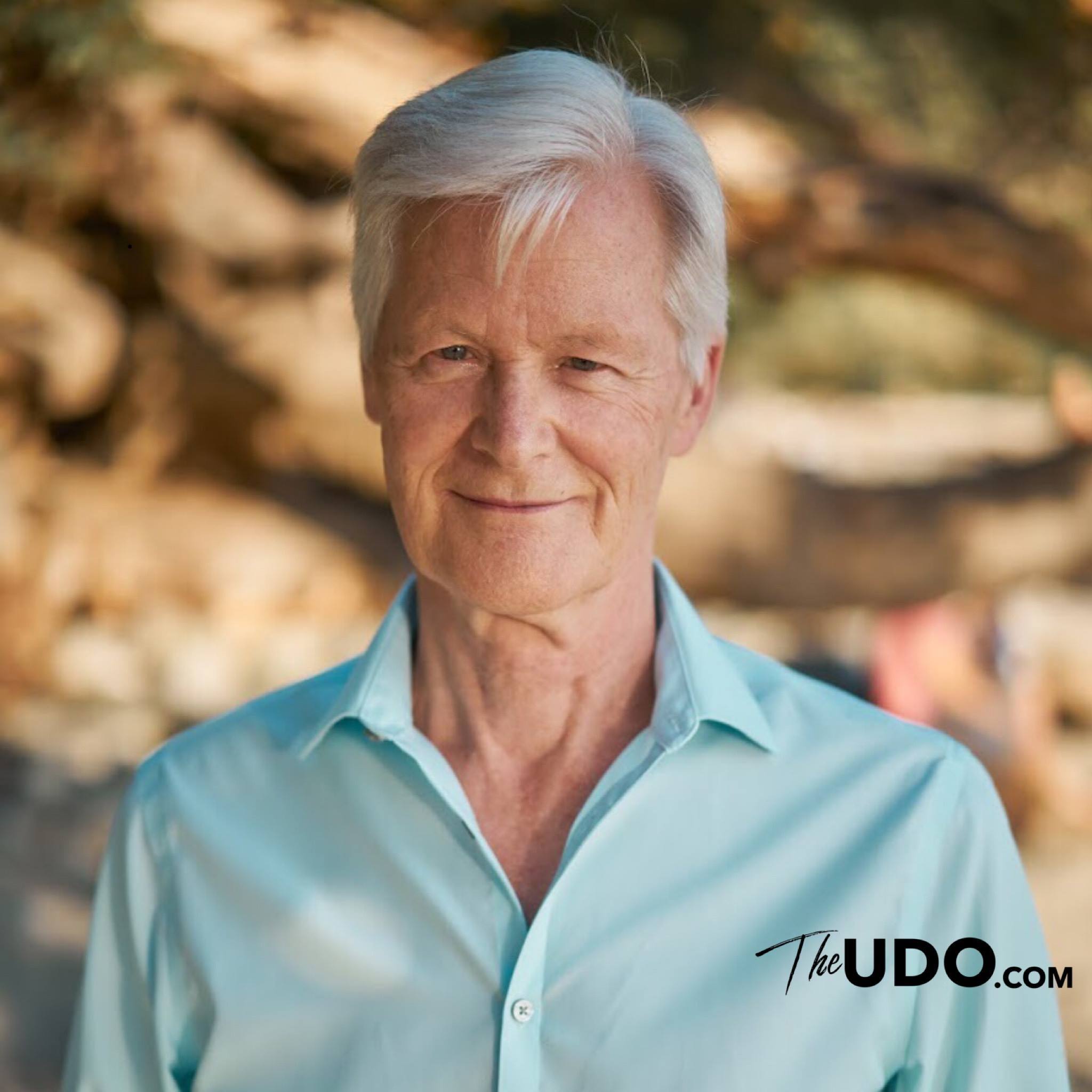
 In this powerful episode of Inside Personal Growth, Greg Voisen sits down with Udo Erasmus, one of the world’s leading authorities on fats, oils, and human health. What unfolds is not just a discussion about nutrition — it’s a deep exploration of how food, biology, consciousness, and spirit are all woven together.
Born during World War II and later poisoned by pesticides while working as a sprayer, Udo’s health crisis became the doorway to a lifetime of discovery. He dove into biochemistry, genetics, and nutrition research and uncovered something most people never hear about: the way modern oils are processed is quietly destroying human health.
Why your body really “needs an oil change”
Udo explains that two fats — omega-3 and omega-6 — are not optional. They are essential fatty acids, meaning the body cannot make them and must get them from food. Without them, cells cannot function properly and health slowly collapses.
The tragedy is that modern industrial processing exposes oils to heat, oxygen, and light, which damages these delicate fats before they ever reach your body. Frying makes it even worse, producing inflammatory and cancer-promoting compounds.
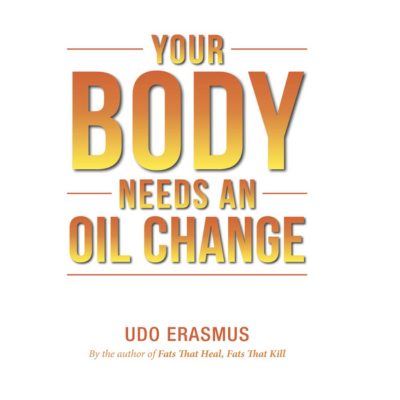
This is why Udo developed a cold-pressed, oxygen-free oil process that protects these fragile fats — now widely known as Udo’s Choice — and why he wrote the landmark book:
👉 Your Body Needs An Oil Change
Buy on Amazon
Food is stored sunlight — and your body runs on it
One of the most profound insights from the episode is Udo’s explanation of life energy.
Sunlight is captured by plants and stored inside food as chemical bonds. When you eat, digest, and metabolize that food, that stored solar energy becomes the life force that runs every cell in your body — the same energy many traditions call spirit, soul, or divine intelligence .
When food is damaged, that life energy is damaged too. When food is alive and intact, it nourishes not only the body, but the mind and heart.
Healing happens because the body constantly rebuilds itself
Udo shares a little-known biological truth: about 98% of the atoms in your body are replaced every year. That means your body is always rebuilding — and when you give it the right materials, it can heal itself .
Illness, he explains, comes from just three causes:
-
Missing essential nutrients
-
Taking in toxins that do not belong
-
Poor digestion
Correct those, and the body naturally moves back toward balance.
Health, inspiration, and why people don’t change
One of the most moving moments in the conversation is Udo’s realization that knowledge alone doesn’t change lives. People change when they feel inspired — when they feel deeply connected to life itself .
When you feel loved, grounded, and alive, taking care of your body becomes natural.
Where to go deeper
Udo continues to share his research, products, and teachings through:
🌐 Official Website
https://udoerasmus.com
💼 LinkedIn
https://ca.linkedin.com/in/udoerasmus
Final reflection
This episode is not just about fats. It is about remembering that the body is powered by life itself — and that when we honor nature’s design, healing, clarity, and energy return.
As Udo reminds us, when we nourish the body correctly, we are not just feeding cells — we are feeding the very force that makes us human.
You may also refer to the transcripts below for the full transcription (not edited) of the interview.
00:00:00:01 - 00:00:25:16
Speaker 1
Well, welcome back to Inside Personal Growth. This is Greg Voisen, the host of Inside Personal Growth. And joining me from Vancouver, British Columbia is Udo Erasmus. An Udo is really quite an interesting man. Udo has two books that he's going to hold up. One is the one we're going to kind of focus on today, which is is fats that he'll fats that kill.
00:00:26:01 - 00:00:36:12
Speaker 1
And that's the first one. So you want to hold that up? There you go. That's been out for quite some time. As a matter of fact, over 250,000 copies sold.
00:00:36:21 - 00:00:39:17
Speaker 2
I think we're up to 300 now right.
00:00:39:17 - 00:00:43:17
Speaker 1
And can you hold up the other book that we'll get into just a tad?
00:00:44:00 - 00:00:48:08
Speaker 2
The other one is called Your Body Needs an Oil Change.
00:00:48:16 - 00:00:49:12
Speaker 1
You go.
00:00:49:12 - 00:00:50:23
Speaker 2
Not just your car.
00:00:51:06 - 00:01:15:11
Speaker 1
All right. Well, I'm going to let our listeners know a little bit about you today. It's really a pleasure to have you on. We did this when I was a pre-interview that we do. Seems like months and months ago and we're finally here. He is known as the father of Fats. Hero's journey is nothing short of remarkable. He was born during World War Two in Europe.
00:01:15:18 - 00:01:44:13
Speaker 1
He just told me that he's 83 years old. What he describes as being born in hell. He walked a long way in a winding path to discover his life's calling, he said. From fruit picking to logging, from dairy farming to a year in medical school, Udo explored countless trades before a life altering moment in 1980 and changed everything after being poisoned by pesticides while working as a sprayer.
00:01:45:00 - 00:02:11:12
Speaker 1
He obviously dove into the scientific research and emerged in the groundbreaking discoveries about the role of essential fatty acids in human health. So he literally has revolutionized our understanding of fats and oils. Okay. So Udo created the first ever flaxseed oil, developed the internationally recognized UNOS choice. You guys will see it on Amazon. You can pick it up anywhere.
00:02:11:13 - 00:02:40:20
Speaker 1
You can go to his website, which if you look below, there's going to be a link and it's a product line. He's authored several influential books which we just shared both of them with you. I shared his message with literally in 30 countries, 5000 live presentations, 3000 media interviews. He shared stages with luminaries like Tony Robbins and Deepak bringing his passion for health, nature and human nature to audience in five continents.
00:02:41:20 - 00:03:11:17
Speaker 1
So today is vision extends far beyond. He's focused on the bigger picture. Sustainable energy, water management, what he calls the nature of human nature and the thirst of the heart, all in service of perfect health for individuals, family and our planet. So, Aaron, thanks for coming on Inside personal Growth to share your wisdom and your knowledge about what possibly some of my listeners might need to help them along the path.
00:03:12:02 - 00:03:27:00
Speaker 1
So really, what inspired you to write this book back then? Obvious is a You said your experience of being poisoned and the experience set you on this lifelong journey of understanding fats and health. What what happened?
00:03:27:20 - 00:03:57:00
Speaker 2
Well, in 1976, my marriage ended and it wasn't by my design. Well, my might have been by my behavior, but not by my wish. And and I was very upset and I wanted to kill something. So I took a job as a pesticide sprayer. Like, really brilliant decision. And. And I was really careless. Sprayed them as a job for three years, walked barefoot over lawns that I had sprayed with weed killers.
00:03:57:23 - 00:04:23:00
Speaker 2
And after three years, I got poisoned by the pesticides I sprayed. I went to the doctor and said, Where do you have the pesticide poisoning? She said, Nothing. By the way, I was a very, very qualified to spray pesticides because I got 99 and a half percent on my exam. And and and and I said to the guy who marked the exam, I said, Are you sure you didn't make a mistake marking it?
00:04:23:00 - 00:04:45:07
Speaker 2
Because I was pretty sure I got 100%. He said, Let me look. So he said, okay, how many? How many in stars in a male fruit fly? I said, Four. He said, Well, you circled two. So I knew my stuff, but I didn't know. We never learned anything about the poison, the side effects. So doctor said, Don't have anything.
00:04:45:07 - 00:05:11:14
Speaker 2
I called the people who certified me to spray. They said, Oh, you just got the flu. It's going around. So they were lying to me. They were gaslighting me. So I went to Greenpeace and got a stack of papers about the side effects of pesticides and found out that 60% of the pesticides we spray cause cancer. I tell you, I look forward to my palms started to sweat and I said, okay, I'm on my own.
00:05:12:07 - 00:05:39:21
Speaker 2
Health is my responsibility. I had background in biochemistry and genetics and biological sciences, so I was well trained to be able to do what I did, which was to go into the research and say, okay, bodies made out of food, water and air. So I was looking really focusing on food. And I said, okay, let me see what I can learn about health and food, food and health or food and nutrition, disease and nutrition.
00:05:40:09 - 00:06:06:03
Speaker 2
And I started reading all the research and found out that there are 42 essential nutrients 18 minerals, 13 vitamins, nine essential amino acids, two essential fatty acids that come from oils. And it got stuck on the area of essential fatty acids because the the information was really contradictory. So I read a study that says omega six is an essential nutrient.
00:06:06:03 - 00:06:25:13
Speaker 2
What does that mean? You have to have it to live and be healthy. You can't make it from anything else in your body. So it has to come in from outside. That's number one. Number two, if you don't get enough long enough, you die. These are really important. Like, these are the these the required building blocks for body construction.
00:06:26:03 - 00:06:47:04
Speaker 2
So if you don't get enough long enough, you die. Third part is if your health is deteriorating because you're not getting enough, but you bring enough back before you die, then all the problems that come from not getting enough are reversed and you get your health back. Because life no stone knows how to make a body that works.
00:06:47:12 - 00:07:19:17
Speaker 2
Provided we make sure we take responsibility at our mouth to make sure all of the building blocks that it needs to build that body land in it so it can do its work. And and so that. So I read this study says, okay, omega six is an essential nutrient, so you've got to have it. And the very next study I read said omega six is poisonous and kills you and how can can those both be true?
00:07:20:10 - 00:07:56:18
Speaker 2
You know, I have to eat it so it can kill me. There's something wrong with that picture. And I decided I must be missing something that's going on. And that made me look deeper because I needed accurate information. Because I had a real problem. Right. And so I found out how oils are made. When oils are made there, they take the two most sensitive of our nutrients that need the most care because they're damaged by light oxygen and heat quite rapidly and omega three, five times more rapidly than omega six.
00:07:56:18 - 00:08:25:02
Speaker 2
And they should be treating those with the most care because they're so sensitive, but they treat them with the least care. Throw them in the frying pan, you know, and they damaged by light oxygen and heat all at the same time. So when you fry food, it doesn't matter whether it starts to fry or protein you fry or oils you fry in that process, you increase inflammation when you eat that stuff and you increase the risk of cancer.
00:08:25:22 - 00:08:45:21
Speaker 2
All three of them independent of each other. So so that is like, okay, well, you know, we shouldn't maybe be frying if I want to get healthy and I have cancer to look forward to frying needs to be put aside. So that was that was one. And and then so so I got stuck on that and I decided, well, you know what?
00:08:45:21 - 00:09:11:21
Speaker 2
I can't get healthy on oils that are damaged by the way they're processed or used. And I found out that the industry, when it makes the oils and they want it, wants them to have a long shelf life, then they have to treated with harsh chemicals and then with bleaching plays and then it goes rancid and then they have to heat it to frying temperature for half an hour to blow off the damaged molecules.
00:09:11:21 - 00:09:30:21
Speaker 2
They call it deodorize ation. And then you have a colorless, odorless, tasteless oil. They dump it in a plastic bottle, they have it sit on the shelf in the light and the light damages the oil while it's in the bottle. And I said, I can't get healthy on oils like that. We should make oils with health in mind.
00:09:31:17 - 00:09:59:06
Speaker 2
And that means you have to make a very tight system. No oxygen, no light, only low temperature, get in touch with the oil so that it retains its health benefits because you're not damaging the molecules. Now, when the industry makes molecules, what makes oils? What I found out is a half, two, 1% of the molecules are damaged in the processing by industry before we throw them in the frying pan a half to 1%.
00:09:59:19 - 00:10:04:21
Speaker 2
So I thought, well, that's not a good thing to have two 1%. So how many molecules is that?
00:10:05:04 - 00:10:25:01
Speaker 1
Well, I call you Udo. Aren't you mixing three oils in this compound that you've got? In other words, where are the essential oils coming from before you put it through this process? I think we're talking about oils, but oils come from soya. They come from all kinds of different. Yeah, Yeah.
00:10:25:02 - 00:10:31:05
Speaker 2
So yeah. And they're not essential oils, they're essential fatty acids. Essential oils are essential oils.
00:10:31:15 - 00:10:33:21
Speaker 1
I in Fraser I'm sorry. You're right. Yes.
00:10:34:09 - 00:10:37:10
Speaker 2
So essential fatty acids come from seeds and nuts.
00:10:38:02 - 00:10:42:19
Speaker 1
Correct. So which ones are you using that are the compound for your oils?
00:10:42:19 - 00:10:45:21
Speaker 2
Well the first one we used was flax seed.
00:10:46:14 - 00:10:46:23
Speaker 1
Right.
00:10:47:08 - 00:11:15:17
Speaker 2
Because it's the richest in omega three, but it's poorly balanced. So I became omega six fish and on flax oil. And you need them both. They have both have important functions. And so then I developed a blend. It's got nine ingredients flax seed, sunflower, sesame, rice, germ oat germ, evening primrose soy lecithin, vitamin E and coke, and a little bit of coconut.
00:11:16:04 - 00:11:31:12
Speaker 2
But the big thing, the the thing that's really important is omega three and omega six that they're not damaged. They're all from organic grown, organically grown seeds because the oils that industry makes have pesticides in them. I didn't know that.
00:11:31:19 - 00:11:46:05
Speaker 1
So how are these oils extracted? In what fashion? In other words, look, you have a seed, you've got to get the oil out of it, and then you've got to do this in a way that doesn't damage the the chemical compound of the oil, correct?
00:11:46:05 - 00:11:46:13
Speaker 2
Right.
00:11:46:16 - 00:11:47:09
Speaker 1
Yep. Right.
00:11:47:15 - 00:12:01:15
Speaker 2
And you have to so you have to do it under protection from light oxygen and heat. So we had to build a very tight system because the seed is protected by nature's packaging. And nature's packaging is pretty good, at least for a season right?
00:12:01:15 - 00:12:01:23
Speaker 1
Right.
00:12:02:15 - 00:12:21:06
Speaker 2
But now we're breaking it up and we're taking the oil out. Well, you have to have something around the machinery that keeps the oil from being exposed to light and heat while it's being pressed and settled and filled and filtered until it's you.
00:12:21:06 - 00:12:25:13
Speaker 1
For somebody to be able to do that. You know.
00:12:25:17 - 00:12:33:01
Speaker 2
Actually, I actually developed the method and then I taught somebody to how to how to make it that way. And I developed the method.
00:12:33:01 - 00:12:59:19
Speaker 1
Yeah, right. But so when people buy this in the store, they buy it from Amazon, they're getting these oils, this blend that is it's your, it's, it's basically your nose oil. Yeah. And like I said, I've been using it. I told you that at the beginning and I put it in my green drink. Right. Yeah. Stick a spoonful in.
00:13:00:04 - 00:13:27:02
Speaker 1
So, you know, one of the most compelling parts of your work is how you connected nutrition to mental, emotional, even in spiritual health. And I want to make this shift because this is important to the kind of listeners that listen to this show. They can go out and buy this oil. But how did that holistic view develop for you personally?
00:13:27:02 - 00:13:35:20
Speaker 1
Because this is the crux of people maintaining lifelong health longevity, right?
00:13:35:20 - 00:14:07:12
Speaker 2
Yeah, Yeah. Okay. So this is a longer story. I didn't start off by putting it together. Mental, physical, physical, mental, spiritual. It came from insights. And it goes like this. If you if you look at the planet, sunlight is the power source. Makes sense. Okay? And it's a fraction of sunlight because it's filtered through 93 million miles of space and then filtered through the atmosphere.
00:14:07:20 - 00:14:44:19
Speaker 2
And then absorbed part of it absorbed by green plants. And that's stored in the bonds between atoms to make molecules and where your life energy comes from is you eat those molecules as food, and in your cells those bonds get broken, that energy is released and that fraction of solar energy is now called life and life. If you whether you call, whether you call it life or spirit or soul or Christ even or master, it's all the same word, same energy.
00:14:45:03 - 00:14:55:24
Speaker 2
So all of what we call spiritual that we tend to put into a different we put it aside into a different realm is actually hidden in plain sight in our biology.
00:14:57:10 - 00:14:58:11
Speaker 1
Great.
00:14:58:11 - 00:15:10:02
Speaker 2
Which is like, which is like really, really interesting. That and then so then I started thinking about that and then the energy that runs everything in your body is, well.
00:15:10:02 - 00:15:35:13
Speaker 1
You talk about life, life, energy and food. Energy. That's a, that's a pretty deep concept. So you don't have to I think you're differentiating, which is important for the listeners. Yeah, but can you explain that difference, what it means and why it matters? Because people are saying, Hey, look, I'm eating these molecules. These molecules are what are affecting my energy.
00:15:35:15 - 00:15:59:01
Speaker 1
You know, the energy that I have. The energy is a source. It's a life source to connect with a higher spirit grade. And the words it is for, however you want to look at it, Right? Yeah. But yet the point is you just use the reference, the spiritual, whether it's God or Allah or whoever it is you worship or Buddha.
00:15:59:01 - 00:15:59:06
Speaker 2
Or.
00:15:59:06 - 00:16:14:20
Speaker 1
Christ or Krishna. All of it, right? Yeah. But that is this connection of energy to a higher source, this providing you with intuitive information to guide and direct you and support you along your path. Mm.
00:16:15:10 - 00:16:16:02
Speaker 2
Okay.
00:16:16:02 - 00:16:19:22
Speaker 1
So maybe now I would say not for you, but for your listeners. Yeah.
00:16:20:04 - 00:16:31:02
Speaker 2
I have two answers for that. So one of them is when the energy is in the food, it's in a potential, it's, it's dormant, held in those bonds.
00:16:31:23 - 00:16:32:08
Speaker 1
Hmm.
00:16:33:10 - 00:17:02:24
Speaker 2
Between atoms. It's dormant though. It's stored when, when it so bonds get broken and that energy flows and that same energy still solar energy fraction still spirit energy, still life energy, whatever you call it, same energy. But in in the food it's stored and when the foods get digested, absorbed and metabolized, then that energy is freed and then it's slow, runs everything in your body.
00:17:03:14 - 00:17:18:23
Speaker 2
And that energy that we call life that is flowing, it's nature's unconditional, empowering love for your body. It runs everything, weighs nothing, and it's omnipresent, omniscient and omnipotent in your body.
00:17:19:14 - 00:17:20:18
Speaker 1
But it's life force.
00:17:21:14 - 00:17:25:11
Speaker 2
It's life force, but it's also it's also God for us.
00:17:25:11 - 00:17:27:05
Speaker 1
Mm hmm. Yeah, yeah, yeah, yeah.
00:17:27:06 - 00:17:53:04
Speaker 2
I mean, you can be say God is awareness and and the master is energy, you know, And you can do that through quantum physics. But, but the most important thing is that if you're present in the space your body occupies, you get to experience that love, and you get to experience the peace behind that. That's your foundation as a human being.
00:17:53:11 - 00:18:14:21
Speaker 2
But most human beings don't live in touch with their foundation or their deepest nature. They live in touch with everything in the world that changes that they react to. So either what you see through the senses in the world of change or all your tripping in your head about it. You're always thinking in your head about it. That's more There are focuses.
00:18:14:21 - 00:18:40:06
Speaker 1
There's the physical world, the physical world, and then there's the spiritual world. There's all realms in between. There's vibrational energy that exists within inside of you as an individual and as the greater sphere of consciousness that exists in the planet. So you've done a lot of work and you talked about and I believe there is obviously it's in the news every day it's happening.
00:18:40:06 - 00:18:59:14
Speaker 1
We're seeing more and more obesity, we're seeing more more issues with people with diabetes. We're seeing more and more. We're seeing ozempic. We're seeing all these drug companies making millions of dollars selling stuff that doesn't really need to be sold to people to try and fix things that have happened as a result of mistreating their bodies. Yeah.
00:19:00:03 - 00:19:01:24
Speaker 2
So I kind of said it better.
00:19:03:03 - 00:19:32:16
Speaker 1
But so the point is there's this role of technology in industrial processing and destroying the quality of food. Obviously, we've seen more industrialized food products come out. Yeah, I could name thousands upon thousands of them. You know, from the day when I was a kid, when there used to be Ding Dongs in Twinkies. Right. They had oil and as well, I think to the day now where it's Cheetos or it's Doritos, right?
00:19:32:16 - 00:20:00:10
Speaker 1
Yeah. And full of fat, full of oil, full of sugar. Right. And we know. And flour. Right. And so let's go down to this. What are some of the biggest challenges that you think we face in Reclaiming real nutrition today for everybody across the planet? Because like we all know, this shit exists. The challenge is the manufacturers have made it very enticing for people to keep eating more and more of it.
00:20:01:02 - 00:20:29:03
Speaker 2
Yeah. Okay. So again, I've two answers. I only gave the first answer in the question you asked before long. I've got two answers to this question. Two. Okay. If you look at nature, you know, we come out of nature. We are part of nature. There's really no way around that. Okay. So we're part of that that natural system that's run on sunlight and that's made out of air, water and dust best.
00:20:29:07 - 00:21:02:01
Speaker 2
Right, right, right. Okay. If you look at all the creatures in nature that eat every one of them eat its food, fresh, whole, raw, organic, local, generally in season, although sometimes some things can be stored over winters and probably for human beings, mostly plant based because there was a time when the hunters only had rocks to address and animals to run away and fight.
00:21:02:01 - 00:21:21:18
Speaker 2
So they came home empty handed a lot. And when they came home empty handed, then they ate plants because you can hunt them down and kill them because they don't run away and they don't fight back. So that that you take it as your natural standard. Every step you take away from that will eventually cost you something else.
00:21:22:02 - 00:21:50:24
Speaker 2
And when you get sick physically, there's really only three reasons why you get sick. Number one, you're missing something that's essential needs to be in your body that the 42 essential nutrients. Number two, you're bringing in something that shouldn't be there, and that's your pesticides and your plastics and your pharmaceutical drugs and all of the industrial molecules that never exist in in nature, that life never made a breakdown program for it.
00:21:50:24 - 00:22:19:22
Speaker 2
That's why they have side effects. That's why they're toxic. It's number two. And number three is your digestion isn't working. And what happens when digestion isn't working? Then you don't get all of the molecules you need and you create some toxic molecules in your digestive system. So those are the three main reasons why people get physically sick. So if you, you know, and what happened to me when I got poisoned, I said, okay, what do I need to do?
00:22:20:07 - 00:22:46:14
Speaker 2
Well, lucky for me, I knew that every year about 98% of the atoms in your body are removed and replaced. So your whole body, you know, everything goes through your body, calcium goes through your body, and and essential fatty acids go through your body and and the vitamins go through your body and the amino acids go through your body, each one at different rates.
00:22:46:22 - 00:23:12:04
Speaker 2
Water goes through your body. If you drink the water, you should be drinking. You will have ten times your body weight of water, go through your body every year. So your body's always turning over. So if something goes wrong, then you need to raise your standard because in one year when you raise your standard, you will have rebuilt 98% of your body to a higher standard.
00:23:12:04 - 00:23:46:21
Speaker 2
That's called healing. Healing is only possible because the body is always turning over. But you want to improve your health. You had you need to you need to make your body to a higher standard. So that means you got to go back in the direction of fresh or raw organic so that you're getting you optimize your intake of all of the essential nutrients you're avoiding all of the poisons and you're letting your life do the healing that it knows how to do when you live in line with nature and your nature.
00:23:47:17 - 00:24:19:02
Speaker 1
No, No. Do you believe, whether you believe or disbelieve, I mean, everybody is most people are trying to buy organic fruits and vegetables. Okay. Yeah. And it's important when we say organic, you're hoping there's no pesticides there. You're hoping that they've been grown in a in a great environment. And we're hoping that some regenerative agriculture is being used in the process of of of of doing these foods so that we're not depleting our top soils along the way.
00:24:19:18 - 00:24:36:17
Speaker 1
But there's this there's this whole Omnivore's Deception. You know, there's 84 billion animals living, breathing animals that are killed every year to feed this world. 80 billion.
00:24:37:08 - 00:24:38:22
Speaker 2
Yeah, that sounds about right. Yeah.
00:24:38:22 - 00:24:44:16
Speaker 1
Okay. We're talking everything from fish to cattle to whatever that are being good.
00:24:44:16 - 00:24:45:07
Speaker 2
Chickens.
00:24:45:12 - 00:25:21:18
Speaker 1
Chickens, turkey that are being fed, grains, all this stuff, right? Yeah. And that and that industry has from a standpoint of socialization, I think personally kind of pull the wool over a lot of people's eyes. The the the cost of production, the deforestation that's occurring around the world, the challenges that we're having, the amount of water that it takes, the examples go on and on and on versus being primarily plant based, focused, more plant based.
00:25:22:08 - 00:25:48:10
Speaker 1
You say when people hear healthy fats, they often think, and this is olive oil, avocados, but your research goes much deeper. So, you know, everybody says you want to avocado on your salad, you want to have a keto oil. But what are the truly huge fats that most people still don't get enough of in your estimation?
00:25:49:05 - 00:26:12:15
Speaker 2
Okay, so first of all, olive oil is the only oil that isn't damaged by processing. If you're really getting extra virgin olive oil, that's a good thing because oils get damaged. But olive oil has no omega threes and only 10%, omega six and all the rest of what olive oil contains. Your body can make out of sugar and starch.
00:26:13:14 - 00:26:37:17
Speaker 2
Okay, So. So olive oil is is it's good that it's not damaged by processing if it isn't because they're lying about it too. Because the olive trees grow slowly and demand demand for it increased very rapidly over the past 20 years. And then avocado oil has no standards are the all the oils have standards for production. They're not great standards, but at least they have standards.
00:26:38:02 - 00:27:12:09
Speaker 2
Olive oils can be made out of rotten olives by Aramco feast. And so they're because there are no standards and it's also mostly omega nine and has maybe, maybe, I don't know, ten, 15%, omega six and maybe 5% omega three. I would say eat the eat the avocados and eat the olives. Forget about the oil. Yeah. And the only thing from oils that you need are from seeds and nuts or the from fats that you need is omega three and omega six.
00:27:12:15 - 00:27:32:19
Speaker 2
Everything else is optional. These are why. Because those are the two essential ones your body can't make, but has to have and has to get from outside. Everything else is optional. And so what I focused on is those two things. When it comes to nutrition and oils, those are the only two things that are absolutely required for health.
00:27:33:08 - 00:27:54:01
Speaker 2
That's why I focused on those. And once you've optimized your intake of those, then all the other oils. Yeah, you can take them or leave them. It's okay to take them. They're, they're so fuel sources, they're just not essential. And the body doesn't make hormone like regulating substances from them. That run cell activity on a moment to moment basis.
00:27:54:09 - 00:28:19:06
Speaker 2
24 seven 365 life long. So I wanted to focus a I'm a I'm the kind of guy who says like, okay, what's the biggest problem here? Let's let's address that first. And it turns out in nutrition, more health problems come from damaged oil than any other part of nutrition. And more health benefits come from making the oil change that your body needs than any other part of nutrition.
00:28:19:14 - 00:28:38:20
Speaker 1
So when obviously, if my if my listeners want to get more information, they go to your website, they can also download research, they can go to one of your webinars, they can find you out on YouTube. You're very prolific and you speak about this. You know, like you said, you've spoken 5000 times out in public.
00:28:38:20 - 00:28:40:17
Speaker 2
I'm pretty close to 3000 now.
00:28:40:17 - 00:29:10:10
Speaker 1
Okay. So what is the what you went from this journey from biochemistry to becoming kind of a global educator for people, which is what you're doing right now? Everything you're speaking about, you're informing people about what would be a better way for them to go for. It is the way they may have gone in the past. What personal beliefs or practices have kind of kept you grounded and motivated through the decades of teaching this message?
00:29:10:10 - 00:29:34:04
Speaker 1
Because, look, you're here today. This is December 9th, 2025, and you've had many, many, many years to talk about this, do research this to whatever. What has changed since you first wrote that book to today, if anything? Okay. And what should our listeners know?
00:29:35:07 - 00:29:39:09
Speaker 2
Okay. So I still have to answer the second question.
00:29:39:19 - 00:29:42:23
Speaker 1
That's okay. And then let me do that word.
00:29:43:23 - 00:30:10:06
Speaker 2
Yeah, and let me do that first, because if people want to make changes, you know, one of the one of my questions when I was traveling, you know, I came with good information and I delivered good information and people liked it. And they took copious notes. And some people knew more about health than I did because they listened to every health guru that came through town and they took copious notes and they were still sick, I think.
00:30:10:12 - 00:30:36:14
Speaker 2
Why is that? You know? And then it was like, oh, well, they're not putting it. They they're writing the notes. But they're not putting it into practice. And so I started asking, well, why? Why is it that people don't put in practice what they know? Because I could guarantee if we talk for a while that there are some things, you know, you should be doing and you're not doing them and guarantee that there are some things I know that I should be doing and I'm not doing them.
00:30:37:16 - 00:31:02:02
Speaker 2
And then I started thinking about why is that? You know, because like health, you want to be healthy, you want to live long, you like your life pretty much. Right? So why is that? And I came to the conclusion that the degree to which you put good information in practice to get practical results in health is directly proportional to the extent or to the.
00:31:02:02 - 00:31:28:12
Speaker 2
Yeah, to the extent of your inspiration or feeling good about being alive. Mm hmm. And feeling good about being alive does not come from your from your soybeans. You know, feeling good about being alive is an inner experience. The inner experience is goes like this. I studied biology because it means study of life, because I wanted to know what life is.
00:31:29:01 - 00:31:50:03
Speaker 2
Seems to me seems like an important thing to know. Like, but like I'm alive and I live in a natural system where everything's alive. I want to know what what's what is that? What? They don't teach you life in biology. They teach you form and function. Then I thought, Well, psychology. How about psychology? Study of soul? Well, they don't teach you soul in psychology.
00:31:50:03 - 00:32:07:00
Speaker 2
They teach you thoughts, beliefs and emotions. Then I went in to medicine for a year because they call it health care, and I wanted to know what else is I'm always looking for. What is the what is the good thing, what's the essence of it? What's the cool thing about it? And I like to get to the center of it.
00:32:07:08 - 00:32:24:03
Speaker 2
So in medicine, we want to learn about disease, know how to talk with the dean. He said, We don't know what health is. We're working on it. And then they told us that a doctor should always say, sound as though he knows what's going on, even when he doesn't. And we call that lying on the farm. And I left medicine because of that.
00:32:24:15 - 00:32:54:06
Speaker 2
Then I got into biochemistry and genetics. But then eventually I had an experience after some Christians treated me extremely badly, very judgmental, curse me, kicked me out for asking a simple question, and I ended up very desperate and very sincere. Desperation sometimes leads to sincerity, and I was like, I really want to know. I really want to know what is the essence of this thing here?
00:32:54:17 - 00:33:12:18
Speaker 2
And I was always looking for that because I came out of a war and it was awful and I was always looking, God, there must be what's the renewing principle? What's the essence? What is it? You know, if you if you tell me about God, I want to see him. Yeah. Yeah. Okay. If you tell me about Jesus, I want to know what.
00:33:12:18 - 00:33:38:23
Speaker 2
What did he feel? You know, because he must have felt something to live the way he did. And then. And then I had an experience where I met a being made of light. And I'm a science guy, so this is not, like, really something I trip on. I met this being made of light, said you didn't say anything.
00:33:39:16 - 00:34:08:22
Speaker 2
No label, no words, but it embodied a message and I could put words to the message and the message was I am come not to judge, but to love. Oh, there's the essence of the message of the master's to humanity. Then when I started thinking about, Oh, that's also the message of life to your body. And life is unconditional, empowering love for in of, for and through your body.
00:34:09:13 - 00:34:38:24
Speaker 2
And when if you decide that you want to get to know your life, that means you have to sit down, maybe connect to the heartache you feel, sit with it quietly, go into stillness, bring your into the space your body occupies. And in that space you will discover that your body has been unconditionally and empowering. You loved every moment of every day life long.
00:34:39:15 - 00:34:40:02
Speaker 1
Well, yeah.
00:34:40:05 - 00:35:02:10
Speaker 2
When you feel and when you feel loved. And then you maybe even find the peace behind that. So now you're in peace and you feel loved and you're not you're not looking for it out there because you already have it. It's already it's actually your nature. But when you live in peace and love, then you get the shine of that is inspiration.
00:35:02:23 - 00:35:20:03
Speaker 2
And when inspired, you like your life and then you're going to do whatever you need to do and make whatever changes you need to make because you have the energy for it that make you be able to live the healthiest, longest life that's possible to have given your genetic makeup.
00:35:20:08 - 00:35:47:19
Speaker 1
And I would just add, I just did a podcast earlier today with Dr. Steven Post, who's a huge researcher. You might know him, but it's pure, unlimited love. You know, he works with health care workers. Yeah. And we're talking doctors and nurses and all kinds of people. And when you have this inside of you to want to give to heal like you do, you want to really, truly help people heal.
00:35:48:06 - 00:36:17:04
Speaker 1
And this is a wonderful message. And I want to let my listeners know if they go to your website, it's loaded with articles. You've got a podcast called the The Food Matters Podcast. You've got another one as well, but it's you d0erasm usa dot com. There you're going to find articles, you're going to find all kinds of ways you can connect.
00:36:17:13 - 00:36:48:24
Speaker 1
You can look at the products. But let me shift just for a second. You have this second book that you held up. Your body needs an oil change. Yeah, right. Well, this is obviously a continuation on from fats that heal And you're you're literally, I guess, found a whole different way to address it in that book are what is the essence of and for my listeners their body needs an oil change.
00:36:50:17 - 00:37:14:05
Speaker 2
Well given that oils cause more problems than any other part of nutrition and given it's because the oils are damaged or we down in our food preparation, then the oil changes. You need to get the bad oils out and you need to bring good oils in. You got to stop doing what's making you sick and you got to bring in what, what, what supports your health.
00:37:14:21 - 00:37:28:21
Speaker 1
So you said earlier somebody's frying foods in a damaging the oils are taking the oils in versus what I'm doing with you is I'm taking your oil and putting it in raw undamaged. I don't fry it I don't you.
00:37:28:21 - 00:37:32:07
Speaker 2
Never it never want to fry clean oils because then you'll damage to.
00:37:32:07 - 00:37:55:21
Speaker 1
Me. All right. So I'm getting the proper oils and I'm going to say that individuals that, you know, the biggest thing that people have kind of pushed out there is obviously omega threes and fish oils. Right? And they come in capsules. Yeah, right. And they people take these capsules or they take it in a form. You kind of have refuted that today, right.
00:37:56:10 - 00:38:01:04
Speaker 1
Yeah. Well I would agree with you. It's. Yeah. Well necessary if you're getting the right oils but to.
00:38:01:07 - 00:38:24:12
Speaker 2
Yeah. Well two reasons. First of all you have to understand that oils are major nutrients, not just supplements. Fish oil is a supplement. Supplement is like maybe three grams, maybe five grams shouldn't take more than that because it can actually get increase inflammation if you take more than 5.1 grams a day. So it's a supplement, but the oil is like maybe 2 to 4 tablespoons.
00:38:24:18 - 00:38:53:16
Speaker 2
That would be 18 to 56 grams. So a major nutrient. And the the fish oils are five times more sensitive to damage by light auction heat, as are the omega threes from flax from plants. So they're even more sensitive and the damage of the fish oils and the industry treats them like they the cooking oils and the cooking oils are maybe 1% damaged.
00:38:54:16 - 00:39:20:04
Speaker 2
The seashells might be 5% damaged. In fact, you know, I figured out one day, well, and when I found out about the damage that industry does, when they make oils, I decided to find out, is that a big deal? Because 1% doesn't sound like a lot. And that's what they tried to tell me. It says, okay, well, let me find out how many damaged molecules are there in a tablespoon of an oil.
00:39:20:15 - 00:39:28:04
Speaker 2
If it's 1% damaged by the processing, how many damaged molecules you ever get that question?
00:39:28:18 - 00:39:29:05
Speaker 1
No.
00:39:29:13 - 00:39:33:16
Speaker 2
Okay. So I'd like you to give me a number because you don't have the.
00:39:34:07 - 00:39:35:13
Speaker 1
Molecules in.
00:39:35:14 - 00:39:42:16
Speaker 2
How many damaged molecules will there be in a tablespoon of an oil, which is four kilograms? That is 1% damage.
00:39:42:16 - 00:39:44:19
Speaker 1
I'm going to say a half a million.
00:39:45:01 - 00:39:51:03
Speaker 2
Okay. Half a million. That's five by six. Five zeros. Five zeros.
00:39:51:06 - 00:39:51:20
Speaker 1
Yeah, right.
00:39:52:10 - 00:39:54:09
Speaker 2
When you would you like to know the actual answer.
00:39:55:17 - 00:39:56:10
Speaker 1
And I sure.
00:39:56:21 - 00:39:59:22
Speaker 2
It's a six followed by 19 zeros.
00:40:00:03 - 00:40:01:00
Speaker 1
Oh, my goodness.
00:40:01:11 - 00:40:24:10
Speaker 2
So you're 14 zeros too short. That's about you're about 100 trillion times lower. And the reason why I ask it is most we don't have a way of estimating there's a way in science Most people don't know it. But when people when I ask people this question, they're always at least a billion times too low in their estimate.
00:40:24:21 - 00:40:47:15
Speaker 2
So that means they're doing something to them. That is at least a billion times in your case, 100 trillion times worse. And they think it is. And at that point, you well, you know what? If if they told you you're on your next flight, your chance of crashing was a billion times or 100 trillion times higher than you thought it was, would you get on the damn airplane?
00:40:47:24 - 00:41:06:21
Speaker 2
Yeah. And and I was in Ireland one time when I asked and I said I would canoe back to Canada if that was my if that was those were my odds. But the point is that to make people think about what are we doing with ourselves, you know, we're just taking we're just taking for granted or the industry would never do anything that wasn't good for us.
00:41:07:04 - 00:41:07:16
Speaker 1
Right.
00:41:07:21 - 00:41:26:07
Speaker 2
And, you know, we know better now. We know that there's a lot of lying going on and a lot of a lot of hiding and and changing, you know, results of experiments. I mean, there's a lot of cheating going on all through the almighty dollar, all of which is a little bit.
00:41:26:07 - 00:41:27:08
Speaker 1
Let me ask you this.
00:41:27:08 - 00:41:36:12
Speaker 2
And so and so it means that we need to take more responsibility for getting ourselves educated on the basic questions about life.
00:41:37:03 - 00:42:19:08
Speaker 1
Well, so in summing here, because we've talked about a lot and we've been around, there's two books here that our listeners can get the 12 links connected below. What do you hope that readers are going to get from your books? Right, Just the kind of bigger picture and the ultimate takeaway message, you know, and then I'm going to guide and direct all these people who are having digestive issues or diabetes or they're having trouble with weight gain, cardiovascular issues or all of these kind of things to your website, because there's a plethora of information there where they can download articles and read articles and understand more.
00:42:19:08 - 00:42:32:13
Speaker 1
And if they want, they can connect with you as well. They can actually push a button, connect and send you a question. So what would you say that you ultimately want people to take away today from our conversation?
00:42:33:05 - 00:43:01:22
Speaker 2
Well, I think, you know, given I came out of a war and started thinking about, gee, there must be a better way to live when I was six years old. So I've been pushed pursuing this track in a very early age. And the conclusion I've come to from everything I've learned is every one of the 8 billion human beings on this planet could live the life that the Masters lived when they would have to do some things different.
00:43:02:07 - 00:43:37:23
Speaker 2
You know, the the master lives within you. It's called life. We have other names for it. But when you feel it, you feel so loved and you feel so content that it's not about you anymore. And then what's left to do? Oh, help. Where you can make it better for everything. Whether it's you're talking about nature or you're talking about animals, or you're talking about pets or you're talking about plants or you're talking about illnesses, you know, everybody's life could be better because that peace and that unconditional love are the essence of every human being.
00:43:38:08 - 00:44:03:22
Speaker 2
Why aren't we living in touch with that? And before I check out, I would like it if 8 billion people not only understood that that's true, but also knew how to sit still too, to go there on a regular basis and to develop their own, their own personal experience of the magnificence of their own human existence.
00:44:04:17 - 00:44:28:17
Speaker 1
Well, that's in action. The oneness with the source is available to people. And, you know, I've pontificated about this so much on this show for 19 years. Yeah. That I think the listeners get it. But, you know, if you're in Buddhist philosophy or any kind of philosophy, you understand that the media gets in the way that our own minds get in the way.
00:44:29:04 - 00:44:31:19
Speaker 2
Those are just excuses. Those are just excuses.
00:44:31:23 - 00:44:56:16
Speaker 1
I get that. And but, but the goal is, is to remember one thing is to be aware. The next thing is to remember who you really are. Yeah. And that whole part about remembering for many people is about shedding layers and layers and layers of parts of who they aren't to find out who they are. All right. Because you don't need to you don't.
00:44:56:16 - 00:45:14:19
Speaker 2
Need to share them. You don't need to shed them. You just need to go to where you are, because underneath all those layers is you. Yeah. And it's so and you're not having to create anything. You're actually just having to do it. Rediscover and reconnect to something. Yeah. And, well, this.
00:45:14:20 - 00:45:31:05
Speaker 1
Is, this is really been a fascinating podcast and I think we're going to have lots of listeners that are going to want to tune into us again, Wolf, to do another one, you know, and get that on the books will certainly do it. But thank you. You want to hold up the books again if you've got them right there close to you.
00:45:31:05 - 00:45:31:10
Speaker 1
Yeah.
00:45:31:19 - 00:45:35:01
Speaker 2
Harold fabulous that he fats to kill.
00:45:35:01 - 00:45:39:01
Speaker 1
Yep. That'd be a great one to go get That's been around for a long time.
00:45:39:09 - 00:45:41:07
Speaker 2
Your body needs an oil change.
00:45:41:13 - 00:45:44:24
Speaker 1
That's the second one. And then what all and ancillary.
00:45:45:00 - 00:45:54:18
Speaker 2
And in the body needs an oil change. I get a little bit more into the bigger picture on total health than I did in fats and he offered said kill.
00:45:54:18 - 00:46:25:11
Speaker 1
Well, thank you so much. Blessings to you, Nona, Stay to you. Thank you for joining in on my show and spending some time with my listeners to better understand. That's the heel, Fats, the kill and your body needs an oil change. For all my listeners, Udoh is a de facto thought leader on oils and fats. Definitely. If you want to know, look at his research and then tested it against real life use of this oils.
00:46:25:20 - 00:46:30:12
Speaker 1
Also you can organize oils on Amazon or at his website.
00:46:30:18 - 00:46:34:21
Speaker 2
Yeah and I'm I'm working really hard on becoming a thoughtless leader.
00:46:35:08 - 00:46:57:04
Speaker 1
Thoughtless leader All right will tell you that he's a thoughtless leader. How's that All right. In the thoughtless. He's actually trying to stay in the space where nothing is influencing his thoughts other than what's coming from a different source. So I agree with you on that. No, I get that. I get that very much. But thank you so much for being on.
00:46:57:04 - 00:47:03:06
Speaker 1
You Have a wonderful holiday season. Enjoy your holidays. Namaste day to you. My friend.
00:47:03:12 - 00:47:05:11
Speaker 2
And you, too, Greg. Thank you.
Sign up to receive email updates
Enter your name and email address below and I'll send you periodic updates about the podcast.











Leave a Reply