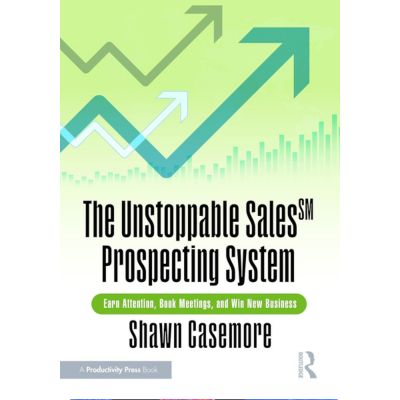
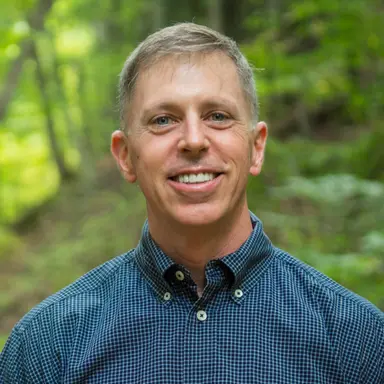
 In this episode of Inside Personal Growth, sales strategist and author Shawn Casemore joins host Greg Voisen to share a modern, human-centered approach to prospecting—one built on attention, trust, and meaningful connection rather than volume and spam.
Why Prospecting Is Still the Most Critical Sales Skill
Research consistently shows that prospecting is the most challenging part of the sales process—but also the most essential. Without a steady pipeline of qualified prospects, even the most skilled sales professionals struggle to close deals.
Shawn explains that while many believe sales is becoming obsolete or fully automated, the opposite is true. What has changed is how buyers gather information. Today’s prospects are already well-researched before they ever speak to a salesperson. This means sales professionals must stop “educating” buyers and instead focus on guiding conversations, asking better questions, and creating value early.
Attention Is the New Currency of Sales
One of the central themes of the conversation is that attention—not persuasion—is now the true currency of sales success.
Shawn emphasizes that blasting more messages through automation doesn’t earn attention—it erodes trust. Buyers are quick to recognize generic outreach, and most sales emails fail because they are:
-
Too long
-
Too self-focused
-
Packed with unnecessary information
Instead, effective prospecting today requires short, relevant, and human communication that speaks directly to the prospect’s priorities.
Cold Calling, Email, and LinkedIn: What Actually Works
Contrary to popular belief, Shawn argues that cold calling is not dead—it’s simply misunderstood. While most calls do go unanswered, calling still creates differentiation because so few salespeople do it well anymore. A thoughtful voicemail paired with a follow-up email or LinkedIn message can dramatically increase response rates.
When it comes to email and LinkedIn outreach, Shawn recommends:
-
Keeping messages short and focused on the recipient
-
Avoiding pitch decks, brochures, and long explanations
-
Leading with relevance and curiosity, not a sales pitch
Sales professionals who succeed on LinkedIn treat it as a relationship-building platform—not a broadcast channel for selling.
The Power of Meaningful Connection and Value Assets
A major takeaway from the episode is the importance of leading with value. Shawn introduces the idea of “value assets”—resources or gestures that are genuinely useful to a prospect.
These can include:
-
Industry insights
-
Practical tools or checklists
-
Personal introductions
-
Creative, human touches that stand out
Rather than asking for something upfront, successful prospecting today is built on giving first, often multiple times, before expecting anything in return.
Why Systems Beat Random Outreach
Another recurring issue in sales is inconsistency. Many salespeople prospect aggressively when business is slow, then stop entirely once deals close. Shawn stresses the importance of building a systematic, repeatable prospecting process—one that continues regardless of workload, holidays, or short-term success.
Simple habits, such as planning daily outreach in advance and committing time consistently, are what separate top performers from those stuck in feast-or-famine cycles.
Where AI Fits—and Where It Doesn’t
The episode also explores the role of AI in modern sales. Shawn sees AI as a powerful support tool, not a replacement for human connection. AI can help with research, organization, and content creation—but trust, empathy, and judgment remain irreplaceable.
Sales professionals who win in the future will be those who combine technology with emotional intelligence, not those who hide behind automation.
Learn More from Shawn Casemore
To go deeper into Shawn’s proven prospecting framework, explore his work and resources below:
-
Book: The Unstoppable Sales Prospecting System: Earn Attention, Book Meetings, and Win New Business
-
Website: shawncasemore.com
-
Instagram: @shawn_casemore
-
Facebook: Unstoppable Sales Machine
-
LinkedIn: Shawn Casemore
-
YouTube: Shawn Casemore Channel
Final Thought
Selling is not disappearing—it’s evolving. As Shawn Casemore makes clear, the future of sales belongs to professionals who focus less on pitching and more on earning attention, building trust, and creating meaningful conversations.
When prospecting becomes intentional, human, and value-driven, results follow naturally.
You may also refer to the transcripts below for the full transcription (not edited) of the interview.
[00:00.5]
Welcome to Inside Personal Growth podcast. Deep dive with us as we unlock the secrets to personal development, empowering you to thrive here. Growth isn't just a goal, it's a journey. Tune in, transform, and take your life to the next level by listening to just one of our podcasts.
[00:20.0]
Well, welcome back to Inside Personal Growth. This is Greg Voisen and the host of Inside Personal Growth. And Shawn Casemore is joining us from Canada. On the other side, he said he's about two hours north of, what's the city? Is it Toronto?
[00:36.0]
Toronto. Okay, so he's out there in the woods somewhere for all of you. And what's the city you're living in, Shawn? It's near Owen Sound, so it's just off the water of Georgia Bay. Okay, so for all of you who know where that is, great. If not, go look it up on Google it and you'll see he probably lives in some of the most beautiful part of the world around.
[00:57.3]
Yeah, that's why he's the smartest guy and that's why he's a good sales, trainer. So we're going to tell our listeners a little bit about Sean. He's a professional speaker, sales trainer, consultant, founder of Casemore & Co.
[01:13.5]
Inc. It's a global consulting firm. He's worked with some of the world's leading organizations, including CN Rail, Tom Hortons, PepsiCo, Bank of Montreal, and over 200 other companies, helping them trust, transform their sales performance.
[01:31.5]
As a keynote speaker, Shawn delivers over three dozen presentations each year at major conferences and sales kickoff meetings. Consistently earning some of the highest satisfaction scores in the industry.
[01:47.4]
His insights have been featured in Forbes, Fast Company, Chief Executive, Industry Week, the Globe and Mail. Sean is a prolific author, as you can see. You can look behind him on the wall there, you'll see that the book we're talking about, the Unstoppable Sales Prospecting System, unfortunately, is the one in the corner, but he has the Unstoppable Sales machine.
[02:13.6]
And Unstoppable. What's the one? Because I can't see. Unstoppable Sales Team is the other one. So we're going to put links to all those in the show notes. So for everybody, please take, a look at the show notes because there's three books that you could get too. Now here's what makes this conversation particularly timely.
[02:34.6]
I said when we started off, studies show that prospecting is consistently rated as the most difficult part of the sales process, yet it's also the most critical. So without a steady stream of qualified prospects, even the most talented salespeople are going to struggle.
[02:53.1]
And in Today's economy, where 30%, 33% of the B2B buyers say they want a, completely rep free experience and prospects are more distracted than ever. The old playbook, as Sean said, simply doesn't work anymore.
[03:11.5]
But Sean, for all of you listening, has cracked the code. Working through thousands of salespeople for over decades, he's developed a systematic approach to prospecting that works in any industry, regardless of what you sell or where you live.
[03:27.8]
And that's what we're going to explore on today's show. So whether you're a seasoned salesperson, it's looking in on the show right now, or you're brand new, someone experiencing sporadic results, who wants more consistently. You're really on the right podcast show today and we're going to give you some great strategies.
[03:49.7]
So Sean, welcome to Inside Personal Growth. I'm thrilled to have you in and to dive into this topic and the unstoppable sales prospecting system. So question for you. Yeah. And I appreciate you taking this time.
[04:07.1]
So Sean, how'd you get into this gig? And why are you writing all these book on sales? And what makes you so passionate about the whole psychology of the sales process? I'll give you the short answer.
[04:22.9]
We'd probably need an hour and a couch to go through the long answer. But I've had a lot of, careers, and if you read my bio, I started at the young age of 11 selling door to door. Essentially it was, I don't know, it was a little bit of an experience back then.
[04:39.3]
So that experience led to me having my second job was working in a grocery store with customers. Some happy, some not. So my early days were dealing with people and you know, I enjoyed it. And so, you know, my career since I'm spanned, project, management, general manager, I've even spent a small period, of time in purchasing.
[05:00.4]
So I've sat on the other side of the table and sales, is what I've, I've loved. So in 2010, I decided to go out of my own. I started initially doing a lot of leadership work because I led teams, you know, large teams, small teams, remote teams, union unionized teams, and ended up doing a lot of work with sales leaders.
[05:19.2]
Love, the work. And decided, you know what, I'm just going to focus on what I'm most passionate about, which is sales and sales teams. So that's where it began, the book writing so the book that is this book here and we were just discussing earlier, unfortunately there was a delay in shipping so the book is now available.
[05:38.2]
But I don't have copies in my hand so I'm going to have those this week, I'm told. But it really began with me writing a book because if you're doing what I do, you speak a lot. Usually everybody has a book. So I thought I better write a book. Then I thought, well, if one book's good, two books is better. So, I wrote a second book, probably a little bit better than the first.
[05:56.4]
And then I met a gentleman several years ago now and he told me he wrote eight books and I thought, well, you know, that definitely sets somebody apart. So I'm now, this is my sixth book that I've published commercially so I haven't self published any.
[06:13.3]
And I've got another two in the hopper, that are out with publishers right now to see if there's interest in it. But all on sales. And it's just, to me it's a way to hopefully reach as many people as possible. I'm very active on LinkedIn. There's a lot of content I share there.
[06:28.9]
I've got a website. But essentially I just want to take these different processes and systems that I have the pleasure of observing, giving recommendations to, but also seeing what people are applying and consolidate that and trying to get it out there to help salespeople because selling is difficult thing.
[06:45.3]
I'll mention you said this earlier. Greg, the, the. For years there's been a saying, you know, the ABCs of sales, right. Always be closing. But for years I've said that's that's false or at least it's misleading because it's abp.
[07:00.4]
I mean you should always be prospecting because if you don't have prospects, there's nothing to close. So prospecting this book in. In the Unstoppable Sales Machine and it talk about prospecting a bit and I talked a little bit about marketing and how marketing and sales work together. Those lines are blurring.
[07:15.5]
But I was told many times there needs to be just a book on prospecting. So that's why I put this book together. Well and it's so needed. I mean prospecting is a, it's a very broad topic. Okay.
[07:32.1]
From you know, people saying, well I go to BNI networking groups to I. These are networking, versus all the way down to orchestrating connections. Right?
[07:48.1]
Because it's really. You say in the opening of the book. Attention is the currency of sales success. And in today's hyper distracted world. Right. I think prospecting has become more connecting with trust than it has.
[08:06.5]
Let's bombard them with more messages to try and get their attention. So what's fundamentally changed about earning and holding the attention compared to when you started selling cars in the 90s? That's the first part. This is a two part question.
[08:22.0]
And second, I want to add to that. How would you advise people listening today to build this, give, give deeper connection with trust in the groups to be able to get more referrals?
[08:38.1]
Because I think the lifeblood of it, prospecting slash referrals slash connecting is really kind of the key. Yeah. Well, I'll start with this. The, the idea of connecting today.
[08:54.3]
I think the key that I always suggest people consider is it's making meaningful connections. And if your mindset is one that, hey, so I want to connect with you, Greg. But there's a different mindset between I want to connect with Greg because he's somebody I could sell to versus I want to connect with Greg and I want to have a meaningful connection.
[09:11.9]
I want to get to understand a little bit about Greg's priorities, what's going on in his life, what he's challenged with so I can better understand if, when and how there may be an opportunity for us to explore. So, so that's step one. The mindset has to be around meaningful connections. But really, what's changed in prospecting today?
[09:29.6]
I mean back, and you'll probably recall this, when I was selling cars, if you wanted to buy a car, there was only one way to do that and it was to go to the dealership to see the car, to see a sales representative to sign the paperwork and potentially to buy that car. Nowadays with cars and everything else, we're all using technology to research what we're doing before we go to buy.
[09:53.1]
And there's a lot of messaging out there about, oh, we don't need salespeople anymore. There's an ad that keeps coming into my social media feed saying, hey, we'll replace your sales team. And that to me, no, that's not it. And I'm not gonna say that. It's a software company. So of course they're saying that buy our software, we'll replace your team.
[10:11.6]
And that's not true. Definitely if it's a transactional sale, there's less need for a salesperson. And that's okay because you want salespeople focused on higher value. But the Prospecting. Today, people are doing their research and, and they're drawing their own conclusions. Right or wrong, they're coming to a conclusion.
[10:28.9]
And so when they do reach out to a salesperson or they do interact, they've already got some ideas of what you're selling, the value it brings, the price, potentially that it might be the time. They kind of have a sense of most things. And unfortunately, many salespeople have been taught to educate, to inform.
[10:45.4]
You know, how many people do you know in sales? They have a slide deck. I mean, almost every salesperson does and they're told to use it, but they're sharing information the other person for the most part already knows. And so unfortunately, we're boring prospect to tears if we're trying to educate them.
[11:00.8]
But the other side of that is if we're not really focused on education and we just think, I just got to connect with people, I got to connect, I got to start to get messages and information out there. We're bombarding them, spamming them essentially the same way everybody else is. I mean, if you or I go into our LinkedIn feed right now under messages, or go into our email junk box, there'll be all sorts of misguided, cold, irrelevant messages that we all receive every day from somebody trying to sell something.
[11:28.1]
And unfortunately it's tainting you and I and everybody else to what a salesperson is. So what we don't want to do in prospecting is focus on just more volume. We don't want to focus on a whole bunch of automation. There is a place and time to use automation, but just bombarding people with irrelevant messages is not it.
[11:46.0]
We've got to come back to making meaningful connections and realize that when we're reaching out to people, they've already got a pretty good clue of what they're going to, to be buying and what we're selling them. So we don't want to just approach them with the typical ho hum, hey, I've got this thing to sell. I think it's going to be great. You're going to love it.
[12:01.4]
It's going to do all this stuff because people can see right through that. They're, they're more, pessimistic, I guess. I would say. So. Sean, you, you don't believe that salespeople today are fighting a losing battle at all? No, not at all. I think they're misinformed.
[12:18.4]
Right, right. But the point is, if we're. One of the statements was made about a rep. Free experience. Right. You Just mentioned everything that's changed since the 90s. I can research it on my phone. I can come in more prepared. I can probably buy the car from Carvana.
[12:36.2]
We have a thing here in, the States, which is, say the car's rolling around in an elevator someplace, and we'll bring it to you, steam them, and we'll put it at your doorstep. Right. In other words, it's all done. The transaction's completely done over the Internet, and it's done and dusted.
[12:54.6]
Now I'll say to my listeners, first experience I ever had. You were a car salesman. I bought a Tesla two years ago. Okay. Model Y. I'd never had an experience like I'd ever had there.
[13:10.4]
Literally, the car was done over. All over the Internet. You just went and picked it up. That was it. Somebody put a red bow on it, said, let's take a picture of you. Looks good. Drive off, you're done. Right? Yeah. So that is eroding. Let's face it.
[13:27.4]
Now you could say, well, customer service. Yeah, they have customer service people. Do they really have salespeople? Yeah, I'd say they're salespeople, kind of. But not like in the olden days when you were selling cars. Not even close. Well, no, the car buying experience is very different.
[13:44.3]
But let me give you a contrasting example, to that. So a close friend of mine is a VP in a multi dealership, organization. They own plenty of dealerships, and he oversees several of them. And I said, what is the biggest challenge you face today with your sales team that are supposed to be selling cars?
[14:02.5]
He said, the biggest challenge I have is they sit at their desk all day. I said, well, why is that? He said, well, you know, trying to. There's no necessarily. There's not necessarily a need for them to walk the lot because not a lot of people trickling in. And when people do come in, they tend to lay down a print off and say, I got this off the web, and here I want.
[14:19.2]
And there's the features, and there's the. But again. So the. The. The salesperson can say, oh, great, right? Win for me. I'll sign it up. And there you go. But, you know, as a proper salesperson, you might want to ask a few questions. Hey, appreciate you putting this together.
[14:34.8]
These are a great car. Can I ask a couple of quick questions of you just before we move ahead? I just want to. Is a good fit, and if positioned correctly, people say, yeah, okay, I got a few minutes. Go ahead. What's your question? And Then it's the questions. The dialogue that you begin to have is where you begin to form trust.
[14:50.6]
Because maybe you believe that's not the best vehicle. Oh, you've got 12 kids and you want to buy a Kia, Maybe it's not the best vehicle for you. Right. So he said, I need to get my salespeople up and moving. I need to get them more comfortable in having a dialogue. They're not challenging anything. They're not. They're just saying, thank you, thank you, thanks for.
[15:08.2]
He says, if that's. If that's how they're going to approach it, I don't need them. What I need are salespeople that focus on building meaningful connections. Because even if you don't change their decision in that circumstance that we're describing, if they have a good experience with you, what are they going to do about that experience? When somebody else says, hey, I got to buy a car, they're going to, they're going to give, they're going to come back, they're going to refer.
[15:27.6]
Right. But I would. I would argue that some of the best companies, the companies today, right now, doing well in car sales, have salespeople. Oh, I'm sure. I. Believe me, I don't disagree with you. I use that analogy because, that's at the opposite end of the spectrum.
[15:48.2]
Right. We've got all spectrums in between. But your book challenges the common belief that cold calling's dead. You actually argue it can be a powerful differentiator. Now, the question is cold calling. Well, am I going to put door hangers on the door?
[16:04.0]
Am I going to go and do, Am I basically going to pick up the phone and pick it up and talk to somebody? Completely cold. What's your response to sales professionals say, nobody answers the phone anymore and why should I bother? And, you know, I don't 100% disagree, but there's a certain percentage that will answer.
[16:27.2]
And the question is, do you have caller ID and do I know who the hell is it's calling? Now? I know every time it's a spam call because they just, like, hit the button and go, bam, I'm done. Yeah. Yeah. So when it comes to calling today, and I think the studies Show Somewhere around 81% of calls go to voicemail if they don't recognize a number.
[16:45.6]
And that you and I could validate that. Most calls, we don't know who that is. We don't answer. But ofttimes, one of the main communication tools in, in, sales Today is still email. It's not the only tool, but it's one of them. But what's also happening, Text.
[17:01.0]
Yeah, but especially you got their number. You now have their cell number. But emails and text messages increasingly are going to a spam folder or they're being blocked. So calling first off, if you happen to answer. Now I've got a chance to build more of a personal connection than a cold email that you probably got three today from my competitors on right where I'm looking the same as everybody else.
[17:22.8]
So it gives me a chance to have a conversation. If you don't answer, it gives me a chance to point to the other channel I'm going to use. Hey, so I said, Greg, you know, sorry I missed you. It's Sean Casemore. I'm calling because we met at the ABC event last week. I was going to send you an email. Don't know if these actually arrive, you know, to where they're supposed to.
[17:40.5]
So I thought I'd leave you a quick message. I'll send that email now. Feel free to give me a call if you prefer, or you can text me, here's my number, you tell me the number. And so you're driving them to look for that other message that you've sent. So the last thing. So aside from you, you could talk to them. You can drive their awareness by using leaving a voicemail.
[17:58.5]
The last thing is likely your competitors are not calling. And the whole key to prospecting today and trying to earn that attention is differentiating yourself from your competition. So what you're saying is that this device, whether you're using it over HubSpot or not, is not dead.
[18:15.2]
Now, I, I don't, I don't disagree with you. I say, though, if whatever list you have, whether you're using HubSpot or in any of it, doesn't matter what it is and it's connected to your phone and you're doing as in the olden days they used to call dialing for dollars.
[18:37.4]
You basically need to do what you're saying. Leave a very friendly message, follow up with whatever it was that you were going to follow up. Hopefully that will jostle them enough that you did. So let's talk about the email side of this.
[18:55.9]
You provide a compelling before and after example with Don Smith email, you said. Yeah. About prefabricating buildings. What's the Singus Bill mistake? Sing us biggest mistake. You see sales professionals making in cold emails.
[19:15.1]
And why does it kill the response rate? Too long. They're Sending much too much information. The emails are too lengthy. You know, if you think about when you don't know somebody, just because I'm reaching out to you, Greg, doesn't mean you want to get to know me.
[19:33.6]
And the longer that email, the better chance A, it's going to go to spam because there could be a trigger word in there and you never see it, or B, you dismiss it because you don't have the time to read it. So emails, if you're going to use them as part of your cold outreach, and I recommend a sequence that I go through in the book, but they should be short, they should be to the point, and they should be focused on the receiver.
[19:52.9]
Okay? Right. Too much information. It's just a waste of time. I, would agree with you. Too much information and overload and people aren't going to read the whole thing anyway and they don't have the time and they want to get to the facts. Right. So that comes to building a relationship.
[20:09.5]
Okay. Sometimes it's more than one call. Maybe it's calls plural. Maybe it's in person meetings. Plural. Financial advisors have to have in person meetings. They have to show up, they have to be trusted, they have to be in integrity. You have this thing called the Prospect Power Planner.
[20:27.3]
It's a cornerstone tool in your system. Can you share why you insist using paper and pen, for this rather than digital tools and what transformed for you? You've seen salespeople, salespeople committed to using your Prospect Power Planner.
[20:47.3]
And then the next question is, I know my listeners are going to want to know, where do they go to get this? Yeah. So the reason I suggest paper to pen and you know, let's be honest, in 15 years, I don't know if there will be paper and pen anymore. But the reason I suggest that is because there's there has been a proven connection between writing something down and you remembering it in your brain.
[21:10.5]
So now I have had teams, in all honesty, that have told me, put this into digital form and I'll type on it. And I'd rather see that than nothing because the main premise of the planner is to have a plan, a plan that you execute on. But by writing it down, what I found repeatedly is you're really committing to what you're putting down.
[21:31.3]
More so than if you were just to type it or just to put a note in your calendar. Right. Reminders are just that. They're not a. I'm not a fan of making a task list on the computer because it's too easy digitally to get buried. If you go to notes right now on most people's computers, there's notes upon notes upon notes that never.
[21:48.1]
They never came back to, they never completed. And CRM systems where they have notes and actions oftimes much the same. So that, that's why. But I. I'll show you what I do. Yeah, sure, yeah, yeah, I can show you. Mine's up. Yeah, there it is.
[22:05.3]
All right. And so these are some company out of the Midwest and it comes with a little packet and you write it down and I will say to you, I totally agree with you. There is a connection between the brain. When you write something with your hand and you check off a box versus you digitally do it on the computer and you check, it doesn't have as much meaning.
[22:28.6]
Actually having a win over here is much greater than having a win on the computer. Yep, I agree and I'm totally with you on that. So, look, every person out there listening today is on LinkedIn or they're using LinkedIn.
[22:48.4]
You can even buy sales nav for LinkedIn. Yeah, my experience with sales nav, I will tell you, was horrendous. I'm, not saying I'm an advocate of it or any, but the reality is it's like, oh my God, no more bombardment.
[23:05.4]
So. But you warn against common mistakes. What's the difference between someone who successfully uses LinkedIn for prospecting versus someone who's just wasting time scrolling LinkedIn posts?
[23:21.5]
And I think so many people get caught in the later. It's like, oh, yeah, scroll down. Or you make a comment xyz almost get sucked into that. No. So if you think about a couple things relative, to LinkedIn, in the B2B sales world, as an example, you've got to realize that people want to communicate on different channels.
[23:42.0]
So if I was to reach out to you, Greg, you might be okay communicating on email, but if I was to reach out to somebody else, they might prefer that I call them and somebody else might prefer to talk on LinkedIn. And what I found over recent years and all the sales teams I've worked with is there are a series of channels that most people are willing to communicate on, but typically they'll only communicate with you or me on one of them.
[24:05.5]
They've got a preference for us as salespeople and our problem is we don't know what that is when we're first reaching out to them. So the sequence I suggest in the book is pick those channels. So maybe I Call first, email second, LinkedIn third, et cetera. So just to, give a picture of the entire system.
[24:21.2]
But from a LinkedIn perspective, if you're going to use LinkedIn number one, you've got to have a profile that's up to date because people are going to look at your profile when you send them a message or connection request. And if it's out of date or it's got you, you know, laying on a beach somewhere, like if it's an unprofessional picture, it's not going to bode well.
[24:40.3]
Right? So that's step one. You've got to have a profile and it's got to be some level of activity on there. I mean, if there's nothing happening on there, you kind of look like the person on Facebook Marketplace that creates the fake profile to go, lowball people on that when they're trying to buy something, right? So you want to have some level of activity, whether you're sharing posts from your company, sharing pictures of whatever clients you at events, whatever it is, there's got to be some activity.
[25:03.6]
So a solid profile gives you the foundation. Then when you're reaching out, what I suggest is again, just like email, short punchy messages. And I'm not a big proponent of creating the perfect outreach script to somebody because the studies I've read suggest that it's like a 2 or 3% improvement if I create the perfect outreach script to you versus I just send you the connection request.
[25:27.4]
You know, either way you're going to connect with me there or you're not. So what I always suggest is as part of that, I reach sales professionals, send a connection request, don't worry about a message, and if they get a connection, it'll always flag you. Hey, Greg, connected with you. Do you want to message him? You click message. You send your brief punchy message, but start out personal.
[25:44.9]
Hey, great to connect with you, Greg. I think we met last week at the ABC event. That's it to start. I don't say, greg, great to meet you. Our company has been around 25 years. You sell this thing, you're going to love it. You need five. I'm going to come by next Tuesday. Like, that's not. But that's what a lot of people, you know, salespeople tend to vomit information. Pardon the, the example, but all over prospects.
[26:05.8]
As if they think more information is what prospects want, when in fact they want less. As we said earlier, they're already researched out. They've got enough information. They don't need more information, they need to understand how you are going to help them. And LinkedIn is a great way to connect. Right. How do you get it from psychologically, from people thinking, well, this person is just trying to sell me something versus this person really cares enough about me to give me something.
[26:34.4]
Right. Give me something of value. I mean, I look at this in orchestrating connection. You know, that orchestration of connection goes beyond you just reaching out. And you use this, what you call value assets.
[26:49.9]
It's really interesting. You explicitly say not to send a brochure, LinkedIn posts or web links. Can you give us three unexpected examples of value assets that have worked brilliantly for clients in different industries that you've counseled?
[27:10.5]
Right. Because, for me, I'm just gonna go back to this. I think you get to a certain age and wisdom. I've been doing marketing and sales most of my life. And look, in the early days in the 90s, like you and I, it was pounded out. You know, I had the gitamer, on here, right.
[27:27.7]
You know, he's been on here a couple of times. And you know, when you look at the, what I want to call techniques, strategies, and it's all talked about in sales and strategies, I like you a lot because you're just saying be real.
[27:44.8]
And I think the strategy is just to be real, be yourself, be authentic, be open, say, hey, look, I make mistakes, I'm a person. This is who I am. But the reality is, what's my reason for wanting to connect with Sean? What is Sean going to bring to me that I will value to spend the time with Sean?
[28:08.8]
And I think that's the key, isn't it? Yeah. So the value assets term is simply the idea that if we lead with value, if we provide things that are of value, which I define as something that is useful to a prospect. So if you're pursuing prospects in a specific industry, you understand them, you've probably got some existing customers or clients, you know a little bit about them.
[28:31.0]
You can always interview existing customers or clients to understand from them what is it that you would find insightful, helpful, useful if you were looking to buy our product or our service today, you know, because they've obviously engaged you at some point.
[28:46.4]
So you can get ideas from existing clients or customers as to what you'd provide. You can even ask prospects. I mean, if you get a meeting, why not take the opportunity? Say, Greg, before I go, one quick question. I sent you some information over the past couple months here, different Resources, tools, et cetera.
[29:01.6]
What. Which one was it that you found most valuable? So there's various ways to validate what is it that your prospects would appreciate. And then as you're reaching out, it's always the give idea. And the old give to get saying has been around forever. I find, as you said earlier, in today's environment, you got to give, give, give, give, give in order to get, because you got to give a lot.
[29:22.3]
So to give you an example, I've got a client that sold capital equipment into a mining sector. So big, like $750,000 pieces of equipment. Big stuff. Yeah. And expensive. Like, not stuff people are buying every day. So, give you an example.
[29:38.9]
He was talking to a client. He got their number, their phone number, and he was asking me, shyamala. I've gone back a few times. He's kind of gone quiet. We were talking about him buying this special, call it a loader. I'm not sure what to share with them now. I've given them some things. I got the initial meeting, but now we're kind of stuck.
[29:54.7]
What should I send? And I said, well, do you have a loader right now you're building? And he said, yeah. I said, go make a sign on a piece of paper, put his name on the sign, stand in front of the loader, get somebody to take your picture and send that to him and say, I'm saving this one for you. Now, that's kind of a funny example, but guess what?
[30:10.6]
It got. It got a response. The guy said, you know what? I'm not ready for that yet. But suddenly he said, the reason I haven't got back to you, we're trying to confirm our budget, blah, blah, blah. So it's. It's about being creative. And so in some of the workshops, I do, I take teams and we sit down and we brainstorm based on all of our knowledge.
[30:28.0]
What are the kinds of things that could be assessments, they could be insights about the industry. It could be some sort of tool that they would use or appreciate. It can be an introduction to somebody else. You think it'd be helpful. There's all sorts of things that can be of value. There's ways to validate.
[30:43.5]
And then you come up with all of these. You create a bunch so that you're not stuck at any one moment as to what to do. You just go to the. The vault of assets, if you will, the value asset bucket, and say, okay, what am I going to try now? Because these others haven't worked. And it Allows you to keep reaching out and giving every time.
[30:59.0]
That's a really good point you make. And I love the example of being creative, I think being curious and creative, asking the right questions, taking that picture in front of the loader and sending it to the guy with a quick little note. And I'm saving this one for you.
[31:15.4]
It's an awesome example of how you ultimately then can win. Yeah, right. You'll win the sale. So, you know, the book emphasizes building a systematic, repeatable prospecting process rather than this random acts of outreach.
[31:32.2]
One of the hardest thing that salespeople fall into is they're not usually in, in smaller businesses, just salespeople. They're also the implementation guy and the customer service guy and all the rest of this stuff.
[31:48.7]
So what happens is that Salesforce or that HubSpot or whatever it is that they're using. Yeah, it stops. Right. Because they got paid a commission to do something and it went beyond that. Even if you're selling a house.
[32:05.4]
I got to help get the escrow closed. Oh. So I stopped prospecting because I'm not a prospecting machine right now. And then you go back and you go, oh my God, I got to fill in the month of December now. So now I got to figure out what to do. And you know, this, what I'm talking about is so true because it's a break in our thing.
[32:24.1]
And you're saying systematic system. You don't want people winging it with their prospecting. There should be that they start to build this unstoppable sales prospecting system. Unstoppable should be highlighted, put in yellow and underlined.
[32:42.9]
Right. And the reality is every salesperson out there, Sean, and you know this, it stops. Yeah, yeah, absolutely, it stops. Commitment. I can give all the reasons. One, I just sold, I made $100,000 commission.
[32:59.2]
Oh, I can sit back now and wait until February before I start prospecting again. Well, and I just, I was doing some, I was working with a team recently and we're doing kind of some one to one coaching after the training. And because of the time of year that we're recording this, it's getting close to the holiday season.
[33:18.2]
So I said, well, talk to me about your activity the next few weeks. And I said this to three different people. It's a team of six, in this case, all VPs. And I said, talk about the activity you've got planned over the next several weeks. It's a. Well, you know, it's hard to get a hold of people. So I'M doing more spending my time planning for next year, you know, and I said that that's, that's wrong.
[33:35.9]
You know, it is during holiday season, so Thanksgiving, end of the, you know, Christmas, New Year's, but depending on what you celebrate, obviously, it is true a lot of people get busy and it is true a lot of people will push things off, but it's also true there's a percent of people that have more time available and they're willing to have a conversation with you.
[33:54.4]
So I say, you know, when it, when it comes to this time of year, you need to actually ramp up your activity to try and reach those people. But also know the people you don't reach, guess what's going to happen in January. They're going to come back and say, oh, you know what, sorry, I missed you last year. You would love to connect this year.
[34:09.4]
So it's got to be time that is committed in your calendar on a daily basis. And somebody said to me recently, well, Sean, you wouldn't understand. You're not selling. And I, I said, what are you talking about? Like every day of my life I'm sell home. I think if I don't sell another talk at a conference or a training, we don't eat.
[34:26.7]
And the bank doesn't like when I call and say, hey, sorry, I don't have any money for you this meal. Right? So, but, but I said, look at me. If I'm going to go do a training program for a day and I've got to travel there, my day might start 5am and I might not be done till 5 or 6. But guess what? I created this little habit that I call it 15 minutes to fame.
[34:45.8]
And what it is at the end of every day, I plan out who are the five people I'm going to reach out to tomorrow. I write down their name, I write down their phone number, write down their email. Remember the handwriting thing. And when I open my book the next day, guess what's top of the book? So that's the first thing I do. Because you can always, at least if you know the person, send a few emails.
[35:03.1]
If you don't know them, you can make a call during the day. So being prepared. And so that's a simple example not of the book, but of, what are those routine habits I can create so that I keep going with my prospecting? Because as you said, we all get stopped. And sometimes it's for good reason.
[35:19.8]
Take a vacation. I tell people double down before vacation so things are still Even when you come back from vacation. But you've got to keep going and you've got to block that time in your calendar to keep the prospecting momentum going. It's critical to long term success. I think one of the things that I used.
[35:36.6]
And I'll just throw this out there and then I have a really important question for you about the future of sales processing with AI. I used to drive around in my car a lot and I had a cell phone in the car before they were cell phones.
[35:52.8]
I hate to admit that this, it was almost like a two way radio. It went from my car to another, the big phone of the huge. Right. It actually was like one of the old dial phones. Right. But it had push buttons. Right? Yeah. And during that time I started this idea, that I would use intuitive sales prospecting.
[36:16.9]
So I went into it, I would kind of sit there in a part of a stupor part of the time and I think of three or four names of people that I intuitively, it just came to mind I should call. Right. A lot of times I would get voicemail just like you said.
[36:32.2]
But I would say, hey, this is Greg, I'm just calling in to check in on you. I sent you that proposal a week ago. I just wanted to see how you were doing, blah, blah, blah, blah, blah, that kind of thing. And I did that more and more and more. And what I did is that intuitive prospecting led to people going, oh, you know, I was thinking about you.
[36:50.5]
It wasn't all the time, it wasn't 90% of the time. It was probably more like 40% of the time. But the reality was, I used my time effectively in the car. That's what I'm trying to say. You said I'm traveling somewhere, I get up at five, I'm there until five.
[37:07.6]
I said great. If there was a lunch break, I took a few minutes to make a couple of calls and leave some messages. That was my point to this story. So looking ahead at the future with AI and automation becoming really more prevalent, what do you see as an irreplaceable human element in this?
[37:26.5]
Regardless of someone who's selling or who's trying, or is selling or heard they're selling to. Right? Because we see these workforce automations and I'm going to call them, you're, you're, you're designing templates.
[37:45.9]
You know, if A, then B, then C, then D. You know, the reality is there's tons of them out there now for prospecting. And I have Some clients who initiated some of these, where AI answers the phone at the business and I will say if it's not done properly, you're gonna f u c k yourself up with 80% of your prospects.
[38:13.1]
Yeah, well, and I think it's and I'll probably get some people writing me that sell AI, AI software. I think what we're seeing right now, it's a trend. I mean AI is not going anywhere and it's going to continue to develop and evolve and hands down we've seen a big swing this year to everybody wants to get on board.
[38:32.2]
You know, it's going to change the world and it will, I think long term it's like the Internet. I mean the Internet was going to change the world and it has, but it's emerged slowly, it's evolved over time and I think we're going to see the same thing here. But what I suggest is that AI is the tool. So anytime I tell sales teams, anytime you were going onto Google in the past or onto the web at all for anything, you can use AI for that and it can sort, it can research, it can summarize if you want to create a value asset that's a, you know, some best practices, 10 best practices of my customers in 2025.
[39:06.2]
Type it in word doc, ugly, upload it to chatgpt or claudette, AI or grok or whatever and say make this pretty and it will, and within seconds. So it's a great resource. And so what I think you will see happen over time, as we said earlier, the transactional sales, which are typically not always lower value stuff, I do think it's going to be, continue to be automated, but I think that's going to elevate salespeople to be more value, add focus.
[39:32.9]
And those will be successful are those that will be able to use the tools around them, such as AI to help them be more productive, to reach more people, to have more conversations, to add more value. That's the benefit that AI brings and that's, that's, that's the shift we're seeing today already.
[39:49.7]
Well, Sean, you're truly a very well, versed person on all of these areas. And I think for all of my listeners who are listening to, you know, they've gotten a lot out of this, dialogue that we've had in the podcast regarding your new book.
[40:05.8]
The book is out there. We put a link below here, for you to get it off of Amazon. It's the unstoppable sales prospecting system that is not the third book in his sequence because you can see by his shelf there's been more.
[40:22.3]
But if you go to Amazon and you type in his name, S H A W N C A S E O R E, you'll do it. You'll see it below. We'll have a link to his website as well. So in wrapping this up, Sean, I have this question for you.
[40:37.6]
If you would give a piece of advice to a salesperson, whether junior or senior, who's frustrated because they're not getting enough qualified prospects in the pipeline. Okay, what would, what would that be?
[40:54.4]
Well, in all honesty, it would probably depend on a lot of things. But generally speaking, if you go back to the, Exactly what we said earlier, Greg, if your focus becomes making meaningful connections, stop worrying about selling, stop worrying about pitching, stop worrying about the pitch decks and all that stuff.
[41:12.0]
Just attempt to make meaningful connections with people who could buy from you. Because you want to be talking to the right people, but on a daily and weekly basis. I think you'll find that is the fundamental step to being able to sell. And you even in some of the coaching I, mentioned I had done, right?
[41:28.9]
I'm like, let's just get you talking to the right people. Don't worry. Don't stress yourself over trying to sell them something. Right? They know you're in sales, and if they're willing to meet with you, they know there's some sort of interest there. We're not sure what it is, but just have those meaningful conversations.
[41:44.1]
And so what I found in the past is those that are senior that have kind of fallen off and got a little bit frustrated, they're stuck in the loop of their existing clients or their existing customers having a hard time breaking out of that. We'll go back to having meaningful conversations. And if it's dealing with somebody who's much younger, therefore their interests are less.
[42:01.3]
Just think about when you're dealing with your grandchildren or your children who are younger, you're able to have those conversations. If it's somebody that's new that's struggling to get started, go back to your network who are people that, you know that either work in the industry you're selling to, or at least know somebody, or might know somebody.
[42:18.2]
My first piece of business came from my cousin's husband, back in 2010, which, you know, he's. He is. Works in a shop as a welder. And it was kind of on the bottom of my list of people in my network to call. But it was like Wiscon, call him. Here's what I'm doing.
[42:33.6]
Do you know somebody? He's like, you know, my boss can maybe use your help. And it was the first client I ever had. So having meaningful conversations with anybody can lead to opportunities. But if you're not having those conversations and you're hiding behind sending a bunch of emails, sending a bunch of cold messages on LinkedIn that, you know that, that's, that's a point as part of your process.
[42:51.3]
But just really focus on having those discussions and I think you'll feel better because, you know, communication as we know helps, us all feel better. We're, we're built that way. But that'll be the starting point to being able to develop opportunities. Well, Sean, if they go to Sean casemore.com and they want to leave you a message, they certainly can through the connection.
[43:12.7]
If they want to hire you to speak or if they want to hire you to do online training or to do in person training, you're available, correct? If they want to buy a case of books because they want to give it to every salesperson on the team and you want to do a little webinar with Sean, I'd really highly encourage that because this book has a lot of knowledge from years and years of background of being in the sales coaching, arena.
[43:41.4]
And Sean is a very highly respected coach. These are Rutledge Press books, that he's got. And it isn't like a self published book. This is a very high qualified publisher. So I just want to let everybody know, look, when it comes to sales, there's a lot of books you can read.
[44:02.0]
You know, the whole thing about Daniel, Goldman and emotionally intelligent and being more emotionally intelligent. Everything we're talking here is around your degree of attention and emotional intelligence and how you read a prospect, but then how you cultivate a prospect and how you move a prospect through a pipeline.
[44:24.9]
This is what Sean is really a master at. Until that prospect not only purchases from you, but then gives you referrals that are actually better than that prospect was, those are the biggest wins that you could have.
[44:40.0]
So Sean, pleasure having you on the show. Any last words for the listeners? No, I just, I appreciate the time, the opportunity to connect and yeah, I think that, I wrote this book with sales professionals in mind. This is not a theoretical book at all. It's step by step, tips, resources.
[44:57.6]
So I, think anybody that's in sales would enjoy it. And please reach out to Sean and again, look to the links below in our show notes for connections to not only Amazon for the book and his other books, but also to his website so that you can reach out to him.
[45:13.4]
Have a happy holiday season, Sean. Really appreciate you being on Inside Personal Growth, sharing your wisdom as a sales coach, an advocate for salespeople. We know salespeople aren't going anywhere, they're just going to morph. And Sean's going to show you how you have to morph to actually stay relevant in today's world of selling.
[45:35.3]
So Sean's your man. Go check him out. Thanks so much, Sean. Thanks, Greg. Thank you for listening to this podcast on Inside Personal Growth. We appreciate your support. And for more information about new podcasts, please go to inside personal growth.com or any of your favorite channels to listen to our podcast.
[45:55.5]
Thanks again and have a wonderful day.
Sign up to receive email updates
Enter your name and email address below and I'll send you periodic updates about the podcast.








Leave a Reply