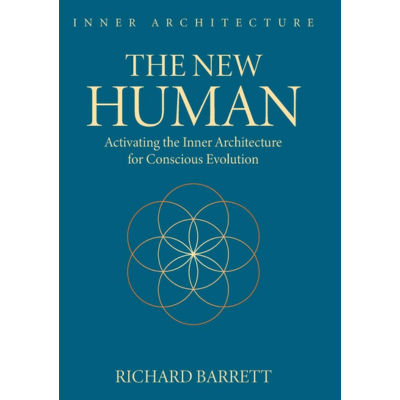
Podcast 1282: The New Human: Activating the Inner Architecture for Conscious Evolution by Richard Barrett

In this deeply reflective episode of Inside Personal Growth, host Greg Voisen welcomes back a longtime voice in the field of human consciousness—Richard Barrett, founder of the Barrett Academy and author of The New Human: Activating the Inner Architecture for Conscious Evolution.

This conversation is not about fixing what is broken.
It is about remembering what was never lost.

For more than three decades, Richard Barrett has explored values-based leadership, emotional integration, and the evolution of human consciousness. In this episode, he invites listeners into a radically compassionate reframing of personal growth—one rooted in self-recognition rather than self-improvement.

From Self-Help to Self-Recognition

One of the most powerful ideas Richard shares is the distinction between self-help and self-recognition. Traditional personal growth often implies that something is wrong with us. Richard challenges this assumption at its core.

He explains that we arrive in the world whole and unconditioned. Over time, family expectations, cultural norms, and fear-based beliefs begin to cover our true essence. What we call “personal growth” is not about becoming better—it is about uncovering who we already are.

Growth, in this sense, is not forward.
It is inward.

The Seven Stages of Psychological Development

Richard revisits his well-known framework, the seven stages of psychological development, which has been applied in more than 80 countries. However, he emphasizes that growth does not happen in a straight line.

Human development is spiral-based, not linear.

Life events—job loss, illness, relationship challenges, or identity shifts—can pull us back into earlier stages such as survival or security. The difference is that we revisit these stages with greater awareness, compassion, and capacity for integration.

This reframing allows listeners to see setbacks not as failures, but as invitations to heal old patterns from a higher level of consciousness.

Emotions as the Doorway to Awakening

A central theme of the episode is Richard’s assertion that emotions are not obstacles to spiritual growth—they are the doorway.

Rather than bypassing emotions in pursuit of transcendence, Richard encourages presence with feelings. Anger often points to unmet needs. Fear signals misalignment. Joy reveals coherence between ego and soul.

By staying present with emotions—rather than suppressing or escaping them—we begin the work of integration. This, Richard explains, is how we feel our way to enlightenment.

Safety, Conditioning, and the Nervous System

Richard also emphasizes the importance of safety as the foundation of transformation. Before awakening can occur, the nervous system must feel safe enough to remain present.

He explains that trauma is not only created by dramatic life events. Subtle conditioning—being told to be quiet, unseen, or emotionally restrained—can shape belief systems that persist well into adulthood. These patterns influence relationships, leadership, and self-worth.

Awakening requires compassion for these imprints, not judgment.

Integration and Authentic Living

Richard describes three forms of integration essential to conscious living:

  • Vertical integration: alignment of body, mind, heart, and soul

  • Horizontal integration: living the same values at work, at home, and in relationships

  • Temporal integration: reconciling past experiences with present awareness

When these dimensions align, authenticity emerges naturally. We stop performing different versions of ourselves and begin living from coherence.

Frequency, Presence, and the One Mind

As the conversation deepens, Richard introduces the idea of frequency—the energetic quality we bring into every interaction.

Love, compassion, and presence operate at a different frequency than fear or performance. Richard describes humanity as expressions of a shared consciousness—what he calls the One Mind. Awakening, then, is the remembering that we are not separate, but interconnected.

At this stage of life, Richard reflects that his work has become simpler: to live in presence, embody peace, and model what is possible when fear no longer drives identity.

A Homecoming, Not a Destination

Richard describes this journey as a homecoming—a return to authenticity rather than a destination to be reached.

When individuals do this inner work—examining beliefs, integrating emotions, and living in alignment—they contribute not only to their own well-being, but to the evolution of human consciousness itself.

Learn More About Richard Barrett

You may also refer to the transcripts below for the full transcription (not edited) of the interview.

[00:00.5]
Welcome to Inside Personal Growth Podcast Deep dive with us as we unlock the secrets to personal development, empowering you to thrive here. Growth isn't just a goal, it's a journey. Tune in, transform, and take your life to the next level by listening to just one of our podcasts.

[00:20.0]
Well, ladies and gentlemen, welcome back to Inside Personal Growth. Joining us from Italy. And I forget exactly where are you now? No, no, no, Italy. Where? In London. You're in London. Okay. Yeah, for the winter.

[00:36.3]
But you still have a house in Italy, right? Oh, yeah, for the summer. For five months in the summer, yeah, but not the winter. It's cold. It's colder than London. And, it's very quiet. And we like to be in a little warm, cozy flat in London in the winter, with access to all of the wonderful things that happen inland.

[00:58.5]
Well, London is wonderful. I just, finished Tiffany Glasgow, who used, who took over Sir John Whitmore's, just put me through a pro bono. They didn't charge me, coaching course that I sat into. And I'm sure you remember John Whitmore.

[01:17.7]
Right. John and I were good friends. And I also know Tiffany, but I haven't seen her in a long time. You did send her. I've seen her on LinkedIn, et cetera. And, I know exactly where she lives because I went to her house probably 30 years ago, or maybe she moved, I don't know.

[01:36.6]
At, any rate, she said to me, oh, the interview was so good, I want you to go through the course. And I was like, oh, man, do I have time. And it was a long course, but it was well worth it. But I want to let our listeners know a little bit about you.

[01:51.7]
Richard. He's the guest on our show today. He's been on three other times in 2016. One of them was podcast 583, a new psychology of human well being.

[02:07.9]
592, the metrics of human consciousness in 597, a values driven organization unleashing human potential. Now, I've said all the books, but let me tell you what. Richard's the founder of Baird Academy for Achievement of Human Values, an organization that's been devoted to exploring the evolution of consciousness and helping individuals, leaders and societies live and lead through values.

[02:34.7]
For over three decades, he's pioneered work, it's probably more than that now, in values based leadership and cultural transformation. He works with CEOs, coaches, communities, line, personal growth, and collective evolution.

[02:49.9]
The seven stages of psychological development model has been applied over 80 countries and now in his new book, the New Human, Richard takes the exploration to even a deeper level, offering not just a framework for growth, but living map for remembering who we truly are beneath the layers of conditioning.

[03:11.4]
His books about integration of body, mind, heart and soul and an invitation to embody our next stage of human evolution. Where you can learn about his work is the barrettacademy.com, which there's a link in the show. Notes below explore his master classes at Barrett Academy, masterclasses, elearning, and even see another side of his creativity through his artwork@soulinspiredpainter.com so there's where you can see Richard and learn more about him.

[03:43.7]
And for all my listeners, we're going to be talking about the new human book and so it's really an interesting book. How come after 15, Richard, you chose to do another one right now?

[03:59.9]
And why now offer some little additions? In the last six months or so I've shift my emphasis to my substack post. I'm posting every day, at the Evolutionary Journal.

[04:17.5]
And I'm getting a lot of joy out of that and getting a lot of people interested in what I'm writing about. So. So we should give them the substack link as well, which he'll dot com.

[04:33.5]
Yeah, that's what it is. Merit, values dot substack dot com will make sure that we get that link from you. Substack is a wonderful, we see Guy Kawasaki, one of our guys who's regular on the show.

[04:48.6]
He there. A lot of people have used substack very positively and I'm glad you're doing that because you're going to get more from it. But you know, you opened the book with this powerful dedication for the ones who never fit the old maps. What inspired you really to write specifically for those who feel like they don't belong in the old paradigm?

[05:12.0]
Because I think there's millions of us out there and the reality is we're seeing an evolution of consciousness. And you've been speaking about this for years, so you can best address that.

[05:25.6]
Let me give you a little, not a little background, a big background. You know, it was over a hundred years ago that scientists discovered that the world is a huge energy field. And we're all energy, basically, everything's energy.

[05:43.8]
And it's never been fully integrated into our work on transformation, on personal growth and development. And that leads me into another concept part of that energy field, or the energy field, I call that the one mind, some people call it God, but the one mind is not hierarchical, but we're all aspects of the one mind energetically.

[06:12.2]
And so this perspective requires a different language. So yes, values are important and I spent a lot of time promoting values all over the world 30 years ago. Nobody was talking about values.

[06:28.3]
And then I invented a way of measuring values. But anyhow, we got a new language and the language of energy. And it's like, what do you resonate with? Do you have coherence in your team? These are different words.

[06:47.8]
I'm really embarking on a whole new language for what we've been used to call transformation, personal growth, leadership development. So that's the background to this, book called the New Human.

[07:04.3]
And in fact there are many other books in this series. Yeah. So people can check it out. It's a Lulu book. It's also at Amazon. We'll have the link below in Amazon for people to buy your book. We'll also have the Lulu link as well. But you know, you describe it as not a self help book and you know, that's good.

[07:24.7]
And it's but more of self recognition book. And I think that's an awakening that we're trying to see within people. Can you explain what you mean by the distinction? And really, you know, why does it matter? Because I think, you know, like I've been doing personal growth.

[07:43.7]
This show is called Inside Person Growth, podcast now for 19 years. And it's always interesting, this distinction. You know, you'll see people categorize their book under self help. You'll see that as one of the categories.

[07:59.5]
Right. And you call it self recognition. I would call it as much as an awakening, awakening to a new level of consciousness. So explain if you would. I will. Yeah. So in the beginning, in the beginning when you were born, you know, you came into this world as a soul, without any conditioning or, maybe a bit of a remember on these things, maybe from previous lives, if you believe in that.

[08:35.5]
But anyhow, and during the first 20 years of our life, we really get conditioned and the essence of who you are gets covered over, because you want to fit in, and you want to perform.

[08:51.6]
And so you deny who you are at the deepest level of your being. And so this is why the words personal growth, you're not actually growing, you're uncovering, uncovering who you really are.

[09:12.8]
For the rest of your life, after 20, you've got parental conditioning, you've got cultural conditioning, and then the rest of your life is like, that's the personal growth part is uncovering all of that conditioning which is fear based beliefs and letting them go so you can get back to who you really are.

[09:32.7]
So this is why I think it's quite revolutionary to think of the fact that actually under all of this conditioning there's perfection. And we try to, we hide our perfection because we want to fit into our community, we want to be acknowledged, we want to be seen.

[09:55.5]
There are so many things that we think we need which cause us not to be authentic. And that's the point. We are not our authentic self and personal growth leads to authenticity. But actually if we could just remember who we are, we'd be authentic right away.

[10:15.7]
Well, you give great tools. The one that you've always given is the seven stages of psychological development from surviving to transcendence. And I remember I listened to one of the podcasts and you talked about Maslow and how you borrowed originally Maslow's hierarchy of needs and changed it into kind of the program you've got.

[10:38.1]
But you emphasize that there aren't linear steps that we graduate from a spiral, but we return again and again. Could you help my listeners understand what it means to spiral through these stages rather than climb like a ladder through these stages?

[10:57.9]
Because I do believe that there can be, depending on the experiences in your life, monumental jumps and instantaneous transformation. For a long time I had that linear idea, particularly when I developed the model, the seven levels of consciousness, seven stages of psychological development.

[11:20.5]
And then I realized in more recent years that actually at particular moment in time where you moved, say to the fourth level, the transformation level, the individuation level. And then suddenly you lose your job or you become bankrupt and you go down to survival level.

[11:42.2]
And over the next few years in order to move on, you have to revisit these survival thoughts. But you're doing it from a higher level of consciousness. So, and it, so the spiral is like you're revisiting these key issues, these maladaptive shama as they are sometimes called, that we all have, everybody has them.

[12:04.7]
But you revisit them from a higher level of consciousness and then you begin to resolve them in this slightly different way. And that's why it's a sparrow, because you know, it's really if you've got, if you've got an issue, I'm not loved enough, you know, and you learn that in the first five years of your life because your parents were always absent, et cetera, Et cetera becomes a belief.

[12:30.3]
And it's really difficult to eliminate that belief or negative belief. However, as you get older and you move through the different stages of consciousness, that belief will come up and then you will see, I can actually now tackle that belief from a different level of consciousness and I can, I can explain it differently.

[12:51.3]
And that's what I mean by the spiral, because you're constantly revisiting these old patterns and beliefs, but you're revisiting them from a higher level of consciousness. That is beautiful way to put it. And I think if people can see that.

[13:08.0]
I, as you know, got a master's degree in spiritual psychology and we used to talk about MSU making stuff up. And I believe frequently we've made these stories up, then we begin to believe these stories, then we begin to live these stories out.

[13:26.1]
And the reality is that isn't usually who you are now. In, in your previous work you talk about feeling your way to enlightenment. And throughout the book you make a claim that emotions aren't obstacles to spiritual growth, they're the doorway.

[13:45.1]
And I would 100% agree with you. But it's being able to get in touch with those emotions because we try and push them away. We don't want to feel that. So this challenges a lot of traditional spiritual teaching. What made you realize that we can bypass our emotions on the path to awakening?

[14:07.4]
No, we don't bypass our emotions. Emotions, are, instantaneous. They're embodied and then comes the feeling. And the feeling that comes with the emotion is also conditioned by your beliefs.

[14:24.9]
So the emotion is also conditioned by your leave. But the feeling gives you, a way of looking at what just happened, that emotion and examining it. Now how do, why, why focus on feelings?

[14:41.8]
Because the very core of, our being, we have what I call ego soul dynamics. And I talked about that in one of my previous podcasts with you. The second one you mentioned. And Ego Soul Dynamic is about how to master the fears of the ego and how the fears of the ego are blocking the love of yourself.

[15:06.0]
Not just the love for others, but the love for yourself. And so, ego Soul Dynamic, you can examine that when you examine your feelings. So, I'm having this feeling right now. I'm. That I know, I'm upset.

[15:22.0]
But why am I upset? What is actual feeling? What is it? What is this feeling telling me about? My lack of, My lack of alignment between my ego and myself. Oh, what is this feeling telling me about? My, my excellent Alignment, you know, because I'm feeling joyful right now.

[15:39.4]
And so feelings allow us to dig deep into the excellent of who we are. The interplay between love and fear, the fears of the ego and the love of the soul. And so we can actually by.

[15:56.7]
We can actually feel our way to enlightenment. You know, it's interesting you speak about this in this manner. Over the years, I've met hundreds of wonderful authors. And one of them is Dr. Steve Beerman. And one of his books is called Healing Beyond Pills and Potions.

[16:14.4]
And he works with, Andrew Weil. They're on the Noetic Medicine Institute. And I go to Steve. He has now become my hypnotherapist. And the thing about my subconscious that I really realized is how I programmed that subconscious.

[16:30.0]
Then to reprogram or at least reinsert new information into that subconscious has really awakened me beyond almost anything. I give him tremendous credit for working with me and also for me getting to what you call.

[16:49.1]
And in your case, you write that the soul doesn't emerge through performance. I was always conditioned because my previous life was around being a producer, a big producer. Now, I don't believe that's all left me, but I believe it has modulated, right?

[17:10.1]
And so it emerges through presence. And you said right at the beginning, I'm not in a hurry. My only thing here is to be present with you. And the present begins with a feeling. So for someone who's been numbing their emotions for years, which is a lot of people, through alcohol, through drugs, through other things, what's the first step to reconditioning or reconnecting, I should say, with their feelings.

[17:40.1]
You mention the word present. And so, you can't get in touch with your feelings if you're not present to them and you welcome them. And so you say, and you become furious. Oh, so, this is what, you know, I say to myself, oh, Richard, I noticed that you're feeling angry at the moment.

[17:59.3]
That's interesting. What is the source of that anger? What is the lack of alignment between your ego and soul that's causing you to feel this anger? What needs have you that are not being met? Because that's what anger is. It's unmet needs. And so now I examine that.

[18:18.1]
But I can only examine it by being present to it. And the moment I'm present to it, it begins to disappear. It's that when you push it away, it refuses to go because it'll keep coming back. And so the more you become present with these emotions that you don't like.

[18:39.2]
The more you. Sorry about that, the phone. Because the more you're present with these emotions that you don't like, the more quickly they go away. I mean, Carl Jung used to talk about the shadow. And I also talk about shadow these days. I don't know about the shadow of nations, but if you can't integrate the shadow, you can't become whole.

[19:08.6]
If you can't integrate the shadow, you can't become whole. And the shadow are these unrecognized

[19:18.4]
limiting beliefs that you love which stop you from being authentic. I don't have enough, I'm not loved enough, I'm not enough. And we learn these during our childhood.

[19:35.0]
And so, we need to integrate all of that limited those limiting beliefs if we want to become whole and to become authentic. Well, that's one of the things.

[19:51.6]
Yeah. One of the things that you bring up in the book is you have a, chapter on structural integrity. You say it begins with before we can awaken. Before I can awaken, you must feel safe enough to stay.

[20:09.3]
Now I totally understand what that means. This puts the nervous system, regulation and safety at the foundation of spiritual work. In other words, it's saying, okay, I have to recognize this feeling. I can't just keep pushing it off. I have to go into the feeling.

[20:26.7]
I have to understand the feeling where it comes from. Which is what you just said. So why do so many spiritual traditions overlook this? And what happens when we try to transcend without first establishing that safety?

[20:46.7]
Well, I don't know why they look at, And the only answer I can think of is fear, of going into dark places. You know, spiritual people love the light and they don't like to go into the dark.

[21:02.5]
But the truth is the way to the light is through the dark. You can't, there's no other way to get there. Yeah, but let's say people, Richard, aren't going to take a, dose of ayahuasca to find themselves through that. Right. And a lot of people do and a lot of people don't.

[21:19.1]
But for people to do this without altering the state of consciousness requires them to be very present with the feelings. Right. Literally. It's not easy. I'm not saying it is easy at all.

[21:35.2]
However, in a more recent book that I, written, it's called Nothing. On this book called Nothing, the byline is the way to everything.

[21:53.8]
So we have problems because we think we are something. We think we have a role, we think we need this, we think we need that. But by saying I am nothing, you actually become, part of the one mind.

[22:12.8]
Because you let go of all of this, all the roles that make you think. You have deeds. One of the ways I practice that, for many years now is today I have no thought, I have no belief, I have no agenda.

[22:29.8]
And I would go into meetings like that. And what I realized recently is that that is simply saying I am not going to influence this from a position of need.

[22:47.7]
And if my role, if I identify, with a role, I will have needs. And I found that really works for me. I have no thought, I have no belief, and I have no agenda. And it's the same when I, you know, in personal relationships too.

[23:03.5]
And so all I'm doing is I'm identifying with the one mind. And the one mind is an amazing creative intelligence. Well, it's the separation from that, the duality.

[23:21.0]
You know, we, we have this sense of, well, it, I don't even, just identify it as ego, but let's just say it's separating us from the one thinking that we are the One. When we are.

[23:38.3]
I believe God is with, inside of all of us. Okay. And so whatever you want to call it, God, spiritual one, the oneness, it doesn't matter. And the reality is that many of us, and I think we have these patterns that have been, etched in.

[24:00.2]
And let's say there's listeners out there, who are thinking, well, I didn't have any trauma, my childhood was fine. What would you say about how these subtle patterns of misattunement can shape our nervous system and spiritual capacity?

[24:20.3]
Because I believe it's this way. It's like a small little etching. And as people say, it gets deeper and deeper and deeper and the rut gets bigger and bigger and bigger and it becomes harder and harder and harder to get out of, you know, so trauma, can be associated with big events.

[24:41.9]
Like my father died when I was five. That's not true. But actually my father died when I was 17. But there are events that we call traumatic. But actually I'm not talking about that type of trauma, which is obviously impact, and we need to get over it.

[25:01.5]
But, when for example, I'm five years old and I learn you have to be quiet, I don't have that. You know, in a family situation, it's not grammar I learned, but it's a repeated conditioning that leads me to believe that my voice is not wanted.

[25:24.9]
And that can be in a relationship. Or it can be in. In the workplace. I remember that, so it's these limiting beliefs. I remember that, I got to maybe 60 years old and I still had that belief that I wasn't loved by my significant female other.

[25:50.9]
And that went right to the early childhood. And I realized that I had to, So I wasn't traumatic, but it was so deeply ached, as you put it, that it was affecting my marriage. And when you believe that, well, obviously your marriage is going to fill.

[26:09.5]
And that's exactly what happened. So after that, I really worked on that belief, and I'm loved by my significant female other. And now I am loved. Congratulations on that awareness. I've been married 47 years, and there are times I've thought the same thing.

[26:29.4]
But when I go back and I look at the, I go back and look at my mother. Okay, look, we all had a mother and a father. My mother wasn't extremely demonstrative. She was loving, but she wasn't demonstrative.

[26:45.0]
In other words, you didn't get a ton of affection. And so what happens to us is we get conditioned to think. Well, my mother was more about performance. She was a little Jewish mother. She always wanted to know, what did you do today?

[27:01.3]
You know, what did you accomplish today? That kind of thing. And was driven by that. And God rest her soul. The point is, is that I've had. I had years of those conditions like you. And one day you awaken and you go, that's not true.

[27:16.4]
That was a story I made up that I was living. What we just said was, takes me back to the right, to the very beginning. And it's like remembering who we were before we developed that lack of authenticity, who we were before we developed that belief that we weren't loved enough.

[27:38.0]
Okay. So personal growth, in a way, looking at that, but in another way, it's like remembering who was I before all of that. Right, right. Which actually does come in line with.

[27:53.8]
You said, you know, you write that self abandonment is the price we pay for conditional belonging. Right. So what does it actually feel like in the body when we're abandoning ourselves?

[28:10.7]
And how can we start to notice that pattern? Because you mentioned anger. I would say anger as well. I had anger in the relationship as a result of the, my conditioning.

[28:26.7]
Right, because you said your needs weren't being met. Well, so whatever need that is, if it's sexual need or it's affection or, like I just said, my mother wasn't demonstrative. It's those kinds of needs that you're talking about.

[28:43.1]
Indeed. And then there's always the other person who is your relationship or significant other or whoever you're with, who has their own conditioning. Right. And that's why, you know, that's why being in a partnership or a relationship is so wonderful in the sense of being able to learn as long as you can remain calm when things get tough.

[29:09.5]
And also as long as you can examine your own beliefs within the relationship and talk about your feelings, your feelings are not who you are, it's the feelings are part, of the conditioning. And so it's like with my wife, who's a psychologist, she's no longer practicing, although she does a lot of mentoring.

[29:33.6]
We own up to our feelings all the time. And we'll say, you know, right now I'm feeling angry. I need you to know that. So instead of being angry, right now I'm feeling angry. And so then I can say, well, there must be a need that has not been met.

[29:55.2]
And have you thought about what that might be and how I might be able to satisfy that need? Well, I'm absolutely willing to satisfy that need if you can identify what it is. Sometimes we don't know why we're angry. It's difficult to. But it's these conversations, I call them courageous conversations, that are so important in relationships and not just with your partner, but also in the workplace too.

[30:19.1]
And we certainly don't have those conversations in the workplace. No, no, not at all. And so look, you started this off around the oneness, the wholeness, the integration. And all of this is about coming back to this oneness, this wholeness and integration.

[30:39.9]
And you emphasize that integration, bringing together these fragmented parts of ourself, which we just talked about, is the key to this wholeness. Now I don't think people are going to take their fingers and go, oh, and they're going to get there.

[30:55.0]
They have to work at this. So you describe three types. Vertical, horizontal and temporal integration. Can you give us a practical example of what one of those looks like in everyday life? Sure. You see, we have a body and the body is actually energetic.

[31:18.8]
And so, you know, you talked about anger and you actually the anger is in the energy field and the body is in the energy field. And so the anger actually affects the energy field and will actually, affect your well being.

[31:34.1]
So now we're talking about the physical, emotional, mental and spiritual. So this is the vertical dimension of being in alignment. So are my thoughts and my mental thoughts and in alignment with my spiritual Thoughts, are they in alignment with what, where, where my body is right now?

[31:59.6]
Do I embody love at the moment or do I embodying anger? I am actually trying to be loving in this situation because I want people to like me, but I can't. So that's a vertical alignment.

[32:16.4]
Now in a horizontal alignment, I, often say to people, well, you know, what are the values you take to work? And what are the values you live at home? What values do you live at work? What values you live at home?

[32:32.7]
And very often they're very different. And even sometimes the beliefs are different and that's the horizontal dimension. So in order to become whole, you have to become authentic. And being authentic means being authentic in every situation that you find yourself in.

[32:49.5]
So you treat your children or, you behave with your children the same way that you behave with your colleague. Not that you treat them like children, but you become a role model for authenticity. And so wherever you are, you bring those values.

[33:07.9]
And that's, in my new work, I talk about frequency, what frequency you're operating from. And are you operating from that frequency all of the time or only in certain locations? Or only some of the time. And so what is frequency?

[33:23.3]
Well, frequency, when you think about it, is a vibrational quality where, you are the best form of who you are. That's what you want to bring, that's the frequency you want to bring. So in the morning, you know, you can have a practice of saying, what's my best frequency?

[33:44.7]
My best frequency is when I'm feeling joyful, when I'm feeling loving, and when I'm feeling caring. And these are very important to me. And so I'm going to start the day with those feelings and I'm going to resonate, I'm going to put those, put that frequency out into the world.

[34:04.5]
So when I walk into a room, people feel that frequency. It's an attunement, it's a vibratory attunement to the highest level that you can be at. I mean, I know there's people, in particular, my wife is the head of a organization called Builders of the Atenum.

[34:26.1]
You know, and then their work is around actually frequency, vibration, color, light, sound. So the reality here is in changing that frequency, you mentioned a beautiful line in the book.

[34:41.9]
It says, you are not becoming, you're returning. And I agree, you're remembering. Actually, you are remembering. So what are we returning to or what are we remembering? And how does this frame the entire journey of our personal and spiritual development.

[34:59.4]
Because, you know, if we were living life in reverse and we were born old and became young. I always liked that movie. You know, the question is, then what. What are we remembering along the way, obviously, is who we truly are.

[35:14.6]
Now, I know that gets used a lot in this vernacular, but the reality is, if you take the time to discover it, I think that's where your vibration is the happiest, the most fulfilling, the most compassionate, the most understanding, what descriptor you want to use.

[35:33.9]
That's what it is. It's not somebody with anger and frustration and emotional upset and all of those other things. So you're just trying to reverse that. So tell us what that development is like from Richard's standpoint. Greg.

[35:52.8]
Six months ago, I reached the ripald age of 80 and. But that here, within the next few weeks, I began to recognize myself as the one mind, as a frequency of the one mind.

[36:12.6]
You are a frequency of the one mind. Psyche was a frequency of the one mind. Buddha was a frequency of the one mind. We're all frequencies of the one mind. We are all the special records of both. But I am, an aspect of the one mind.

[36:28.5]
And the way that I remember that is to be who I truly am, which is my soul. And let my soul enjoy through my life by self expression.

[36:45.3]
Because every soul has a different mode of self expression. And what we tend to do is we tend to remove that from our children by giving them, telling them they need to be this and we need to be that. So hanging on to that self expression really starts in childhood.

[37:04.7]
But I've, you know, I've rediscovered my self expression and that self expression loves, through the recognition that I'm nothing. Yeah.

[37:20.3]
No thing. No thing. I'm no thing. I'm no role. I'm no. So there's nothing coming to disturb this way of being. There's nothing. And I think when people our age reflect on finitude, we really realize that all the angers and the frustrations and the things we've lived and the feelings we've pushed away and had, challenged.

[37:52.8]
I know it kind of sounds old the way that I'm speaking, but what I'm going to say is that each day is a blessing to be here. I was reflecting on, Jane Goodall's message to the world that came out.

[38:09.4]
I don't know if you saw it or not. Did you see it? Nothing. I did. So she, she had the foresight to videotape a message to the world before she died. And Only to be released after she died. And when she spoke, I was in complete tears about the state, you know, her speaking about the state of darkness of the world.

[38:34.0]
But please continue to have hope, continue to persevere, continue to fight, continue to go on. And I think that is within the human spirit. That is who we are. Of the one mind.

[38:49.1]
Yeah, exactly. And it was so moving, Richard. So that brings me kind of to this, the end, or, kind of where we are here of our interview and you call welcome home. So why is homecoming the perfect metaphor for this work?

[39:05.7]
And what does it feel like when someone truly arrives there? Because you say you're 80 and you've had reflection on this and that you are continuing to come home. We're not always there, I guess.

[39:22.4]
I don't know when that homecoming will be. Maybe it is when we make our transition off this fiscal plane into a different plane of existence. And whether people you said, mentioned believed in reincarnation. And how many times are we going to have to live this again?

[39:40.4]
I think Jane Goodall said, she said, I hope this is the last one because I don't want to have to come back again. So I have an aspect of the one mind. The one mind is consciousness. And it's continually the developer and grow.

[39:59.1]
And so by working on ourselves, as we put it, we're actually contributing to the evolution of human consciousness. So my contribution to human consciousness is to become one with this universal energy on code.

[40:23.9]
By doing that, I raise the minutely maybe, but I do raise the level of consciousness of humanity. I think that's what it is like. It's like to come home to the recognition that I can affect humanity by thinking, by working on myself, by looking at my feelings, examining my feelings and becoming whole.

[40:56.8]
I can raise the consciousness of humanity. Now what else is there to do in my, you know, when you get to this age? What else? It's about just being pure, being in a state of peace and being a role model for that.

[41:13.2]
Because that's what you, when you're in that place, that's what you resonate. And people notice it and they want it because actually it's in our DNA to be like that.

[41:30.7]
I think the other thing too, I don't know how many times I think I've seen the Dalai Lama in person twice and always recognize this, about him. You know, someone ask a question and then you would hear the giggle, the laughter, the just the display of kind of, you know, and you're like, wow, is this guy this way?

[41:55.2]
All the time. And they say, yes, he is. You know, it's like, why be upset? Why be disturbed? Only look at this from a state of piece of acceptance for what is. And I think the what is ness is what we need to accept within ourselves.

[42:16.2]
It's we do in fact we need to accept the fact that we can be joyful, we can be hopeful, and we can have gratitude. And these are three aspects of, of the soul which the soul loves to embody and who we mentioned earlier, I think before we began.

[42:44.0]
The world needs hope right now. Yeah, people need hope. And the hope comes from the fact that we can change the world. And I believe it is actually changing. And I'm in my subtitle, I call it the Evolutionary Journal.

[43:01.5]
And it's all about how are we approaching and what are we each doing? Good evolution of human consciousness. What are we doing individually, what are we doing within our organizations, and what are we doing within our societies?

[43:17.5]
And that's, I think when you come home to who you are, you can impact that in a, in a measurable way. Well, and I believe that that vibratory level will ultimately impact the darkness that exists on the planet.

[43:40.0]
And so what if we can all keep this state of evolutionary consciousness? This in other words, as we evolve, shift. Share that energy, share that vibration, share that hope, share that compassion, share that peace with others who can see that you have become a living example of what it is like to live a life that way and to be a person.

[44:06.6]
I always said if someone took a camera today and followed you and then you watched the camera back, would you like what you saw? Right. In other words, would you be happy with the video that played back of every day that you existed?

[44:25.4]
And I can say, in many days, maybe not for me, but in a lot of days, yes, I'd be really happy with the video I saw. Who did you help? Who did you give encouragement to? Who did you support? What did you do that furthered the cause of evolutionary consciousness?

[44:45.4]
And Richard, you're a perfect example of that. And I want to encourage my listeners to go get. Look down below in the show notes. We'll also put his substack listing. I think you should start reading that as well.

[45:00.6]
He's written 15 books. Is it 15 or 16? You don't know him. I do know, but you're out of date. Regard. I've written 15 books a year. Oh, okay. Well, so I'm really out of date. I might say 30 or 40 right now.

[45:16.4]
Okay, so let's say he's got 30 or 40. The point is, all you have to do is go to Amazon and type in his name and you're going to come up with numerous books that he's written. The first one I got introduced to, he and I were reflecting that I took a course from him in san francisco over 20 years ago.

[45:38.4]
And it was the, the Soul of Business. Right. Cracking the Corporate Soul. Yeah, yeah, exactly. So that's a book for any of you who are out there that's still just as relevant today as it was 25 years ago. The work of Richard is very timeless.

[45:55.8]
So I want to encourage you to, go pick up a copy of any one of his books, wherever you want to start. But this book is called the New Human. I think you'll get a lot out of it. And Richard, it's been a pleasure having you back again for the fourth time on Inside Personal Growth.

[46:12.8]
Let's not make it, let's see 2016 and five. Let's not make it nine years in between each time. And this is the first video call that we've had with Richard. So it's a pleasure actually seeing you in purpose. Prior to this, it was just all audio.

[46:30.4]
So, you're a blessing to the world. Richard, thank you so much for being on the show. Namaste to you and to all the work that you have out there. We'll also put the substack link. Look below for that.

[46:50.8]
Your mission in life is helping many, many people. And I'm sure there are many, many people who are absolutely grateful for, being able to listen to your podcast. So I think we want everybody happy for everybody who listens.

[47:10.6]
Well done, Greg. Well, thank you so much. I appreciate it. And well done to you and for a life well lived and supporting others always along the way. Richard, you've always been so kind and compassionate and generous to me, and I really appreciate that.

[47:29.3]
Well, there's only one of us here, and so, when I'm. When I'm generous to you, I'm being generous to myself. Thank you for that, everybody. Go look below in our show notes for more about Richard and all of the 30 books that you wrote this year that I totally got off.

[47:50.5]
All right, bye. Thank you for listening to this podcast on Inside Personal Growth. We appreciate your support. And for more information about new podcasts, please go to inside personal growth.com or any of your favorite channels to listen to our podcast.

[48:07.1]
Thanks again and have a wonderful day.

powered by

Leave a Reply

Your email address will not be published. Required fields are marked *

Inside Personal Growth © 2025